8 Christmas Sensory Activities for Preschoolers: No Messy Bin, Just Calm Fun and Real Science
Christmas sensory activities for preschoolers don’t need a messy bin. A pine cone, a few Christmas tree needles, some covered cups of cinnamon and orange peel, little boxes of rice, a stocking, and a few ribbons are enough to explore smell, sound, touch, and color. Here are eight calm activities from my Montessori-Inspired Christmas Advent Calendar, with real science answers along the way.
- 8 calm activities
- Ages 3–6
- No messy bin
- Real science answers
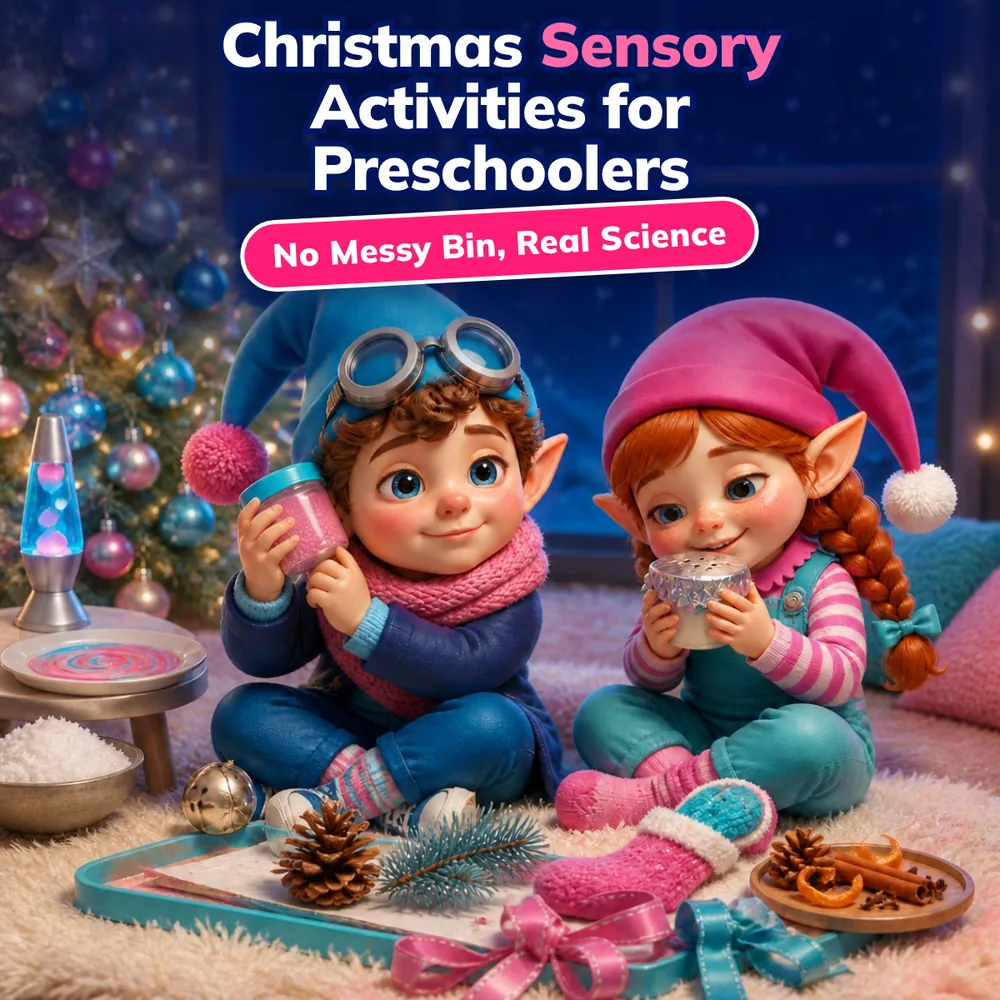
Save this for a calm December evening, or send it to a friend whose little one wants to touch, smell, and shake everything.
Over almost 15 years I’ve run hundreds of science shows for children in Hungary. By the end, the grown-ups are always just as excited as the little ones, because deep inside every one of us lives a curious child. When you experiment together, it’s quality FUN time for both of you.
The eight activities below are made for that curious child, the little one and the grown-up one. Each starts with something to smell, hear, touch, or see, and most come with a short answer for when your child asks why.
Ask your child tonight: Which would you like to try first, your nose, your ears, or your fingers? The last activity, near the end of this page, starts at your own Christmas tree, if it is a real one.
Know a grandparent or a preschool teacher who loves a calm December activity? Send this page to them. Share it
Why do pine cones open and close?
Most ripe pine cones open when the air is dry and close when they get wet. On dry days the open scales let the seeds fly off, so the wind can carry them far. On wet days the scales close and keep the seeds inside.
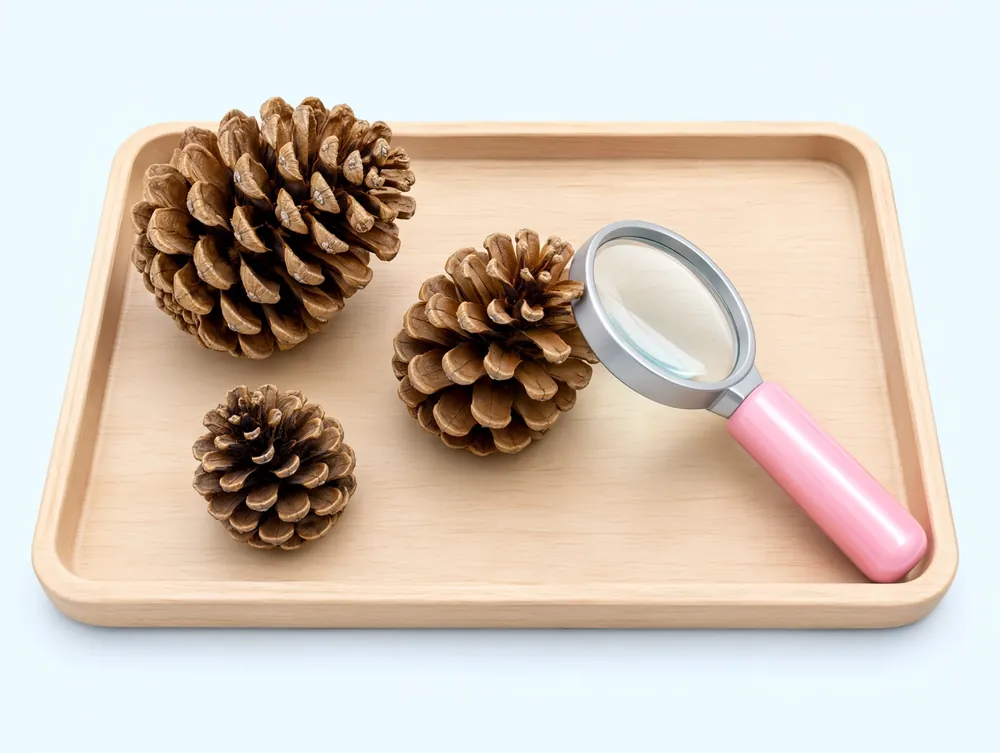
This is Day 3 in my calendar, and two or three pine cones are all you need.
Day 3: Pine Cone Explorer
READ IT TOGETHER · DAY 3
Pine cones can open when dry and close when wet!
Each scale is like a little door, with seeds tucked in behind it. On dry days the doors open, so the seeds fly off when the wind can carry them far. Touch the scales of your pine cone. Can you see how they go round and round?
TODAY’S LITTLE JOB · NATURE
You need: 2 or 3 pine cones, a magnifying glass if you have one, a tray
- Look, touch, and smell.
- Find the biggest and the smallest cone.
- Count the scales along one spiral.
Wonder: What would your pine cone do in the rain?
IF THEY ASK WHY
Is the pine cone alive? No, and it doesn’t need to be. The cone doesn’t use any energy of its own to move. Its scales are made of layers that react to water in different ways. When a scale gets wet, those layers make it bend shut. Scientists at the University of Freiburg report that even fossil pine cones, millions of years old, can still make this bending movement.
How can you tell a spruce from a fir?
Look at how the needles grow. If they grow in little bundles of two, three, or five, your tree is a pine. If they grow one by one, roll a needle between your fingers. Most spruce needles have four sides and roll. Most fir needles are flat and won’t roll. For a sure answer, look at a bare bit of twig: a spruce twig is rough with tiny woody pegs, and a fir twig has no pegs, only tiny flat, round marks.
Day 19 turns this into a detective game, and your child gets to find out what kind of tree is standing in your living room. It works with a real Christmas tree or with a real wreath.
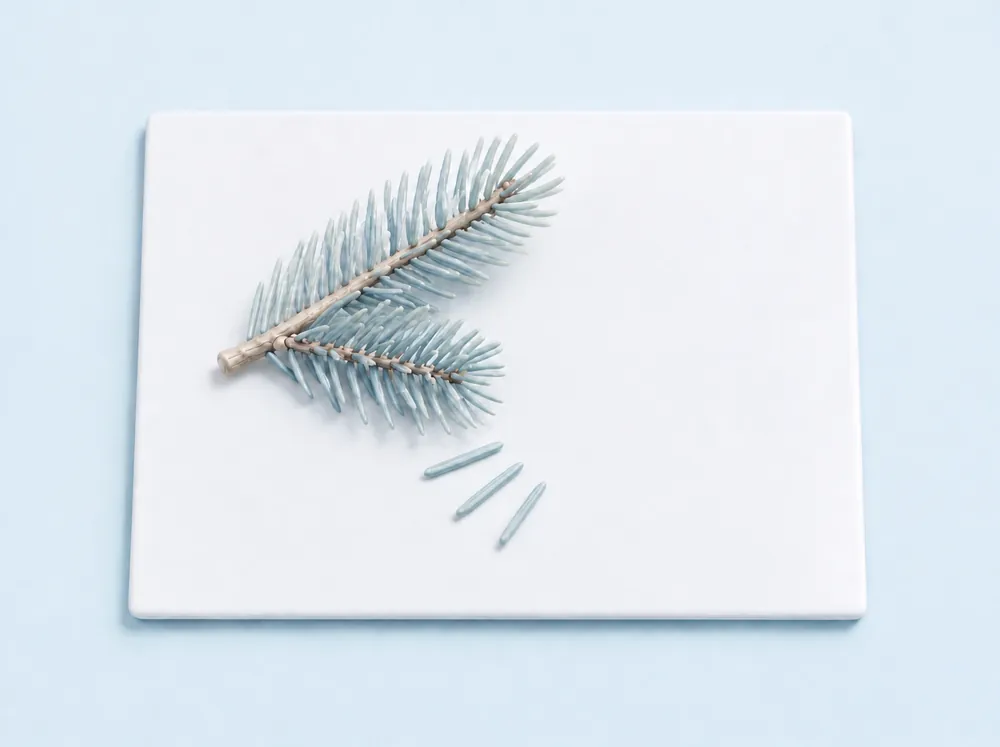
Day 19: Needle Detective
READ IT TOGETHER · DAY 19
Needles hold clues to the name of your tree!
Look at the branch. Pine needles grow in bundles, usually of two, three, or five. Spruce and fir needles grow one by one. Then pick up one needle and roll it between your fingers. Most spruce needles have four sides. They roll, and you can feel their edges. Most fir needles are flat and won’t roll. Which needles do you have?
TODAY’S LITTLE JOB · NATURE
You need: a few needles or a small branch from a real Christmas tree or wreath, a sheet of white paper
- Lay the needles on the paper.
- Look closely: does each needle grow alone or in a bundle?
- Try to roll one between your fingers.
Wonder: What kind of tree is your Christmas tree?
IF THEY ASK WHY
Why does a spruce needle roll? Most spruce needles have four sides, a bit like a tiny square pencil, so they roll between your fingers. Most fir needles are flat, like a little ribbon, so they won’t. Spruce needles usually feel stiff and sharp, and fir needles usually feel soft. There is one sure sign, too. Each spruce needle grows on a tiny woody peg, and the pegs stay on the twig after the needles fall off. A fir needle sits right on the twig and leaves a smooth, round mark.
How does a smell get to your nose?
A smell comes from tiny bits, called molecules, that float off things like cinnamon and orange peel. When you breathe in, some of them reach special smell cells high up inside your nose, and your brain tells you: cinnamon!
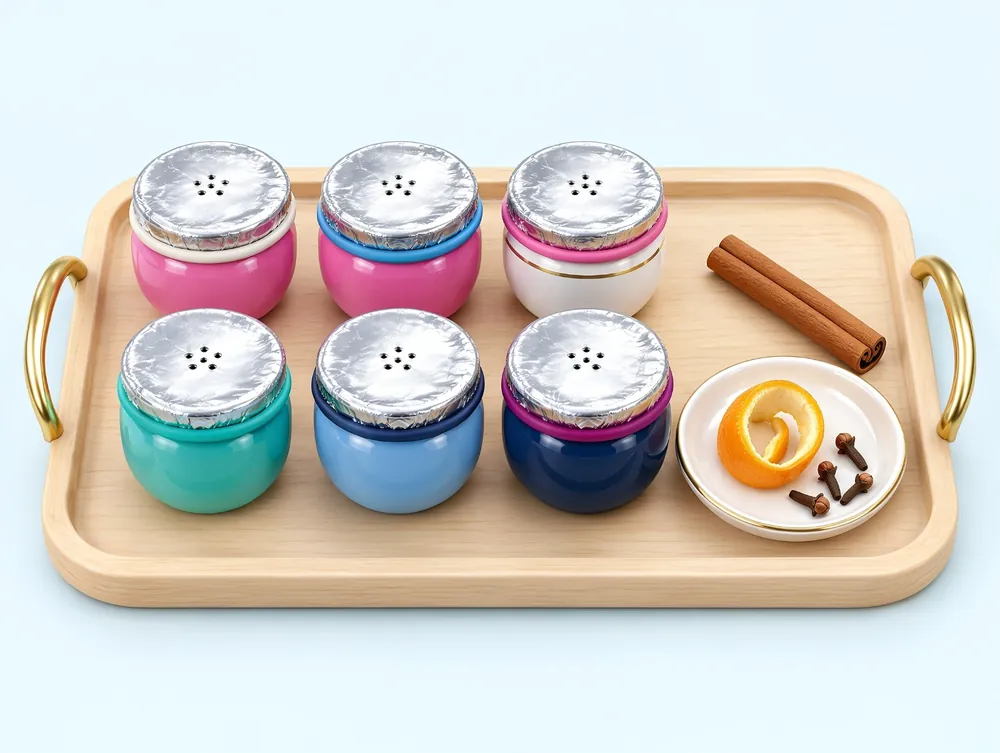
That is why the smell jars on Day 17 work even with the cups covered. The foil hides what is inside, but the tiny bits float out through the little holes.
Day 17: Christmas Smell Jars
READ IT TOGETHER · DAY 17
A smell can sneak out through tiny holes!
Tiny bits of cinnamon, orange, and clove float out of the cup and into the air. When they reach your nose, you smell them. Sniff each cup gently. Find two cups that smell the same. Then find the next two.
TODAY’S LITTLE JOB · SENSES
You need: 6 small cups or jars you can’t see through, foil with a few holes poked in it, rubber bands, a cinnamon stick, orange peel, a few whole cloves
- A grown-up puts each smell into two cups and covers them with foil.
- Sniff each cup gently.
- Find the pairs that smell the same.
Wonder: Which smell reminds you of Christmas?
SMALL PARTS · not for kids under 3 · a grown-up stays closeFor grown-ups: Grows: words for smells. Sensorial work helps children describe and name what they sense. Check for allergies first: cinnamon, orange, cloves, and latex rubber bands.
Know a preschool teacher who is tired of cleaning up sensory bins? Send them these eight ideas. Share it
Where does a sound come from?
Every sound you can hear starts with something shaking back and forth very fast. That shaking is called vibration. When you shake a box of rice, the grains hit the walls of the box and make them vibrate, and the vibration travels through the air to your ears.
Day 9: Jingle Sound Pairs
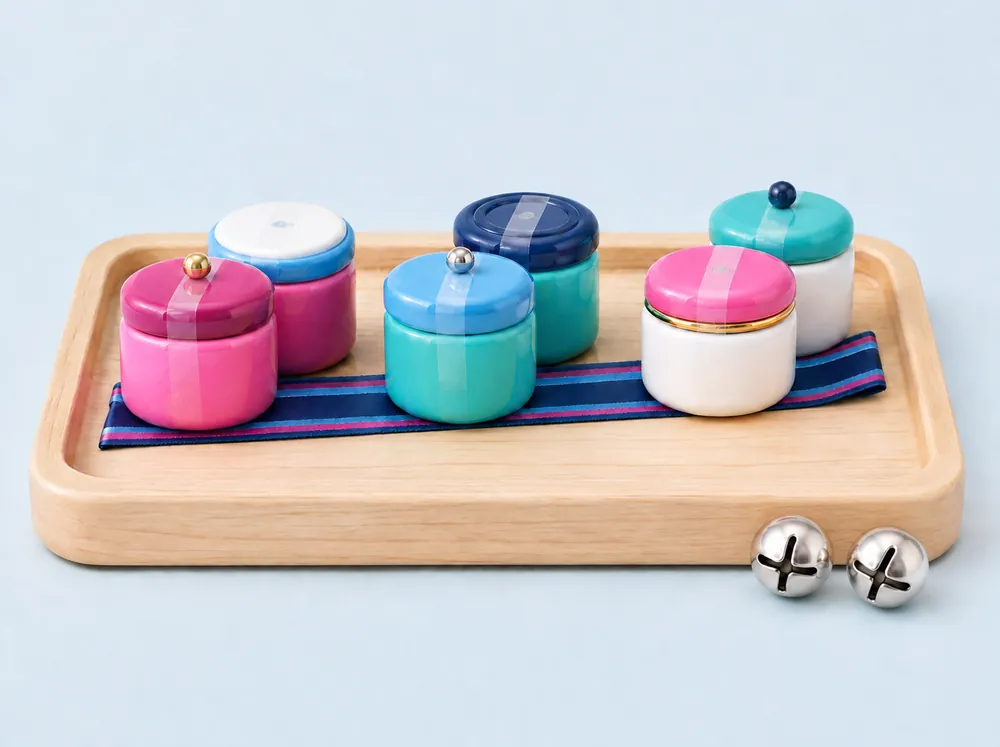
READ IT TOGETHER · DAY 9
Your ears can find pairs, too!
Shake a box next to your ear. Rice makes a soft swish. Dry beans rattle. A bell goes jingle. Every sound you hear comes from something shaking very fast. Does another box sound the same? Then you found a pair. Put the two side by side.
TODAY’S LITTLE JOB · SENSES
You need: 6 small plastic containers with lids (not see-through), tape, rice, dry beans, 2 jingle bells
- A grown-up fills two with rice, two with beans, and puts one bell in each of the last two, then tapes the lids shut.
- Shake each one and listen.
- Find the pairs that sound the same.
Wonder: Which one is the loudest? Which one is the quietest?
SMALL PARTS · not for kids under 3 · a grown-up stays closeIF THEY ASK WHY
Can you feel a sound? Yes. Rest your fingers gently on the front of your throat and hum a song. That little buzz is your voice. When you hum, two small bands inside your voice box, called vocal folds, vibrate very fast, and you can feel that buzz through your skin.
For grown-ups: Grows: careful listening. Sensorial work builds the ability to sort and tell things apart.
Day 21: Sound I Spy
Day 21 is another listening game. This time your child listens for the first sound of a word.
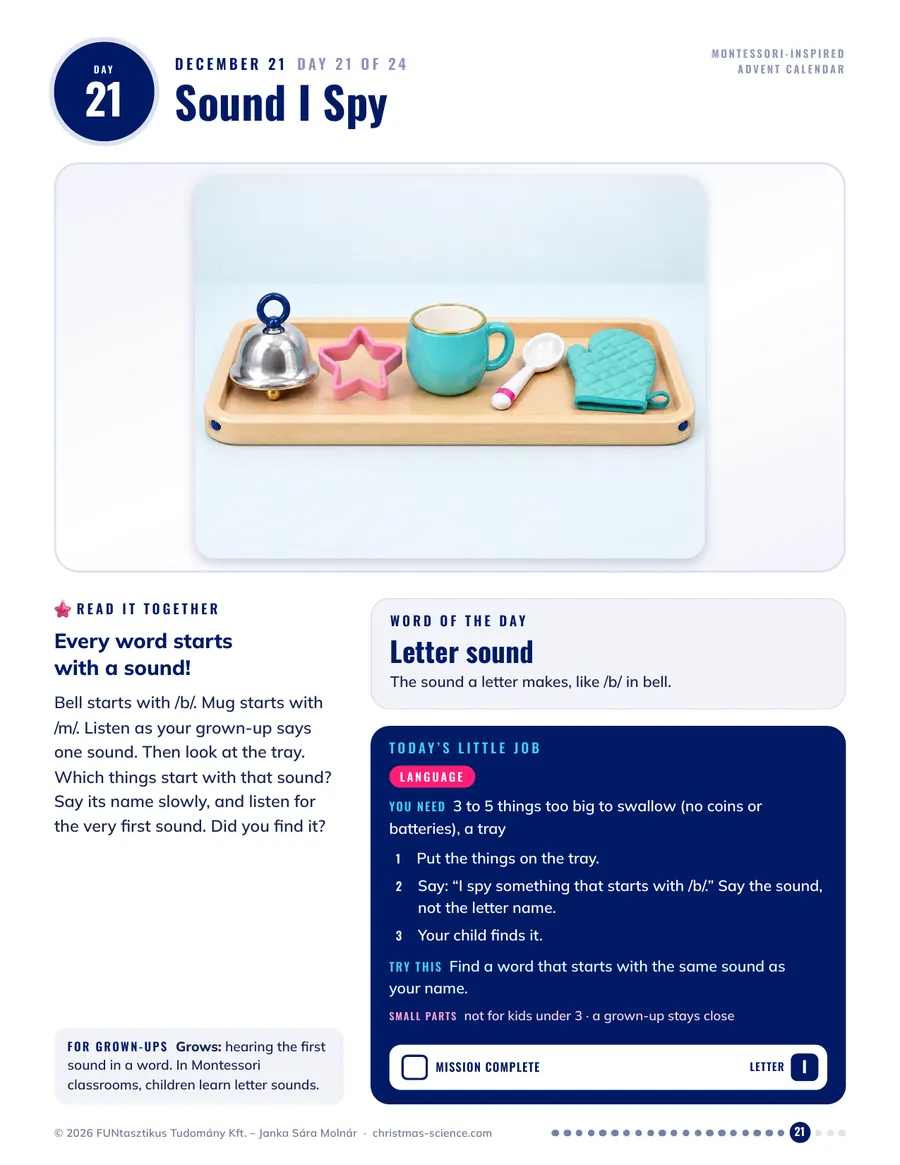
READ IT TOGETHER · DAY 21
Every word starts with a sound!
Bell starts with /b/. Mug starts with /m/. Listen as your grown-up says one sound. Then look at the tray. Which things start with that sound? Say its name slowly, and listen for the very first sound. Did you find it?
TODAY’S LITTLE JOB · LANGUAGE
You need: 3 to 5 things too big to swallow (no coins or batteries), a tray
- Put the things on the tray.
- Say: “I spy something that starts with /b/.” Say the sound, not the letter name.
- Your child finds it.
Try this: Find a word that starts with the same sound as your name.
SMALL PARTS · not for kids under 3 · a grown-up stays closeFor grown-ups: Grows: hearing the first sound in a word. In Montessori classrooms, children learn letter sounds.
Why are fingertips so good at feeling things?
Fingertips are packed with tiny touch sensors. In a patch of skin the same size, a fingertip has more than 10 times as many as your back. That is why fingertips can tell what something is without looking.
Day 5: Mystery Stocking
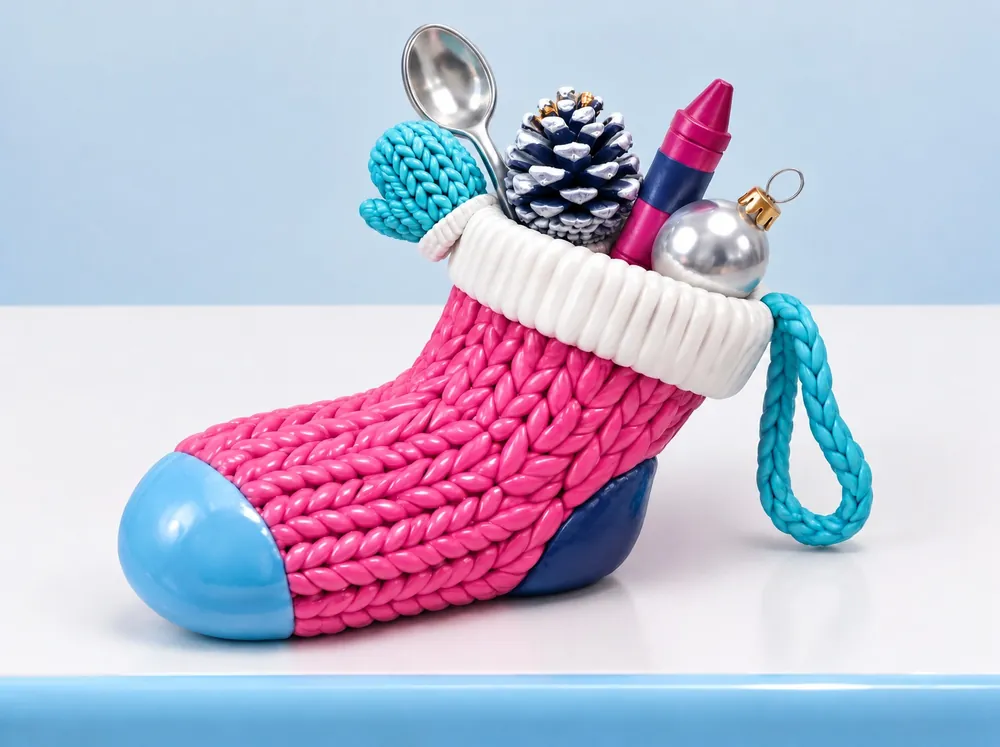
READ IT TOGETHER · DAY 5
Your fingers can tell a spoon from a mitten without looking!
A spoon feels hard, cold, and smooth. A mitten feels soft and warm. Reach into the stocking and hold one thing. Is it hard or soft? Round or flat? Say what you think it is. Then pull it out and see.
TODAY’S LITTLE JOB · SENSES
You need: a stocking or a sock, 5 familiar things (a spoon, a mitten, a pine cone, a crayon, an unbreakable ornament)
- Put the things in the stocking while your child looks away.
- Your child feels one and says what it is.
- Pull it out to check.
Try this: Let your child hide something for you to guess.
For grown-ups: Grows: knowing things by touch. Sensorial activities refine sensory perception.
Day 14: Rough and Smooth
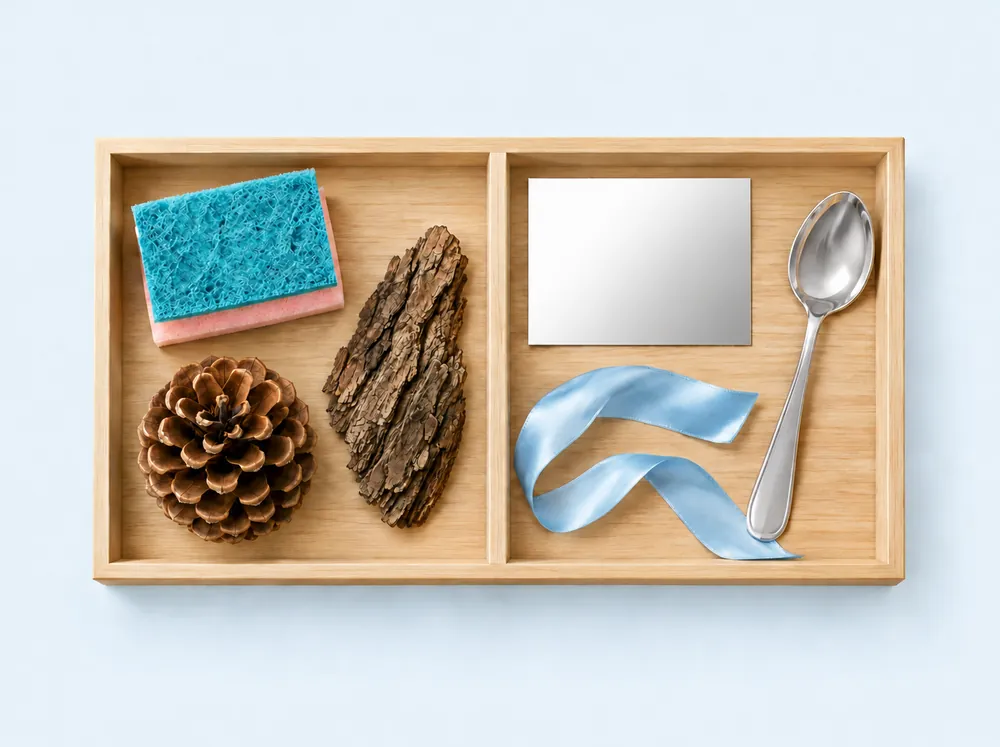
READ IT TOGETHER · DAY 14
A pine cone feels rough, and a spoon feels smooth!
Rough things are bumpy and scratchy. Your fingers bump along them. Smooth things have no bumps you can feel. Your fingers slide right over them. Touch each thing on the tray. Is it rough or smooth? Put the rough things in one pile and the smooth things in another.
TODAY’S LITTLE JOB · SENSES
You need: 6 things to touch: some rough (the rough side of a sponge, a pine cone, a piece of bark) and some smooth (flat foil, a ribbon, a spoon)
- Touch each thing with your fingertips.
- Say if it is rough or smooth.
- Make two piles.
Wonder: Is your mitten rough or smooth?
For grown-ups: Grows: words for what you feel. Sensorial work helps children name experiences like rough and smooth.
Why do things have different colors?
Things have different colors because each one bounces back different parts of the light. White light, like sunlight, is a mix of many colors. A pink ribbon bounces some of them back to your eyes and soaks up the rest, and together they make the pink you see.
Day 2: Color Match
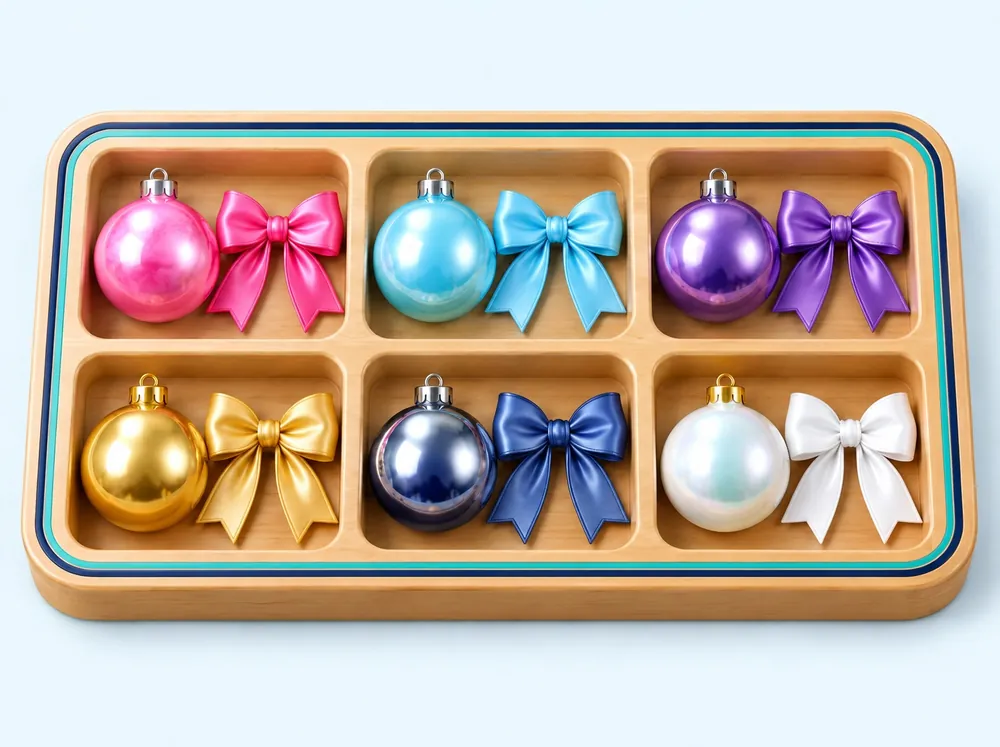
READ IT TOGETHER · DAY 2
Every color on the tray has a twin hiding somewhere!
Look closely. A pink one is looking for another pink one. A blue one is looking for another blue one. When you find two that match, lay them side by side, like two friends. Then say their color out loud together.
TODAY’S LITTLE JOB · SENSES
You need: 6 pairs of things in matching colors (ribbons, paper squares, or unbreakable ornaments), a tray
- Mix everything on the tray.
- Find two that match and lay them side by side.
- Say each color together.
Try this: Find one more thing in the room for every color.
For grown-ups: Grows: seeing and naming colors. Most children can name a few colors by age 4.
Are these sensory activities safe for 3-year-olds?
They are made for ages 3 to 6, always with a grown-up nearby. Some use small things, like rice, beans, jingle bells, and cloves, that can cause choking, so keep them away from children under 3. If your 3-year-old still puts things in their mouth, skip the activities with small things for now. The smell jars also need an allergy check first. Here are the safety rules from the calendar.
THE SAFETY RULES FROM THE CALENDAR
- Small parts: rice, beans, pasta, cotton balls, stickers, jingle bells, marker caps, cloves, and rubber bands can cause choking. Never for children under 3: keep them away from younger siblings, too.
- Nothing goes in the mouth, nose, or ears. Uncooked rice, beans, and pasta are for play only.
- Magnifying glass: never look at the sun through it, and never leave it in a sunny window.
- Allergies: check before Day 6 (pasta, wheat) and Day 17 (cinnamon, orange, cloves, latex rubber bands).
- Pine cones and tree needles: spruce needles can be prickly. From a wreath, use only needles, never berries or wire. Wash hands afterward.
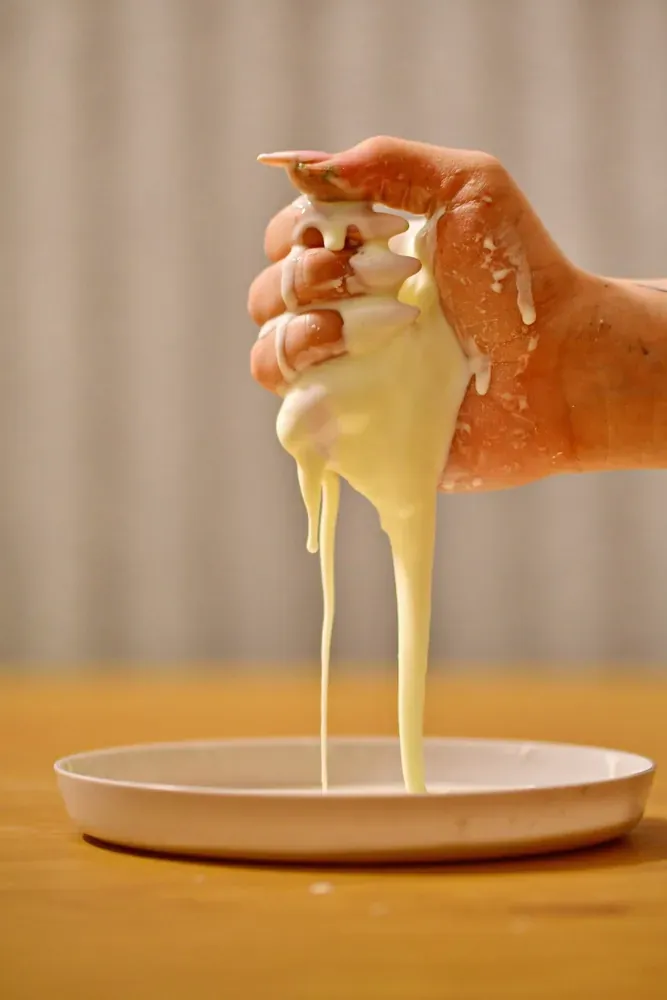
Ready for kitchen experiments?
If your little one liked feeling rough and smooth, try Magic Snow next. Stir about twice as much cornstarch as water. The “snow” runs through your fingers when you move slowly, but feels firm, almost solid, when you squeeze it fast.
It is December 2 in my book, Theo and Tilda’s Christmas Science Adventure: 51 read-aloud stories and 51 kitchen experiments with real photos, plus a 24-day December plan. For ages 3 to 9.
Is there a printable advent calendar with sensory activities?
Yes. The eight activities above come from Theo & Tilda’s Montessori-Inspired Christmas Advent Calendar, a printable advent calendar for kids ages 3 to 6. It has 24 hands-on activities, one for each day from December 1 to 24, and each one uses simple things from home.
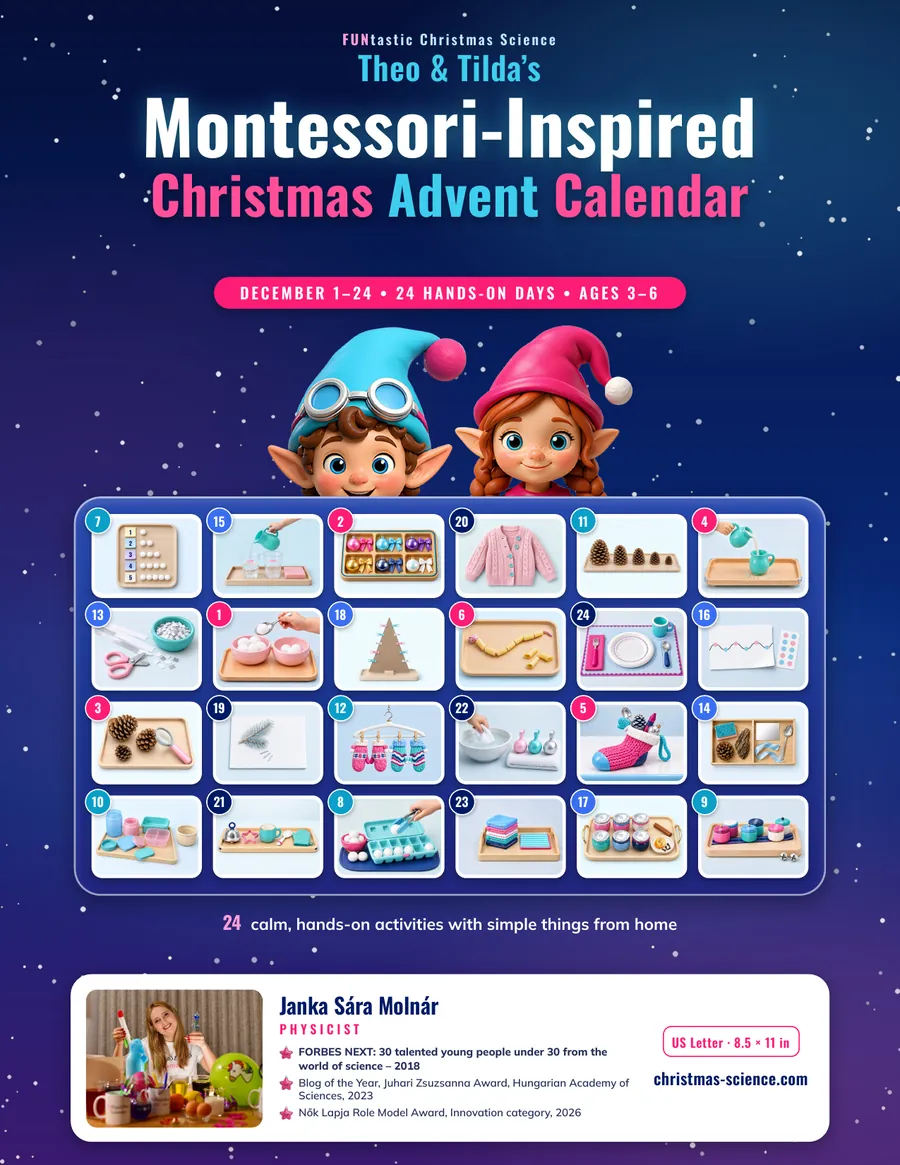
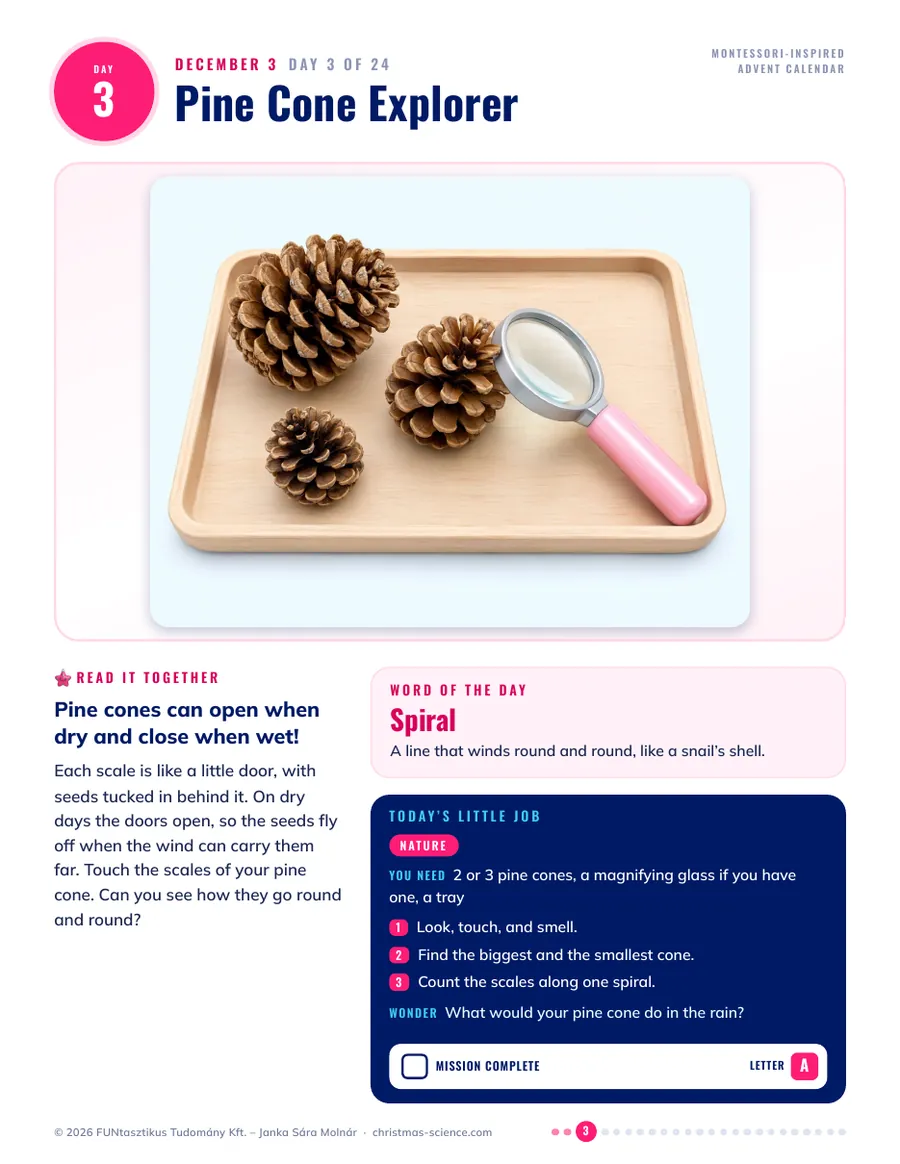
- 24 activity pages, one for each day: a big picture, a short text to read aloud, a word of the day, what you need, 3 easy steps, the skill it builds, and a “Try this” or “Wonder” idea
- Senses, nature, Practical Life, math, and language: smell jars, sound pairs, a mystery stocking, rough and smooth, pine cones and Christmas tree needles, plus pouring, spooning, tongs, folding, and setting the holiday table
- A safety page and a weekly list of household things to gather
- A color-in countdown page: each day adds one letter, and on December 24 the letters spell a secret sentence
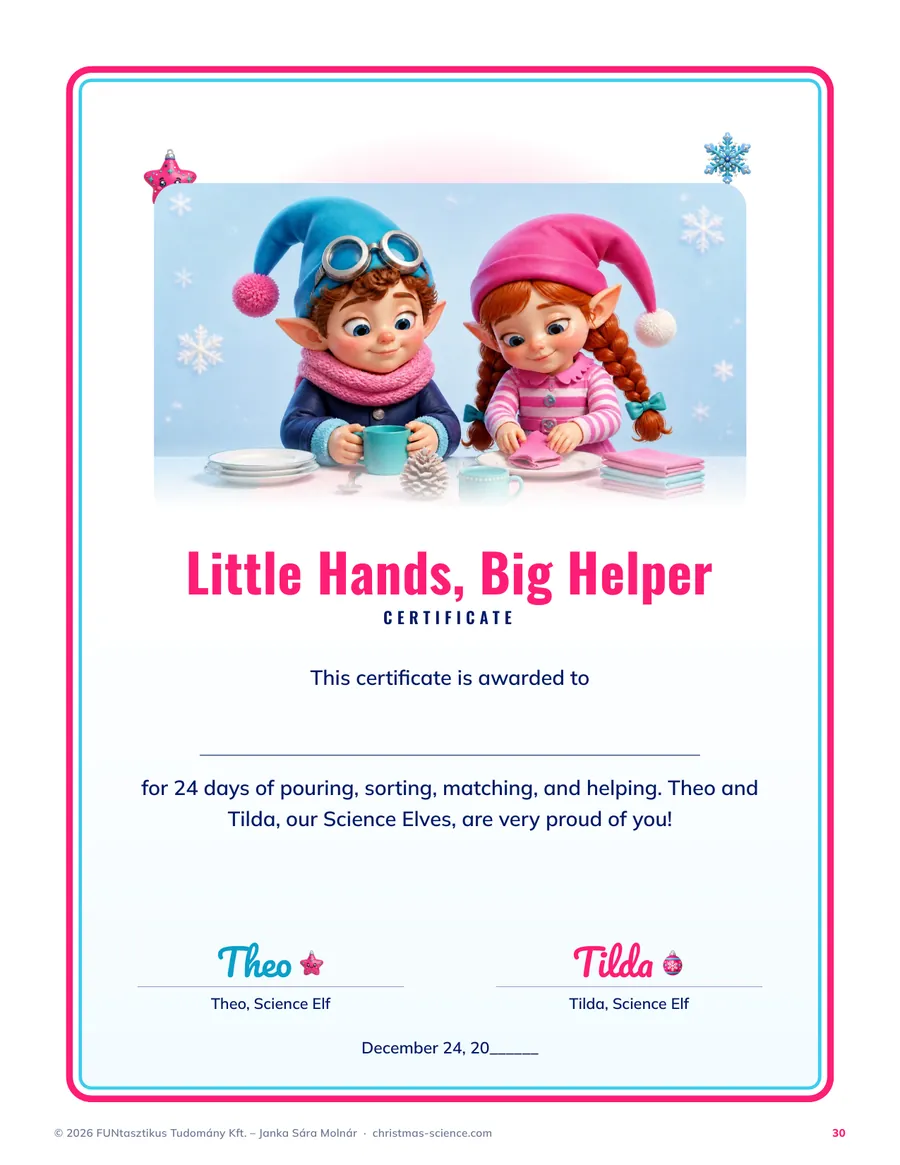
- A December 24 certificate
- No printer? You can read the whole calendar on a screen.
This calendar is Montessori-inspired. It is not an official Montessori product and is not affiliated with AMI or AMS.
Every activity on this page uses your child’s senses as science tools: eyes, ears, nose, and fingertips. Looking closely and comparing is what scientists do, too.
You don’t need to know every answer. It’s fine to say, “I don’t know. Let’s find out.” Scientists say it all the time.
Want more days from the calendar, like pouring rice and folding napkins? Read “Montessori Christmas Activities for Preschoolers.” And here are all my printable advent calendars for kids.
Which needles do you have?
If you have a real Christmas tree or wreath, go to it together. First, look at how the needles grow. In little bundles of two, three, or five? It is a pine.
One by one? Pick up a needle and roll it between your fingers. If it rolls, it is most likely a spruce. If it is flat and won’t roll, it is most likely a fir. Want to be sure? Find a bare bit of twig. On a spruce, you will see tiny woody pegs. A fir twig has no pegs, only tiny flat, round marks. Tiny overlapping scales instead of needles? Then it is most likely a juniper, a cypress, or an arborvitae.
Ask at dinner tonight: What kind of tree is our Christmas tree, and how did you find out?
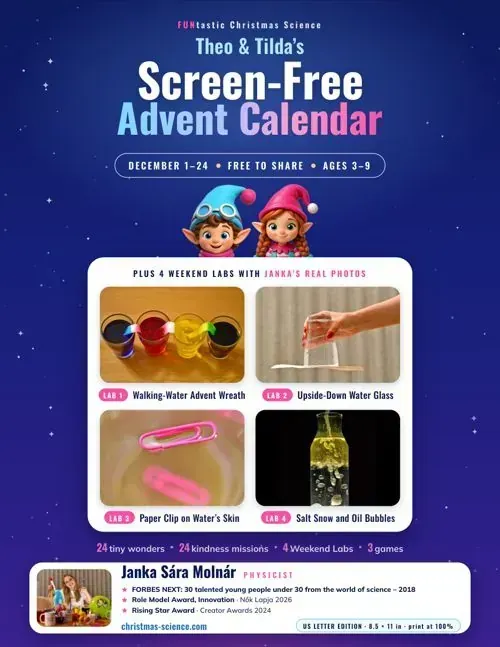
Theo & Tilda’s Screen-Free Advent Calendar
A free printable for ages 3 to 9: 24 tiny wonders and 24 kindness missions, one of each for every day from December 1 to 24.
This calendar is free to share. Print it as often as you like for your family or class, and pass it on to friends, families, and teachers. Please don’t sell it or change it.

Know a family with a curious little explorer?
Send them this page. All eight activities are free to read here, and each one takes a few minutes.
COPY THIS MESSAGE
Paste it into a family group chat, or send it to a friend.
I found eight calm Christmas sensory activities for little ones, no messy bin needed: pine cones, Christmas tree needles, smell jars, sound boxes, and a mystery stocking. Most come with the science behind them. www.christmas-science.com/blog/christmas-sensory-activities-for-preschoolers
Quick answers about Christmas sensory activities for preschoolers
What are some easy Christmas sensory activities for preschoolers?
Easy Christmas sensory activities for preschoolers use simple things from home. Sniff covered cups of cinnamon and orange peel, shake little boxes of rice or beans to find pairs, guess what is in a stocking by touch, sort rough and smooth things, match colors, and look closely at pine cones and Christmas tree needles.
Why do pine cones open and close?
Most ripe pine cones open when the air is dry and close when they get wet. Dry days are the best days for the seeds to fly off, because the wind can carry them far. The scales are made of layers that react to water in different ways, and when a scale gets wet, those layers make it bend shut.
How can you tell a spruce from a fir Christmas tree?
Look at how the needles grow. If they grow in bundles of two, three, or five, the tree is a pine. If they grow one by one, roll a needle between your fingers. Most spruce needles have four sides and roll. Most fir needles are flat and won’t roll. For a sure answer, look at a bare bit of twig: a spruce twig is rough with tiny woody pegs, and a fir twig has no pegs, only tiny flat, round marks.
How do you explain smell to kids?
Things like cinnamon send tiny bits of themselves, called molecules, into the air. When you breathe in, some of them reach special smell cells high up inside your nose, and your brain tells you what you are smelling.
What age is the Montessori-Inspired Christmas Advent Calendar for?
Ages 3 to 6, always with a grown-up nearby. Some activities use small items, so they are never for children under 3. The calendar comes as two PDF files, US Letter and A4, and you can also read it on a screen.

About Janka
Janka Sára Molnár is a physicist and award-winning science communicator from Hungary, and the founder of FUNtastic Christmas Science. As a high school student, she built particle detectors and took them to CERN several times, where she presented them in its teacher program. She graduated from Eötvös Loránd University (ELTE) in Budapest, and for almost 15 years she has run several hundred science shows for children and families.
- FORBES NEXT: 30 talented young people under 30 from the world of science – 2018
- Nők Lapja Role Model Award, Innovation category, 2026
- Women of Excellence Award, 2026
- Creator Awards, Rising Star, 2024
- Blog of the Year, Juhari Zsuzsanna Award, Hungarian Academy of Sciences, 2023
- Winner of the HBO Max reality show A Híd
The illustrations and the pictures of Theo, Tilda, and their world were created with AI-assisted tools (Canva) and edited by our team. Physicist Janka Sára Molnár checked every fact in this post against trusted sources. The photos of Janka and of her Magic Snow experiment are real photos. The Montessori-Inspired Christmas Advent Calendar is not an official Montessori product and is not affiliated with AMI or AMS.
Keep reading
More Christmas science ideas from Theo, Tilda, and me.
 For parents · 20 min read8 Montessori Christmas Activities for Preschoolers (Ages 3–6)Montessori Christmas activities for preschoolers: 8 calm Practical Life jobs with simple things from home, each with a short read-aloud to share first.Read the post →
 Free calendar · Preschool · 9 min readScreen-Free Preschool Advent Calendar (Free Printable)A free, screen-free preschool advent calendar from a physicist: 24 ten-minute science wonders and kindness missions for Pre-K and K. Free to share.Read the post →
 Preschool · 22 min readWinter Science Experiments for Preschoolers (No Snow Needed)10 easy winter science experiments for preschoolers, no snow needed: ice, salt, cornstarch, a floating egg, static snowflakes. No flames, no hot water.Read the post →
© 2026 FUNtasztikus Tudomány Kft. – Janka Sára Molnár