A Screen-Free Preschool Advent Calendar: 24 Tiny Science Wonders for December
Ten minutes a day, things you already have in your classroom, and one kindness mission. Free to download and free to share, from a physicist who has run several hundred science shows for children.
Save it for your December planning, or share it with the teacher next door.
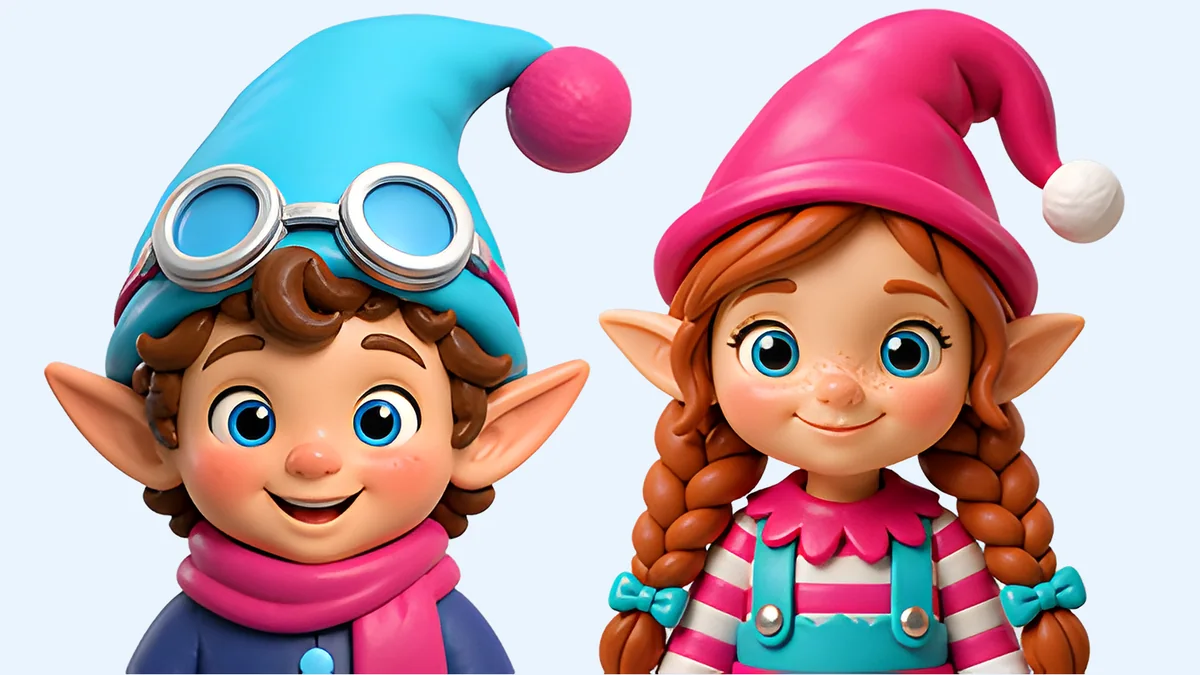
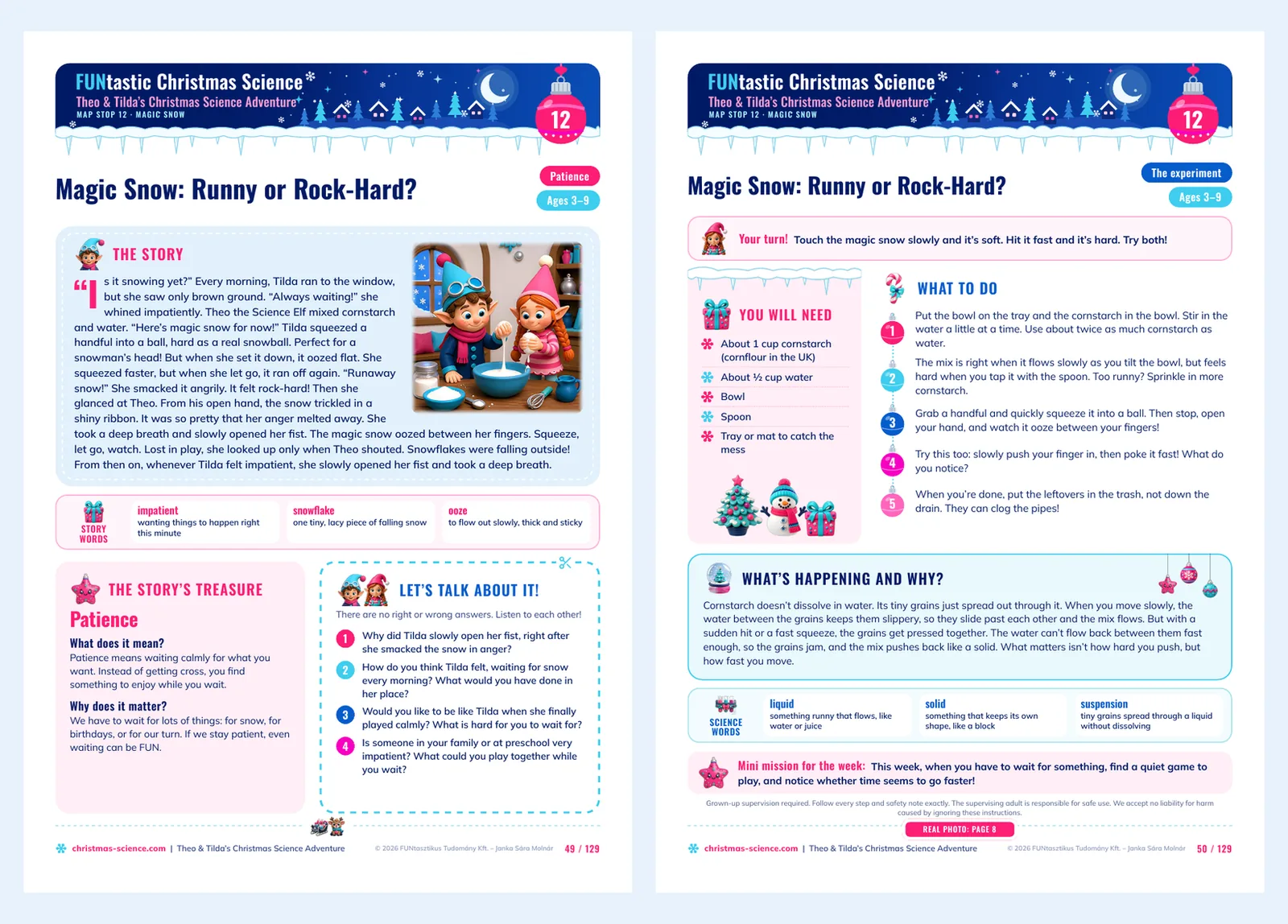
“Is it snowing yet?” Every morning, Tilda ran to the window, but she saw only brown ground. “Always waiting!” she whined impatiently. Theo the Science Elf mixed cornstarch and water. “Here’s magic snow for now!”
Tilda squeezed a handful into a ball, hard as a real snowball. Perfect for a snowman’s head! But when she set it down, it oozed flat. She squeezed faster, but when she let go, it ran off again. “Runaway snow!” She smacked it angrily. It felt rock-hard!
From Theo & Tilda’s Christmas Science Adventure, “Magic Snow: Runny or Rock-Hard?” How Tilda finds her patience is at the end of this post.
Know a Pre-K or kindergarten teacher who is planning December right now? Send this to them. Most of the ideas below take about ten minutes, with things you already have in your classroom. Share it
What is a screen-free preschool advent calendar?
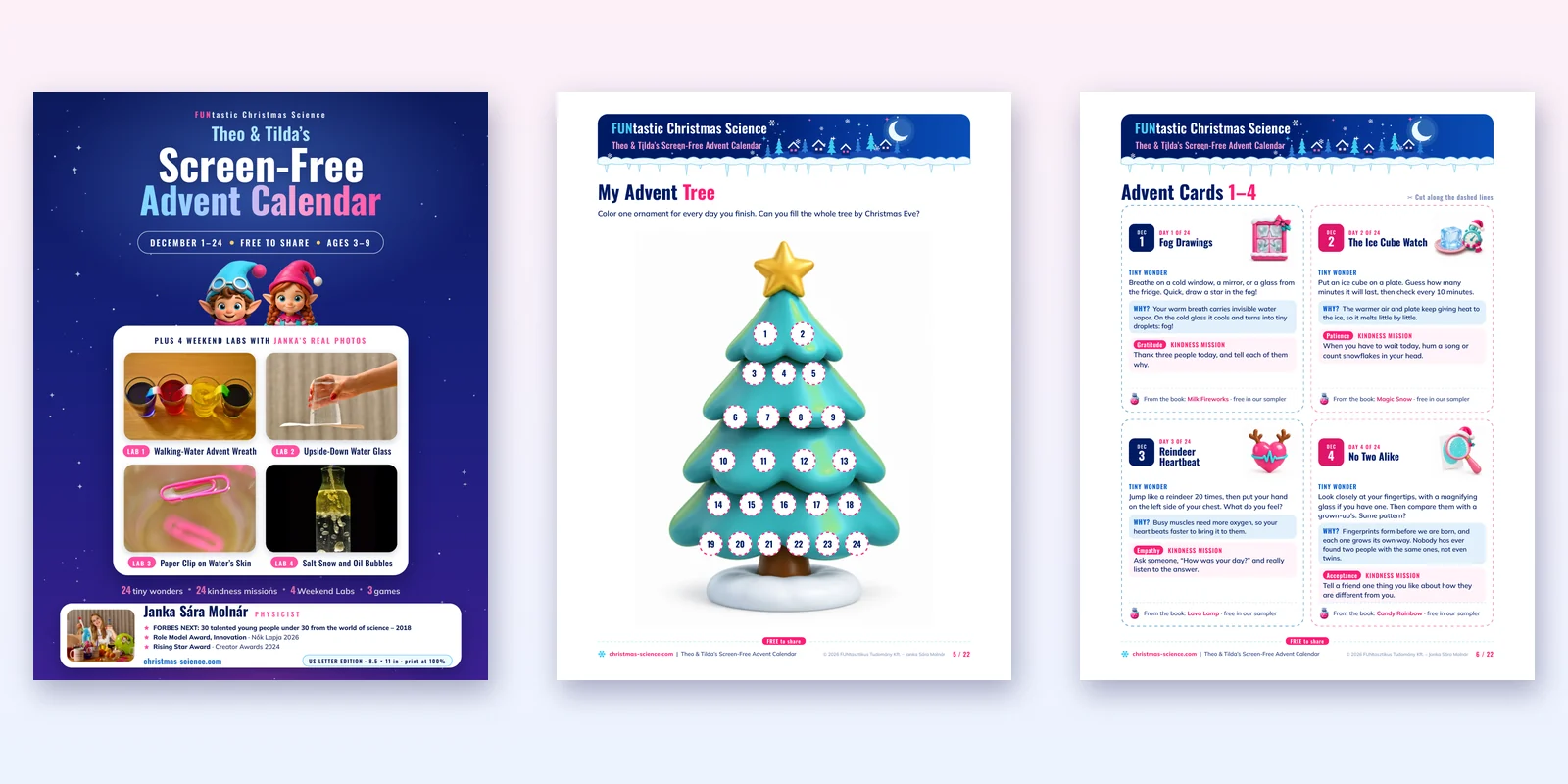
A screen-free preschool advent calendar gives your class one small, hands-on surprise for every day from December 1 to 24, with no screens and no shopping. Mine has 24 cards. Each one has a tiny wonder (most take about 10 minutes), a short “Why?” box, a value of the day with a kindness mission, and the big experiment of the day from my book. It’s made for ages 3 to 9, so it fits preschool, Pre-K, and kindergarten. And it’s free: download it below, print it for your class, and pass it on.
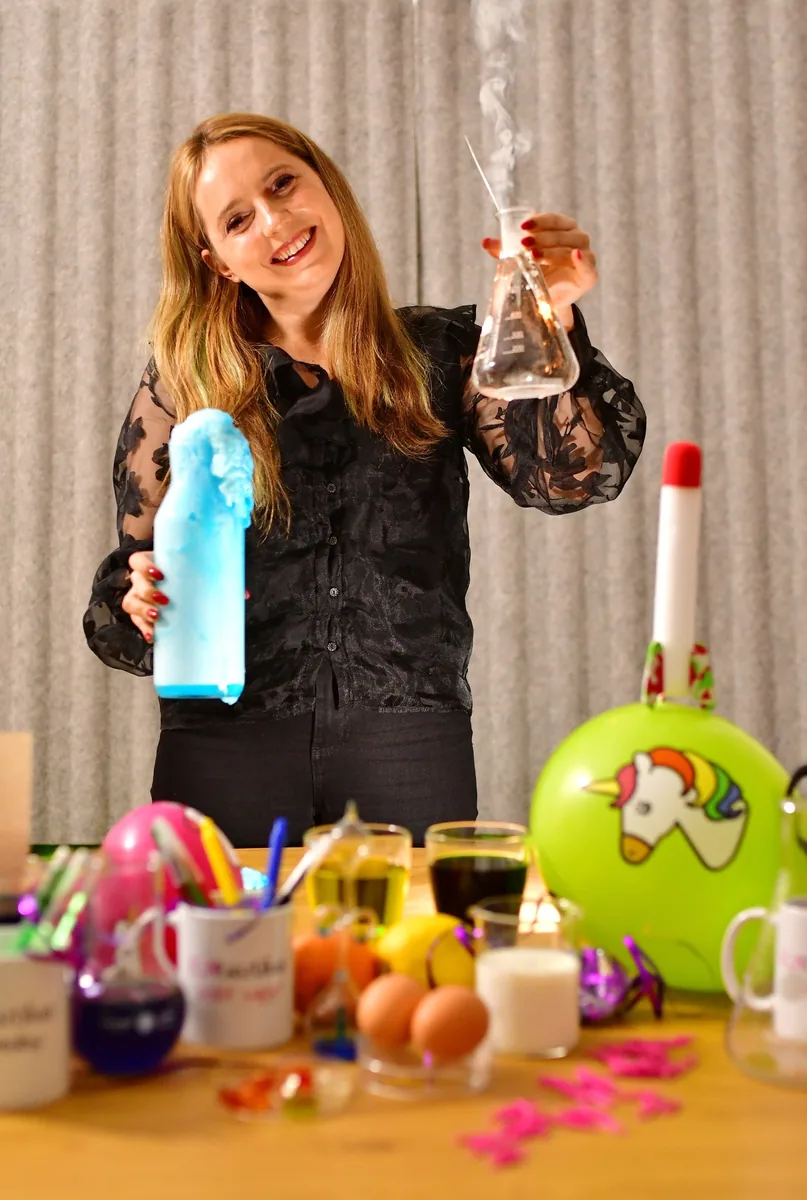
I’m Janka Sára Molnár, a physicist from Hungary. I have run several hundred science shows for children and families, from big, smoky stage experiments to tiny kitchen ones.
In the calendar I wrote to parents and teachers: “December is full of screens, lists, and rushing.” This calendar gives you 24 tiny moments to slow down together. Most cards use things you probably already have in the classroom: a glass of water, a flashlight, a sheet of paper, crayons, and plastic cups.
What does one advent day look like in a Pre-K classroom?
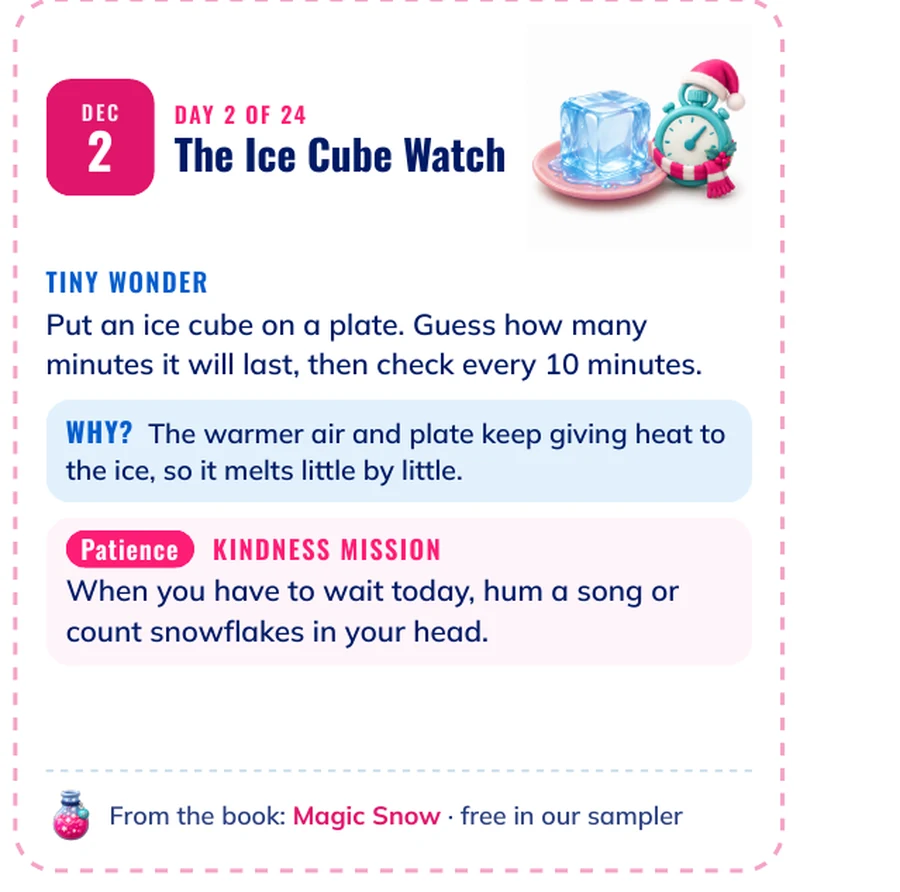
Take Day 2, The Ice Cube Watch. At morning circle, put an ice cube on a plate and ask: “How many minutes will it last?” Write every guess on the board. Then check it every 10 minutes, between centers. The “Why?” box gives you the answer in kid words: the warmer air and plate keep giving heat to the ice, so it melts little by little.
The value of the day is patience. The kindness mission: “When you have to wait today, hum a song or count snowflakes in your head.” It works in the bathroom line too.
Every card follows the same routine from the calendar:
My four tips for grown-ups (from the calendar)
- Ask before you explain. “What do you think will happen?” is the best question in science.
- Keep it tiny. Ten minutes is enough, and stopping while it’s still fun makes tomorrow exciting.
- Notice the kindness out loud. “I saw you help Grandma” means more than any sticker. In class: “I saw you hold the door for your friend.”
- No printer? Read the day’s card aloud from the screen, then put the screen away and play.
Save these four tips to your December board on Pinterest, or send them to the teacher you share a hallway with. Share it
Which December science activities work for 3- to 5-year-olds?
Short ones that little hands can touch, with no flames. Here are eight of the 24 tiny wonders, word for word from the cards, so you can see how simple they are:
Eight December wonders, no flames and no screens. Your teaching partner might want this list too. Share it
And the big experiment of the day
Each card also names that day’s experiment from my book, Theo & Tilda’s Christmas Science Adventure. Day 2 is Magic Snow, the one from Tilda’s story. You need about 1 cup of cornstarch, about ½ cup of water, a bowl, a spoon, and a tray. Use about twice as much cornstarch as water. Squeeze it fast and it’s a hard ball. Open your hand and it oozes between your fingers. As I explain it in the book: what matters isn’t how hard you push, but how fast you move. One tip from the page: put the leftovers in the trash, not down the drain, because they can clog the pipes.
Day 1 is Milk Fireworks. Pour whole milk about 1 cm (⅜ in) deep into a shallow dish, add a few drops of food coloring, and touch the middle with a cotton swab dipped in dish soap. The colors race apart, because the soap lowers the surface tension of the milk. Don’t drink the milk afterward.
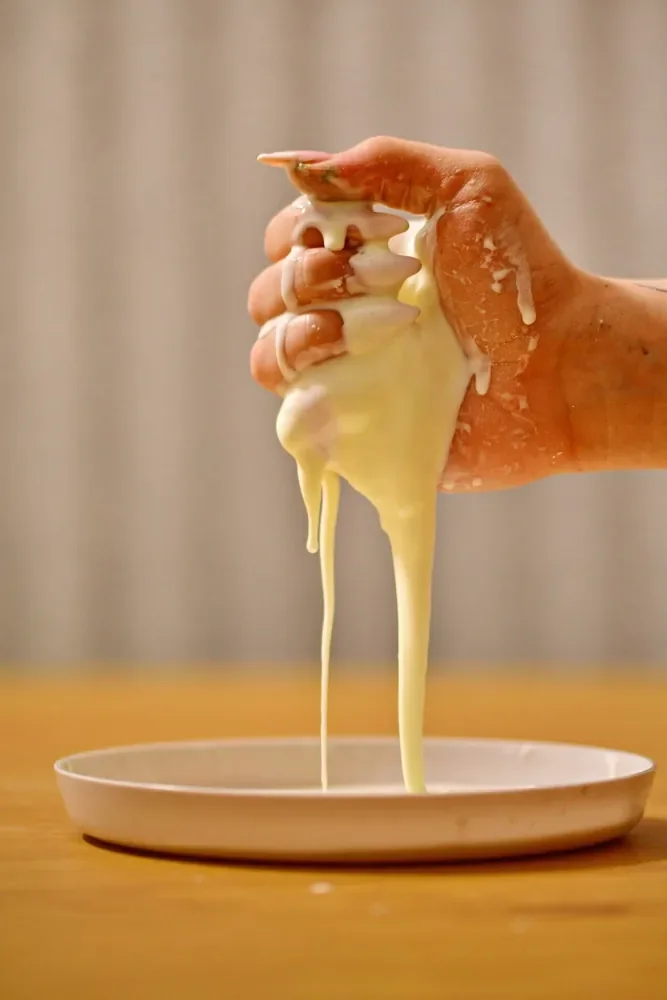
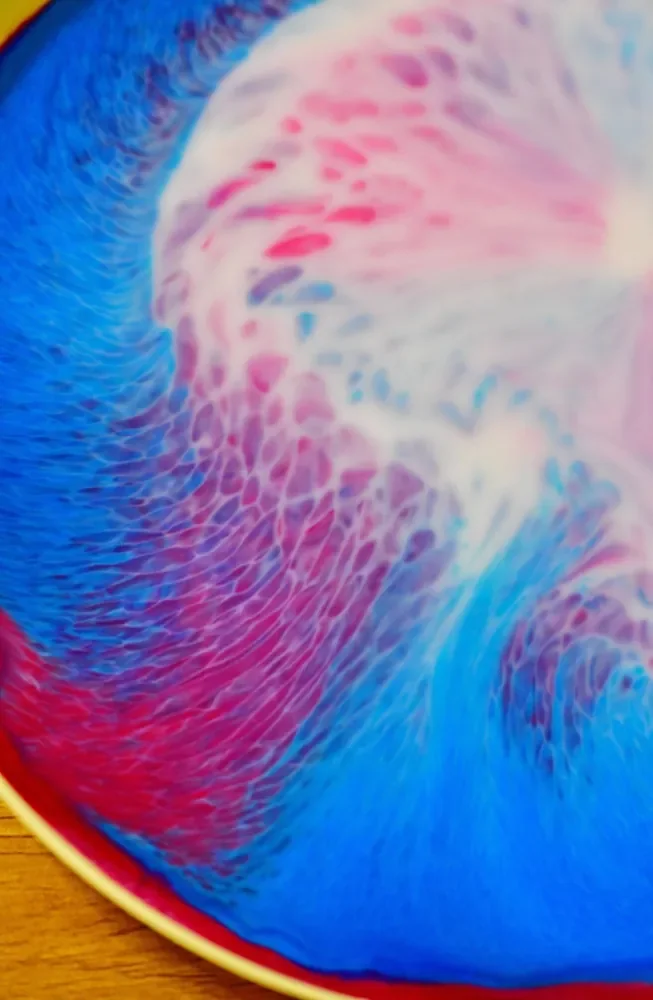
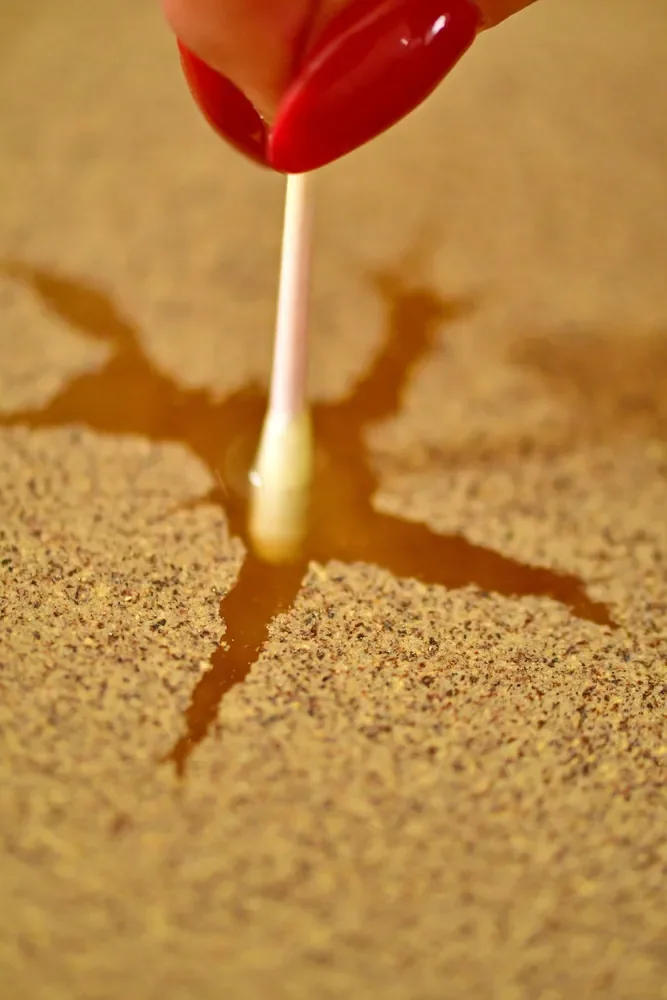
These are real photos of my own experiments, so the children see what should happen.
How do you run a classroom advent calendar in a busy December?
- Print and cut once. Print single-sided at 100% on US Letter paper or light cardstock (there’s an A4 version too). Only the card pages need cutting. Roll each card with a ribbon, or slip them into envelopes, little socks, or a jar. A different child can open the card each day.
- Weekends and late starts. December 1, 2026 is a Tuesday, and six cards fall on weekends. The calendar says it plainly: start with today’s card, or catch up with two tiny wonders a day. Every card stands on its own.
- Color a bauble. When you finish a day, color its bauble on the Advent tree. Hang one tree on the class wall, or print one for every child. On Christmas Eve, the tree is full.
- Before winter break. If school ends before December 24, use your last day for the “My Favorite Advent Day” page (draw your favorite tiny wonder, write the kindest thing you did) and the Advent Wonder Explorer certificate, signed by a grown-up.
- Home words, classroom swap. A few cards mention home, like the Magnet Hunt in the kitchen. In class, hunt around the room instead: what does the magnet stick to, and what doesn’t it?
- Safety for mixed ages. A grown-up is always there. Keep small things (crayons, lentils, corks, keys, magnets, small toys) away from children under 3. Grown-ups poke holes and help with scissors. Use warm, never hot, water.
Running the calendar with a co-teacher or an aide? Send them this checklist, so you print and cut only once. Share it
How do you get the free advent calendar?
Download it right here. It’s free, it has 22 pages, and it comes in US Letter and A4. Print it for your class as often as you like, and pass it on to other teachers and families.
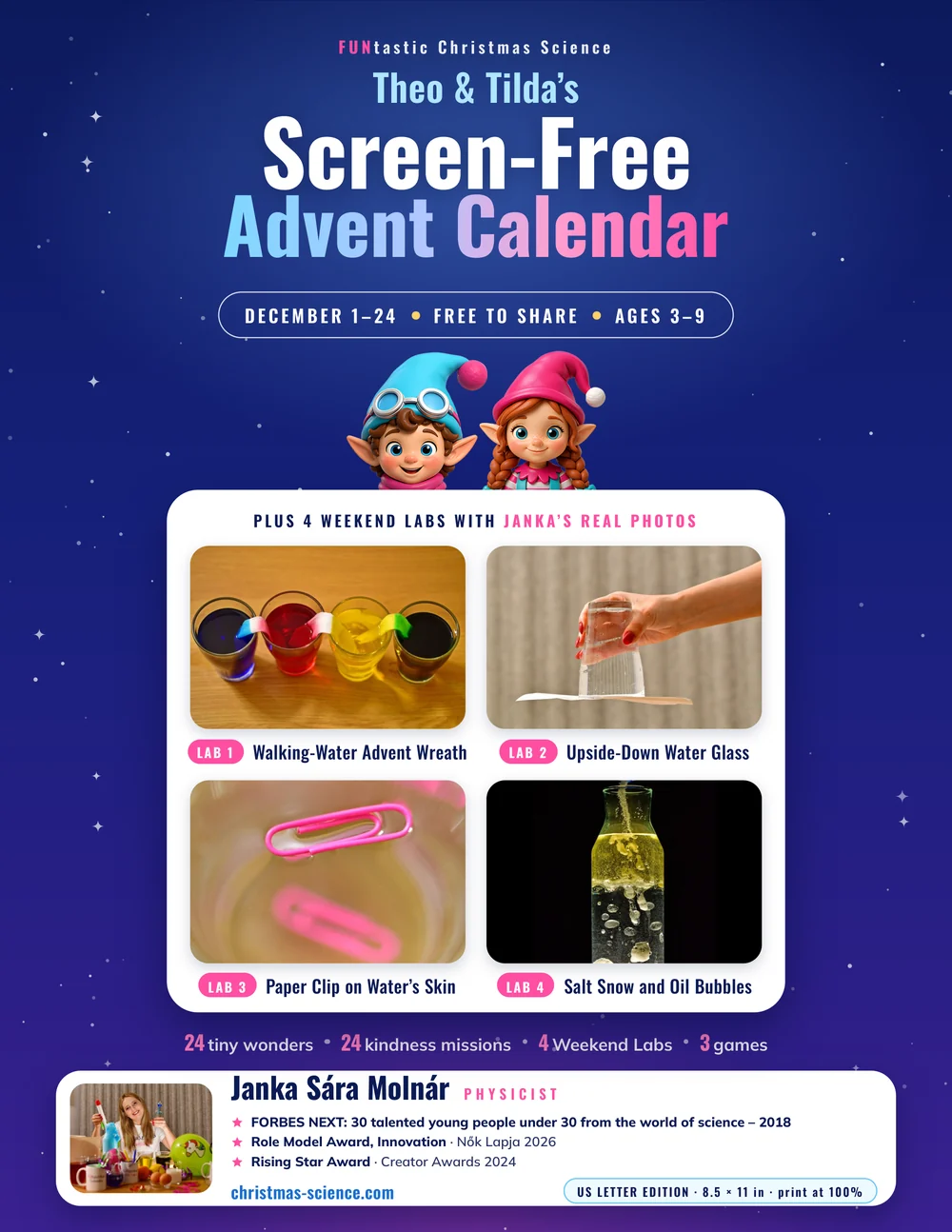
Theo & Tilda’s Screen-Free Advent Calendar
24 tiny wonders and 24 kindness missions, one for every day from December 1 to 24, plus 4 Weekend Labs with my real photos and 3 games. Most tiny wonders take about 10 minutes and use things you probably already have. 22 pages, for ages 3–9.
This calendar is free to share. Print it as often as you like for your family or class, and pass it on to friends, families, and teachers. Please don’t sell it or change it.
Looking for more? Here are all my printable advent calendars for kids, with true rocket and astronaut stories, animal superpowers, and daily kindness missions.
What do you get with the Book + Activity Pack bundle?
Every advent card names the big experiment of the day from my book. If you would like all 51 experiments with their stories, this is what the Book + Activity Pack bundle gives you:
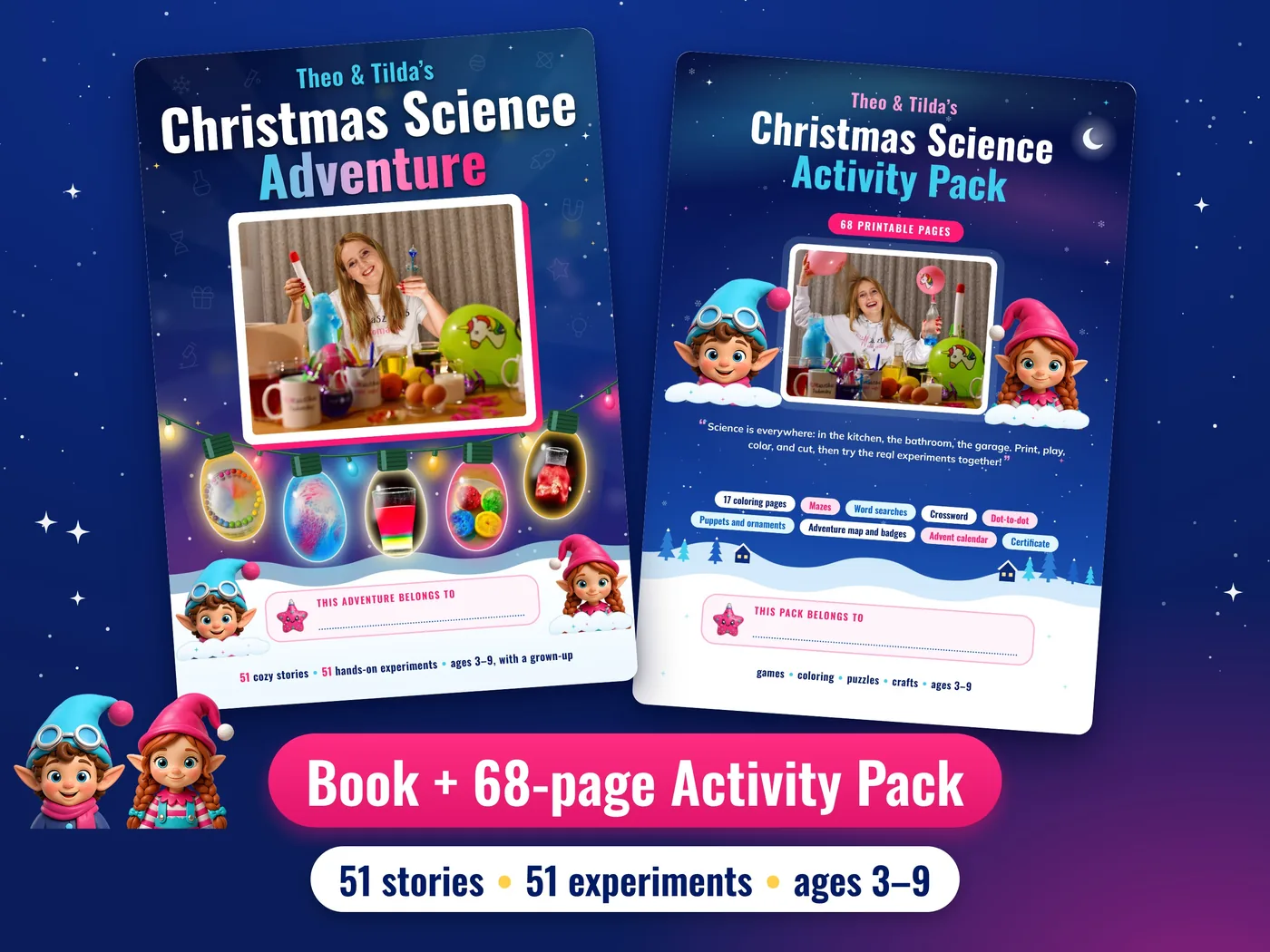
- The book, 129 pages: 51 read-aloud stories, 51 kitchen experiments with my real photos, a 24-day December plan, and 27 more adventures for January.
- The Activity Pack, 68 pages: coloring pages, puppets, an adventure map, ornaments, bookmarks, word cards, an experiment journal, mazes, Elf Lab Mysteries detective puzzles, STEM challenge cards, and a certificate.
- Two paper sizes: every file in US Letter and in A4.
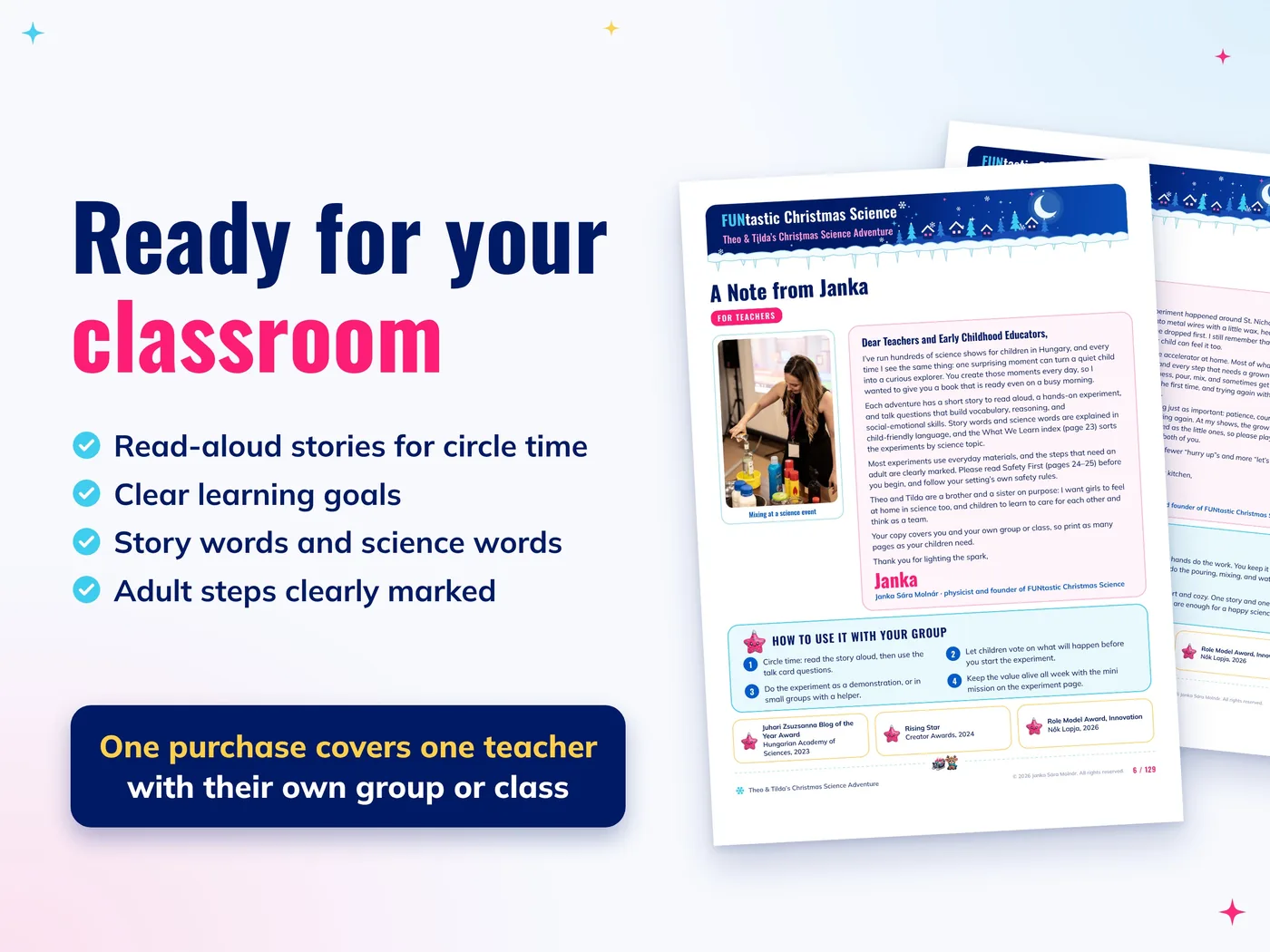
For teachers: one purchase covers one teacher with their own group or class. Print as many copies as your class needs. The bundle is $13.99 until December 24, then $17.99. One price for everyone.
Then she glanced at Theo. From his open hand, the snow trickled in a shiny ribbon. It was so pretty that her anger melted away. She took a deep breath and slowly opened her fist. The magic snow oozed between her fingers. Squeeze, let go, watch.
Lost in play, she looked up only when Theo shouted. Snowflakes were falling outside! From then on, whenever Tilda felt impatient, she slowly opened her fist and took a deep breath.
The book’s mini mission for that week fits every preschool room in December: “This week, when you have to wait for something, find a quiet game to play, and notice whether time seems to go faster!”
With love from my lab to your classroom,
Janka
Know a teacher who’d love this?
Is there a teacher in your building who could use a calmer, screen-free December? Send them this post. The eight wonders and the four tips above are free to try tomorrow morning.
COPY THIS MESSAGE
Paste it into your staff group chat, or send it to a colleague.
I found something for our December mornings! A screen-free preschool advent calendar from a physicist: 24 tiny science wonders, most of them about ten minutes, with things we already have in the classroom, and a kindness mission for every day. The post shares eight of the wonders and four tips from her. www.christmas-science.com/blog/screen-free-preschool-advent-calendar
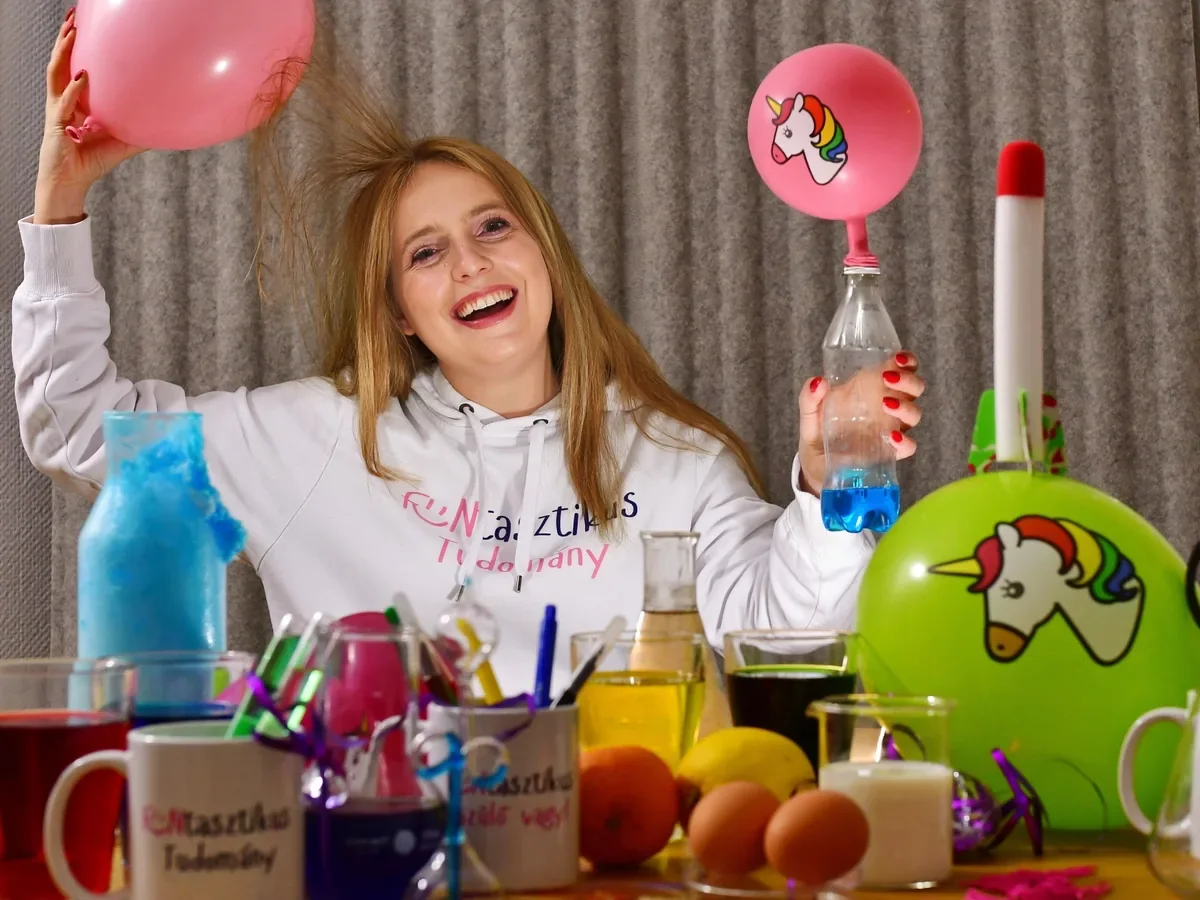
About Janka
Janka Sára Molnár is a physicist from Hungary and the founder of FUNtastic Christmas Science. As a high school student, she built particle detectors and took them to CERN several times, where she also presented them in the CERN teacher program. She has run several hundred science shows for children and families in Hungary.
Awards: Rising Star Award (Creator Awards, 2024), Role Model Award, Innovation (Nők Lapja, 2026), and FORBES NEXT: 30 talented young people under 30 from the world of science – 2018.
Questions teachers ask
What is a screen-free advent calendar for preschool?
A countdown from December 1 to 24 where each day brings a hands-on activity instead of a screen. In Theo & Tilda’s Screen-Free Advent Calendar, each day is a tiny science wonder with a kindness mission, most of them about 10 minutes long, for ages 3 to 9.
What are easy Christmas science activities for preschoolers?
Fog drawings on a cold window, watching an ice cube melt and checking it every 10 minutes, magic snow from cornstarch and water, and milk fireworks with food coloring and a drop of dish soap. None of them needs a flame or hot water.
How long should a preschool science activity take?
Most cards in the calendar take about 10 minutes. My tip: ten minutes is enough, and stopping while it’s still fun makes tomorrow exciting.
Can I use one calendar with my whole class?
Yes. The calendar is free to share. Print it as often as you like for your family or class, and pass it on to friends, families, and teachers. Please don’t sell it or change it.
The illustrations of Theo, Tilda and their world were created with AI-assisted tools (Canva) and edited by our team. Physicist Janka Sára Molnár wrote the stories and the experiment instructions herself, and she designed and tested every experiment. AI tools were used only to correct and polish the text. The experiment photos are real photos of her own experiments. A grown-up is always there for every activity.