
Skip to Content
✦✦✦✦
December 2 · free experiment

Theo & Tilda’s Christmas Science

Magic Snow Experiment

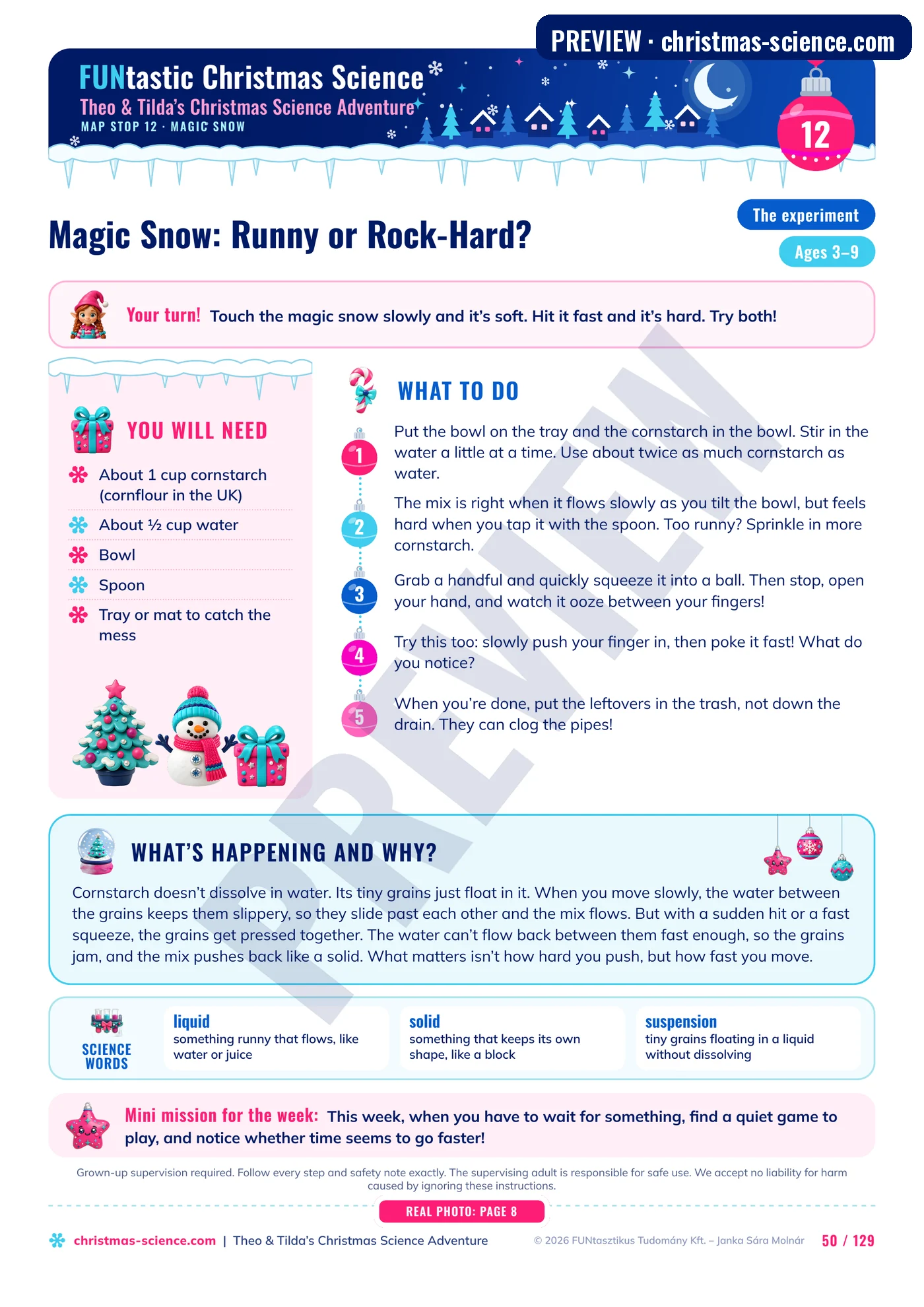
Stir about twice as much cornstarch as water, and you get a strange “snow” that runs through your fingers when you move slowly but turns hard as a rock when you squeeze or tap it fast. The tiny cornstarch grains jam together when you push quickly.

  • Age3 and up
  • ValuePatience
  • ScienceAmazing materials
  • FlameNone
  • Ages 3–9
  • Kitchen materials
  • No flame, no heat
  • Tested by a physicist
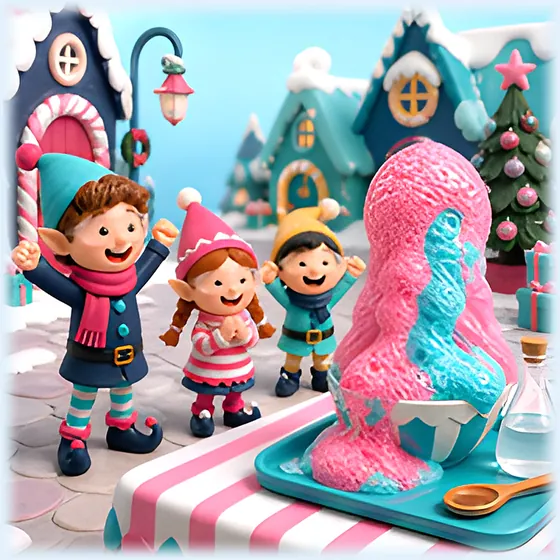
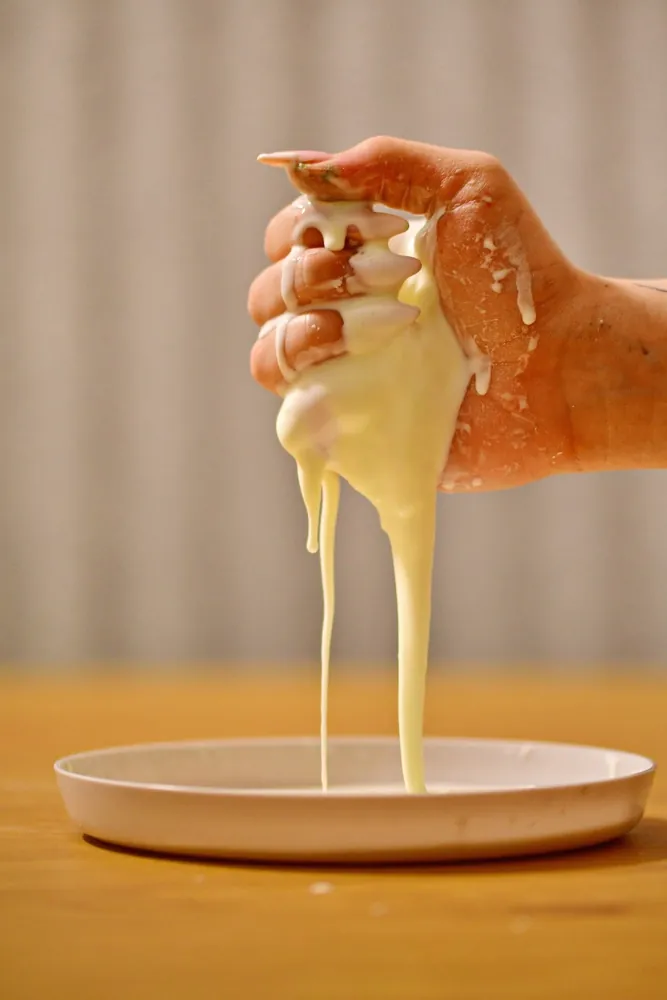
Real photo from Janka’s lab: the Magic Snow experiment
NO STOCK PHOTOJanka’s real result
December 2: Theo and Tilda’s Magic Snow adventure

In short

  • You need: about 1 cup of cornstarch, about ½ cup of water, a bowl, a spoon and a tray.
  • You see: the mix flows like a liquid, then pushes back like a solid when you hit it.
  • Why: when you push fast, the water can’t flow back between the cornstarch grains in time, so they jam and act like a solid.
  • Name: Magic Snow, a cornstarch and water mix, often called oobleck. Day 2 of a 24-day December plan.
Step by step

How do you make Magic Snow?

Discover a goo that flows like a liquid but pushes back like a solid. Here is everything from the book page, ready for your kitchen table.

What you need

  • About 1 cup cornstarch (cornflour in the UK)
  • About ½ cup water
  • Bowl
  • Spoon
  • Tray or mat to catch the mess

Stay close the whole time. In the book, every step that only a grown-up may do is clearly marked.

  1. 1

    Put the bowl on the tray and the cornstarch in the bowl. Stir in the water a little at a time. Use about twice as much cornstarch as water.

  2. 2

    The mix is right when it flows slowly as you tilt the bowl, but feels hard when you tap it with the spoon. Too runny? Sprinkle in more cornstarch.

  3. 3

    Grab a handful and quickly squeeze it into a ball. Then stop, open your hand, and watch it ooze between your fingers!

  4. 4

    Try this too: slowly push your finger in, then poke it fast! What do you notice?

  5. 5

    When you’re done, put the leftovers in the trash, not down the drain. They can clog the pipes!

What’s happening?

Why does it work?

Janka Sára Molnár, physicist

Janka explainsThe same words you’ll find in the book, ready to read aloud.

Cornstarch doesn’t dissolve in water. Its tiny grains just float in it. When you move slowly, the water between the grains keeps them slippery, so they slide past each other and the mix flows. But with a sudden hit or a fast squeeze, the grains get pressed together. The water can’t flow back between them fast enough, so the grains jam, and the mix pushes back like a solid. What matters isn’t how hard you push, but how fast you move.

Science words for little scientists

  • liquidsomething runny that flows, like water or juice
  • solidsomething that keeps its own shape, like a block
  • suspensiontiny grains floating in a liquid without dissolving
The Magic Snow experiment in Janka’s lab
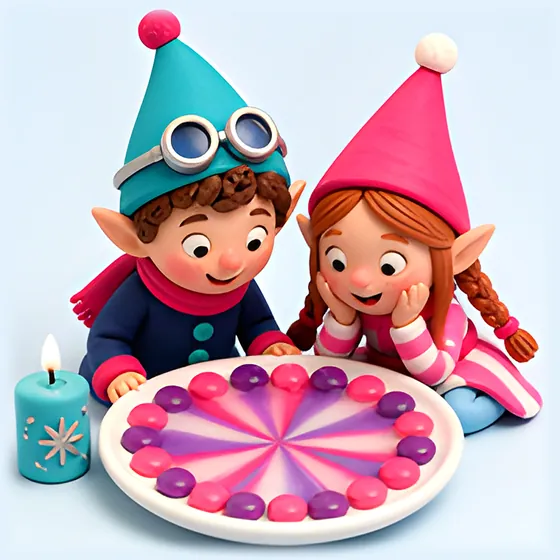
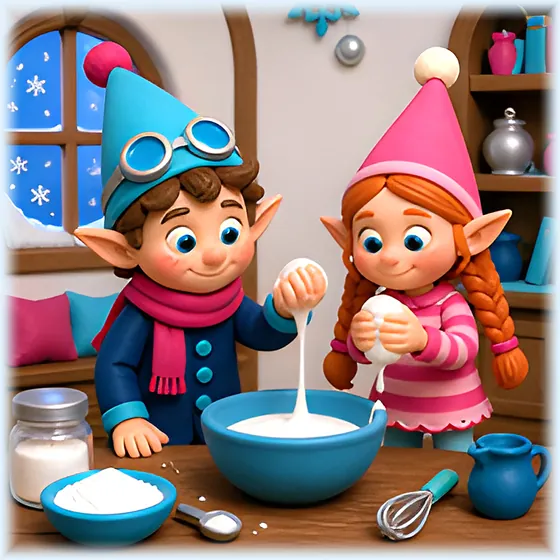
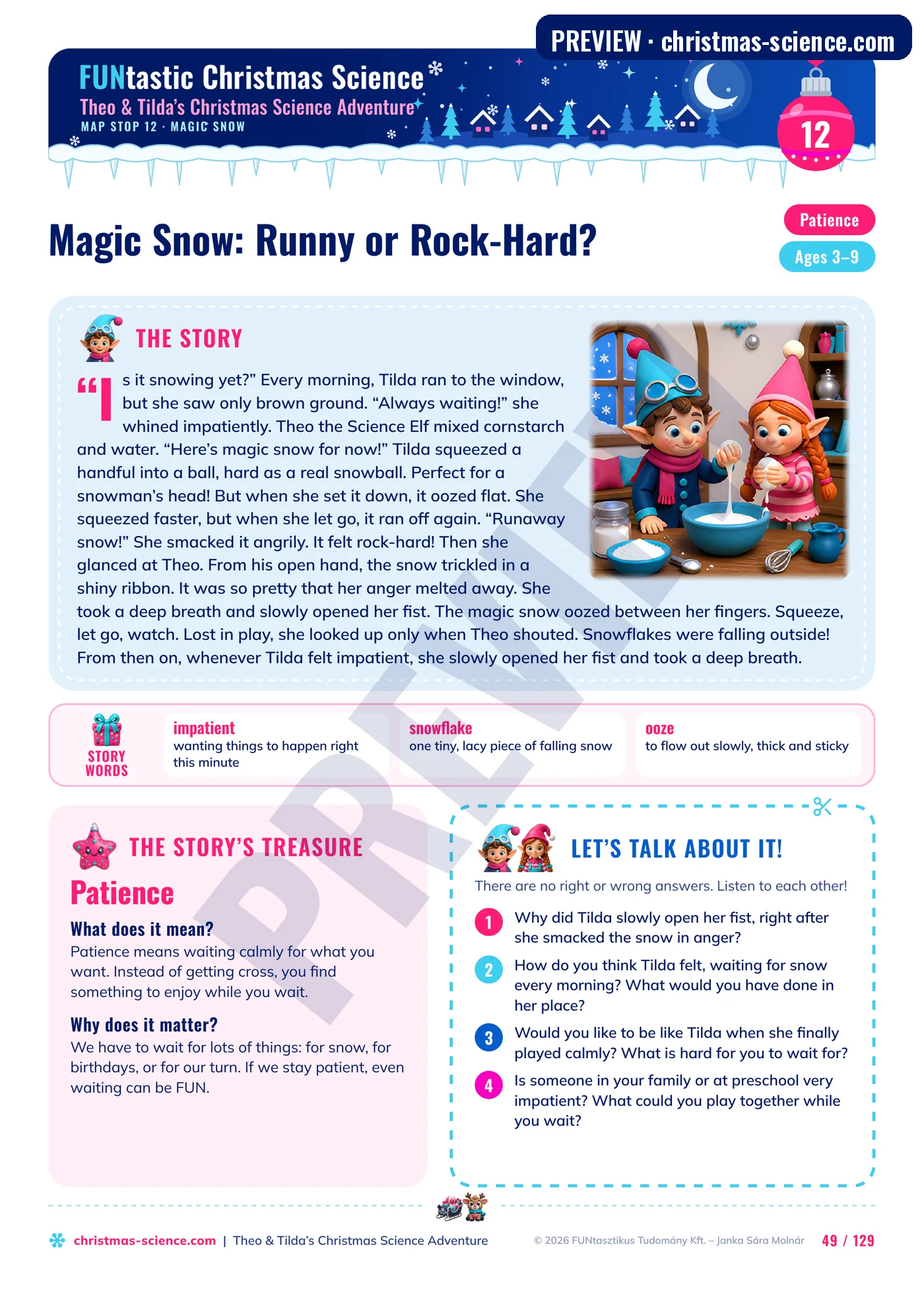
Theo and Tilda in the story “Magic Snow: Runny or Rock-Hard?”
The story for December 2

Magic Snow: Runny or Rock-Hard?

“Is it snowing yet?” Every morning, Tilda ran to the window, but she saw only brown ground. “Always waiting!” she whined impatiently. Theo the Science Elf mixed cornstarch and water. “Here’s magic snow for now!” Tilda squeezed a handful into a ball, hard as a real snowball. Perfect for a snowman’s head! But when she set it down, it oozed flat. She squeezed faster, but when she let go, it ran off again. “Runaway snow!” She smacked it angrily.

How does it end? The whole story, the activity page and four more days are in the free sampler.

Read the whole story free
The value of the dayPatience

What does it mean?

Patience means waiting calmly for what you want. Instead of getting cross, you find something to enjoy while you wait.

Why is it important?

We have to wait for lots of things: for snow, for birthdays, or for our turn. If we stay patient, even waiting can be FUN.

Mini mission for the week

This week, when you have to wait for something, find a quiet game to play, and notice whether time seems to go faster!
After the experiment

Let’s talk about it

Ready-made questions link the story’s value to your child’s own life. There are no wrong answers, only curious ones.

  • Why did Tilda slowly open her fist, right after she smacked the snow in anger?

  • How do you think Tilda felt, waiting for snow every morning? What would you have done in her place?

  • Would you like to be like Tilda when she finally played calmly? What is hard for you to wait for?

  • Is someone in your family or at preschool very impatient? What could you play together while you wait?

Tilda’s tip: Touch the magic snow slowly and it’s soft. Hit it fast and it’s hard. Try both!

Look inside

This is how Day 2 looks in the book

Real pages from the free sampler. Tap a page to see it big, then read it on a tablet or print it at home.

The story page for December 2: Magic Snow: Runny or Rock-Hard?
Story page
The experiment page for December 2: Magic Snow
Experiment page
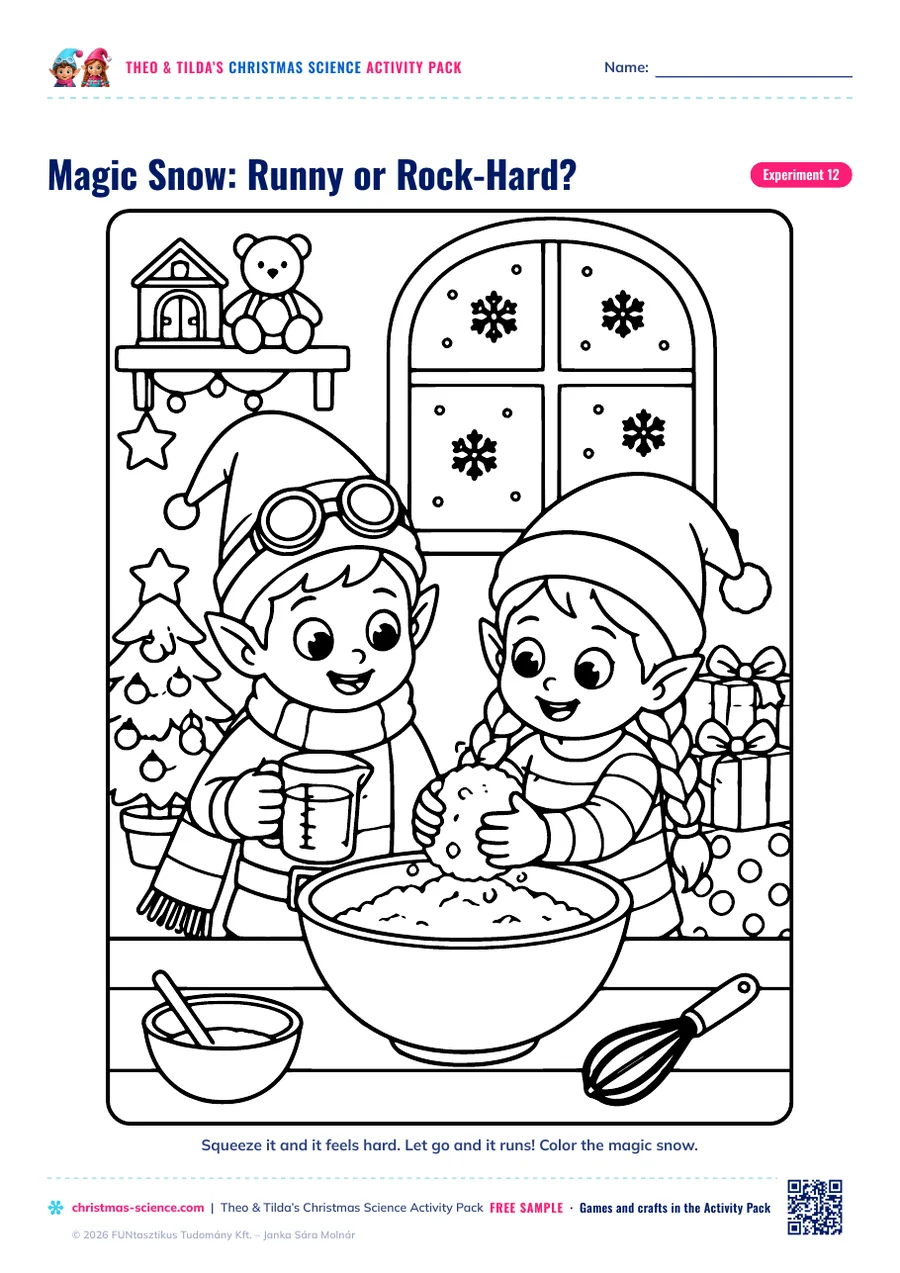
The coloring page for December 2 from the free sampler
Coloring page

Day 2 is one of 5 free days. The full book has 51.

✦✦✦
Free sampler

Can we try it first?

Of course! The first 5 days of the December plan are yours for free. Try them at home or with your group, and see if your little scientist asks for Day 6.

  • 5 cozy stories
  • 5 kitchen experiments
  • 5 activity pages
  • A note from Janka
  • A cover with your name and the 5 experiments

No printer needed. Open it on a tablet or phone and start today.

Launch prices

How much does it cost? Less than a hot cocoa.

Launch prices until December 24. Your files are ready the moment you check out.

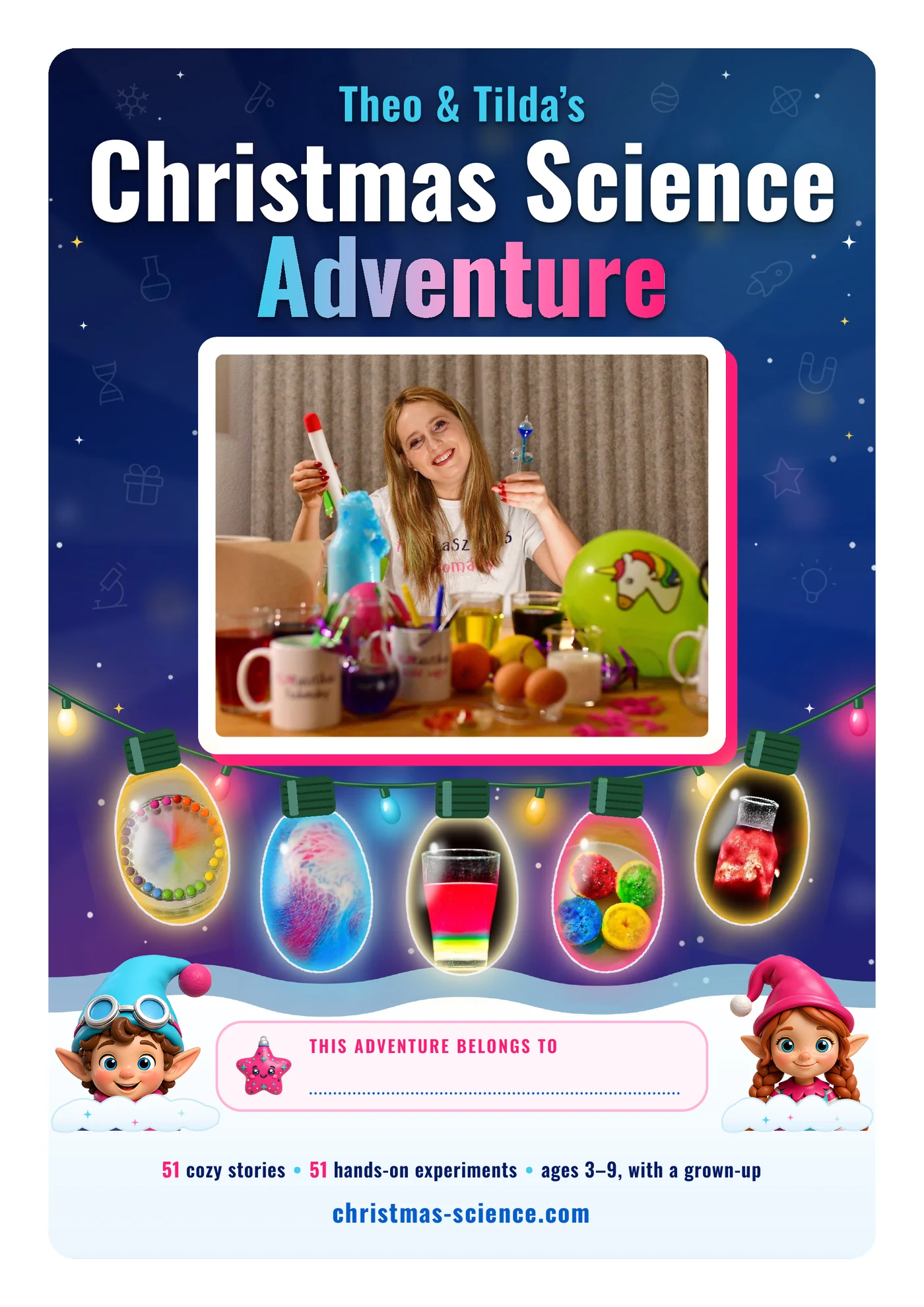
The cover of Theo and Tilda’s Christmas Science Adventure

The Book

129 printable pages

$11.99Regular price $14.99

less than 50¢ a day in December

Get the book
  • 51 stories and 51 experiments
  • 24-day December plan
  • Story words and science words
  • Stampable two-page adventure map
  • Contents, learning index, and certificate
Best value
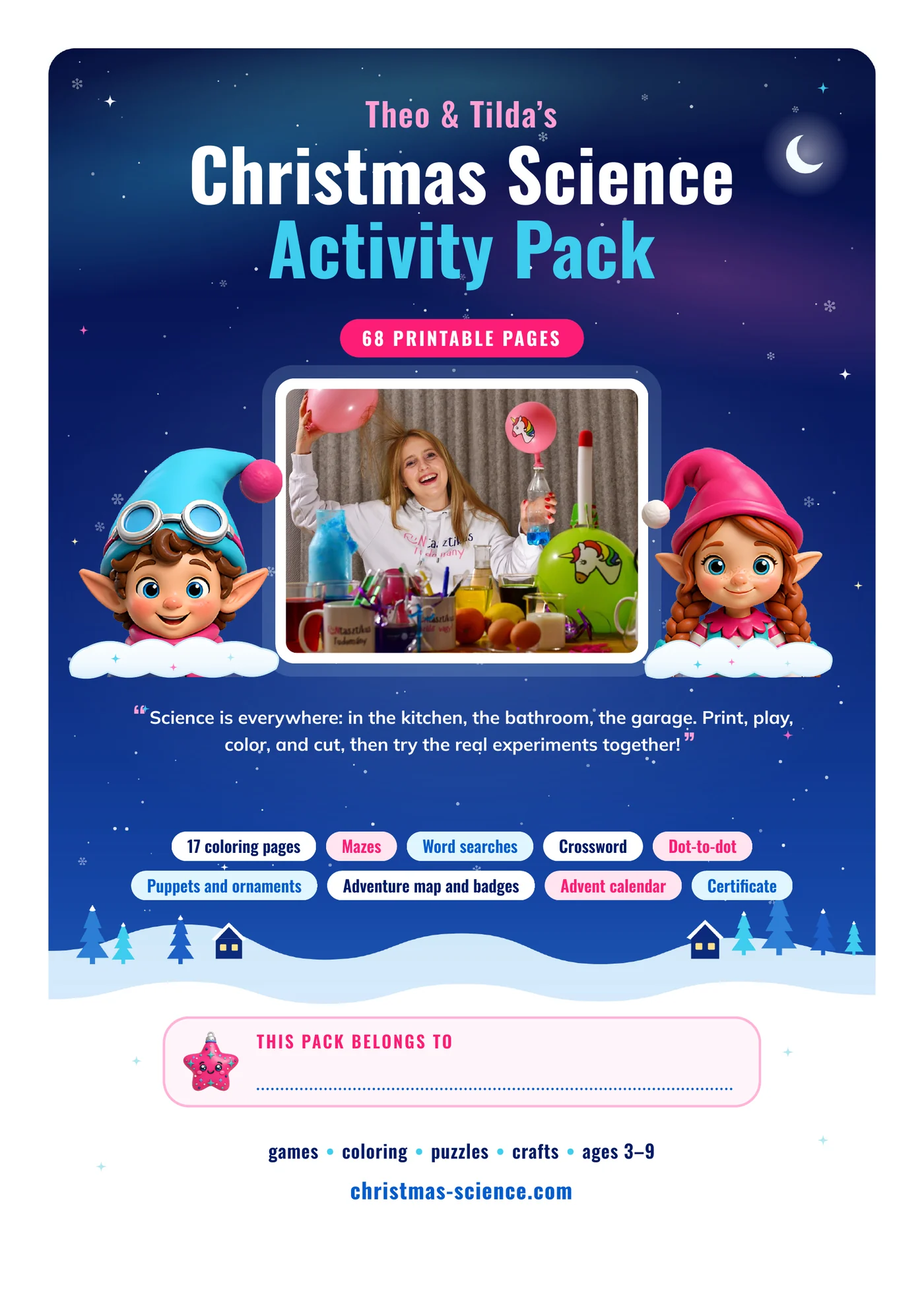
The cover of the Theo and Tilda Christmas Activity Pack

Book + Activity Pack

Everything in the book, plus 60+ pages of FUN

$13.99Regular price $17.99

less than 60¢ a day in December

Get the bundle
  • The complete book
  • Coloring pages, mazes, and word games
  • Puppets, ornaments, and bookmarks
  • Kindness advent calendar
  • Word cards and value talk cards

No printer? No problem. Read it on any tablet, phone or computer, and print only the pages you love.

One price for everyone. A parent can print it for Advent at home, and a preschool teacher can bring it to her group. One purchase covers one family, or one teacher with their own group or class.

Prices in US dollars. Any sales tax or VAT is calculated at checkout.

Questions and answers

Magic Snow: what parents ask

Short answers from Janka, the physicist who tested the experiment in her own lab.

Still wondering?

Write to Janka. She reads every email herself.

molnar.janka.sara@funtasztikus-tudomany.hu
Is magic snow the same as oobleck?

Yes. A runny-hard mix of cornstarch and water is often called oobleck. Scientists call this kind of mix a non-Newtonian fluid, because it gets thicker the faster you push it.

How much cornstarch and water do I need?

About 1 cup of cornstarch and about ½ cup of water, so roughly twice as much cornstarch as water. Add the water little by little. If it’s too runny, sprinkle in more cornstarch.

How do I clean up?

Put the leftovers in the trash, never down the drain, because they can clog the pipes. Spills dry back into powder that you can wipe or sweep away.

Is it safe for toddlers?

Yes, with a grown-up close by. It’s only cornstarch and water, but it isn’t a snack, so keep it out of little mouths and work on a tray.

Which story goes with Magic Snow?

“Magic Snow: Runny or Rock-Hard?”, the story for December 2. Its value is patience, and the experiment shows it beautifully: go slowly and the snow lets you in.