
Skip to Content
✦✦✦✦
December 4 · free experiment

Theo & Tilda’s Christmas Science

Candy Rainbow Experiment

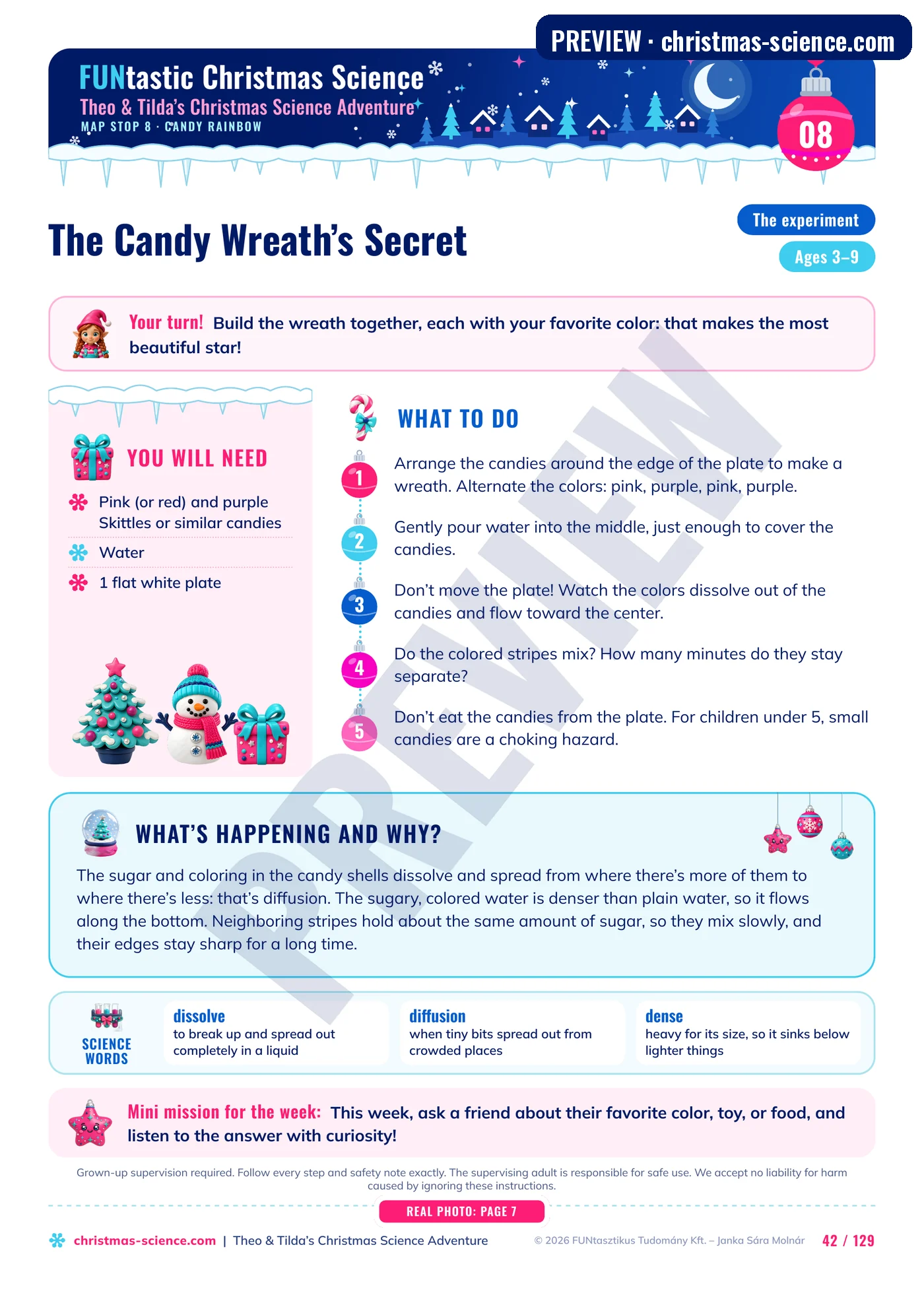
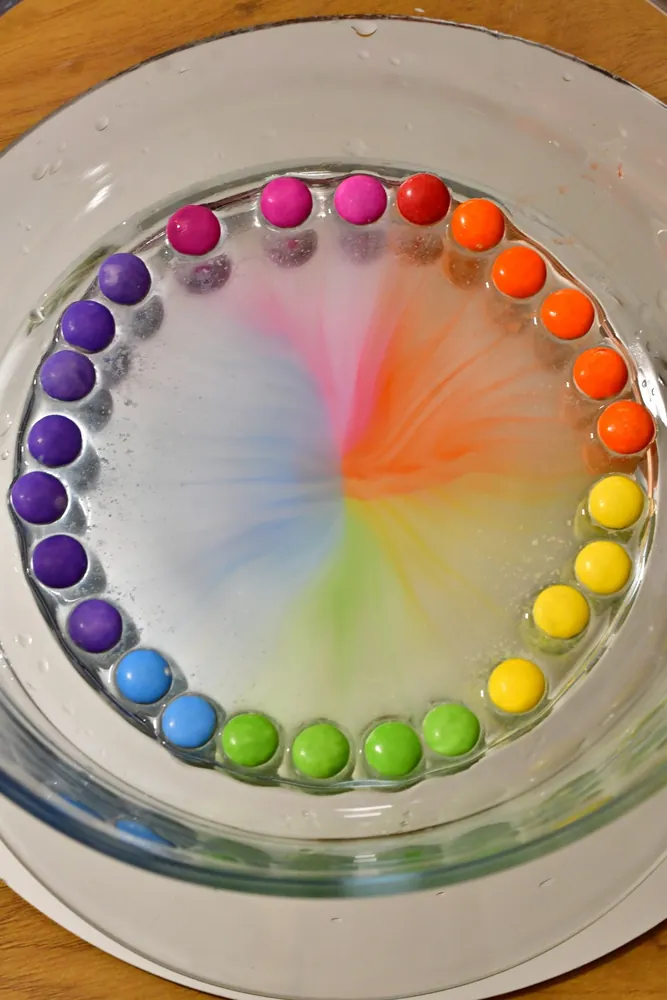
Lay candies in a ring on a white plate, pour water into the middle, and stripes of color flow toward the center without mixing. The sugar and coloring dissolve and spread out, and neighboring stripes stay apart for a surprisingly long time.

  • Age3 and up
  • ValueAcceptance
  • ScienceMixing and dissolving
  • FlameNone
  • Ages 3–9
  • Kitchen materials
  • No flame, no heat
  • Tested by a physicist
Real photo from Janka’s lab: the Candy Rainbow experiment
NO STOCK PHOTOJanka’s real result
December 4: Theo and Tilda’s Candy Rainbow adventure

In short

  • You need: pink and purple Skittles or similar candies, water and a flat white plate.
  • You see: colored stripes stream to the middle of the plate and stay separate.
  • Why: the sugar and coloring dissolve and spread out by diffusion, and stripes with the same amount of sugar mix only very slowly.
  • Name: Candy Rainbow, the Skittles wreath experiment. Day 4 of a 24-day December plan.
Step by step

How do you make Candy Rainbow?

Watch candy colors dissolve and spread into a star. Here is everything from the book page, ready for your kitchen table.

What you need

  • Pink (or red) and purple Skittles or similar candies
  • Water
  • 1 flat white plate

Stay close the whole time. In the book, every step that only a grown-up may do is clearly marked.

  1. 1

    Arrange the candies around the edge of the plate to make a wreath. Alternate the colors: pink, purple, pink, purple.

  2. 2

    Gently pour water into the middle, just enough to cover the candies.

  3. 3

    Don’t move the plate! Watch the colors dissolve out of the candies and flow toward the center.

  4. 4

    Do the colored stripes mix? How many minutes do they stay separate?

  5. 5

    Don’t eat the candies from the plate. For children under 5, small candies are a choking hazard.

What’s happening?

Why does it work?

Janka Sára Molnár, physicist

Janka explainsThe same words you’ll find in the book, ready to read aloud.

The sugar and coloring in the candy shells dissolve and spread from where there’s more of them to where there’s less: that’s diffusion. The sugary, colored water is denser than plain water, so it flows along the bottom. Neighboring stripes hold about the same amount of sugar, so they mix slowly, and their edges stay sharp for a long time.

Science words for little scientists

  • dissolveto break up and spread out completely in a liquid
  • diffusionwhen tiny bits spread out from crowded places
  • denseheavy for its size, so it sinks below lighter things
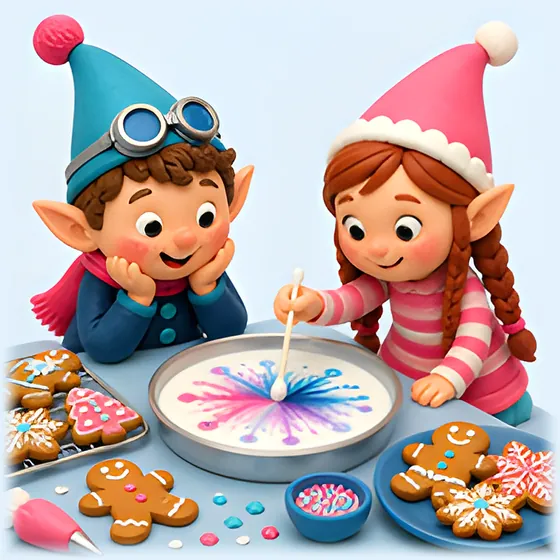
The Candy Rainbow experiment in Janka’s lab
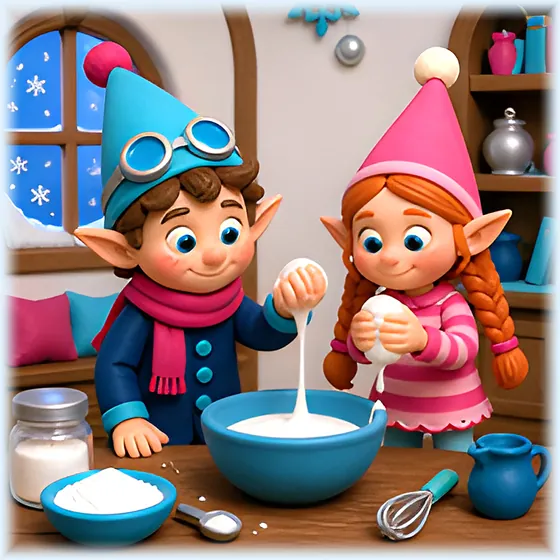
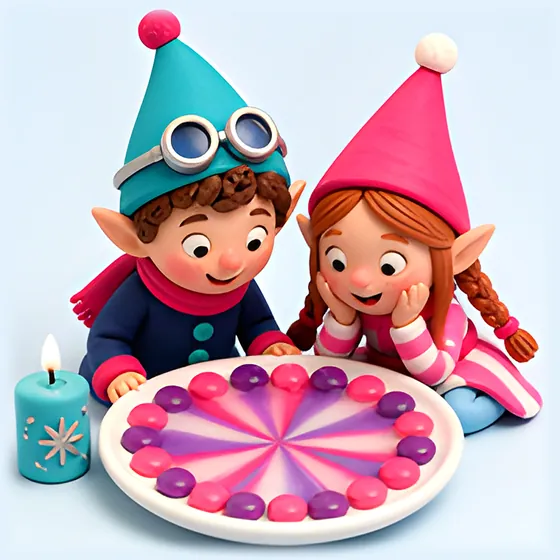
Theo and Tilda in the story “The Candy Wreath’s Secret”
The story for December 4

The Candy Wreath’s Secret

One cold evening before Christmas, Tilda made a candy wreath on a white plate by candlelight. “Only pink ones, because pink is the prettiest!” she said. Theo the Science Elf held out his purple candies. “You can use mine too. Purple is my favorite.” “Purple is ugly!” Tilda wrinkled her nose and pushed his hand away. Theo sadly pocketed his candies and sat by the window. But Tilda’s pink candies made only a gappy half circle. She sulked and glanced at Theo.

How does it end? The whole story, the activity page and four more days are in the free sampler.

Read the whole story free
The value of the dayAcceptance

What does it mean?

Acceptance means respecting others when they like different things, think differently, or are different from us.

Why is it important?

We’re all different: some love soccer, others love drawing. If we don’t tease each other for it, everyone feels good, and together we have more great ideas.

Mini mission for the week

This week, ask a friend about their favorite color, toy, or food, and listen to the answer with curiosity!
After the experiment

Let’s talk about it

Ready-made questions link the story’s value to your child’s own life. There are no wrong answers, only curious ones.

  • Why did Tilda go over to Theo when she saw the pink scarf around his neck?

  • How do you think Theo felt when Tilda said purple was ugly? What would you have done in his place?

  • Would you like to be like Tilda, who made room for purple? When have you accepted that a friend liked something else?

  • Who at preschool or school likes very different things from you? What could you learn from them?

Tilda’s tip: Build the wreath together, each with your favorite color: that makes the most beautiful star!

Look inside

This is how Day 4 looks in the book

Real pages from the free sampler. Tap a page to see it big, then read it on a tablet or print it at home.

The story page for December 4: The Candy Wreath’s Secret
Story page
The experiment page for December 4: Candy Rainbow
Experiment page

Day 4 is one of 5 free days. The full book has 51.

✦✦✦
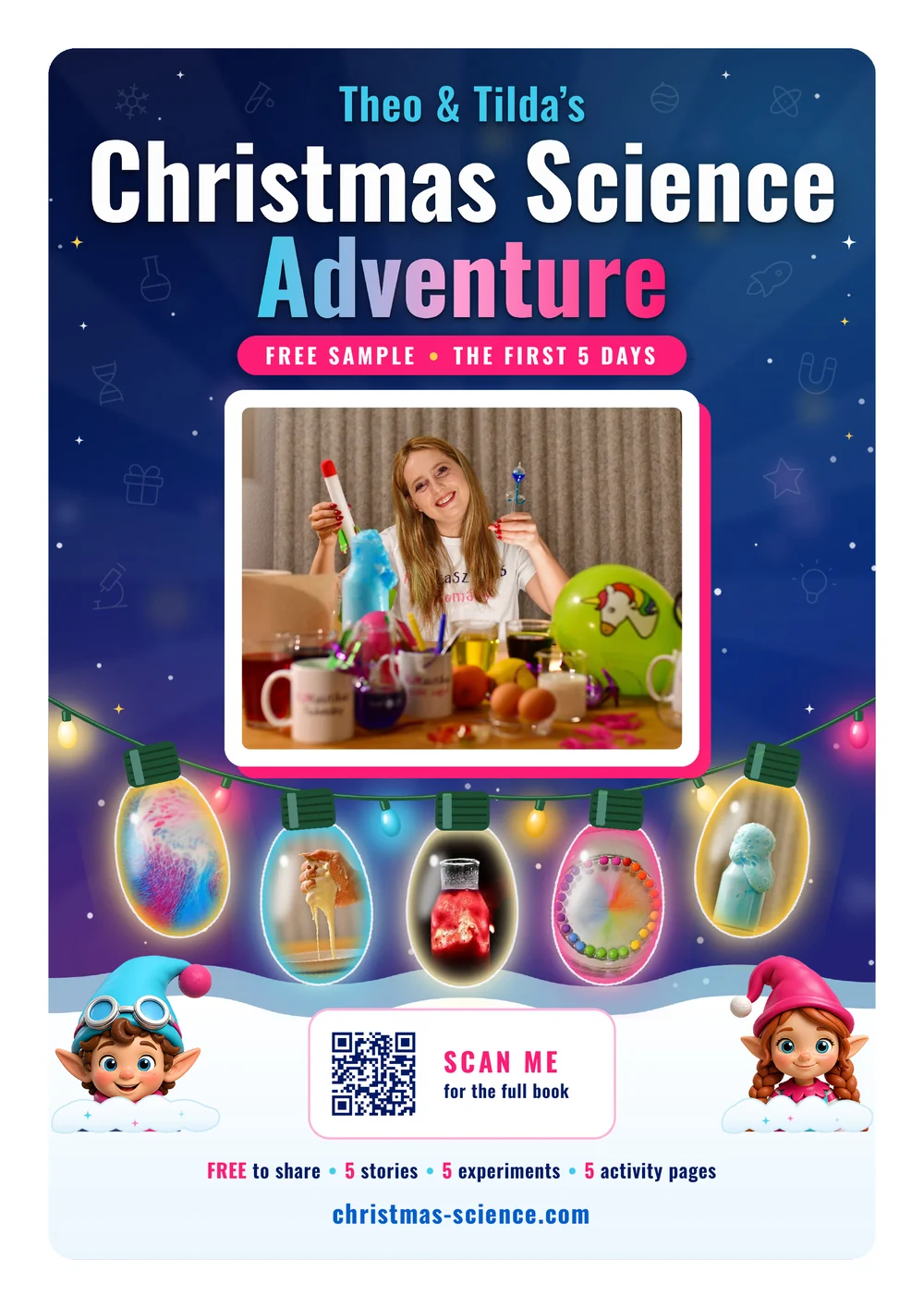
Free sampler

Can we try it first?

Of course! The first 5 days of the December plan are yours for free. Try them at home or with your group, and see if your little scientist asks for Day 6.

  • 5 cozy stories
  • 5 kitchen experiments
  • 5 activity pages
  • A note from Janka
  • A cover with your name and the 5 experiments

No printer needed. Open it on a tablet or phone and start today.

Launch prices

How much does it cost? Less than a hot cocoa.

Launch prices until December 24. Your files are ready the moment you check out.

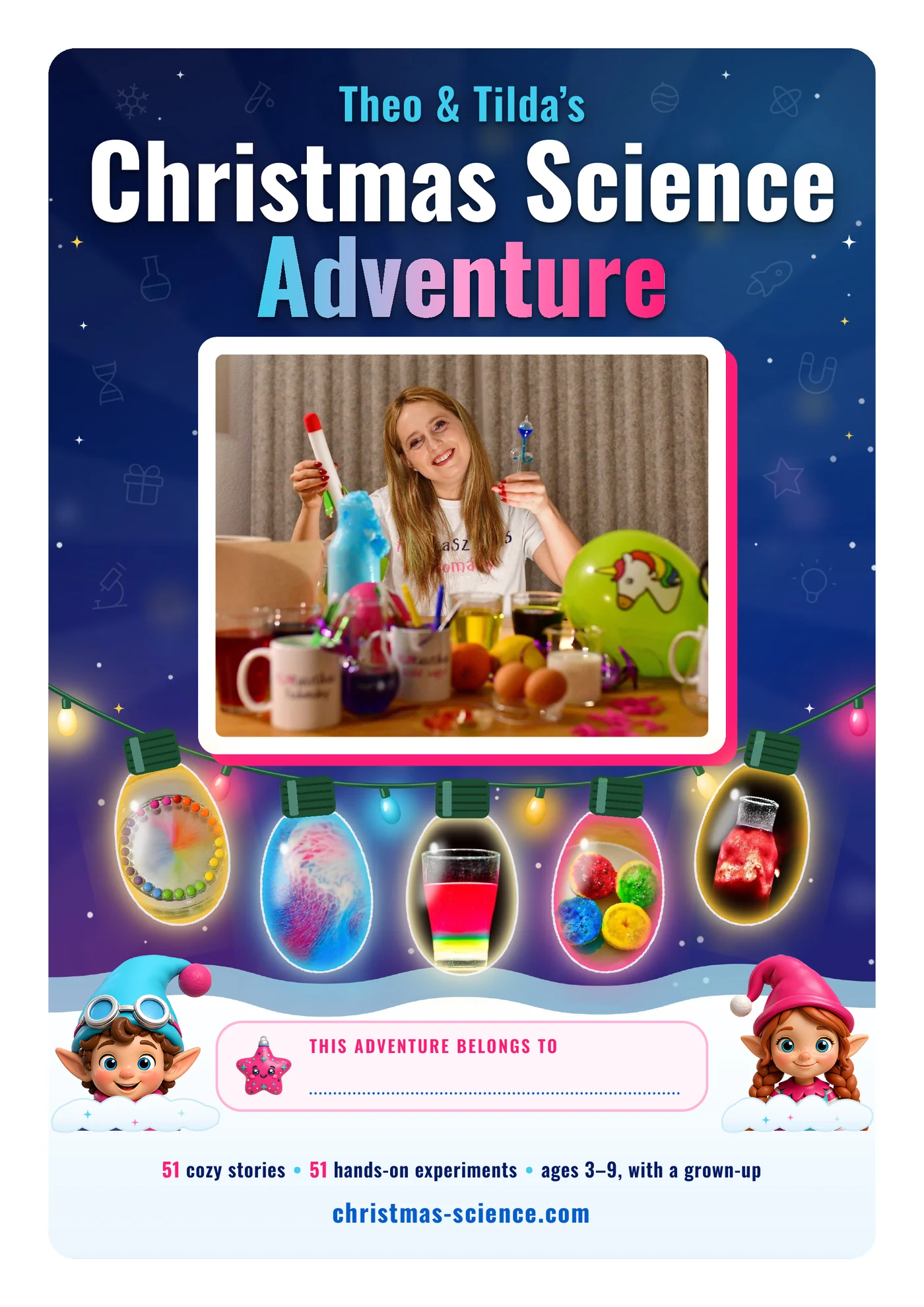
The cover of Theo and Tilda’s Christmas Science Adventure

The Book

129 printable pages

$11.99Regular price $14.99

less than 50¢ a day in December

Get the book
  • 51 stories and 51 experiments
  • 24-day December plan
  • Story words and science words
  • Stampable two-page adventure map
  • Contents, learning index, and certificate
Best value
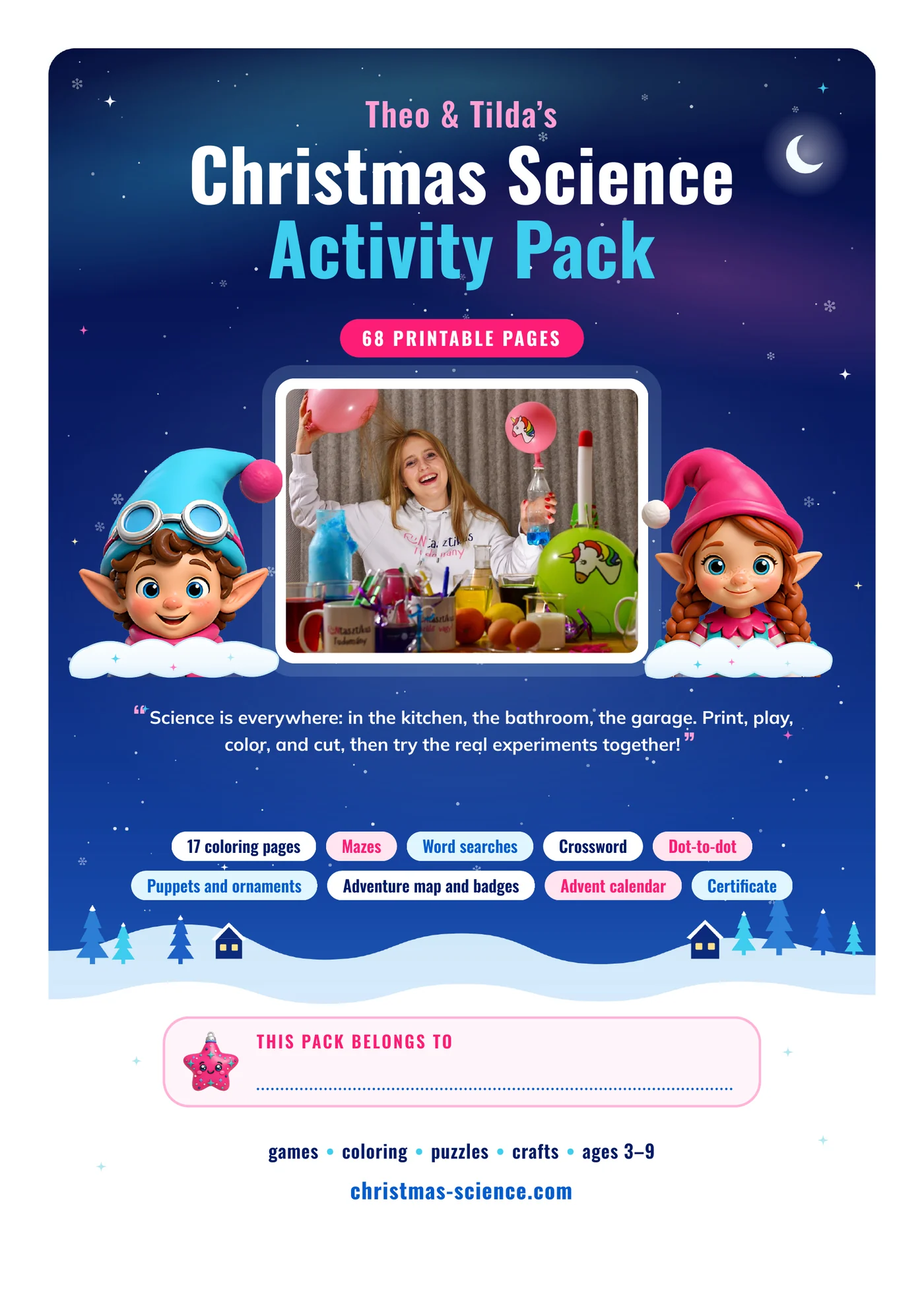
The cover of the Theo and Tilda Christmas Activity Pack

Book + Activity Pack

Everything in the book, plus 60+ pages of FUN

$13.99Regular price $17.99

less than 60¢ a day in December

Get the bundle
  • The complete book
  • Coloring pages, mazes, and word games
  • Puppets, ornaments, and bookmarks
  • Kindness advent calendar
  • Word cards and value talk cards

No printer? No problem. Read it on any tablet, phone or computer, and print only the pages you love.

One price for everyone. A parent can print it for Advent at home, and a preschool teacher can bring it to her group. One purchase covers one family, or one teacher with their own group or class.

Prices in US dollars. Any sales tax or VAT is calculated at checkout.

Questions and answers

Candy Rainbow: what parents ask

Short answers from Janka, the physicist who tested the experiment in her own lab.

Still wondering?

Write to Janka. She reads every email herself.

molnar.janka.sara@funtasztikus-tudomany.hu
Why don’t the colors mix?

Each stripe holds about the same amount of dissolved sugar as its neighbors, so the stripes push against each other evenly and mix very slowly. That’s why their edges stay sharp for a long time.

Which candies work?

Skittles or any similar candies with a colored sugar shell. The book uses pink (or red) and purple ones for a Christmas wreath.

Does the water temperature matter?

Yes. In warmer water the sugar and colors dissolve faster, so the stripes reach the middle sooner. Try a cold plate and a warm plate side by side, using warm tap water, never hot.

Can my child eat the candies afterward?

No, please don’t eat the candies from the plate. For children under 5, small candies are also a choking hazard, so a grown-up keeps the bag.

Which story goes with the candy rainbow?

“The Candy Wreath’s Secret”, the story for December 4. Its value is acceptance: every color keeps its own stripe, and together they make the wreath beautiful.