Why Do Boats Float? Ships, Submarines, and Balloons Explained for Kids (8 True Stories)
Boats float because they push water out of the way, and the water pushes back up. A boat sinks into the water only until the water it pushes aside weighs as much as the boat. Then the upward push holds it up, and it floats. Here are eight true stories for kids about how vehicles float, dive, and fly, from my Vehicles Advent Calendar. Each one takes about a minute to read aloud.
- 8 vehicles
- Ages 3–8
- About a minute each
- Free to read aloud
Save this for a rainy afternoon, or send it to a friend whose child tests every toy in the bathtub to see if it floats.
The Steel Ship
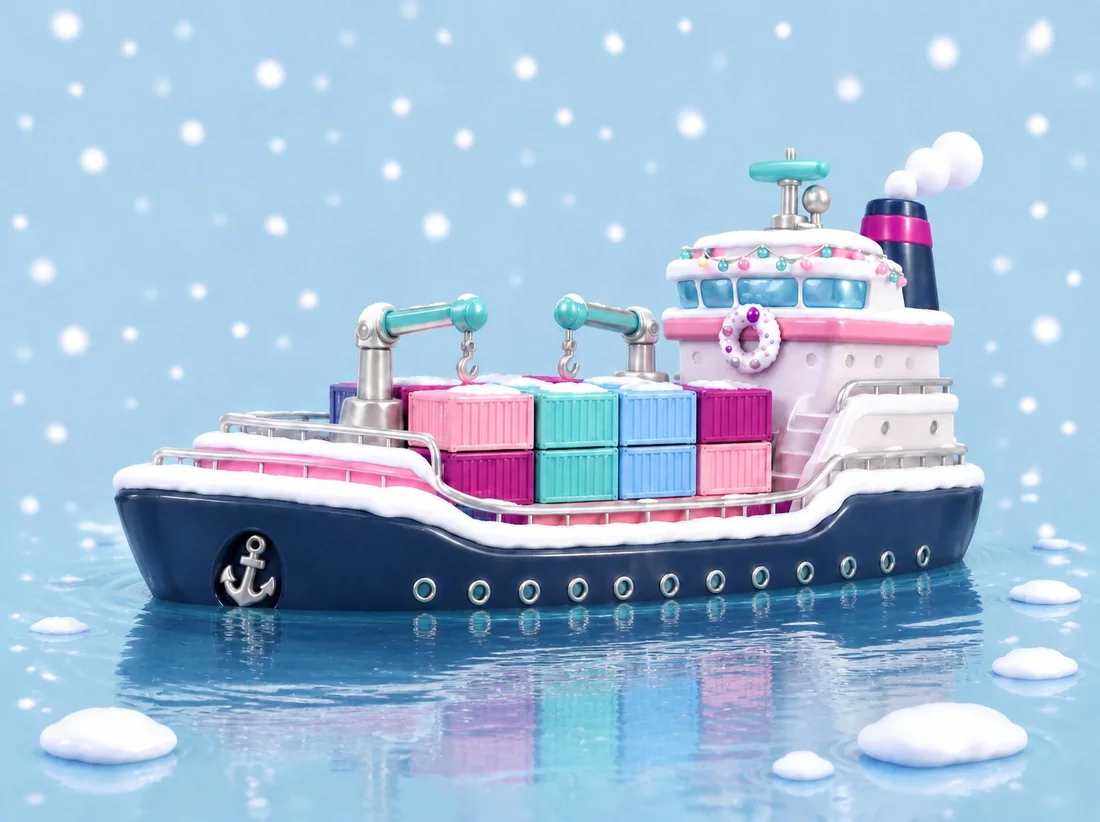
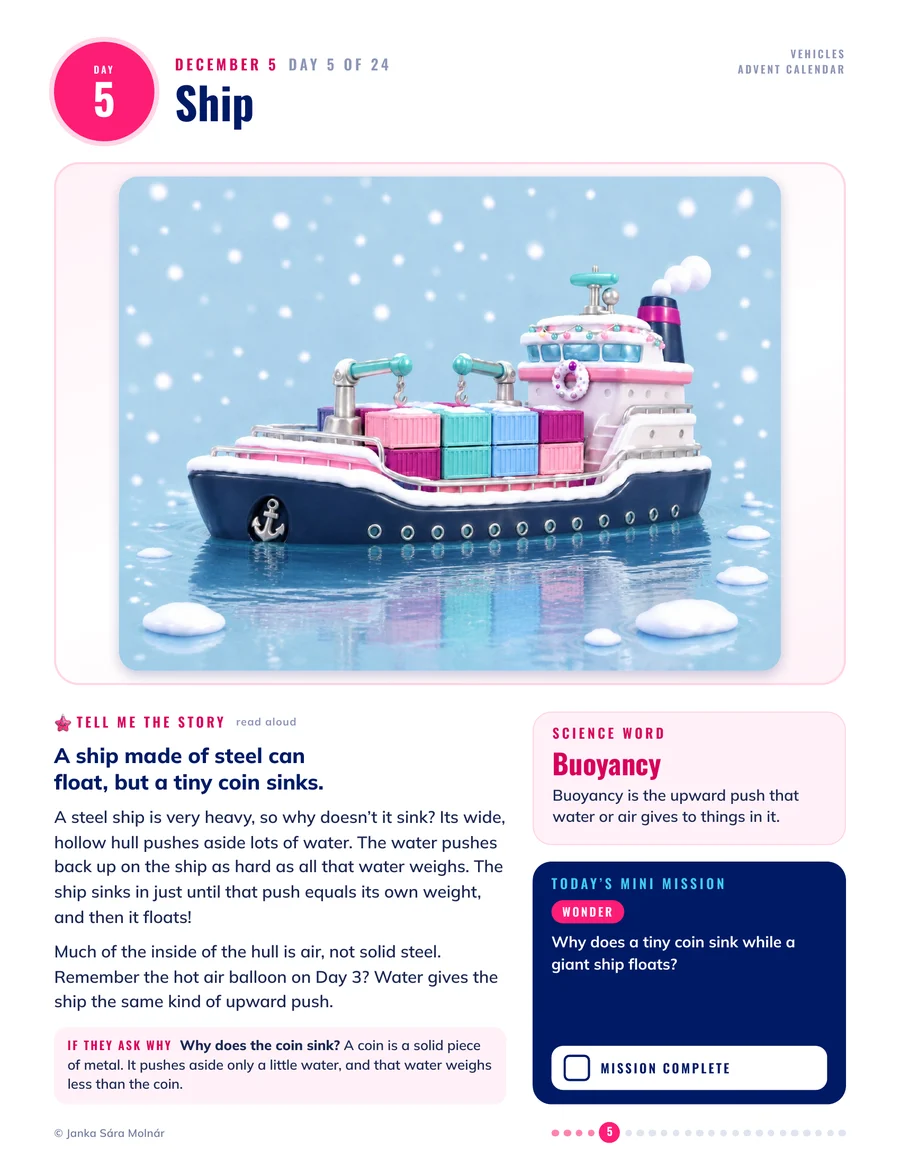
A ship made of steel can float, but a tiny coin sinks!
A steel ship is very heavy, so why doesn’t it sink? Its wide, hollow hull pushes aside lots of water. The water pushes back up on the ship as hard as all that water weighs. The ship sinks in just until that push equals its own weight, and then it floats!
Much of the inside of the hull is air, not solid steel.
Stop here and ask your child: Will a coin float or sink? And a giant steel ship? Let’s find out, and meet seven more vehicles that float, dive, and fly. Our trip ends at the bottom of this page.
Why does a steel ship float when a coin sinks?
A steel ship floats because of its shape. Its steel is spread out into a wide, hollow hull with lots of air inside. That hull pushes aside so much water that the water weighs as much as the whole ship. Squash all of the ship’s steel into one solid lump, and it would sink, just like the coin.
TODAY’S MINI MISSION · WONDER
Why does a tiny coin sink while a giant ship floats?
IF THEY ASK WHY
Why does the coin sink? A coin is a solid piece of metal. It pushes aside only a little water, and that water weighs less than the coin.
How does a hot air balloon float?
A hot air balloon floats because warm air is less dense than cool air. It has no wings and no engine, yet it flies! The burner heats the air inside the balloon. When it is hot enough, the whole balloon, with its warm air, basket and all, weighs less than the cool air it pushes aside, and up it goes!
Warm air is only a little lighter than cool air. That is why the balloon is so big: it needs lots of warm air to lift the basket. So a balloon floats in air for the same reason a ship floats in water.

TODAY’S MINI MISSION · QUIZ
What do you think happens when the air inside the balloon cools down? A) The balloon slowly sinks B) The balloon pops C) The balloon flies higher
Answer: A. As the air inside cools, it gets heavier. Once the whole balloon weighs more than the cool air it pushes aside, it slowly comes down.
IF THEY ASK WHY
Why is warm air lighter? When air warms up, it spreads out. The same air takes up more space, so each scoopful of it weighs less.
How does a submarine work?
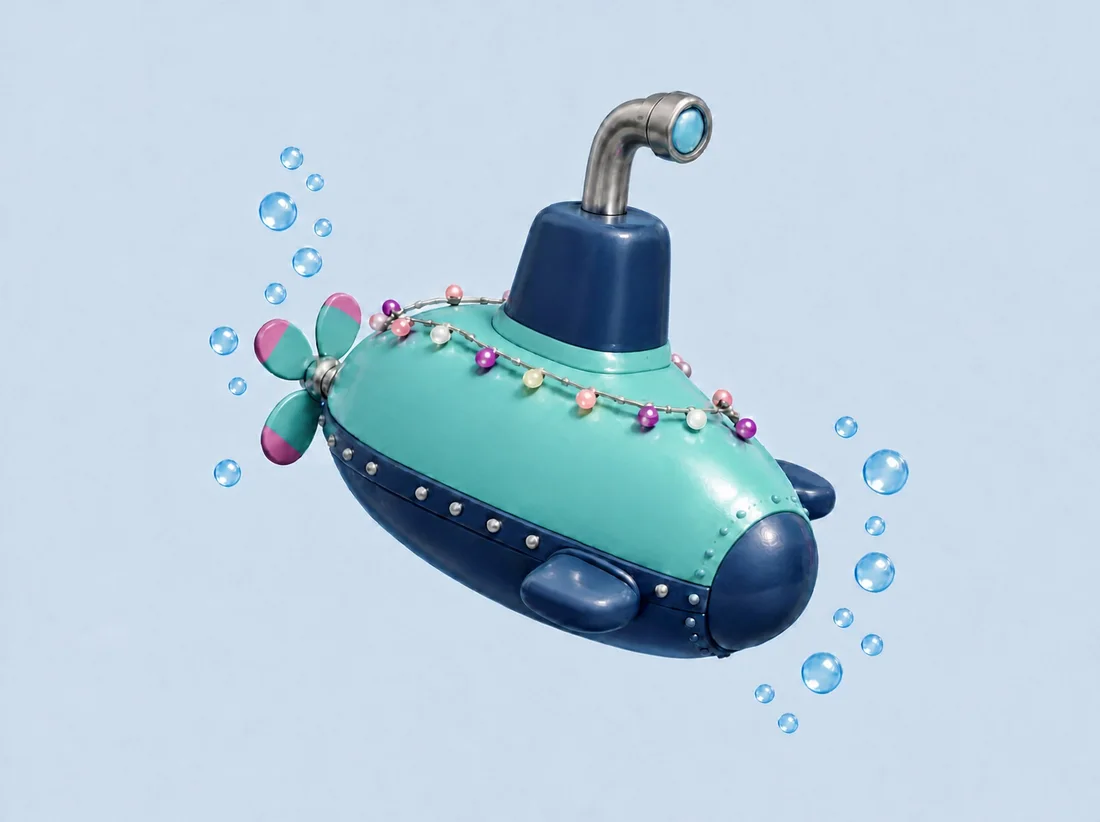
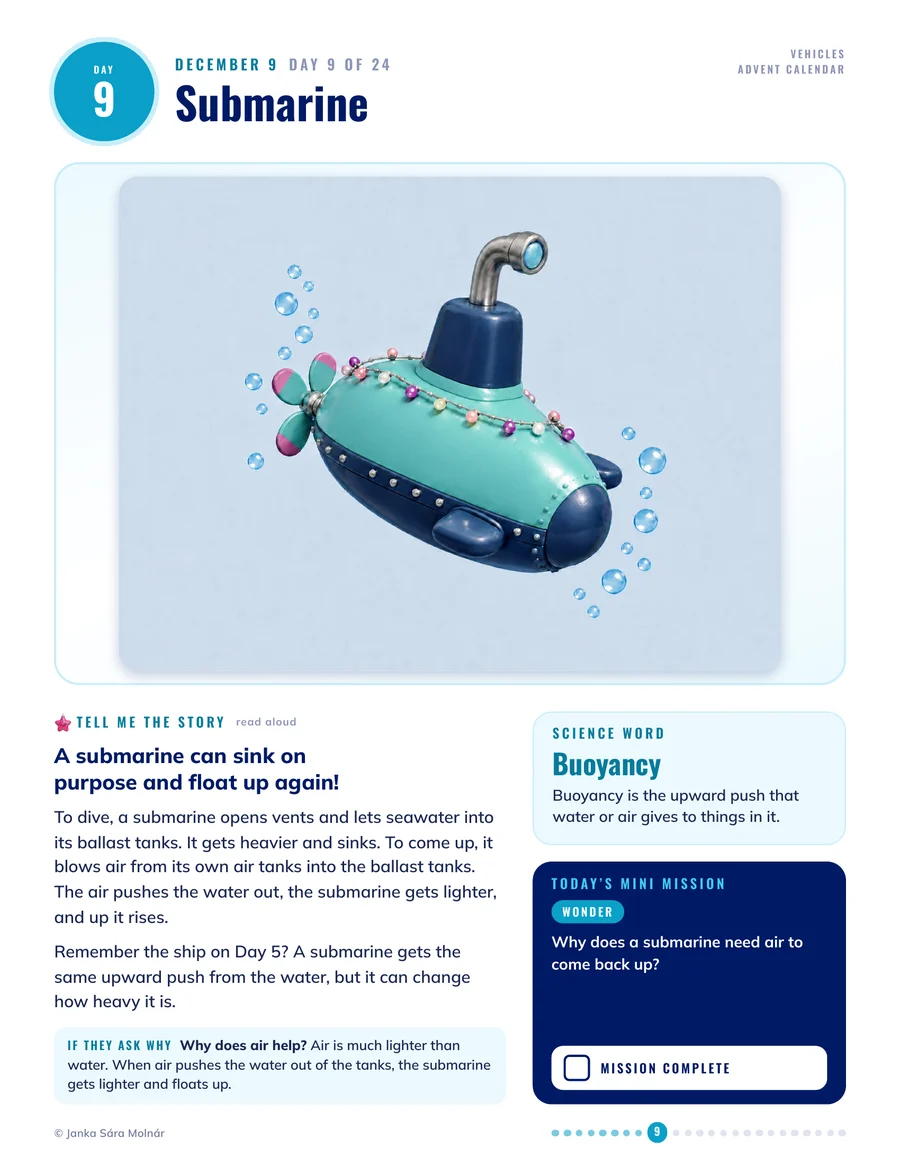
A submarine dives by filling its ballast tanks with seawater and comes back up by blowing that water out with air. It can sink on purpose and float up again! To dive, it opens vents and lets seawater into its ballast tanks. It gets heavier and sinks. To come up, it blows air from its own air tanks into the ballast tanks, and up it rises.
Remember the steel ship? A submarine gets the same upward push from the water, but it can change how heavy it is.
TODAY’S MINI MISSION · WONDER
Why does a submarine need air to come back up?
IF THEY ASK WHY
Why does air help? Air is much lighter than water. When air pushes the water out of the tanks, the submarine gets lighter and floats up.
How does a hovercraft work?
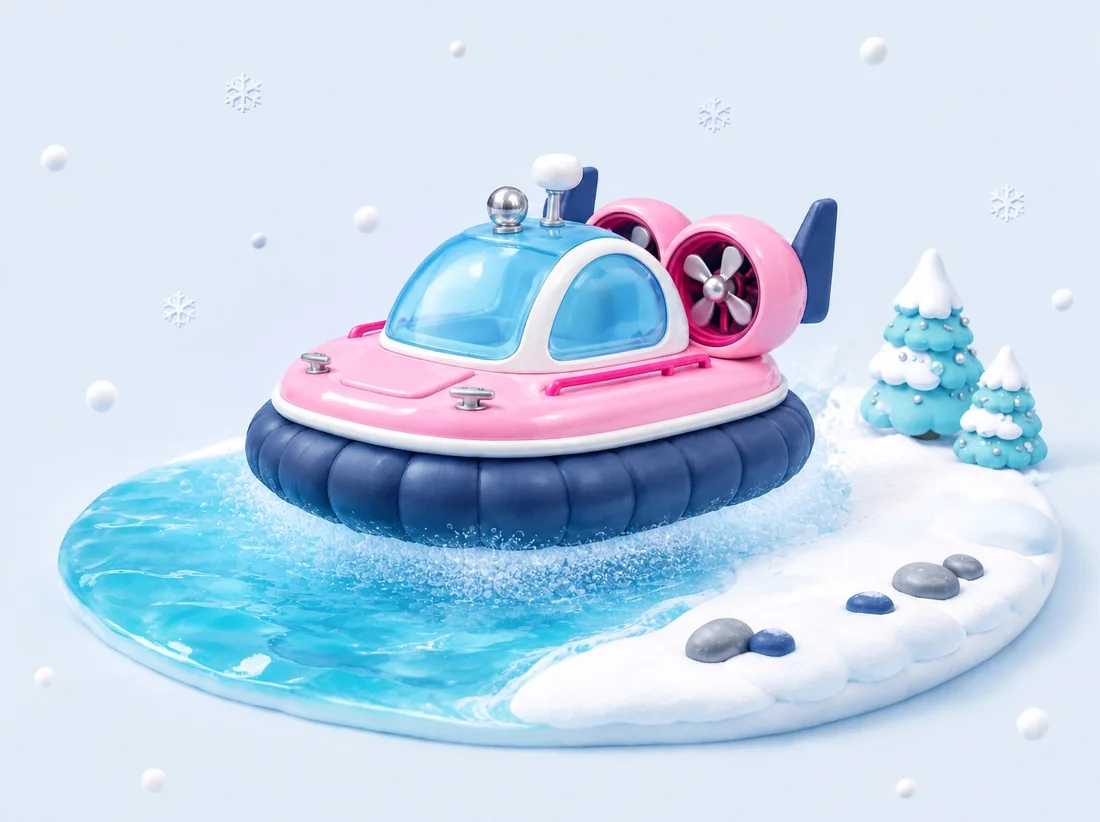
A hovercraft floats on a cushion of air. Fans blow air underneath it, and a soft rubber skirt around the edge helps hold the air in. It doesn’t float in the water like a boat, so it can drive off a beach and straight onto the sea!
On July 25, 1959, a hovercraft called SR.N1 crossed the English Channel, the sea between England and France, in just over two hours.
TODAY’S MINI MISSION · DRAW IT
Where would you ride a hovercraft: over a lake, a beach, or a muddy field? Draw your hovercraft there.
IF THEY ASK WHY
Can a hovercraft really go on all three? Yes. Its air cushion lets it glide over water and land alike.
How does a maglev train float?
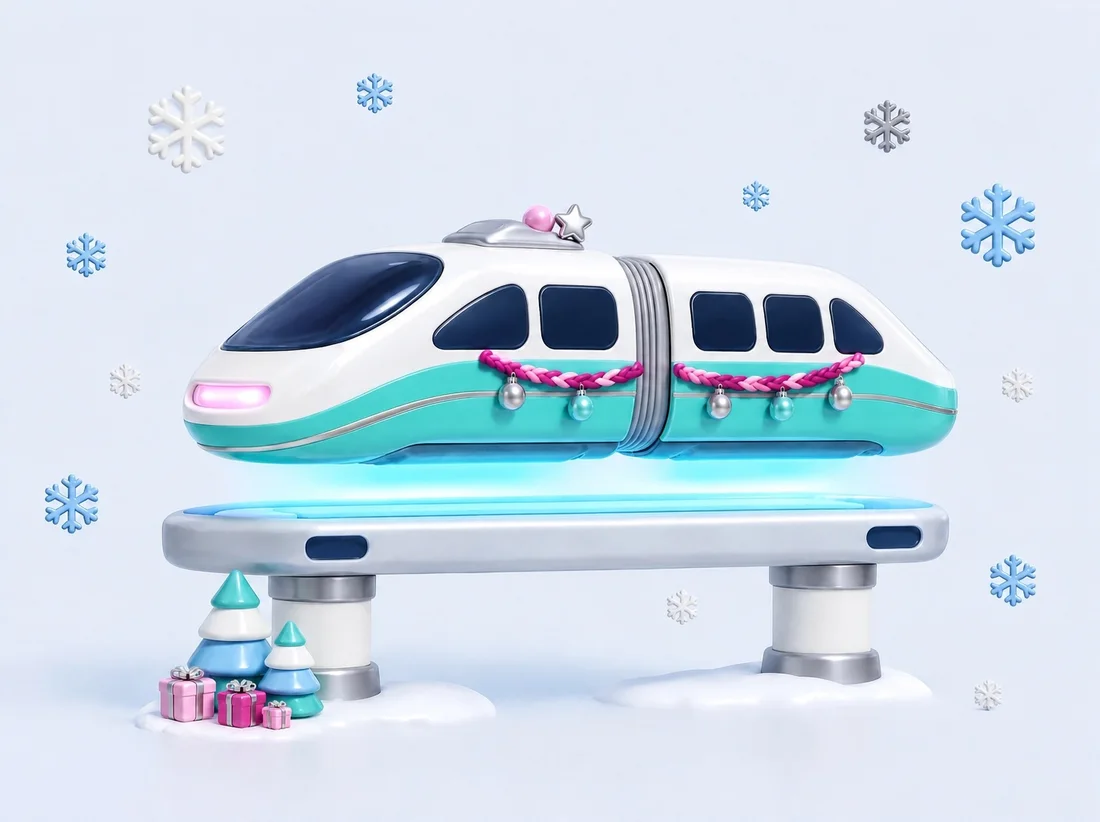
“Maglev” is short for magnetic levitation, which means floating with magnets. In some maglevs, magnets that push each other away lift the train a few inches above the guideway. Other magnets pull and push it forward. While it floats, nothing rubs on the track, so mostly the air slows it down.
Two magnets can push each other away without touching. In those maglevs, that push holds up a whole train.
TODAY’S MINI MISSION · QUIZ
Why can a floating train go faster than a train rolling on wheels? A) Its wheels are bigger B) It doesn’t touch the track C) It runs only at night
Answer: B. A maglev train doesn’t touch the track.
IF THEY ASK WHY
Don’t wheels go fast, too? They do, but wheels still press on the rails, and that holds a train back a little.
Know a train fan who has seen every train video twice? Send them the maglev story. Yes, a train really can float on magnets! Share it
How does an icebreaker break the ice?
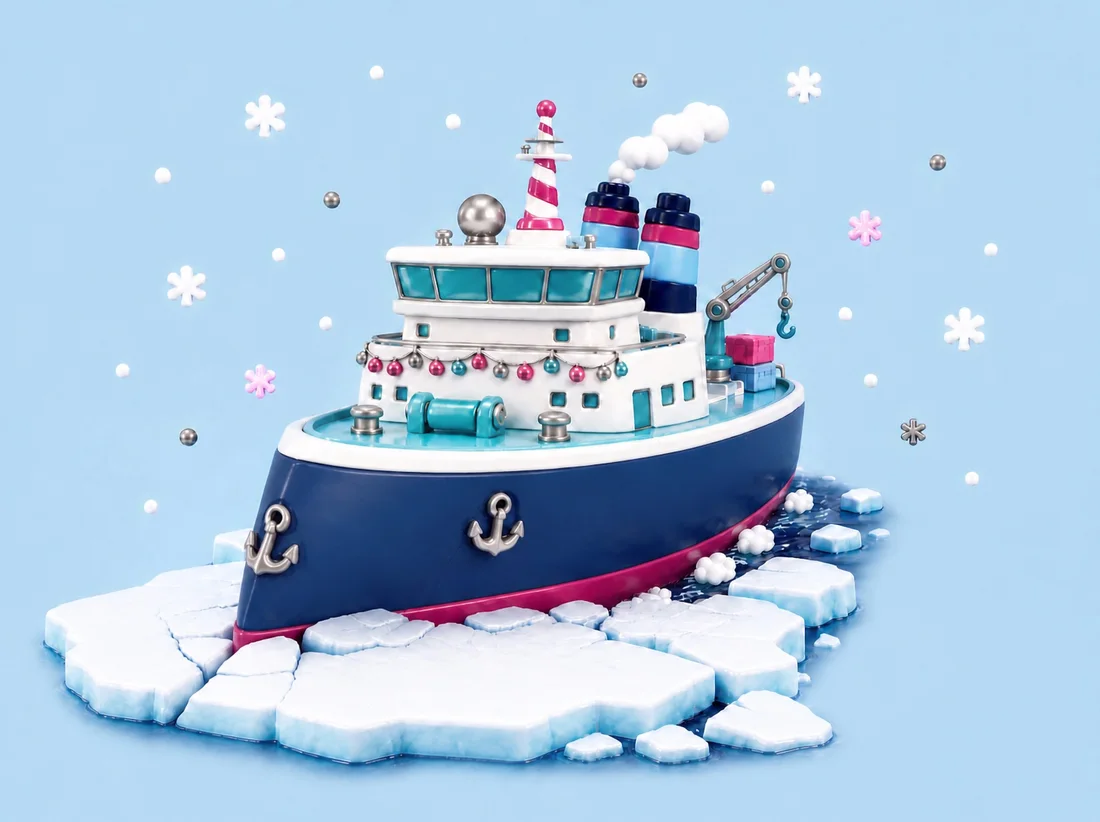
An icebreaker breaks the ice with its strong, sloping front. The front pushes down on the ice until it cracks, then forces the broken pieces under and aside. An icebreaker floats like any other ship, but it is built to open a path through a frozen sea!
One U.S. Coast Guard icebreaker, the Healy, can keep going through ice 4½ feet (1.4 meters) thick. It also opens a path for ships that can’t get through the ice on their own.
TODAY’S MINI MISSION · WONDER
Why do you think icebreakers need such strong engines?
IF THEY ASK WHY
Why such strong engines? Pushing thick, heavy ice down and out of the way takes a lot of force, so the ship needs powerful engines to keep going.
How does a helicopter fly?
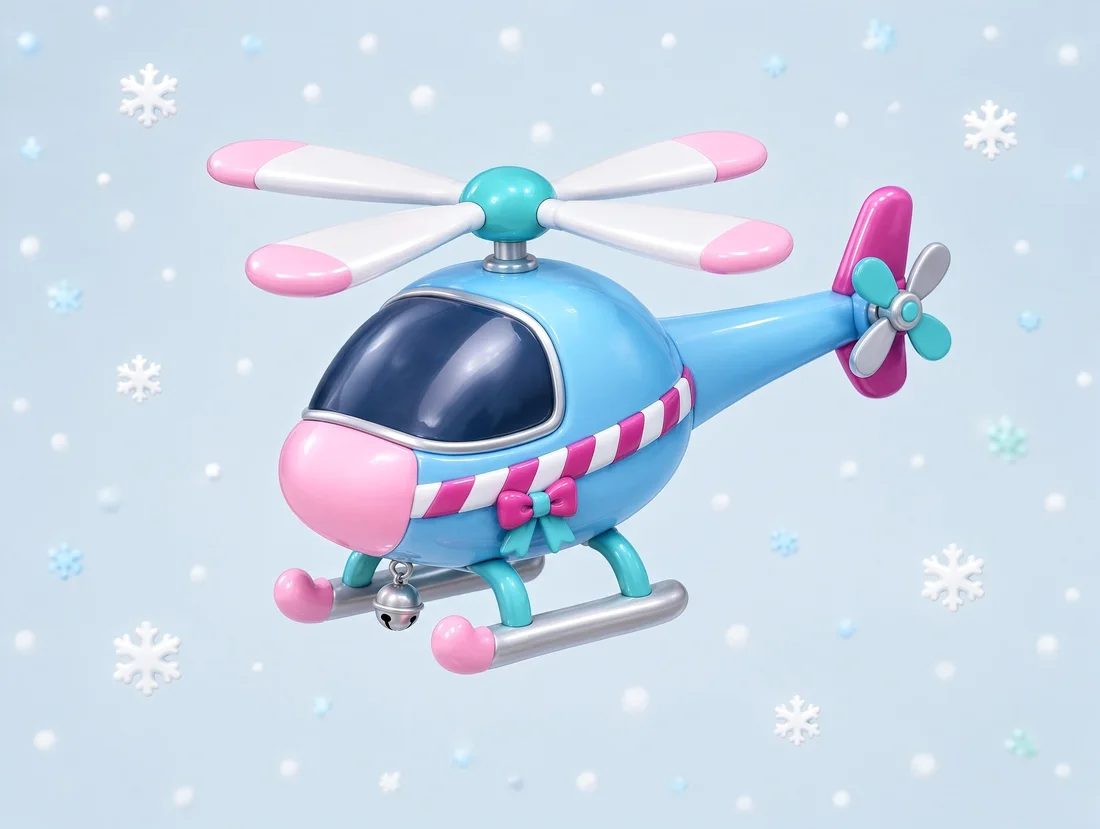
A helicopter flies by spinning its big rotor blades, which are long, thin wings. They push air down, so the helicopter can rise straight up and hover.
Without the little rotor on its tail, a helicopter would twirl like a top! When the big rotor spins one way, the body of the helicopter tries to spin the other way. The little rotor on the tail pushes against this turning, so the helicopter does not spin around.
TODAY’S MINI MISSION · QUIZ
What would this helicopter do without its tail rotor? A) Fly twice as fast B) Turn into an airplane C) Spin around and around
Answer: C. It would spin around and around.
IF THEY ASK WHY
Do all helicopters have a tail rotor? No. Some have two big rotors that spin in opposite directions. Their turning pushes cancel out, so they need no tail rotor.
LAND, WATER, OR AIR? A VEHICLE GAME
Read each vehicle’s name out loud. Your child points down for land, makes waves with one hand for water, or points up for air.
Train · Ship · Helicopter · Submarine · Hot air balloon · Maglev train · Airplane · Icebreaker
ANSWERS
Land: train, maglev train.
Water: ship, submarine, icebreaker.
Air: helicopter, hot air balloon, airplane.
Bonus question: Which vehicle from this page can go on land and on water? The hovercraft!
For teachers: say the vehicles in a different order each time.
What’s inside the Vehicles Advent Calendar?
Theo & Tilda’s Vehicles Advent Calendar is a printable advent calendar with 24 true vehicle stories for kids ages 3 to 8, one for each day from December 1 to 24. The stories on this page are Days 3, 5, 7, 9, 12, 14, 17, and 21.
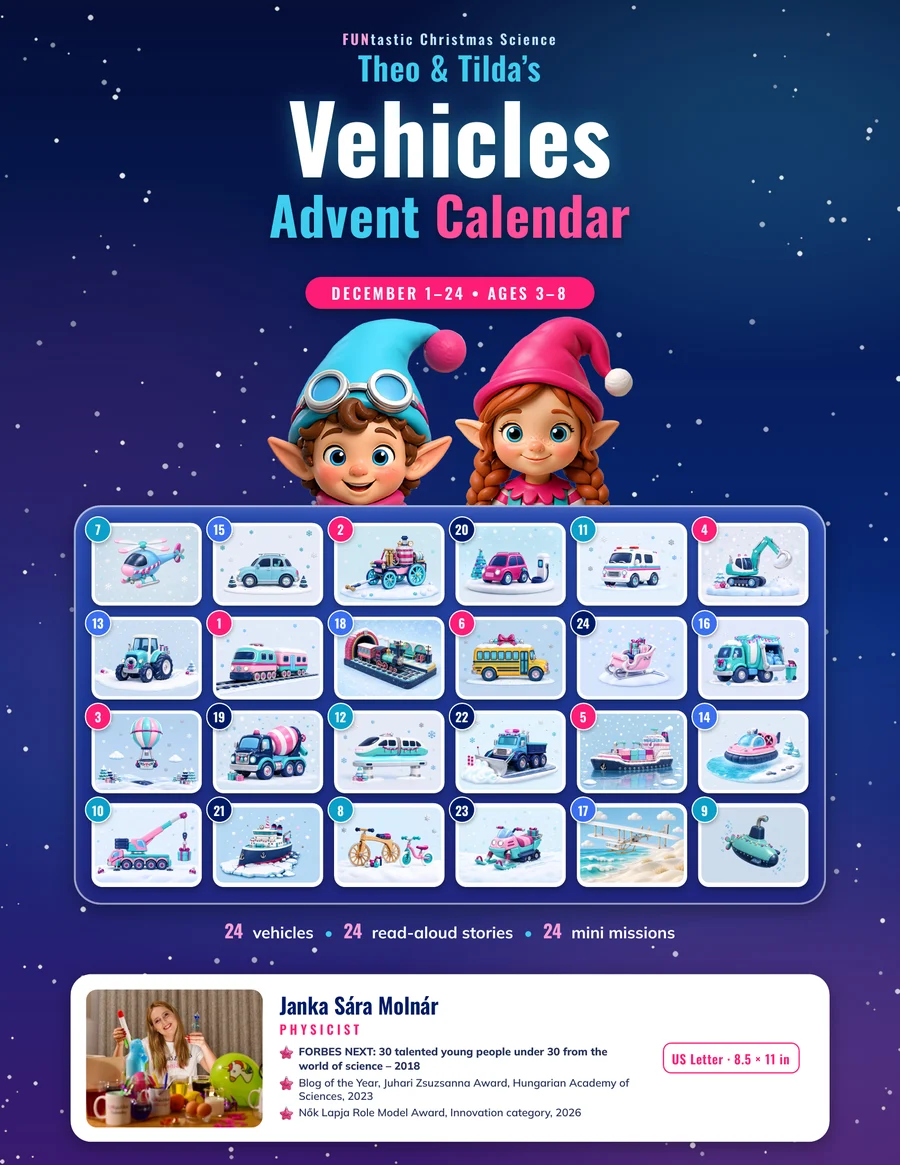
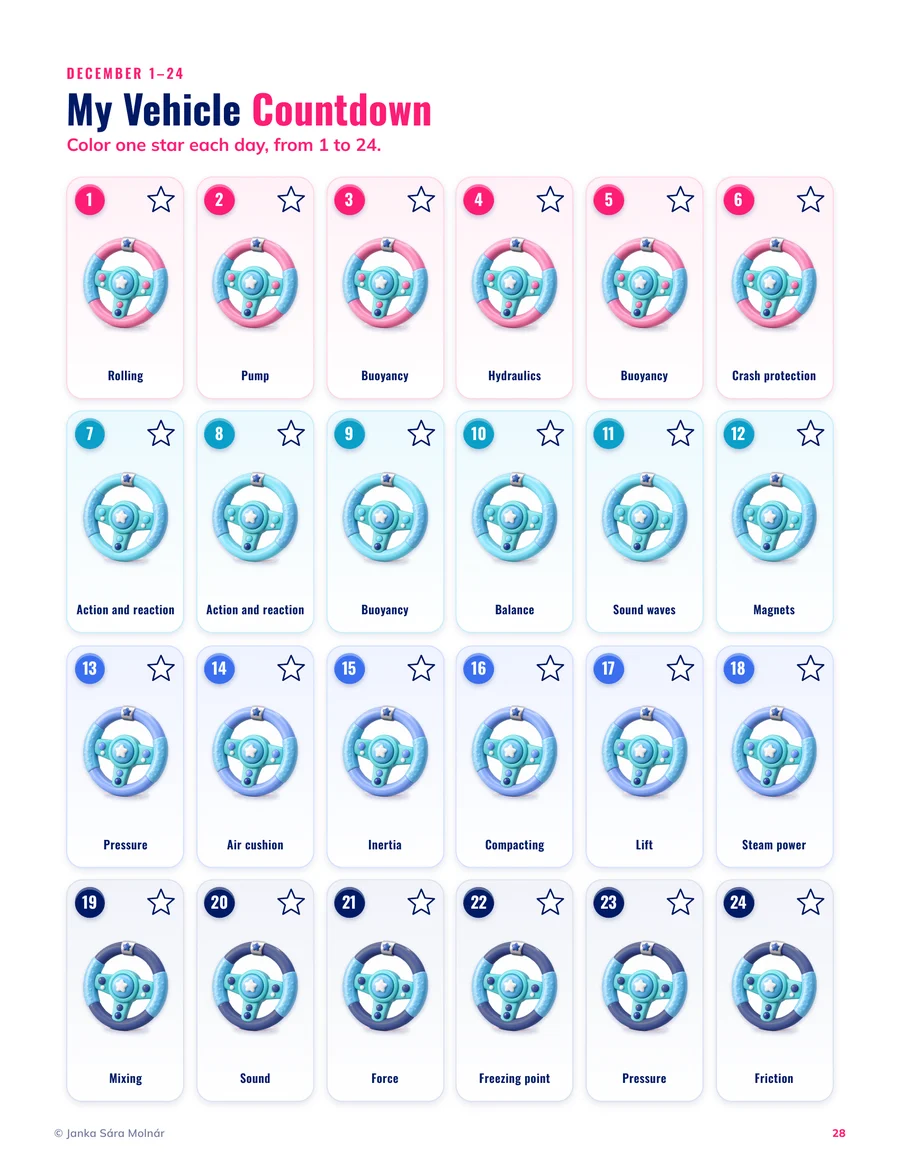
- 24 day pages, each with its own picture, a true vehicle story to read aloud (about a minute), a Science word, a mini mission (a quiz, a movement game, a drawing, or a question for dinner), and an “If they ask why” helper for the grown-up
- 24 real vehicles: on roads and rails, at work, on the water, in the air, and on the snow
- My Vehicle Countdown: color one star each day
- A Vehicle Science Explorer certificate for December 24
- Most missions need nothing at all. No printer? Read it on a tablet, a laptop, or a phone.

Kids ask the best questions about things that go. Why doesn’t a heavy ship sink? How does a helicopter stay up? Each day page answers one big question in about a minute, and as a physicist, I checked every fact.
Read it at bedtime, at breakfast, or snuggled up on the couch. Five minutes together is enough.
Looking for a different theme? Here are all my printable advent calendars for kids, from true dinosaur stories to rockets and polar animals. And if your child loves diggers and cranes, here are eight true stories about construction vehicles for kids.
Who made the first airplane flight?
We started on the water, and we end in the sky.
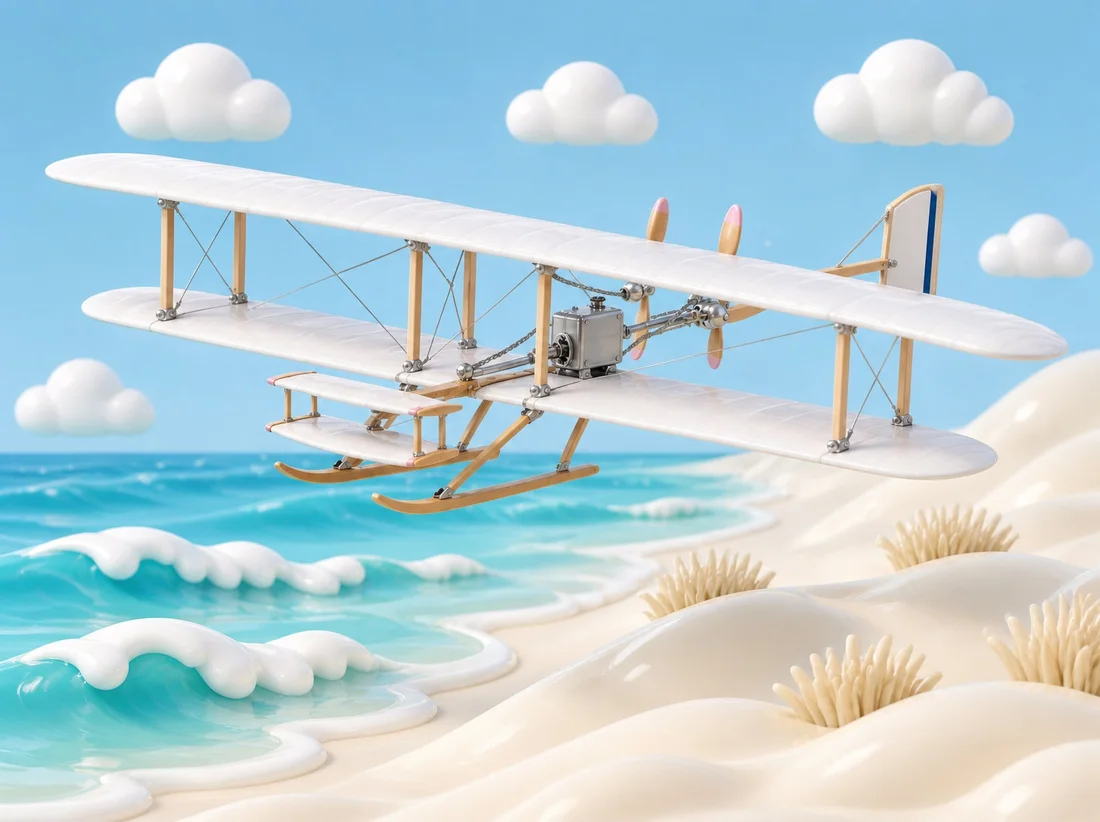
The Wright brothers did, on December 17, 1903, near Kitty Hawk, North Carolina. It was the first powered, controlled airplane flight. It lasted 12 seconds and covered 120 feet (about 37 meters). Orville Wright was the pilot. He lay on his tummy on the lower wing, while his brother Wilbur ran alongside.
How does a plane stay up? Its wings turn the air downward, and the air pushes the wings up. This upward push is called lift.
Tonight’s mission: Ask everyone at home, “If you could ride in one vehicle from this page, would you float, dive, or fly?”

Theo & Tilda’s Screen-Free Advent Calendar
24 tiny wonders and 24 kindness missions, one for every day from December 1 to 24, plus 4 Weekend Labs with my real photos and 3 games. Most tiny wonders take about 10 minutes and use things you probably already have. 22 pages, for ages 3–9.
This calendar is free to share. Print it as often as you like for your family or class, and pass it on to friends, families, and teachers. Please don’t sell it or change it.

Know a family with a little captain or pilot?
Send them tonight’s stories about vehicles that float, dive, and fly. The stories above are free to read aloud, and each one takes about a minute.
COPY THIS MESSAGE
Paste it into a family group chat, or send it to a friend.
Why does a giant steel ship float when a tiny coin sinks? I found these true vehicle stories to read to the kids tonight, from a submarine that sinks on purpose to a train that floats on magnets. A physicist checked every fact. www.christmas-science.com/blog/why-do-boats-float
Why boats float: quick answers
Why do boats float?
A boat floats because it pushes water out of the way, and the water pushes back up. The boat sinks in only until the water it pushes aside weighs as much as the boat. Then the upward push holds it up.
Why does a heavy steel ship float?
Its steel is shaped into a wide, hollow hull with lots of air inside. The hull pushes aside so much water that the water’s upward push is as big as the whole ship’s weight.
Why do some things float and others sink?
A thing floats if it can push aside its own weight in water before it goes all the way under. A coin can’t. It is a solid piece of metal, so the water it pushes aside weighs less than the coin.
How does a hot air balloon float?
A burner heats the air inside the balloon. Warm air is lighter than cool air, so once it is hot enough, the whole balloon, with its warm air, basket and all, weighs less than the cool air it pushes aside, and it floats up.
What is buoyancy?
Buoyancy is the upward push that water or air gives to things in it. It holds up ships in water and hot air balloons in the air.
How does a submarine sink and come back up?
To sink, a submarine lets seawater into its ballast tanks and gets heavier. To come back up, it blows air into the tanks, the air pushes the water out, and the submarine gets lighter.
What age is the Vehicles Advent Calendar for?
Ages 3 to 8. Little ones can enjoy it with a grown-up reading aloud. Each of the 24 day pages has a true vehicle story, a Science word, and a mini mission, and the calendar comes as two PDF files, US Letter and A4. No printer? You can read it on a tablet, a laptop, or a phone.

About Janka
Janka Sára Molnár is a physicist and award-winning science communicator from Hungary, and the founder of FUNtastic Christmas Science. As a high school student, she built particle detectors and took them to CERN several times, where she presented them in its teacher program. She graduated from Eötvös Loránd University (ELTE) in Budapest, and for almost 15 years she has run several hundred science shows for children and families.
- FORBES NEXT: 30 talented young people under 30 from the world of science – 2018
- Rising Star Award, Creator Awards, 2024
- Role Model Award, Innovation, Nők Lapja, 2026
- Juhari Zsuzsanna Blog of the Year Award, Hungarian Academy of Sciences, 2023
- Winner of the HBO Max reality show A Híd (The Bridge)
The vehicle illustrations and the pictures of Theo, Tilda, and their world were created with AI-assisted tools (Canva) and edited by our team. Physicist Janka Sára Molnár checked every fact in this post against NASA, the Smithsonian, and other trusted science sources.
Keep reading
More Christmas science ideas from Theo, Tilda, and me.
 For parents and teachers · 11 min readConstruction Vehicles for Kids: How Diggers and Cranes WorkConstruction vehicles for kids: how an excavator’s arm moves, why cranes don’t tip over, and why mixers keep spinning. 8 true stories, physicist-checked.Read the post →
 For parents · 14 min readHow Do Rockets Work? 8 True Rocket Stories for KidsHow do rockets work for kids? A physicist explains thrust, liquid oxygen, and rocket stages in 8 true stories to read aloud.Read the post →
 For parents · 16 min readFun Facts About Ocean Animals for Kids: 8 True Sea StoriesFun facts about ocean animals for kids: an octopus with three hearts, a seahorse dad, a fish that makes sand. 8 true stories, checked by a physicist.Read the post →
© 2026 FUNtasztikus Tudomány Kft. – Janka Sára Molnár