Construction Vehicles for Kids: How Excavators, Cranes, and Cement Mixers Work (8 True Stories)
Construction vehicles are the big machines that dig, lift, mix, and carry on building sites, like excavators, cranes, and cement mixer trucks. Each one works with a clever bit of science: an excavator pushes a liquid to move its arm, a crane truck balances like a seesaw, and a mixer truck keeps its drum turning. Here are eight true stories from my Vehicles Advent Calendar: three big construction machines, four more big working vehicles, and a sleigh for Christmas Eve. Read each one aloud in about a minute.
- 8 vehicles
- Ages 3–8
- About a minute each
- Free to read aloud
Save this for your little builder, or send it to a friend whose child stops to watch every digger on the street.
The Mighty Arm
An excavator’s mighty arm is pushed by a liquid!
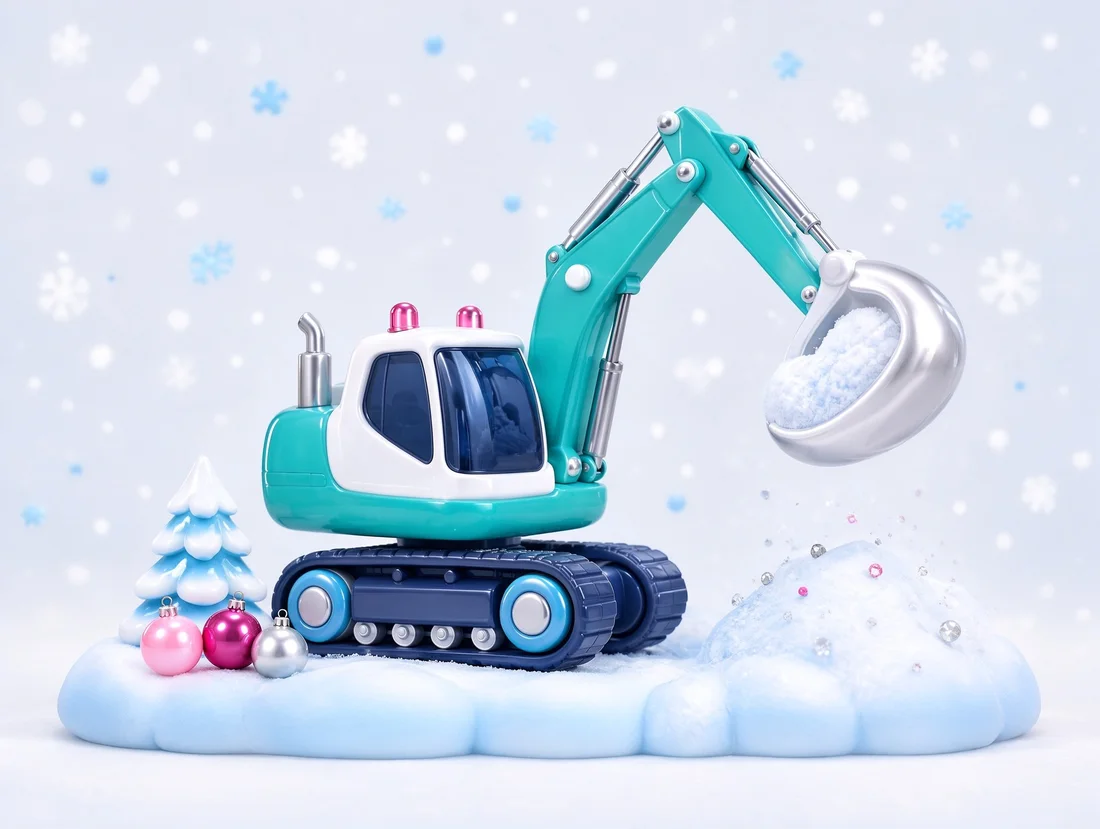
An excavator’s arm moves with hydraulics. A pump, run by the engine, pushes liquid through hoses into big cylinders. The pressure travels through the liquid and pushes on wide pistons, making a huge force, strong enough to dig and lift heavy loads.
The arm bends in three places, a bit like yours: at the shoulder, at the elbow, and at the wrist. The bucket at the end is its scooping hand.
Stop here and ask your child: Which part of your arm works like the excavator’s bucket? Let’s meet the excavator and seven more big working vehicles. Our story ends at the bottom of this page.
How does an excavator work?
An excavator digs with hydraulics, which means using a pushed liquid to move something heavy. The liquid pushes on pistons inside the big cylinders, the pistons move the arm, and the bucket scoops up dirt, rocks, or snow.
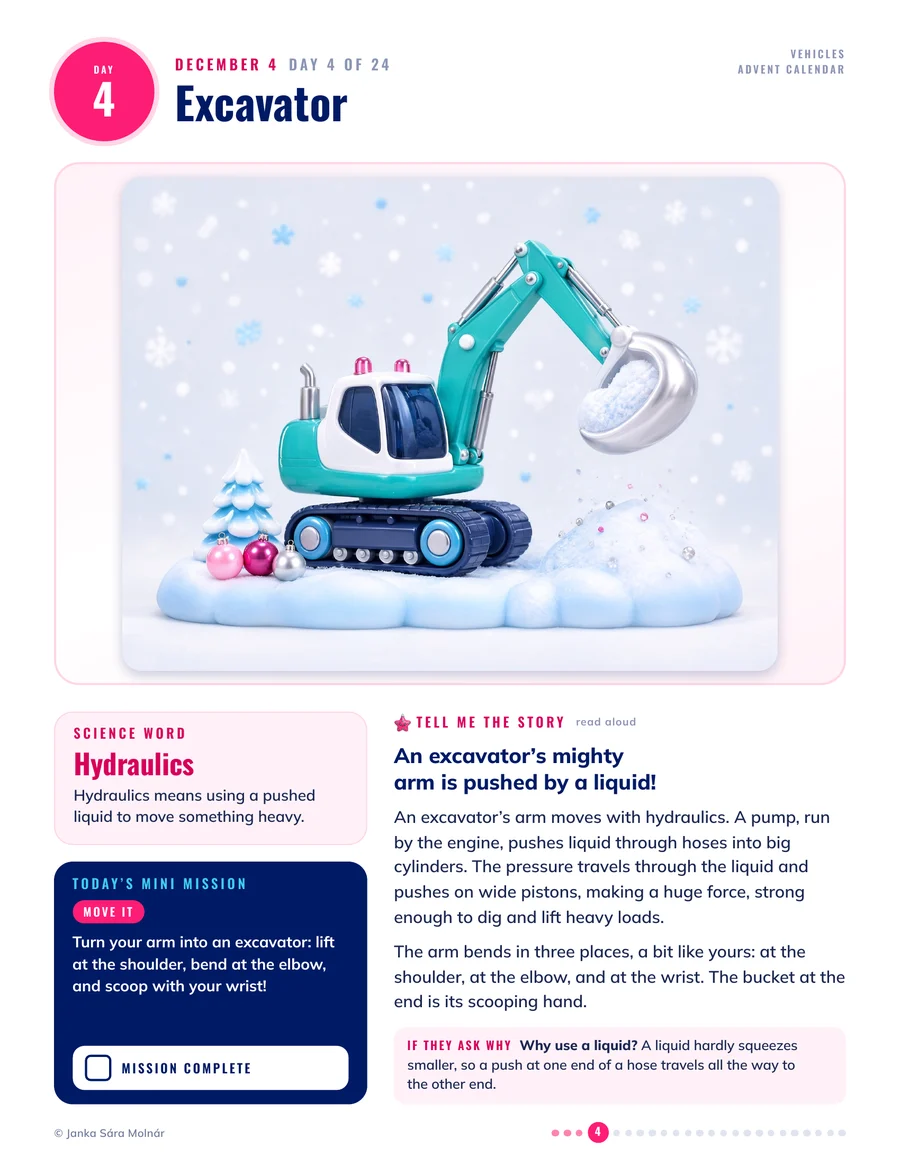
TODAY’S MINI MISSION · MOVE IT
Turn your arm into an excavator: lift at the shoulder, bend at the elbow, and scoop with your wrist!
IF THEY ASK WHY
Why use a liquid? A liquid hardly squeezes smaller, so a push at one end of a hose travels all the way to the other end.
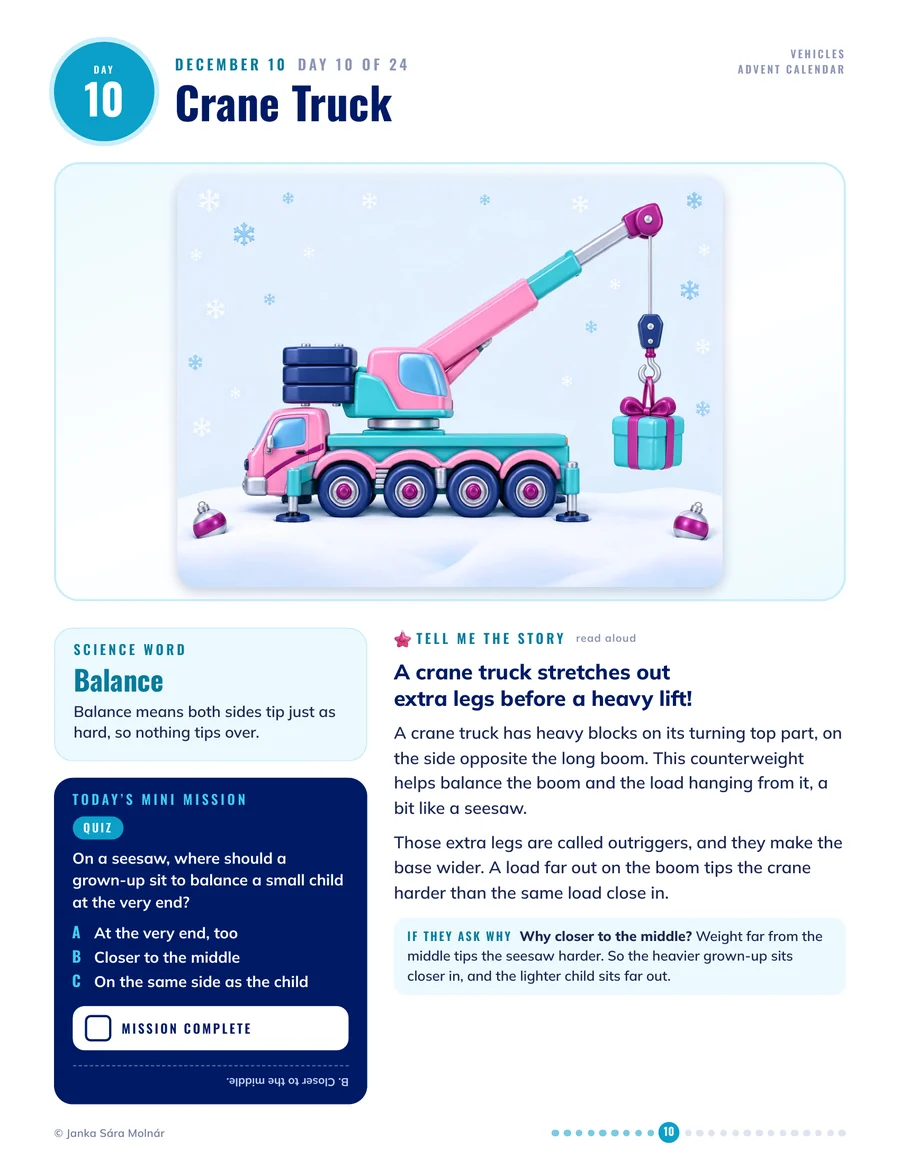
Why doesn’t a crane truck tip over?
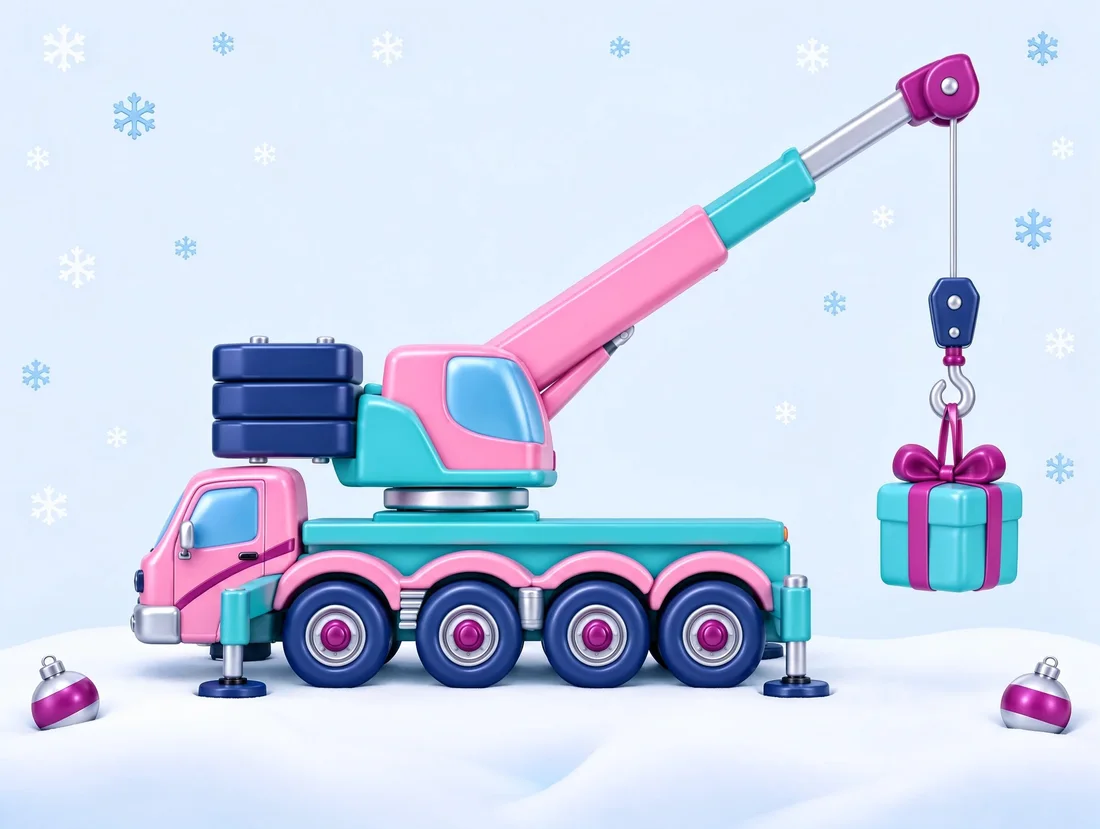
A crane truck carries heavy blocks on its turning top part, on the side opposite the long boom. These blocks, called the counterweight, help balance the boom and the load hanging from it, a bit like a seesaw. Before a heavy lift, the truck also stretches out extra legs called outriggers, which make its base wider.
A load far out on the boom tips the crane harder than the same load close in.
TODAY’S MINI MISSION · QUIZ
On a seesaw, where should a grown-up sit to balance a small child at the very end? A) At the very end, too B) Closer to the middle C) On the same side as the child
Answer: B. Closer to the middle.
IF THEY ASK WHY
Why closer to the middle? Weight far from the middle tips the seesaw harder. So the heavier grown-up sits closer in, and the lighter child sits far out.
Why does a cement mixer truck keep spinning?
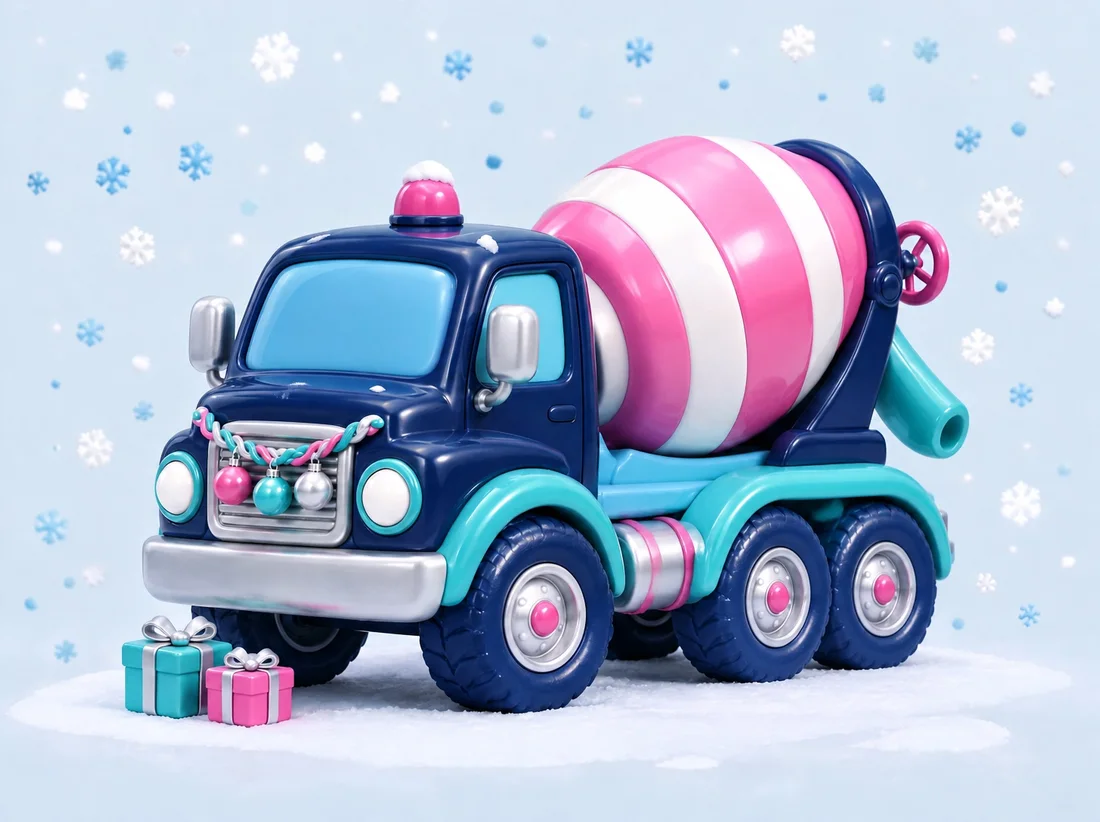
A cement mixer truck keeps spinning its drum so the concrete inside stays mixed and ready to pour. The big drum turns slowly the whole way to the construction site, often just two to four turns every minute. Many people call it a cement mixer, but what it carries is concrete.
Fresh concrete is soft, like thick, wet mud. Once it is poured, it slowly turns hard as stone. Cement is one of the things mixed into it.
TODAY’S MINI MISSION · MOVE IT
Turn around slowly like a mixer drum: just two turns in a whole minute. Can you go that slowly?
IF THEY ASK WHY
Why keep turning? The turning keeps the mix even all the way through, and it helps keep the concrete soft enough to pour when the truck arrives.
Know a little one who waves at every cement mixer on the road? Send their grown-up this story. Now they’ll know why the drum keeps turning. Share it
More big working vehicles kids love
Construction vehicles aren’t the only hard workers. Here are four more big vehicles with a job to do, on the farm, in your town, and on snowy roads.
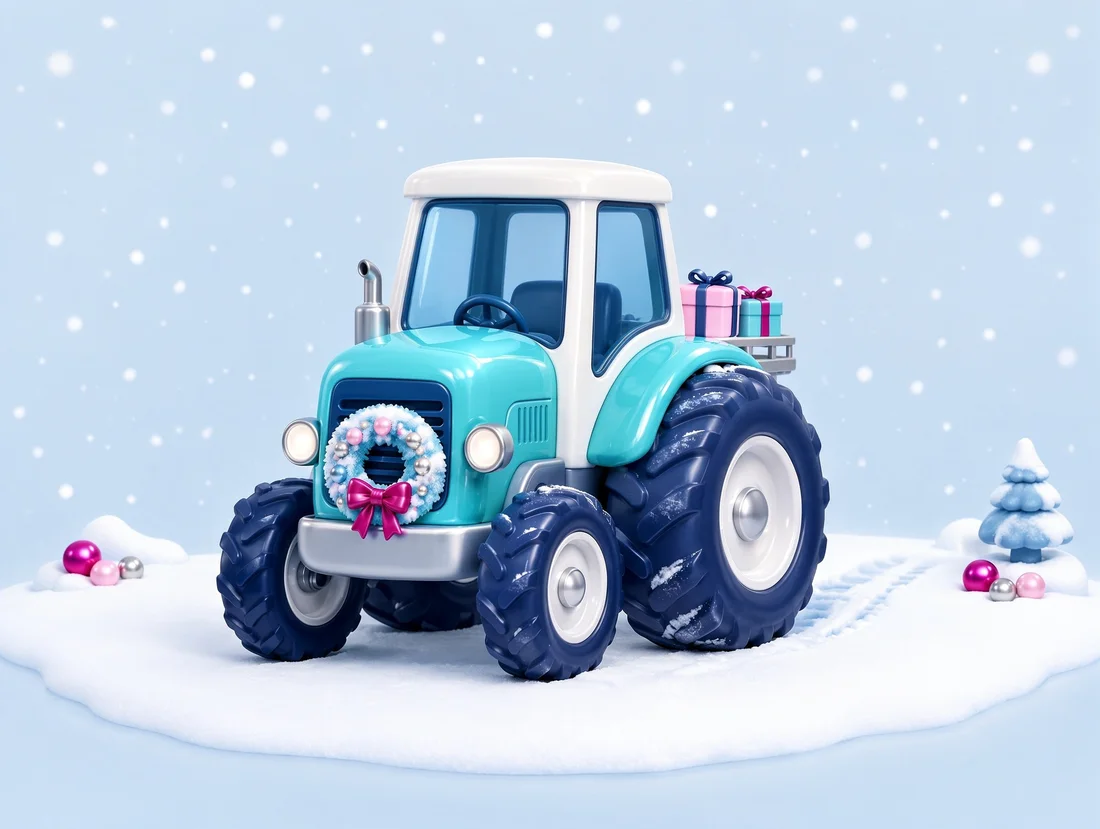
Why do tractors have such big tires?
A tractor’s huge tires help protect the soil in the field. Farm fields are soft. Big, wide tires spread a tractor’s weight over more ground, so the top layer of soil gets pressed down less. Farmers can also use lower tire pressure, which makes each tire touch even more ground.
Plant roots have a hard time growing through pressed-down soil.
TODAY’S MINI MISSION · WONDER
Why do you think tractors have such big back wheels?
IF THEY ASK WHY
Why such big back wheels? The back wheels do most of the pulling. Big, wide tires grip the soft soil and spread out the tractor’s weight, so it sinks in less.
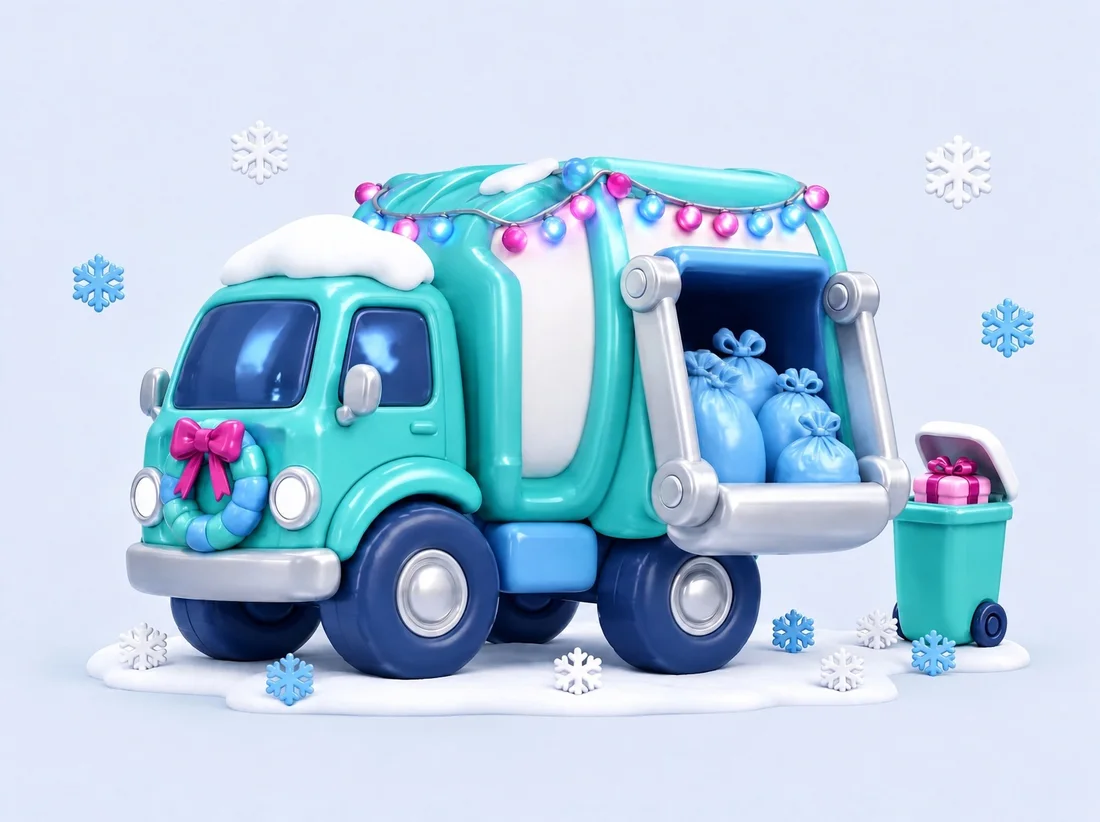
How does a garbage truck work?
A garbage truck squishes the trash right on your street! It has a packer blade that squeezes the trash again and again along its route. Squeezed trash takes up about half the space, so the truck can collect from many more homes before it is full.
Squeezing pushes the bits of trash closer together and squishes out the empty spaces between them.
TODAY’S MINI MISSION · MOVE IT
From a window, or holding a grown-up’s hand on the sidewalk, wave thank you to the people who collect your trash.
IF THEY ASK WHY
Where does the trash go? Trucks take it to places like a landfill or a recycling center, depending on what is inside.
Know a family whose kids run to the window every trash day? Send them the garbage truck story. Share it
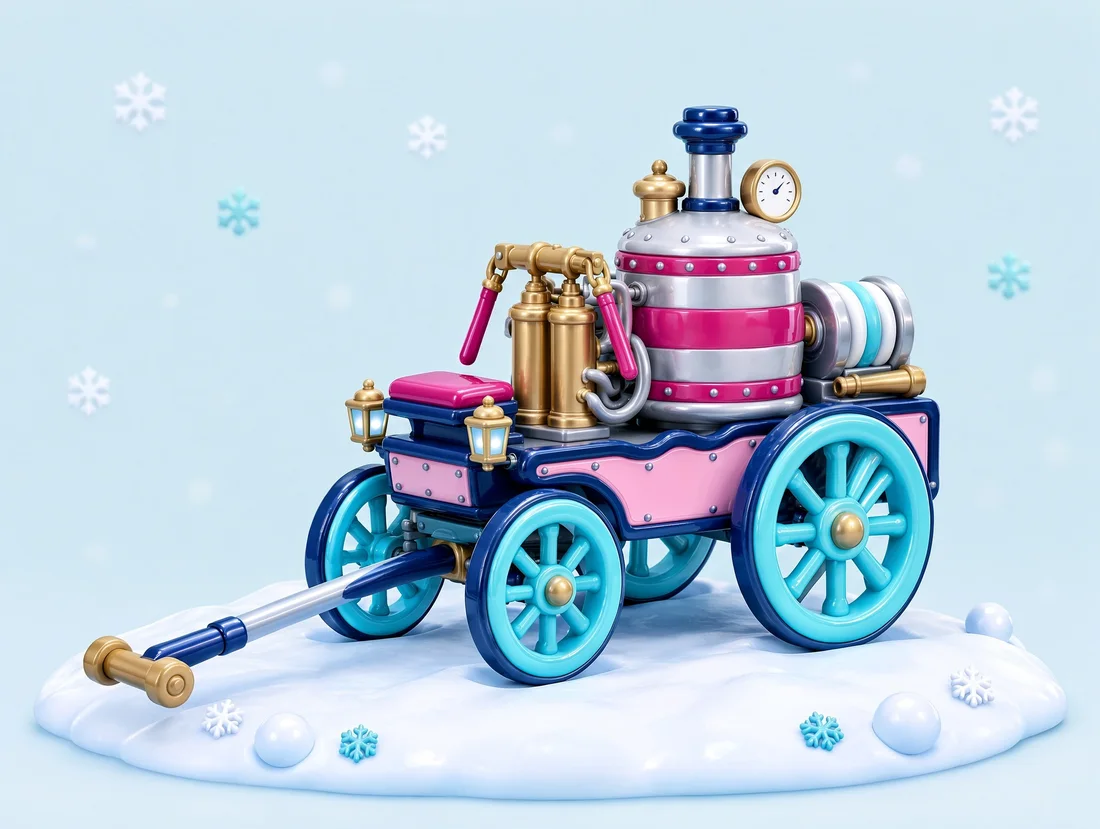
How does a fire truck pump water?
A fire truck carries a powerful pump that pushes water through its hoses, so the water can spray far and high. Long ago, firefighters had to pump the water by hand! About 200 years ago, many fire engines had pumps that people worked by hand, and firefighters often pulled the engine to the fire themselves.
In the 1850s, steam-powered pumps began to do the hard work, and they needed fewer firefighters to run them.
TODAY’S MINI MISSION · MOVE IT
Pump your arms up and down like the firefighters of long ago. How many pumps can you do?
IF THEY ASK WHY
Why was pumping so hard? Every push of the handles had to move heavy water through the pump and out of the hose.
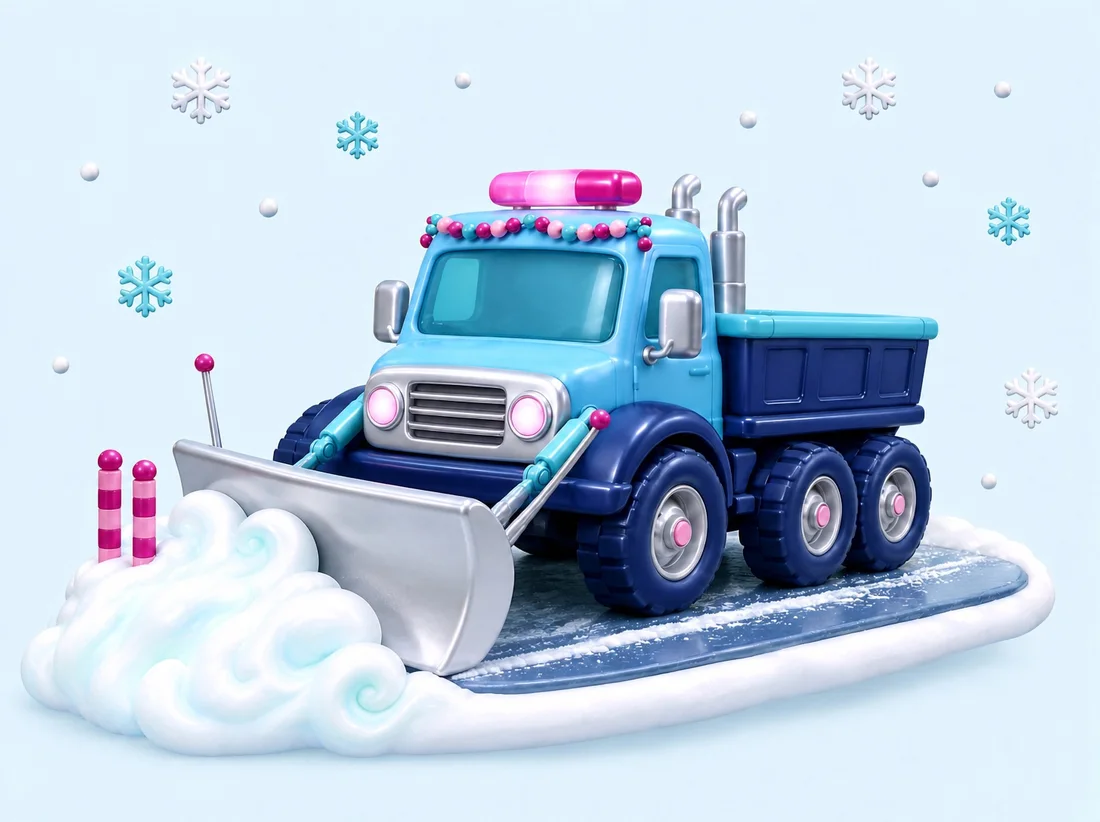
How do snowplows work?
A snowplow pushes snow off the road with a big blade. The blade is set at a slant, so the snow slides along it and off to one side of the road.
Road crews can even get the road ready before the first snowflake falls! Before a snowstorm, they can spray salty water, called brine, on the road. Salt water freezes at a lower temperature than plain water, so ice has a harder time forming and sticking to the road.
TODAY’S MINI MISSION · OBSERVE
On a snowy day, watch from a window: which way does the snowplow push the snow?
IF THEY ASK WHY
Does salt melt ice, too? Yes, when it is not too cold. Salt mixes into the thin wet layer on the ice, and salty water stays liquid at colder temperatures than plain water.
WHO DOES THE JOB? A VEHICLE GAME
Read each job out loud. Your child shouts the vehicle that does it.
- Dig a big hole
- Lift a heavy load up high
- Bring soft concrete to pour
- Pull heavy farm machines across a soft field
- Squeeze the trash and take it away
- Pump water onto a fire
- Push the snow off the road
ANSWERS
1. Excavator · 2. Crane truck · 3. Concrete mixer truck · 4. Tractor · 5. Garbage truck · 6. Fire truck · 7. Snowplow
Bonus question: Which vehicle has the most important job on Christmas Eve? The sleigh! Read its story at the bottom of this page.
For teachers: say the jobs in a different order each time.
What’s inside the Vehicles Advent Calendar?
Theo & Tilda’s Vehicles Advent Calendar is a printable advent calendar with 24 true vehicle stories for kids ages 3 to 8, one for each day from December 1 to 24. The stories on this page are Days 2, 4, 10, 13, 16, 19, 22, and 24.
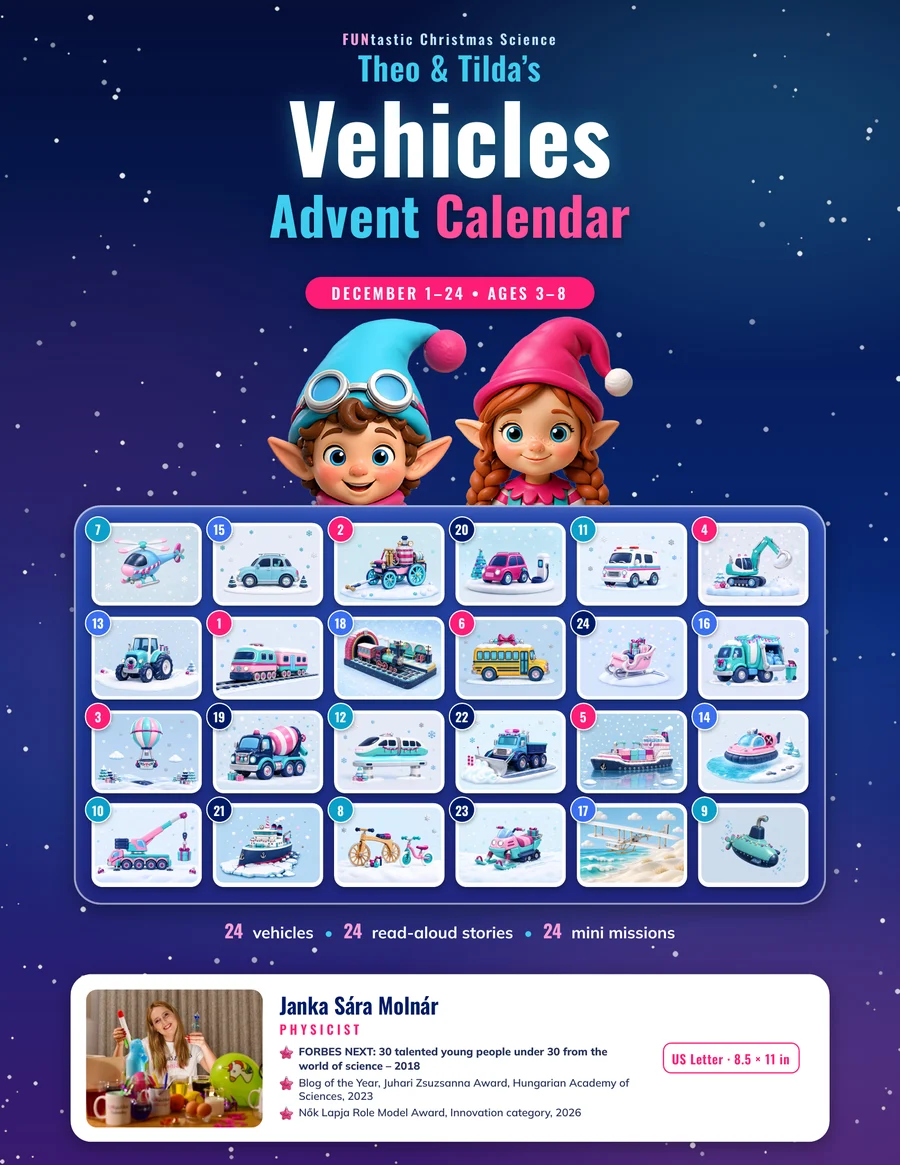

- 24 day pages, each with its own picture, a true vehicle story to read aloud (about a minute), a Science word, a mini mission (a quiz, a movement game, a drawing, or a question for dinner), and an “If they ask why” helper for the grown-up
- 24 real vehicles: on roads and rails, at work, on the water, in the air, and on the snow
- My Vehicle Countdown: color one star each day
- A Vehicle Science Explorer certificate for December 24
- Most missions need nothing at all. No printer? Read it on a tablet, a laptop, or a phone.

Little builders want to know how big machines work. How can an excavator lift so much? Why doesn’t a crane fall over? Each day page answers one big question in about a minute, and as a physicist, I checked every fact.
Read it at bedtime, at breakfast, or after watching the diggers on your street. Five minutes together is enough.
Looking for a different theme? Here are all my printable advent calendars for kids, from true dinosaur stories to rockets and polar animals. And if your child asks why a giant steel ship doesn’t sink, read why boats float, in eight true vehicle stories.
Why does a sled slide so easily on snow?
We started with a digger, and we end with the vehicle on the Christmas Eve page of my calendar: the sleigh.
A sled glides on a layer of water thinner than a hair! Sleighs and many sleds slide on smooth runners. The top of snow and ice has a super-thin, slippery wet layer. The runners glide on it with very little friction! Scientists are still studying exactly how this slippery layer forms.


Tonight’s mission: Ask everyone at home, “Why is it easier to pull a sled over snow than over grass?” Then ask: “Which vehicle from this page would you most like to drive?”
Here’s the answer to the first question: grass is rough and has no slippery wet layer, so there is much more friction.

Theo & Tilda’s Screen-Free Advent Calendar
24 tiny wonders and 24 kindness missions, one for every day from December 1 to 24, plus 4 Weekend Labs with my real photos and 3 games. Most tiny wonders take about 10 minutes and use things you probably already have. 22 pages, for ages 3–9.
This calendar is free to share. Print it as often as you like for your family or class, and pass it on to friends, families, and teachers. Please don’t sell it or change it.

Know a family with a little builder?
Send them tonight’s stories about diggers, cranes, and big trucks. The stories above are free to read aloud, and each one takes about a minute.
COPY THIS MESSAGE
Paste it into a family group chat, or send it to a friend.
Did you know an excavator’s arm is pushed by a liquid? And a crane truck stretches out extra legs before a heavy lift! I found these true stories about diggers, cranes, and big trucks to read to the kids tonight. A physicist checked every fact. www.christmas-science.com/blog/construction-vehicles-for-kids
Construction vehicles: quick answers
What are construction vehicles called?
Construction vehicles are also called heavy equipment. The best known are the excavator (digger), the bulldozer, the dump truck, the loader, the mobile crane, and the concrete mixer truck (cement mixer). Each one has its own job on a building site.
How does an excavator work?
An excavator uses hydraulics. A pump pushes liquid through hoses into big cylinders, and the liquid pushes on pistons that move the arm and the bucket.
Why does a cement mixer truck keep spinning?
The slowly turning drum keeps the concrete evenly mixed, and it helps keep it soft enough to pour when the truck arrives at the construction site.
Why don’t cranes fall over?
Many cranes carry heavy blocks, called a counterweight, on the side opposite the load. They help balance the load, a bit like a seesaw. A crane truck also stretches out outriggers to make its base wider, and a tall tower crane usually stands on a heavy concrete base.
Why do tractors have such big tires?
Big, wide tires grip the soft soil so the tractor can pull hard, and they spread its weight over more ground, so the top layer of soil gets pressed down less.
What age is the Vehicles Advent Calendar for?
Ages 3 to 8. Little ones can enjoy it with a grown-up reading aloud. Each of the 24 day pages has a true vehicle story, a Science word, and a mini mission, and the calendar comes as two PDF files, US Letter and A4. No printer? You can read it on a tablet, a laptop, or a phone.

About Janka
Janka Sára Molnár is a physicist and award-winning science communicator from Hungary, and the founder of FUNtastic Christmas Science. As a high school student, she built particle detectors and took them to CERN several times, where she presented them in its teacher program. She graduated from Eötvös Loránd University (ELTE) in Budapest, and for almost 15 years she has run several hundred science shows for children and families.
- FORBES NEXT: 30 talented young people under 30 from the world of science – 2018
- Rising Star Award, Creator Awards, 2024
- Role Model Award, Innovation, Nők Lapja, 2026
- Juhari Zsuzsanna Blog of the Year Award, Hungarian Academy of Sciences, 2023
- Winner of the HBO Max reality show A Híd (The Bridge)
The vehicle illustrations and the pictures of Theo, Tilda, and their world were created with AI-assisted tools (Canva) and edited by our team. Physicist Janka Sára Molnár checked every fact in this post against trusted science and engineering sources.
Keep reading
More Christmas science ideas from Theo, Tilda, and me.
 For parents and teachers · 11 min readWhy Do Boats Float? (Explained for Kids by a Physicist)Why do boats float? A wide, hollow hull pushes aside lots of water, and the water pushes back up. 8 true vehicle stories for kids, physicist-checked.Read the post →
 For parents · 14 min readHow Do Rockets Work? 8 True Rocket Stories for KidsHow do rockets work for kids? A physicist explains thrust, liquid oxygen, and rocket stages in 8 true stories to read aloud.Read the post →
 For parents and teachers · 14 min readHow Do Polar Animals Stay Warm? (Physicist-Checked)How do polar animals stay warm? Fur that traps air, thick blubber, and big huddles. 8 true Arctic and Antarctic stories for kids, checked by a physicist.Read the post →
© 2026 FUNtasztikus Tudomány Kft. – Janka Sára Molnár