How Do Polar Animals Stay Warm? 8 True Arctic and Antarctic Animal Stories for Kids
Many polar animals stay warm with thick fur or feathers that trap air, a layer of fat called blubber, and habits like huddling together or hiding under the snow. Here are eight true stories for kids about how Arctic and Antarctic animals stay warm, from my Arctic and Antarctic Animals Advent Calendar. Each one takes about a minute to read aloud.
- 8 polar animals
- Ages 3–8
- About a minute each
- Nothing to buy
Save this for a cold winter night, or send it to a friend whose child asks “Aren’t they cold?” about every animal at the zoo.
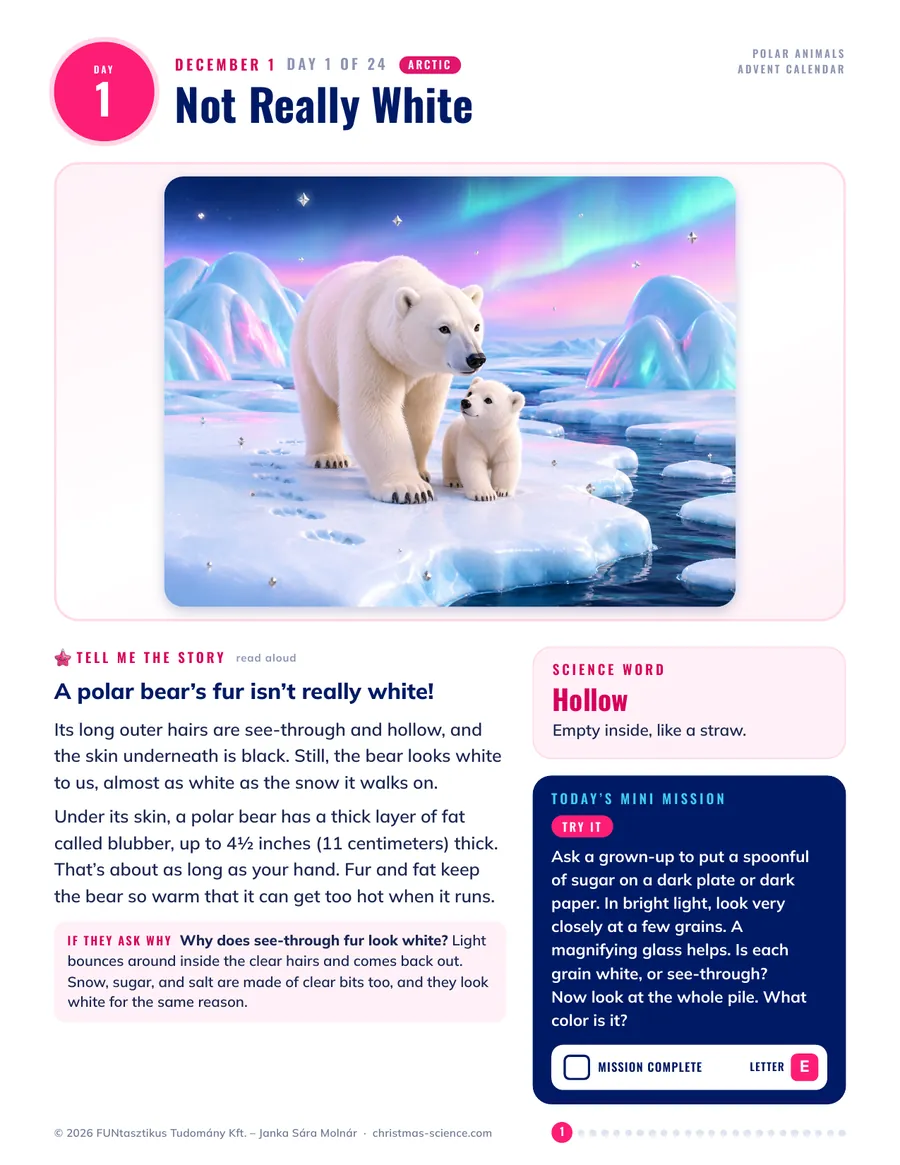
Not Really White
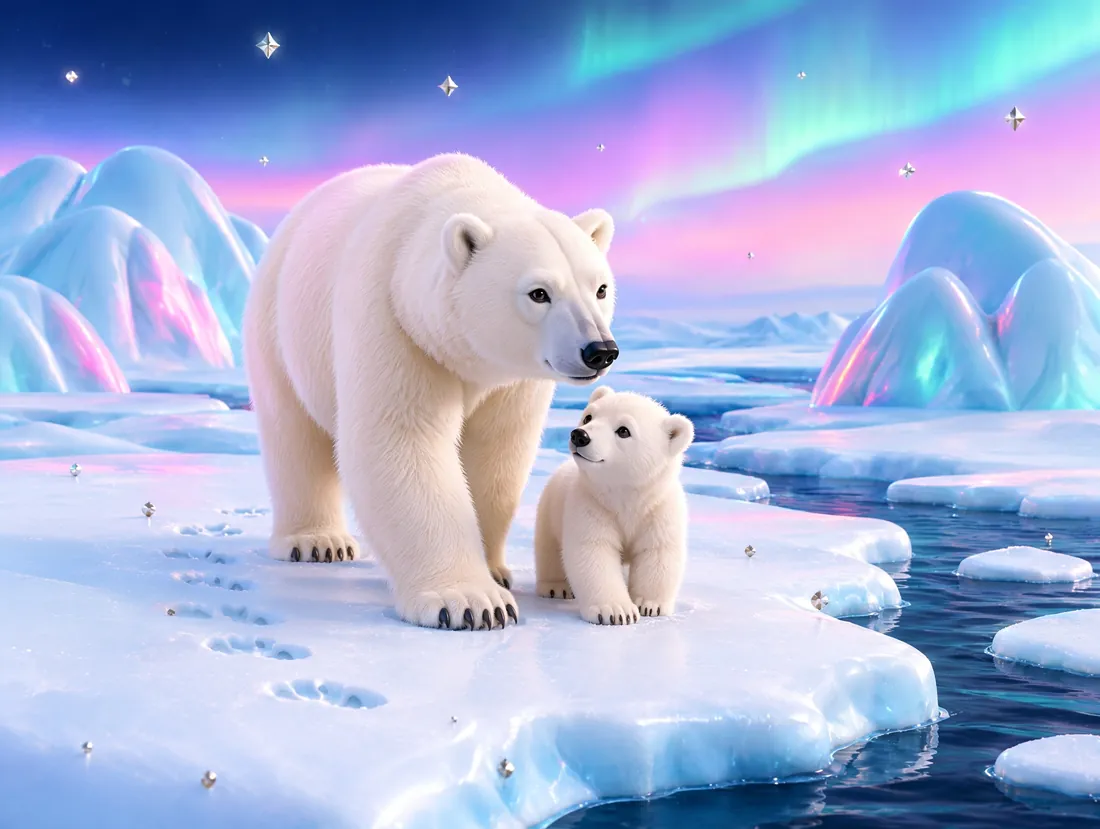
A polar bear’s fur isn’t really white!
Its long outer hairs are see-through and hollow, and the skin underneath is black. Still, the bear looks white to us, almost as white as the snow it walks on.
Under its skin, a polar bear has a thick layer of fat called blubber, up to 4½ inches (11 centimeters) thick. That’s about as long as your hand. Fur and fat keep the bear so warm that it can get too hot when it runs.
Stop here and ask your child: If a polar bear’s hairs are see-through, why does it look white? Let’s find out, and meet seven more animals that know how to stay warm. Our story ends at the bottom of this page.
Know a little one who won’t leave the house without a hat in winter? Send this to their grown-up. Each story answers a real question kids ask, like how a penguin dad keeps an egg warm on ice. Share it
How do polar animals stay warm?
Many polar animals stay warm with tricks like these:
- Thick fur or feathers that trap air. Air that can’t move around keeps warmth in, like the air in a puffy winter coat.
- Blubber, a thick layer of fat under the skin.
- Huddling together to share warmth.
- Hiding from the icy wind, curled up in a ball or in tunnels under the snow.
Scientists call body parts and habits like these adaptations. Many polar animals use more than one at the same time.
Is a polar bear’s fur really white?
No. Its long outer hairs are see-through, a bit like clear plastic, and hollow inside. Light bounces around inside all those clear hairs and comes back out, so the fur looks white to us.
TODAY’S MINI MISSION · TRY IT
Ask a grown-up to put a spoonful of sugar on a dark plate or dark paper. In bright light, look very closely at a few grains. A magnifying glass helps. Is each grain white, or see-through? Now look at the whole pile. What color is it?
IF THEY ASK WHY
Why does see-through fur look white? Light bounces around inside the clear hairs and comes back out. Snow, sugar, and salt are made of clear bits too, and they look white for the same reason.
A PHYSICIST’S NOTE
You may read that a polar bear’s hollow hairs carry sunlight down to its black skin, like tiny light pipes. It’s a famous story, but it isn’t true. A physicist, Daniel Koon, measured how much light really travels down a polar bear hair, and it is almost none. The fur keeps the bear warm because it is thick and traps air. Some scientists also think the many layers of hair bounce some of the bear’s own body warmth back toward its skin.
How do penguins stay warm in Antarctica?
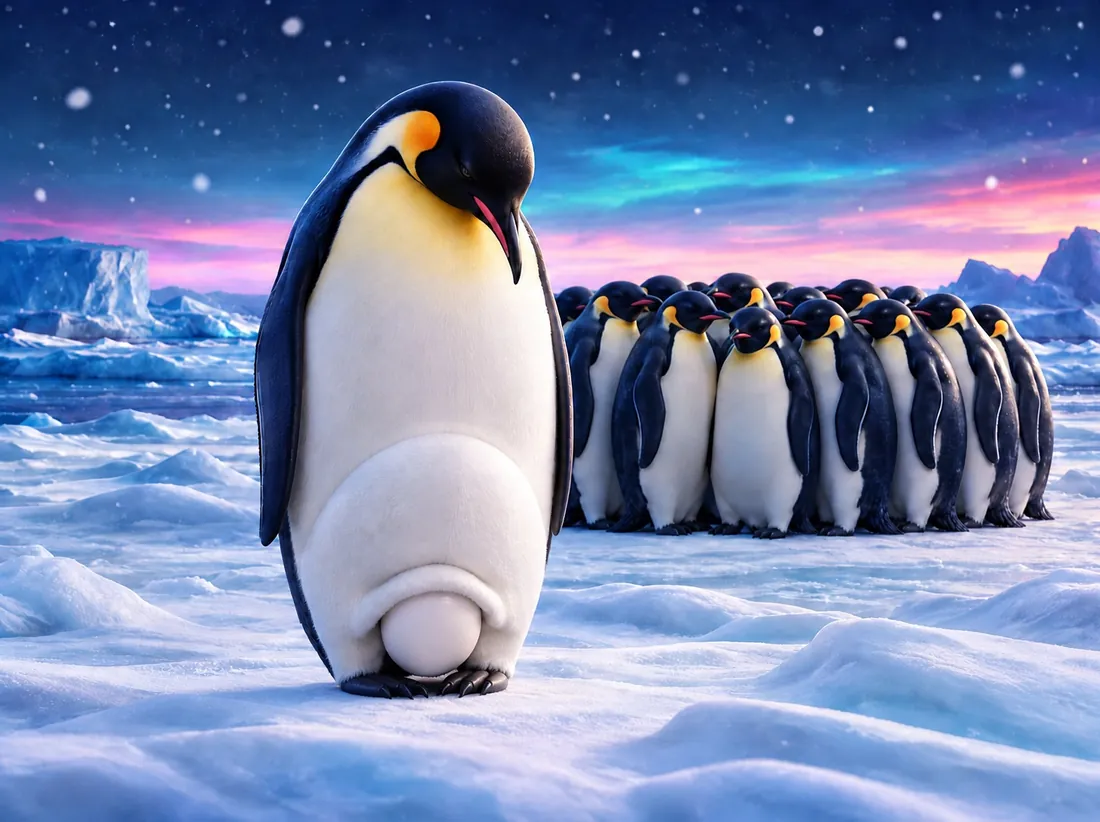
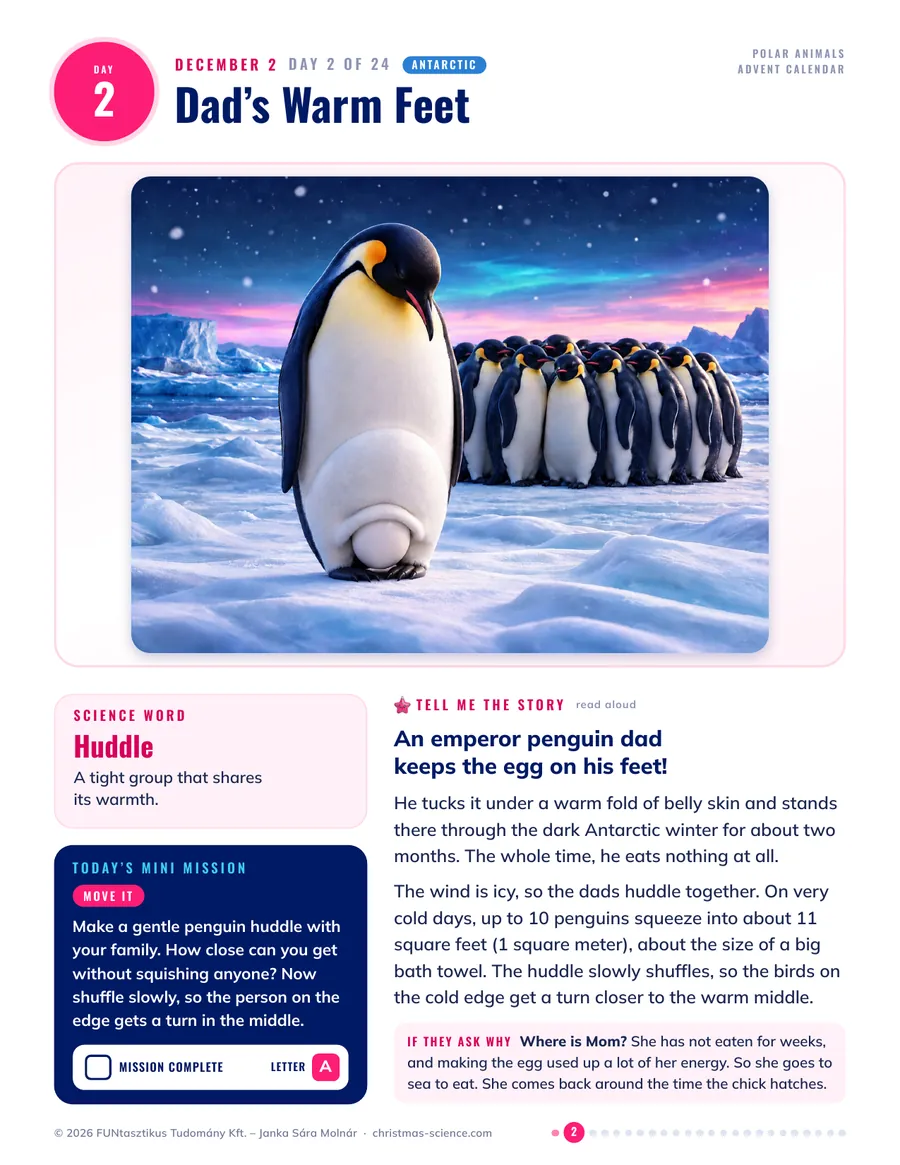
On very cold days, emperor penguins huddle together to share their warmth. And an emperor penguin dad keeps the egg on his feet! He tucks it under a warm fold of belly skin and stands there through the dark Antarctic winter for about two months. The whole time, he eats nothing at all.
The wind is icy, so the dads huddle together. On very cold days, up to 10 penguins squeeze into about 11 square feet (1 square meter), about the size of a big bath towel. The huddle slowly shuffles, so the birds on the cold edge get a turn closer to the warm middle.
TODAY’S MINI MISSION · MOVE IT
Make a gentle penguin huddle with your family. How close can you get without squishing anyone? Now shuffle slowly, so the person on the edge gets a turn in the middle.
IF THEY ASK WHY
Where is Mom? She has not eaten for weeks, and making the egg used up a lot of her energy. So she goes to sea to eat. She comes back around the time the chick hatches.
How does an Arctic fox stay warm?
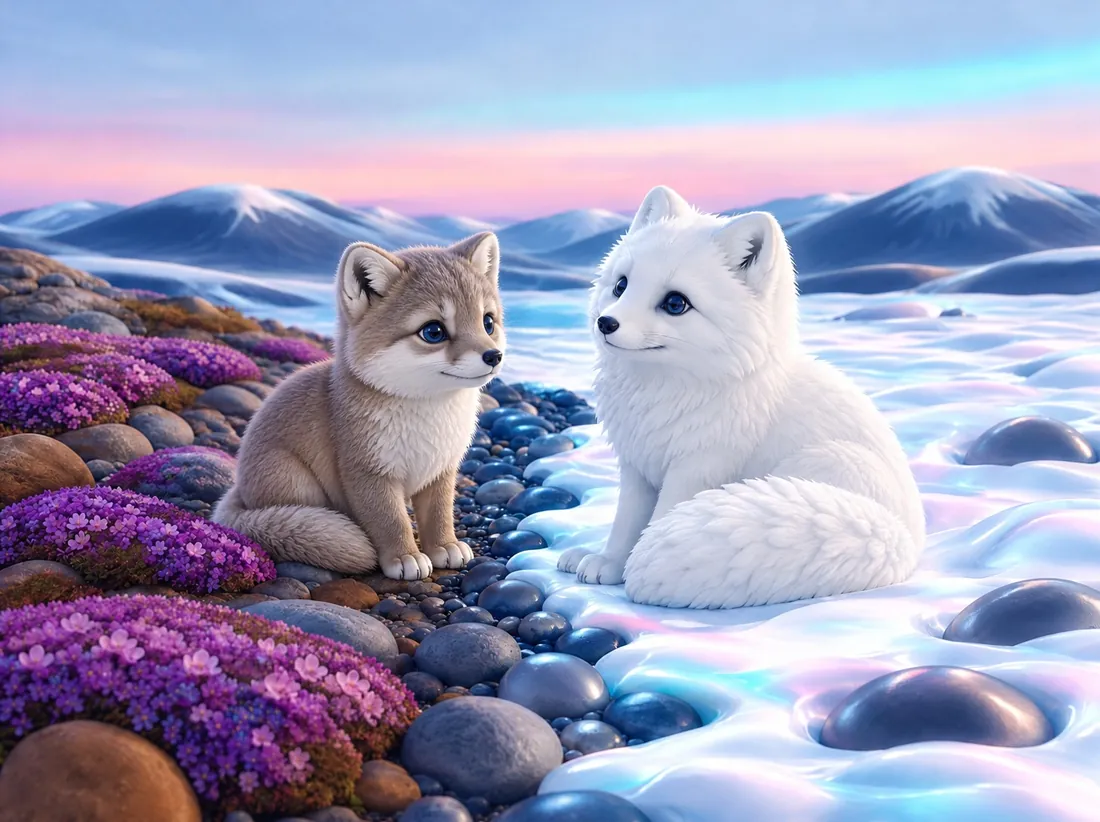
An Arctic fox is covered in thick fur from head to toe. It even has fur on the bottoms of its paws, like warm socks. When it sleeps, it curls up into a ball and wraps its big, fluffy tail around its body and nose, like a blanket.
Many Arctic foxes change their coats twice a year! In summer, their fur is short and brown, the color of rocks and earth. By November, they have a thick, snow-white coat. In the snow, a white fox is very hard to spot. This is called camouflage.
TODAY’S MINI MISSION · DRAW IT
Draw the same fox twice. Give the summer fox brown fur and draw rocks around it. Give the winter fox white fur and draw snow around it. Which fox is harder to see?
IF THEY ASK WHY
Is it the same fox? Yes. It sheds its old fur and grows new fur. This is called molting.
Know someone who knits cozy socks for the whole family? Send them the Arctic fox story. This fox grows its own. Share it
What is blubber?
Blubber is a thick layer of fat under the skin. It keeps seals and whales warm in icy water.
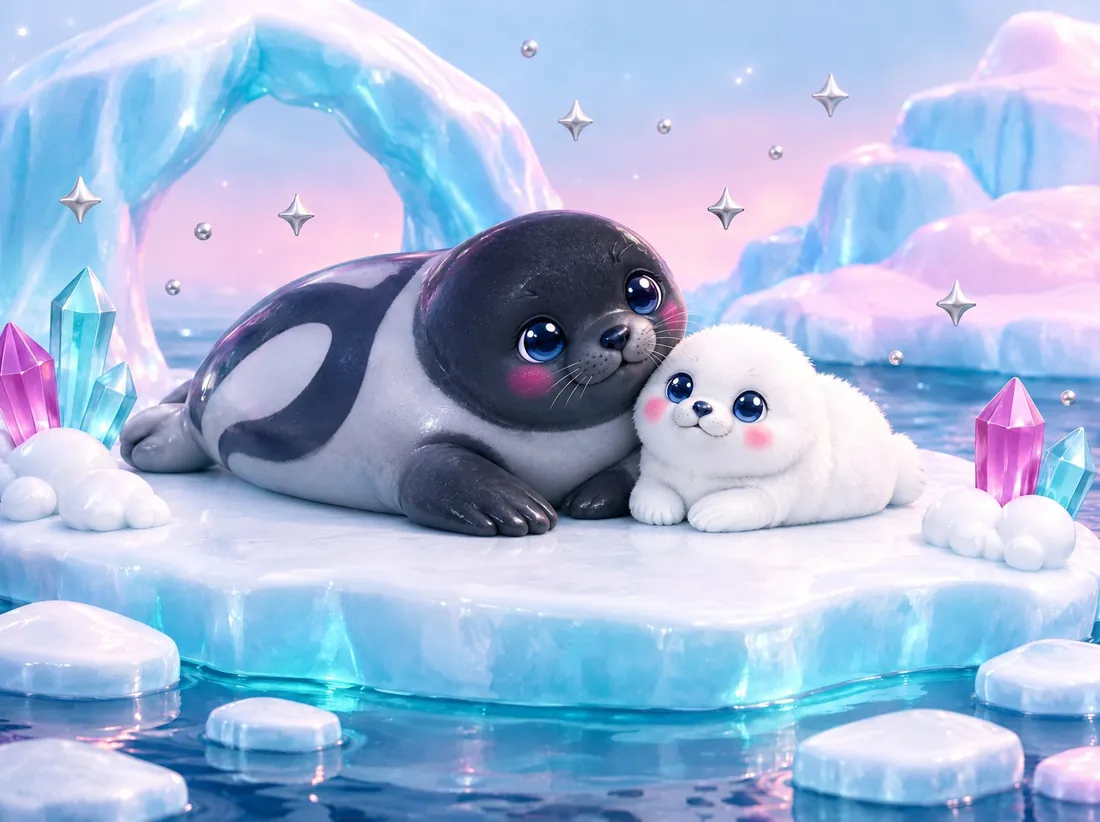
Grown-up harp seals have a dark patch on their backs that looks like a harp! That’s how they got their name. They live in the cold North Atlantic and Arctic Oceans.
Harp seal pups are born on the sea ice with almost no blubber. At first, their fluffy coat is white. Mom feeds her pup very rich milk for about 12 days, half as long as my Advent calendar. The pup quickly grows a thick layer of blubber.
TODAY’S MINI MISSION · DRAW IT
Draw a harp seal pup on the ice with its fluffy white coat. Then draw a grown-up harp seal next to it. Don’t forget the dark harp shape on its back.
IF THEY ASK WHY
What is a harp? A big musical instrument with many strings that you pluck. Its curved frame looks a bit like the patch on the seal’s back.
How thick can blubber get?
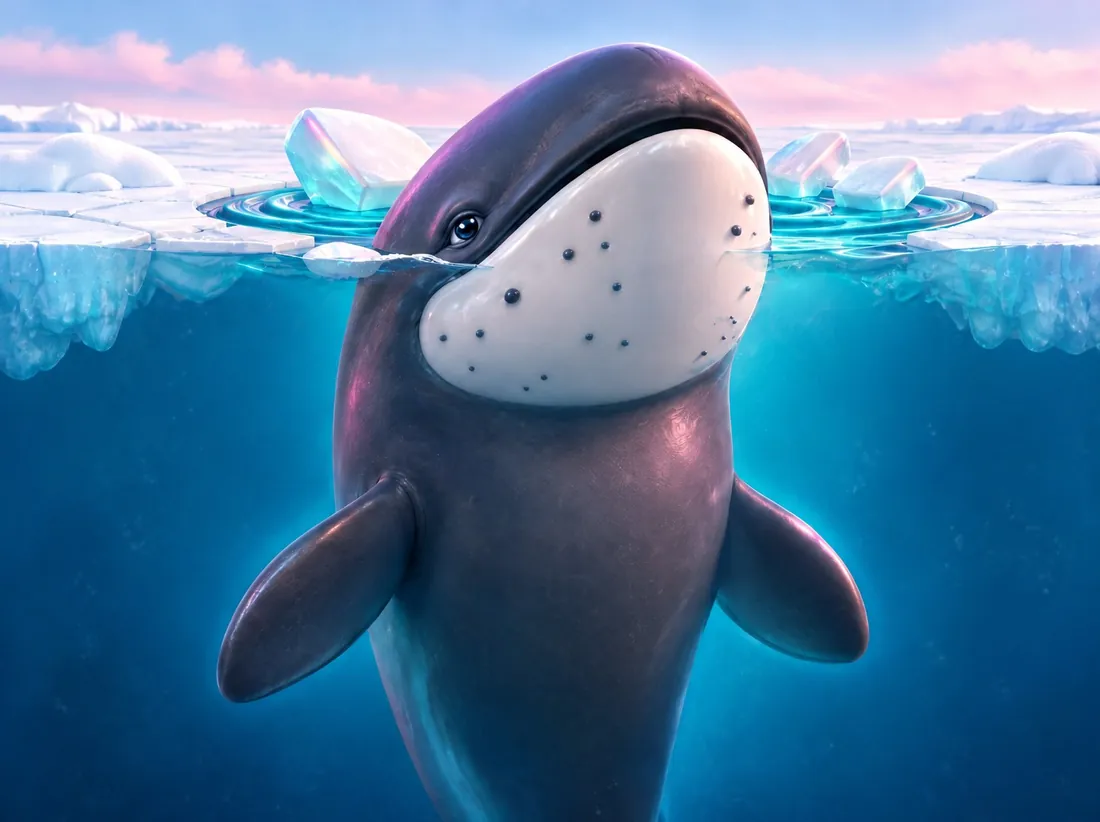
A bowhead whale’s blubber can be up to about 19 inches (half a meter) thick. That’s about as long as your arm. It keeps the whale warm in icy water.
Bowhead whales may live more than 200 years! A lifespan that long would mean more than 200 birthdays.
Bowheads live in the Arctic all year round. They can break through sea ice with their huge heads to make a hole to breathe.
TODAY’S MINI MISSION · QUESTION FOR DINNER
Who is the oldest person you know? How many of their lifetimes would fit into 200 years?
IF THEY ASK WHY
How do scientists know their age? They study tiny changes inside the whales’ eyes. These changes build up slowly, year after year.
How do musk oxen stay warm?
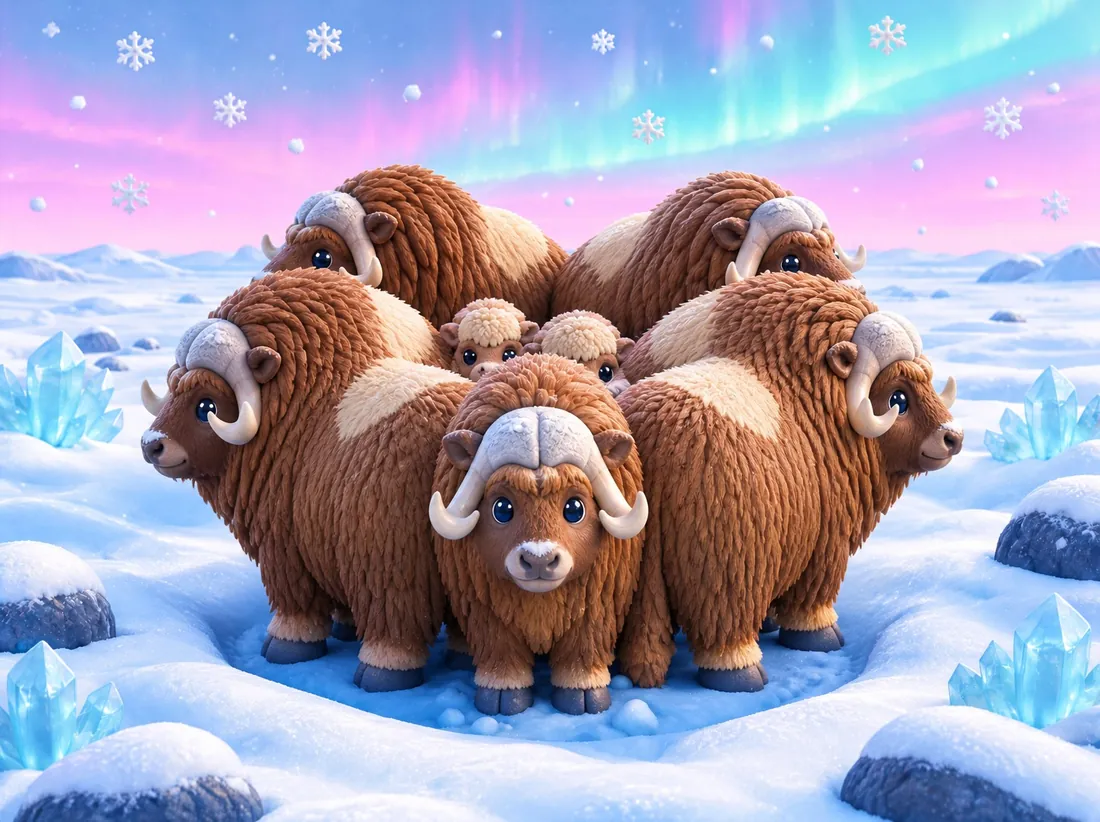
Musk oxen have a very warm coat. Under their long, shaggy hair grows soft wool called qiviut (say KIV-ee-ut). It is much warmer than sheep’s wool, the kind in a winter sweater. In spring, musk oxen shed it in big tufts.
When a wolf pack surrounds them, musk oxen stand in a tight circle, all facing out! The calves in the herd press close to their moms or huddle inside the circle. Now the wolves see only a wall of heads and horns.
TODAY’S MINI MISSION · DO IT
Make a musk ox circle with your family. Keep a teddy bear safe in the middle.
IF THEY ASK WHY
Why do they face out? Their heads and horns are their strongest parts. Facing out, they keep the wolves away from their sides and from the calves.
Where do small Arctic animals go in winter?
Some go under the snow! Lemmings don’t sleep all winter. They stay busy under the snow, in tunnels close to the ground, where it is warmer than in the icy wind above. They eat plants and build round nests of grass.
Most collared lemmings turn completely white in winter. No other rodent does that. In winter, they also grow special double claws on their front feet to dig through snow and ice.

TODAY’S MINI MISSION · TELL IT
Snowy owls hunt lemmings. Tell someone at home how a white coat could help a lemming hide from a snowy owl.
IF THEY ASK WHY
What happens to the double claws? When winter is over, the big winter claws wear away or fall off, and the lemming’s normal claws are left.
Know a family who loves building snow forts? Send them the lemming story. These little animals live in a snow fort all winter long. Share it
What’s inside the Arctic and Antarctic Animals Advent Calendar?
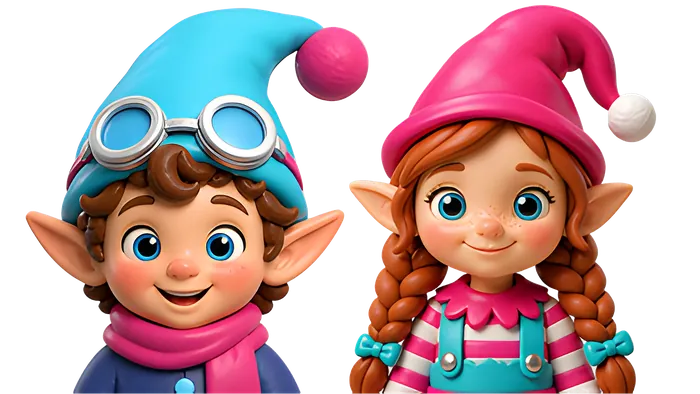
The Arctic and Antarctic Animals Advent Calendar (Theo & Tilda’s Polar Animals Advent Calendar on the cover) is a printable advent calendar with 24 true stories about Arctic and Antarctic animals for kids ages 3 to 8, one for each day from December 1 to 24. The stories above are Days 1 to 3, 14, 18, 20, 22, and 24.
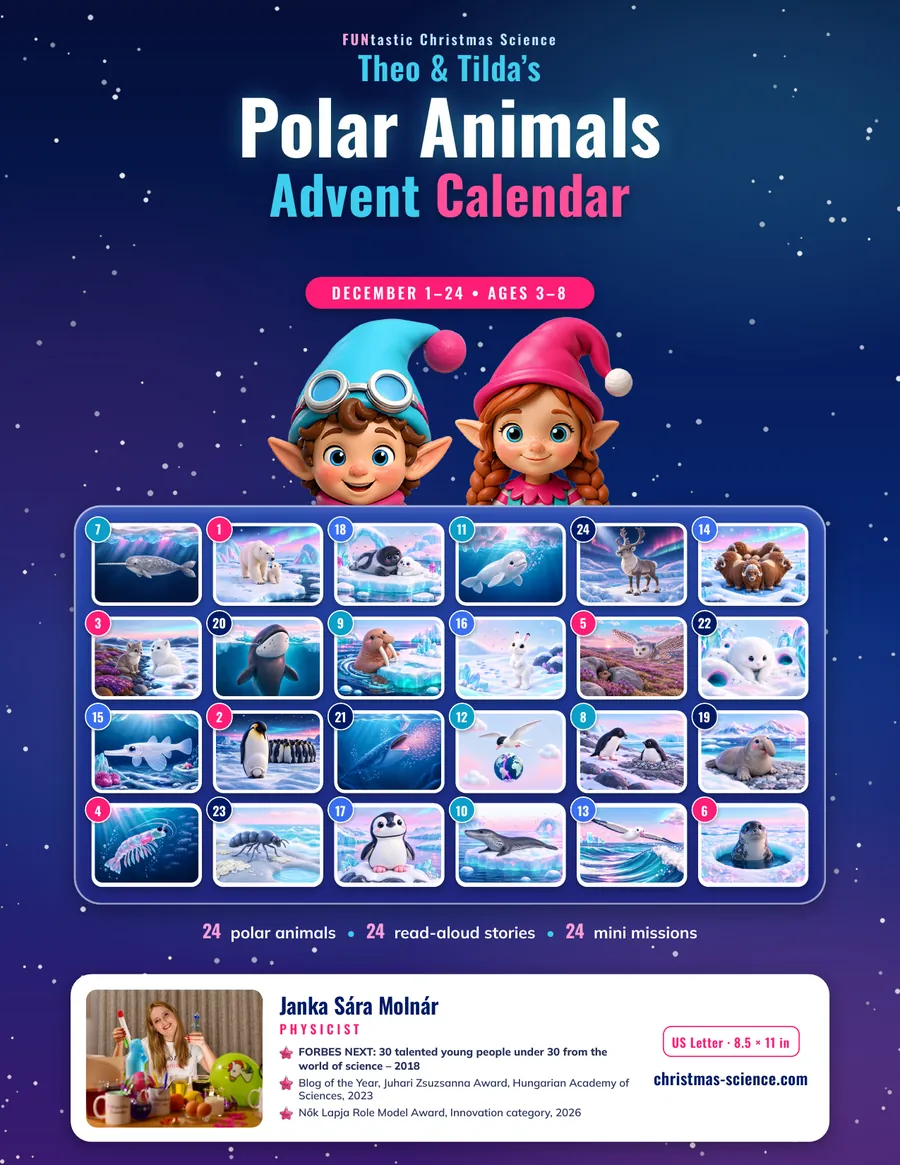
- 24 day pages, each with its own picture, a short true story to read aloud, a Science word, a mini mission (a quiz, a game, a drawing, or a question for dinner), and an “If they ask why” helper for the grown-up
- 24 real polar animals, each with a badge: Arctic, Antarctic, or both
- A Polar Explorer Passport: color a star every day, and the 24 letters spell a secret sentence
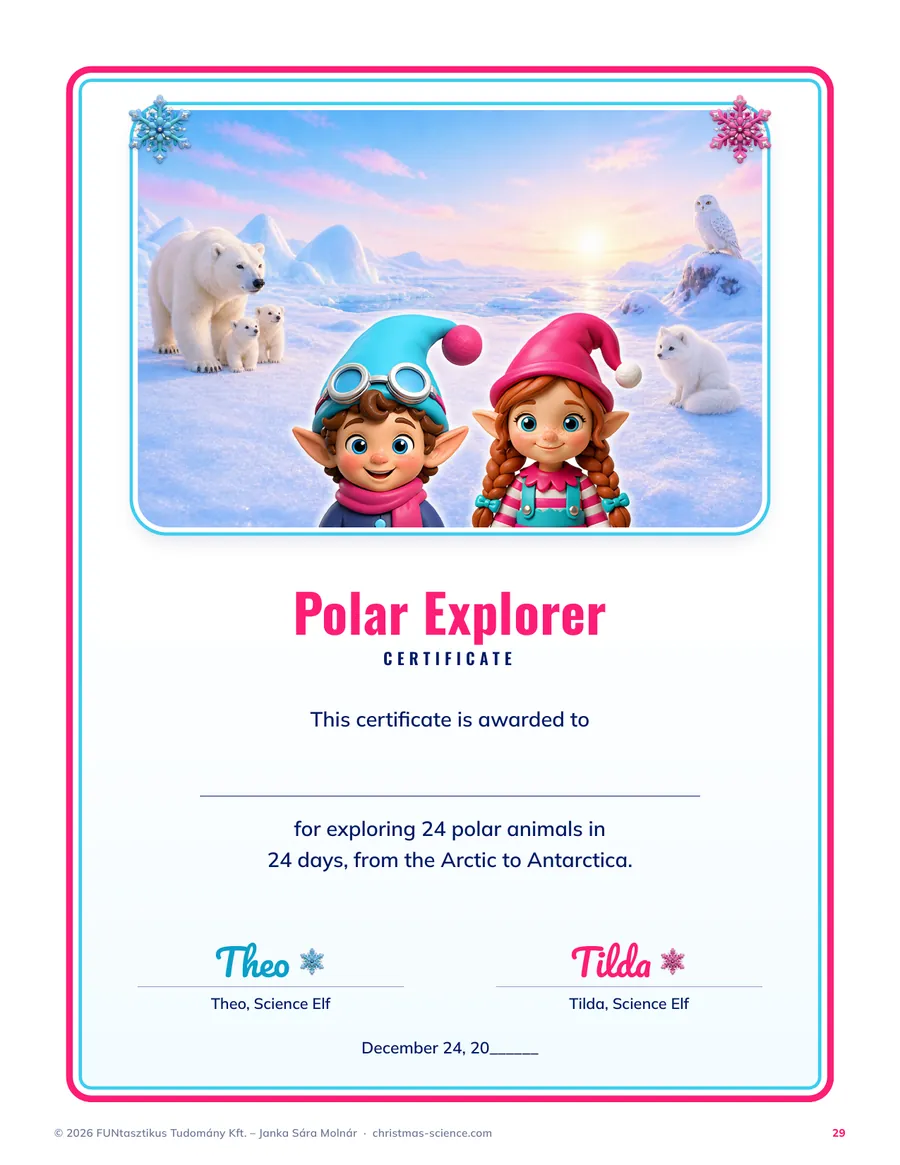
- A Polar Explorer certificate for December 24
- Most missions need nothing at all. No printer? Read it on a tablet, a laptop, or a phone.

Kids ask the best questions about cold places. Isn’t the polar bear cold? How does a penguin dad keep an egg warm on the ice? Each day page answers one big question in about a minute, with facts I checked against NOAA, Polar Bears International, and other trusted science sources.
Read it at bedtime, at breakfast, or snuggled under a blanket. Five minutes together is enough.
Looking for a different theme? Here are all my printable advent calendars for kids, from true dinosaur stories to rockets and planets. And if your child asks whether penguins and polar bears live together, read eight more true stories from both ends of the Earth.
Merry Christmas from the Arctic
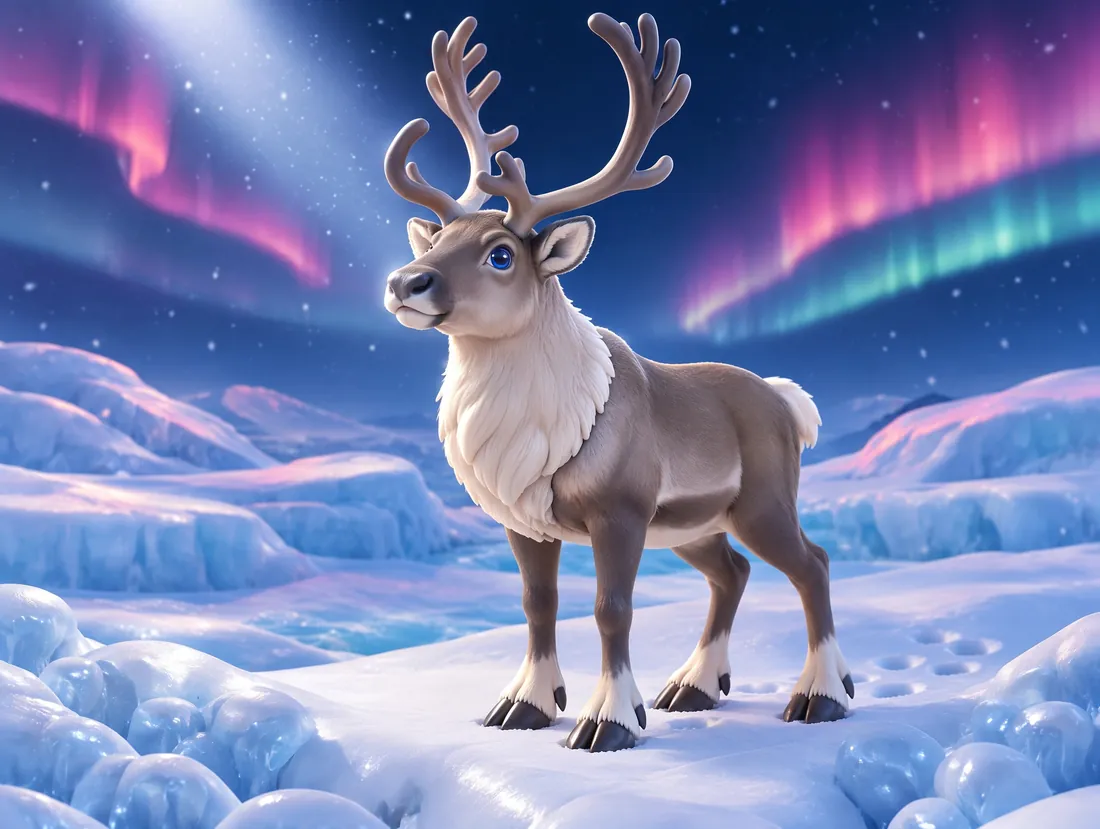
We started with a polar bear, and we end with the animal on the Christmas Eve page of my calendar: the reindeer.
The shine in a reindeer’s eyes changes color in winter! Reindeer eyes reflect light, like a cat’s. In summer, the shine is gold-green, and in the dark Arctic winter it turns deep blue. The blue shine helps their eyes catch more of the little light there is.
For winter, reindeer grow a thick coat of hollow hairs, like the polar bear at the top of this page. And their big, scoop-shaped hooves help them dig through the snow to find food.
Tonight’s mission: Look back at all the animals on this page. Which ones have a trick for winter? Count them.
Which ones? Here are a few. The polar bear has thick fur and blubber. Emperor penguins huddle. Many Arctic foxes and most collared lemmings turn white. Musk oxen grow soft qiviut, and the shine in the reindeer’s eyes turns blue. There is more than one right answer.

Theo & Tilda’s Screen-Free Advent Calendar
24 tiny wonders and 24 kindness missions, one for every day from December 1 to 24, plus 4 Weekend Labs with my real photos and 3 games. Most tiny wonders take about 10 minutes and use things you probably already have. 22 pages, for ages 3–9.
This calendar is free to share. Print it as often as you like for your family or class, and pass it on to friends, families, and teachers. Please don’t sell it or change it.

Know a family with a little animal lover?
Send them tonight’s stories about staying warm in the ice and snow. The stories above are free to read aloud, and each one takes about a minute.
COPY THIS MESSAGE
Paste it into a family group chat, or send it to a friend.
I found true stories about how polar animals stay warm, to read to the kids tonight: a polar bear whose fur isn’t really white, a penguin dad who keeps the egg on his feet, and a lemming that spends the winter in snow tunnels. A physicist checked every fact. www.christmas-science.com/blog/how-do-polar-animals-stay-warm
How polar animals stay warm: quick answers
How do Arctic animals stay warm?
Arctic animals stay warm with thick fur or feathers that trap air, a thick layer of fat called blubber, huddling together, and hiding from the wind, sometimes in tunnels under the snow. Many use more than one of these tricks.
Is a polar bear’s fur white?
No. Its long outer hairs are see-through and hollow. Light bounces around inside them and comes back out, so the fur looks white.
Do polar bears have black skin?
Yes. Under its see-through fur, a polar bear’s skin is black.
How do penguins stay warm in Antarctica?
Emperor penguins have several layers of feathers and lots of body fat. On very cold days, they also huddle together. The huddle slowly shuffles, so each bird gets a turn closer to the warm middle.
What is blubber?
Blubber is a thick layer of fat under the skin that keeps seals and whales warm in icy water. A bowhead whale’s blubber can be up to about 19 inches (half a meter) thick.
Can polar bears get too hot?
Yes. Fur and fat keep a polar bear so warm that it can get too hot when it runs.
What age is the Arctic and Antarctic Animals Advent Calendar for?
Ages 3 to 8. Little ones can enjoy it with a grown-up reading aloud. Each of the 24 day pages has a short true story, a Science word, and a mini mission, and the calendar comes as two PDF files, US Letter and A4. No printer? You can read it on a tablet, a laptop, or a phone.

About Janka
Janka Sára Molnár is a physicist and award-winning science communicator from Hungary, and the founder of FUNtastic Christmas Science. As a high school student, she built particle detectors and took them to CERN several times, where she presented them in its teacher program. She graduated from Eötvös Loránd University (ELTE) in Budapest, and for almost 15 years she has run several hundred science shows for children and families.
- FORBES NEXT: 30 talented young people under 30 from the world of science – 2018
- Rising Star Award, Creator Awards, 2024
- Role Model Award, Innovation, Nők Lapja, 2026
- Juhari Zsuzsanna Blog of the Year Award, Hungarian Academy of Sciences, 2023
- Winner of the HBO Max reality show A Híd (The Bridge)
The polar animal illustrations and the pictures of Theo, Tilda, and their world were created with AI-assisted tools (Canva) and edited by our team. Physicist Janka Sára Molnár checked every fact in this post against NOAA, Polar Bears International, and other trusted science sources.
Keep reading
More Christmas science ideas from Theo, Tilda, and me.
 For parents and teachers · 14 min readDo Penguins and Polar Bears Live Together? (For Kids)Do penguins and polar bears live together? No! Polar bears live in the far north, penguins in the south. 8 true polar stories, physicist-checked.Read the post →
 For parents · 16 min readFun Facts About Ocean Animals for Kids: 8 True Sea StoriesFun facts about ocean animals for kids: an octopus with three hearts, a seahorse dad, a fish that makes sand. 8 true stories, checked by a physicist.Read the post →
 For parents · 11 min readWinter Solstice for Kids: Why Are Days Shorter in Winter?Winter solstice for kids, explained by a physicist: why winter days are short, why Earth is closest to the Sun in January, and 5 true sky stories.Read the post →
© 2026 FUNtasztikus Tudomány Kft. – Janka Sára Molnár