Do Penguins and Polar Bears Live Together? Arctic vs. Antarctic Animals for Kids (8 True Stories)
No, penguins and polar bears don’t live together, and they never meet in the wild. Polar bears live only in the Arctic, around the North Pole. Almost all wild penguins live in the southern half of the world, and the penguins in this post live around Antarctica, in the far south. Here are eight true stories about Arctic and Antarctic animals for kids, from my Arctic and Antarctic Animals Advent Calendar. Each one takes about a minute to read aloud.
- 8 polar animals
- Ages 3–8
- About a minute each
- Nothing to buy
Save this for a cozy winter night, or send it to a friend whose child thinks polar bears and penguins are next-door neighbors.
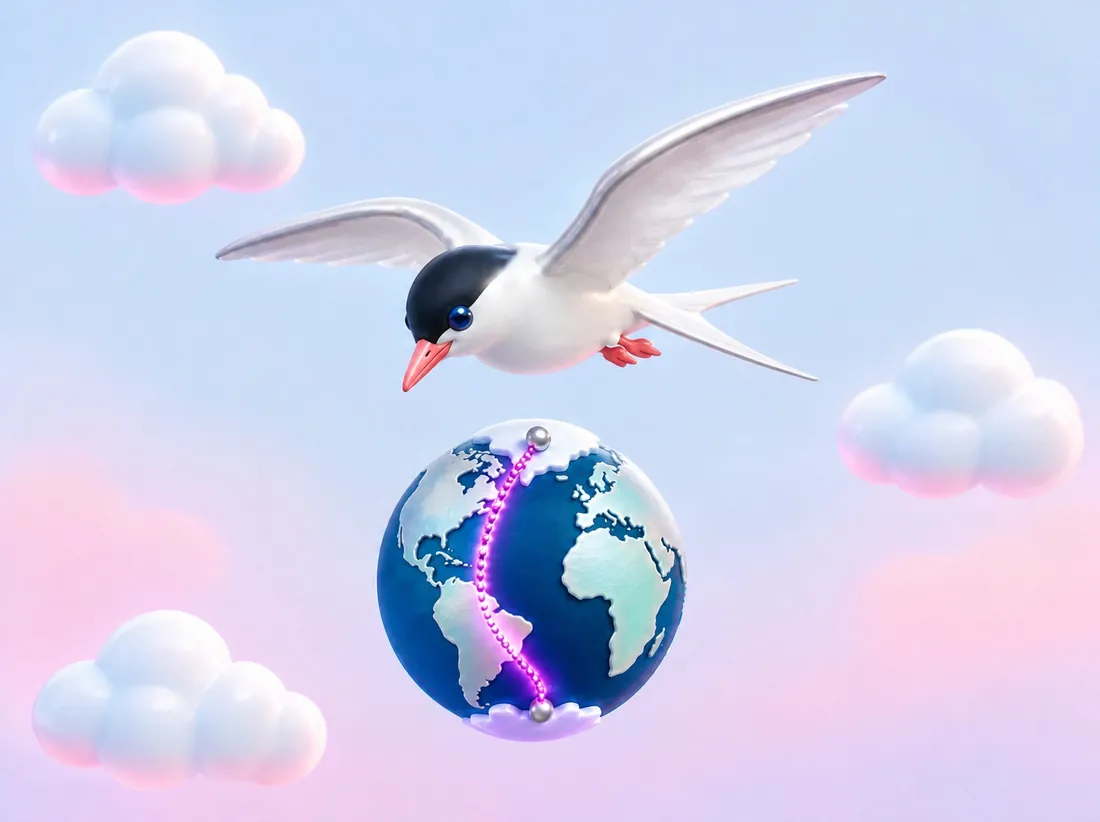
From Pole to Pole
Arctic terns fly from the Arctic to the ocean around Antarctica and back, every year!
Some fly about 50,000 miles (more than 80,000 kilometers) in a year. That’s about two trips around the whole Earth. It’s the longest animal migration ever tracked.
So an Arctic tern sees both ends of the world. A polar bear and a penguin never do.
Stop here and ask your child: If you could fly from the top of the world to the bottom, what would you take with you? Let’s fly with the tern and meet the animals at both ends. Our trip ends at the bottom of this page.
Know a little one who sleeps with a toy polar bear and a toy penguin? Send this to their grown-up. Each story answers a real question kids ask, like why a polar bear never eats a penguin. Share it
What is the difference between the Arctic and Antarctica?
The Arctic is at the top of the Earth, around the North Pole. In the middle of the Arctic is an ocean, often covered with floating sea ice, and there is land all around it. Antarctica is at the bottom of the Earth, around the South Pole. It is land, a whole continent covered with thick ice, and there is ocean all around it.
The seasons are flipped, too. When it is winter in the Arctic, it is summer in Antarctica.
In my calendar, a badge on every page shows where its animal lives: pink for the Arctic and blue for Antarctica. The Arctic tern on Day 12 gets both.
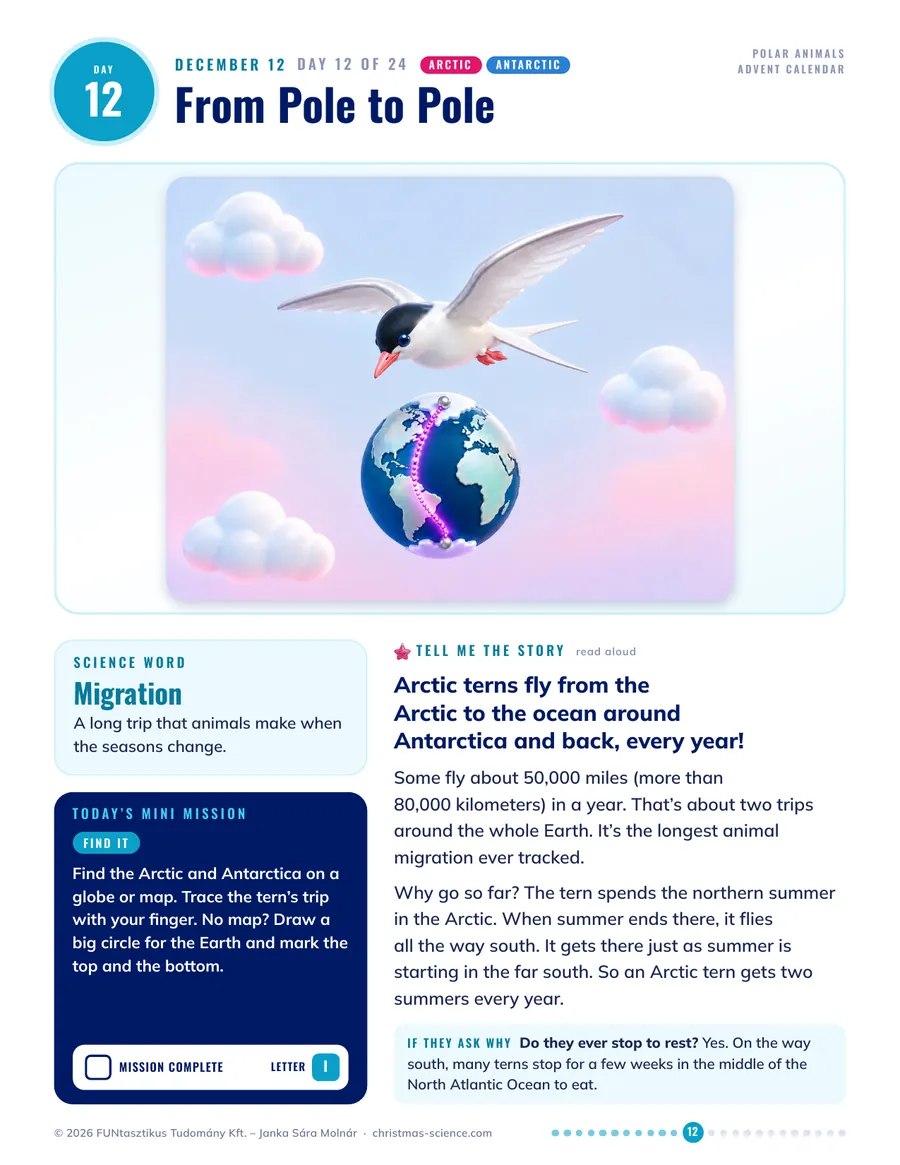
TODAY’S MINI MISSION · FIND IT
Find the Arctic and Antarctica on a globe or map. Trace the tern’s trip with your finger. No map? Draw a big circle for the Earth and mark the top and the bottom.
Which animals live in the Arctic?
Polar bears, Arctic foxes, snowy owls, narwhals, walruses, beluga whales, and reindeer all live in the Arctic. Here are three of them.
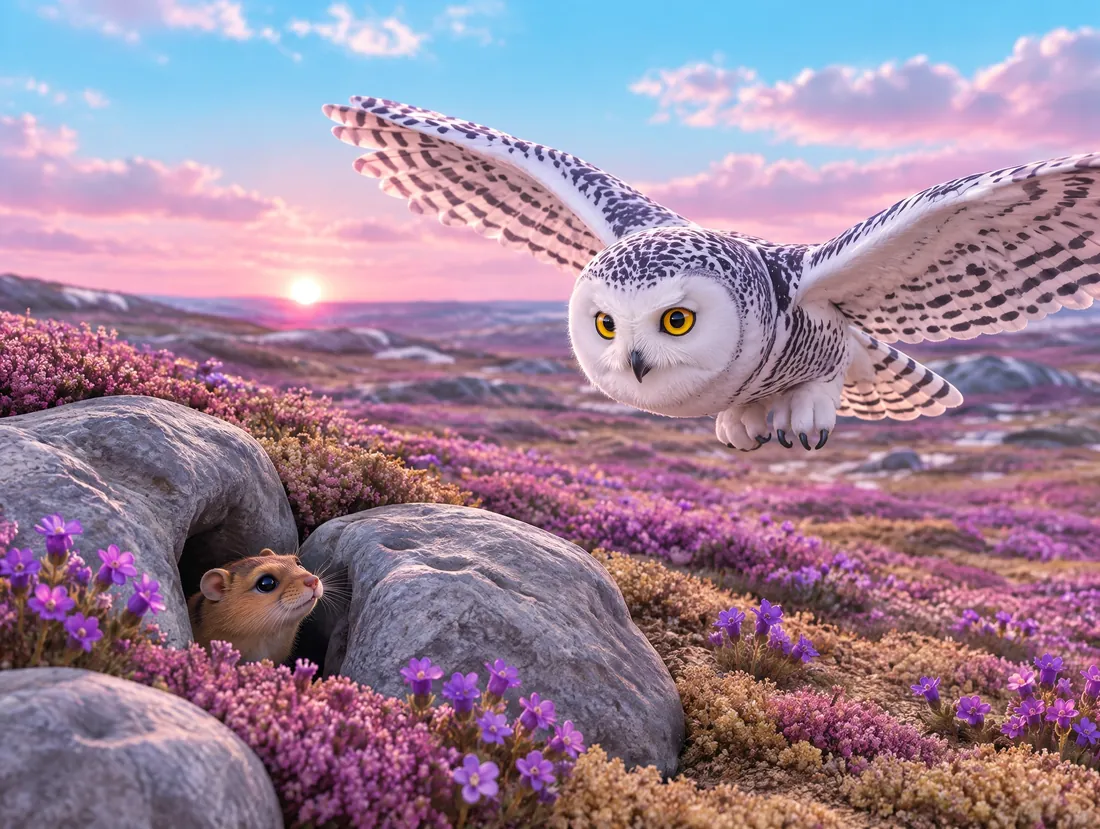
Why do snowy owls hunt at midnight?
In the Arctic summer, the sun shines day and night! So snowy owls can hunt on the tundra at any hour. Their main food is the lemming, a small, furry animal a bit like a hamster. One owl may eat more than 1,600 lemmings in a year. That’s more than four lemmings a day.
Snowy owls have thick feathers all the way down their legs and toes, like fluffy boots. In winter, many of them fly south. Some even visit the northern United States.
TODAY’S MINI MISSION · QUESTION FOR DINNER
Ask everyone at dinner: How would you sleep if the sun never set?
IF THEY ASK WHY
Why doesn’t the sun set? In summer, the top of the Earth is tilted toward the sun, so the far north stays in sunlight all day and all night.
Is a narwhal’s tusk a horn or a tooth?
A narwhal’s long tusk is really a tooth! In most males, it grows out through the front of the jaw and twists in a spiral. It can grow almost 10 feet (3 meters) long. That’s about as tall as a basketball hoop.
Narwhals live in the cold Arctic Ocean. In winter, they dive deep under the sea ice to hunt fish. A narwhal has no fin on its back, which may help it swim close under the ice.
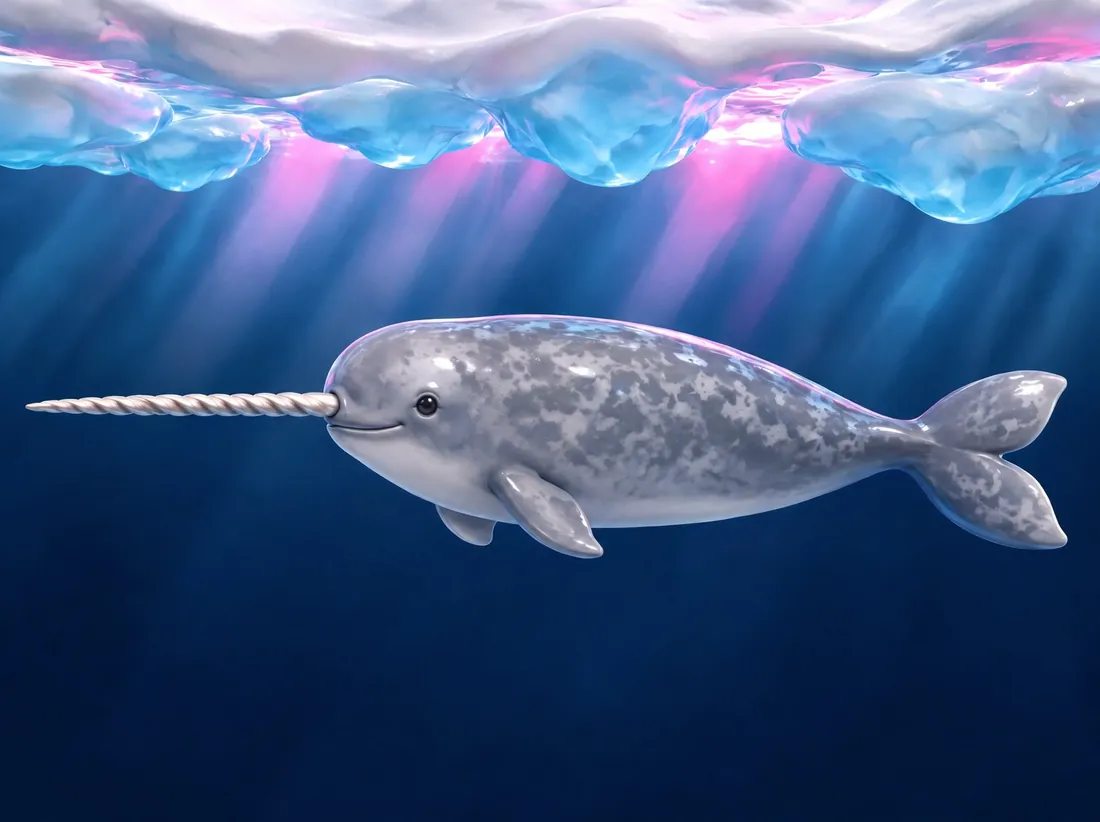
TODAY’S MINI MISSION · MOVE IT
Draw a spiral in the air with your finger, like the twist on a narwhal’s tusk.
IF THEY ASK WHY
Do females have tusks? Most don’t, but a few do. And once in a while, a narwhal grows two tusks.
Does someone in your family love unicorns? Send them the narwhal story. A real animal with a long spiral tusk is even better than a made-up one. Share it
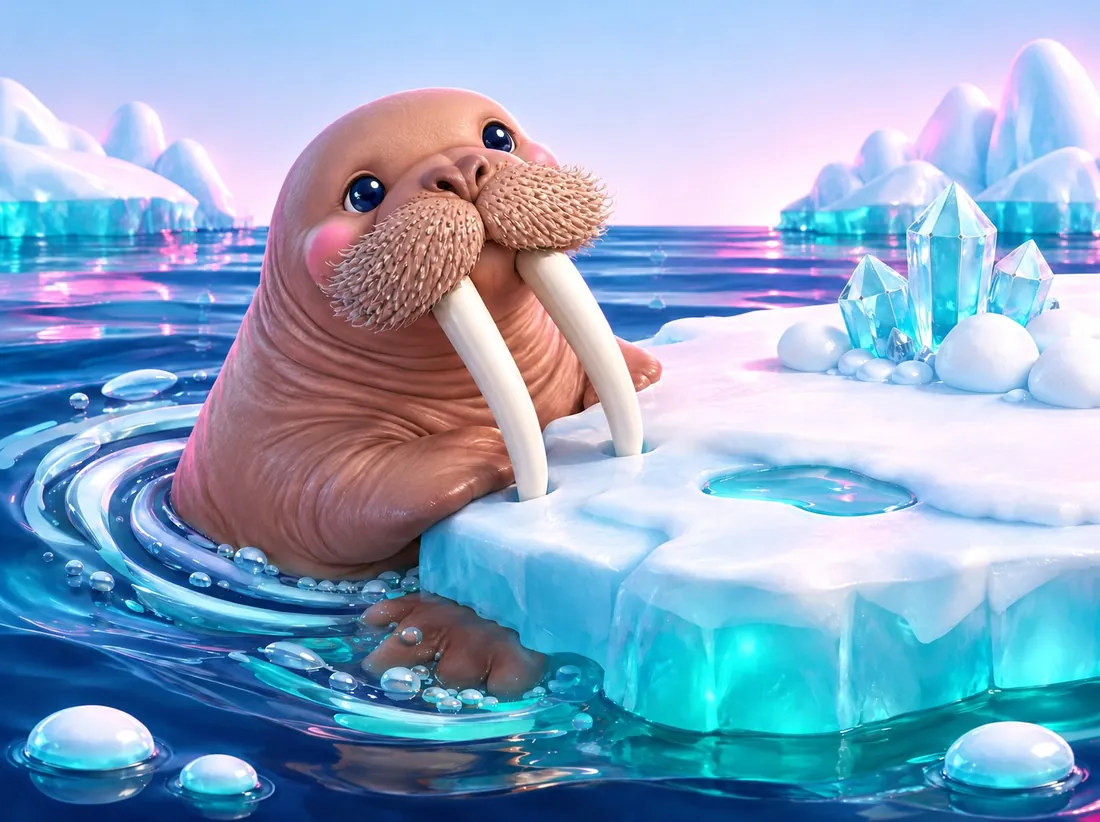
How does a walrus find food on the murky seafloor?
A walrus finds its food by touch! On the seafloor, it is hard to see. So a walrus feels for clams with hundreds of sensitive whiskers, many more than a cat has. When it finds one, it sucks the soft clam right out of the shell.
Walruses also use their long tusks to help them climb onto the ice. They hook their tusks over the edge and pull their heavy bodies up. Both males and females have tusks.
TODAY’S MINI MISSION · TRY IT
Ask a grown-up to put a few soft toys in a basket. Sit down, close your eyes, and find one just by touch, like a walrus feeling for clams.
IF THEY ASK WHY
Why use tusks to climb? A walrus is very heavy, and it has flippers, not hands. Its tusks work like ice picks.
Which animals live in Antarctica?
Penguins, seals, whales, seabirds, and tiny krill live in and around Antarctica. No polar bears live there. Here are four Antarctic animals, from a penguin to a tiny insect with no wings.
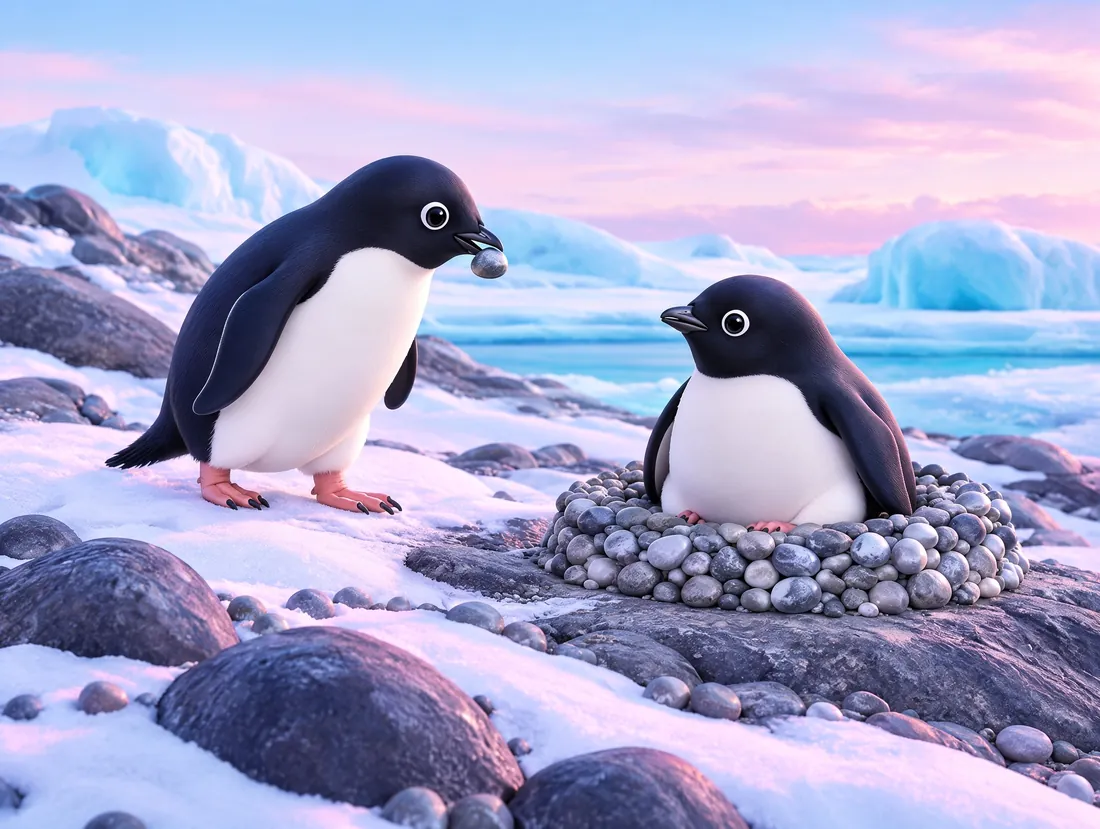
How do penguins build a nest with no trees?
Adélie (say uh-DAY-lee) penguins build their nests out of pebbles! In Antarctica, there are no trees, so there are no twigs. The penguins collect small stones in their beaks instead. They pick a spot on a slope so that melting snow runs away from their eggs.
A good pebble is precious. Sometimes a penguin even sneaks a stone from a neighbor’s nest when no one is looking.
TODAY’S MINI MISSION · COUNT IT
Build a nest for a stuffed toy out of soft things from around the house, like socks, scarves, or pillows. How many pieces did you need?
IF THEY ASK WHY
Why not a nest of snow? Snow melts in spring, and the nest would turn into a puddle. Stones stay solid and keep the eggs up off the wet ground.
What do penguins and whales eat in Antarctica?
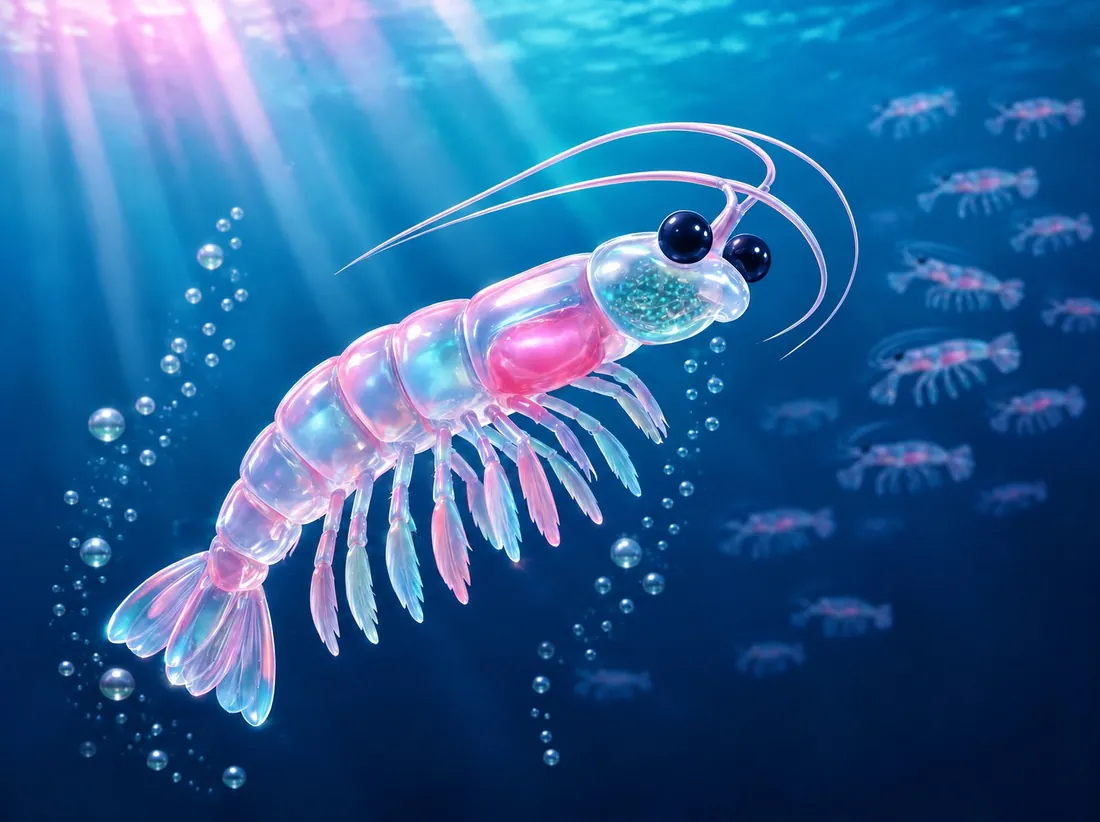
Many penguins and whales in Antarctica eat krill. You can see right through an Antarctic krill! Its body is mostly see-through, so you can often spot the tiny ocean plants it ate, right inside its tummy. A grown-up krill is almost 2½ inches (6 centimeters) long. That’s about as long as your finger.
Krill swim together in huge groups called swarms, in the cold ocean around Antarctica. They are small, but there are so many of them that they feed whales, seals, penguins, fish, and seabirds.
TODAY’S MINI MISSION · QUIZ
Which of these animals eats krill? A) A blue whale B) A polar bear C) An Arctic fox
Answer: A. Blue whales eat krill. Polar bears and Arctic foxes live in the far north, a long way from these krill.
IF THEY ASK WHY
How can something so small feed a whale? There are huge numbers of krill, and a whale gulps a whole mouthful of them at once.
Know a teacher who is starting a polar animals unit? Send them this page. The sorting game below works as a two-minute circle-time activity. Share it
Do polar bears eat penguins?
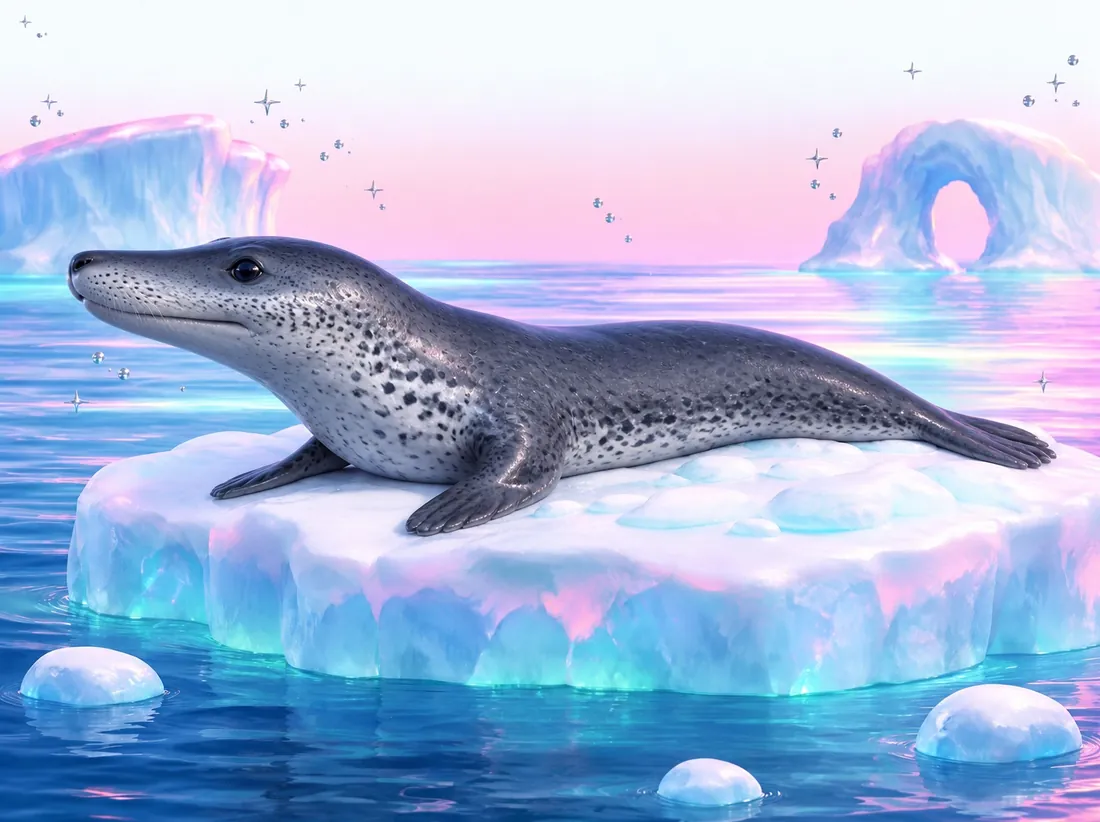
No. Polar bears and penguins never meet in the wild, so a polar bear never gets the chance. In Antarctica, one of the animals that hunt penguins is the leopard seal.
Leopard seals are predators that eat almost anything, including penguins and fish. They even have special teeth for straining tiny krill out of the water. The seal takes a big gulp of seawater with krill in it. Then it pushes the water out between its back teeth. The teeth fit together like a strainer, so the krill stay inside.
TODAY’S MINI MISSION · QUIZ
Look at the picture. Why do you think it is called a leopard seal? A) It can roar B) It has spots C) It climbs trees
Answer: B. Its coat has dark spots, a little like a leopard’s.
IF THEY ASK WHY
Is it related to a leopard? Not closely. It is a seal, and seals are closer cousins of dogs and bears than of big cats. It only got its name from its spotted coat.
Are there any insects in Antarctica?
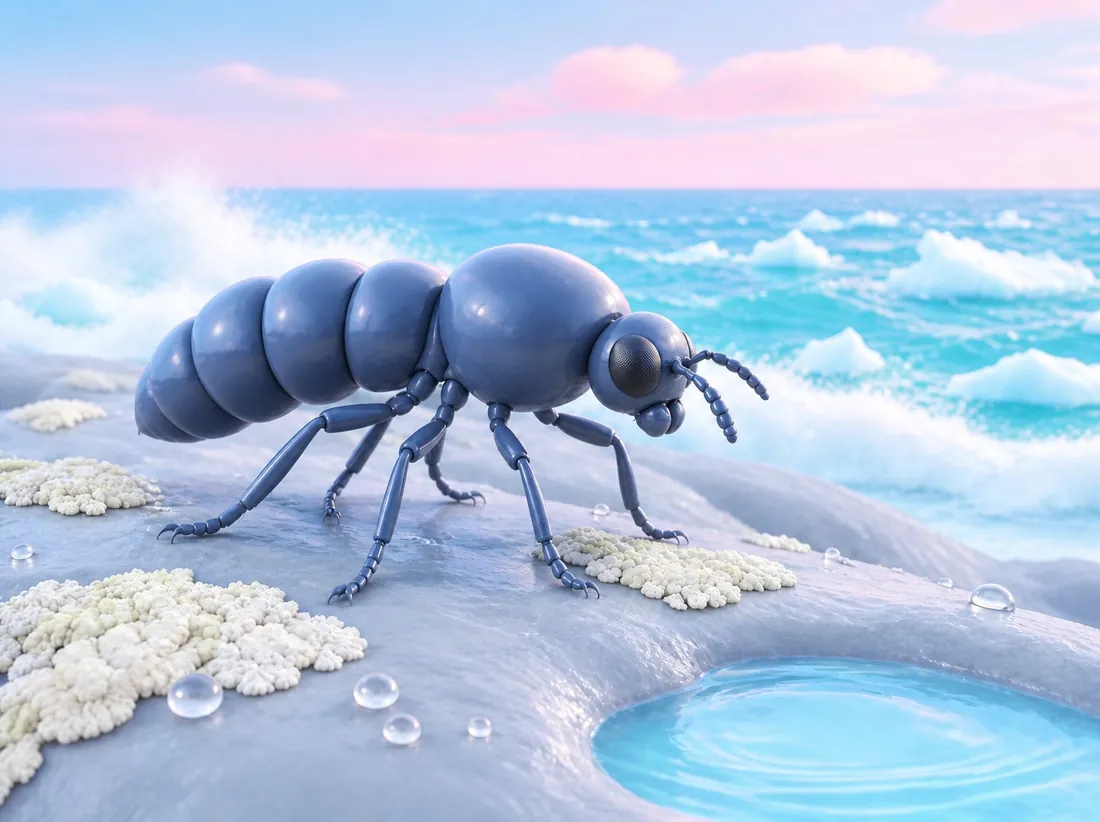
Only a few, and just one is Antarctica’s very own: a tiny midge with no wings! A grown-up midge is no bigger than a grain of rice. It lives near the coast, among the rocks. Scientists study it to learn how it survives freezing and drying out.
A young midge is called a larva. It looks like a tiny worm, and it can live through being frozen in winter. It takes two years to grow up. The grown-up midge lives only about a week.
TODAY’S MINI MISSION · QUESTION FOR DINNER
Why might a tiny insect in a very windy place be better off without wings?
IF THEY ASK WHY
Why no wings? Scientists think wings would not help here. A strong wind could blow a flying insect away from its home, out to sea.
ARCTIC OR ANTARCTIC? A SORTING GAME
Read each animal’s name out loud. Your child points up for the Arctic, at the top of the world, or down for Antarctica, at the bottom.
Polar bear · Emperor penguin · Narwhal · Antarctic krill · Walrus · Leopard seal · Snowy owl · Adélie penguin
Answers: Up for the Arctic: polar bear, narwhal, walrus, snowy owl.
Down for Antarctica: emperor penguin, Antarctic krill, leopard seal, Adélie penguin.
Bonus question: Which bird gets both? The Arctic tern!
For teachers: say the animals in a different order each time.
What’s inside the Arctic and Antarctic Animals Advent Calendar?
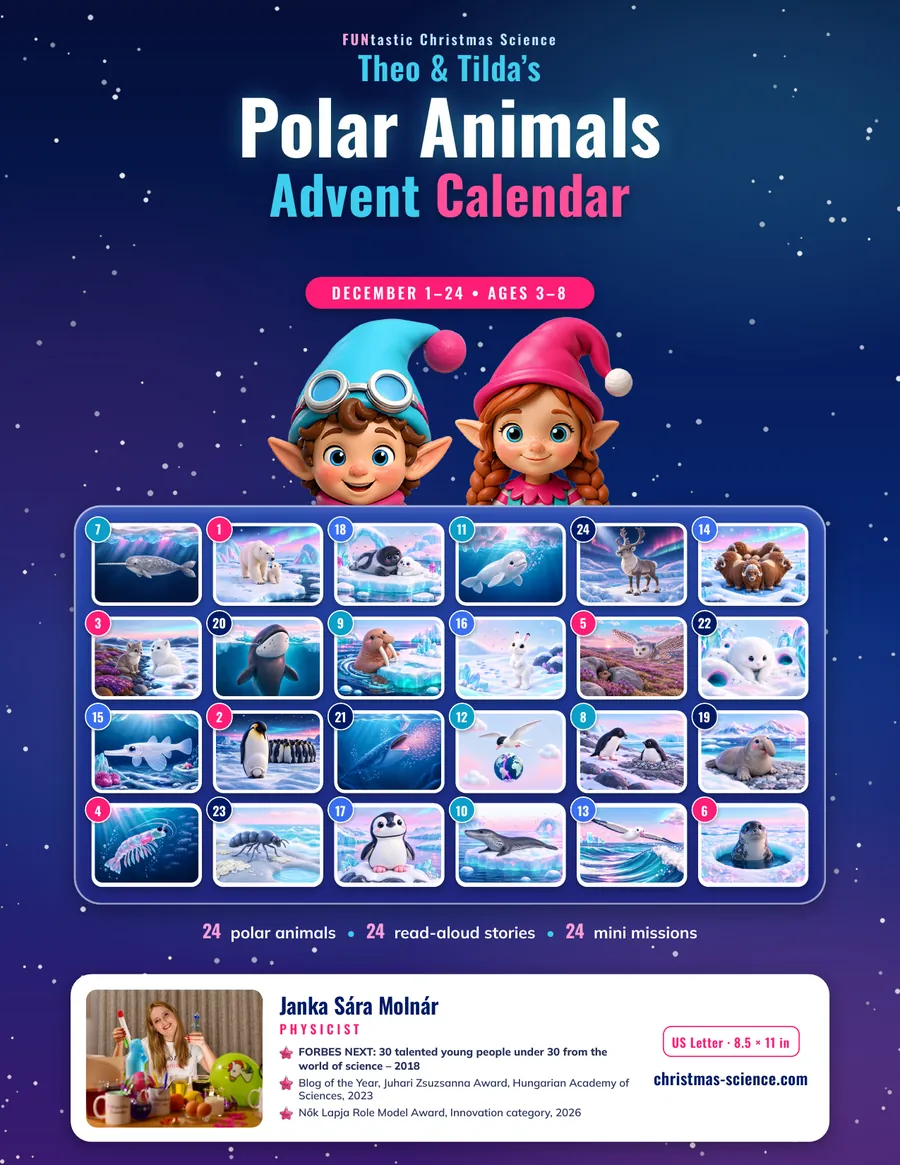
The Arctic and Antarctic Animals Advent Calendar (Theo & Tilda’s Polar Animals Advent Calendar on the cover) is a printable advent calendar with 24 true stories about Arctic and Antarctic animals for kids ages 3 to 8, one for each day from December 1 to 24. The stories above are Days 4, 5, 7 to 10, 12, and 23.
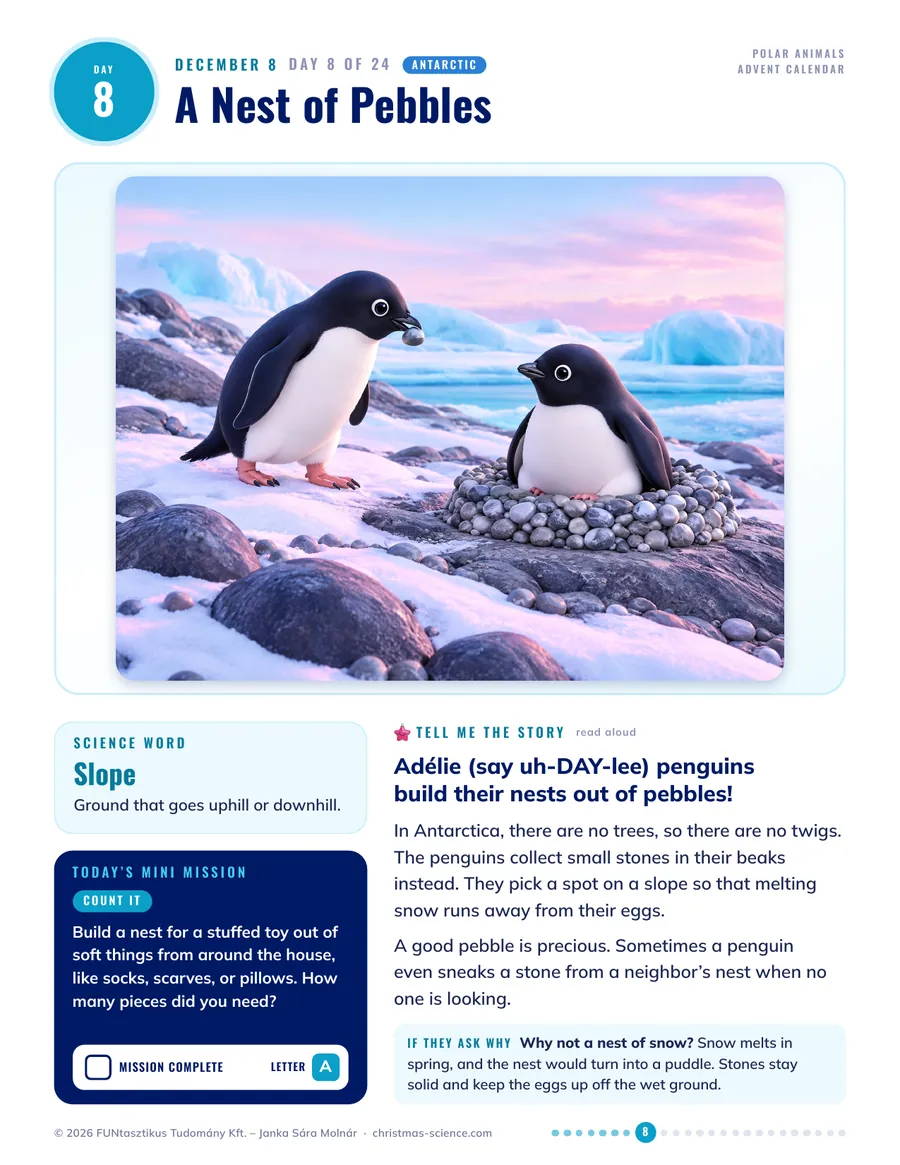
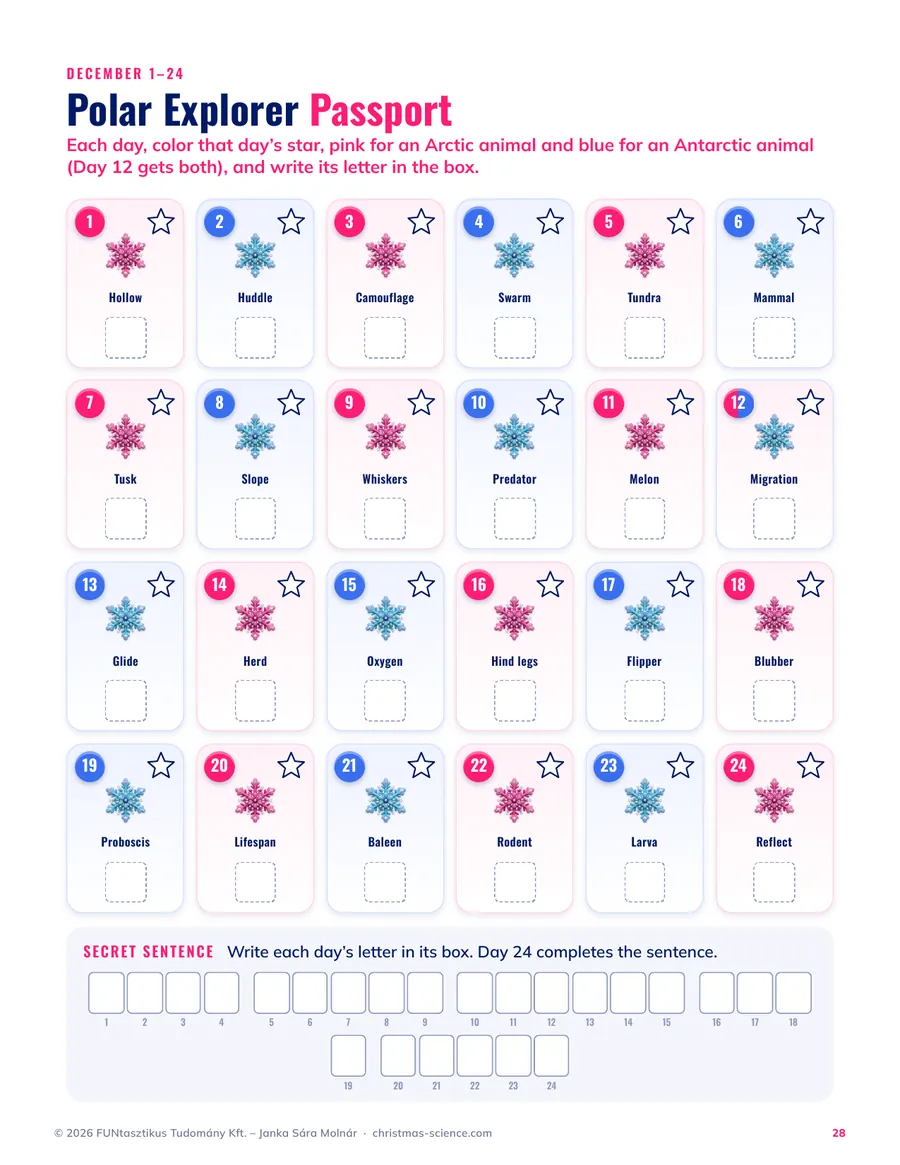
- 24 day pages, each with its own picture, a short true story to read aloud, a Science word, a mini mission (a quiz, a game, a drawing, or a question for dinner), and an “If they ask why” helper for the grown-up
- 24 real polar animals, each with a badge: Arctic, Antarctic, or both
- A Polar Explorer Passport: color a star every day, and the 24 letters spell a secret sentence
- A Polar Explorer certificate for December 24
- Most missions need nothing at all. No printer? Read it on a tablet, a laptop, or a phone.

Kids ask the best questions about the poles. Do penguins and polar bears ever meet? Is a narwhal’s tusk really a horn? Each day page answers one big question in about a minute, with facts I checked against NOAA, Polar Bears International, and other trusted science sources.
Read it at bedtime, at breakfast, or snuggled under a blanket on a cold December evening. Five minutes together is enough.
Looking for a different theme? Here are all my printable advent calendars for kids, from true dinosaur stories to rockets and planets. Want to know how polar bears and penguins keep warm in all that ice? Read eight more true stories about how polar animals stay warm. And for the dinosaurs that lived near the poles, read Did Dinosaurs Live in the Snow?
Two summers every year
We started with the Arctic tern, and we end with it too. Why does it fly so far?
The tern spends the northern summer in the Arctic. When summer ends there, it flies all the way south. It gets there just as summer is starting in the far south. So an Arctic tern gets two summers every year.
Do terns ever stop to rest? Yes. On the way south, many terns stop for a few weeks in the middle of the North Atlantic Ocean to eat.
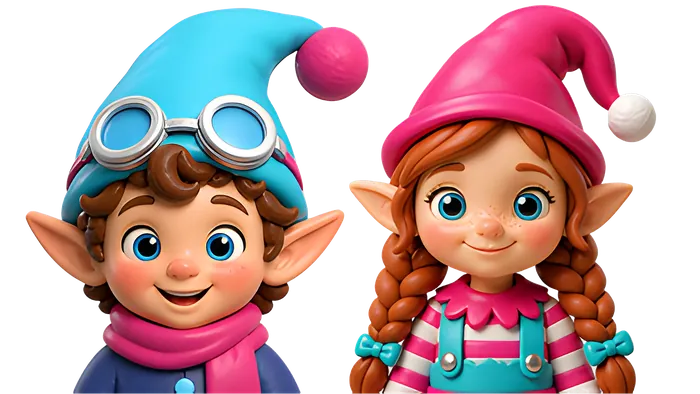
Tonight’s mission: Ask everyone at home, “Would you rather visit the Arctic or Antarctica? Which animal would you look for first?”

Theo & Tilda’s Screen-Free Advent Calendar
24 tiny wonders and 24 kindness missions, one for every day from December 1 to 24, plus 4 Weekend Labs with my real photos and 3 games. Most tiny wonders take about 10 minutes and use things you probably already have. 22 pages, for ages 3–9.
This calendar is free to share. Print it as often as you like for your family or class, and pass it on to friends, families, and teachers. Please don’t sell it or change it.

Know a family with a little polar explorer?
Send them tonight’s trip from the top of the world to the bottom. The stories above are free to read aloud, and each one takes about a minute.
COPY THIS MESSAGE
Paste it into a family group chat, or send it to a friend.
Penguins and polar bears never meet in the wild! I found true Arctic and Antarctic animal stories to read to the kids tonight, from a narwhal whose tusk is really a tooth to penguins that build nests from pebbles. A physicist checked every fact. www.christmas-science.com/blog/do-penguins-and-polar-bears-live-together
Penguins and polar bears: quick answers
Do penguins and polar bears live together?
No. Polar bears live only in the Arctic, in the far north. Almost all wild penguins live in the southern half of the world. The two never meet in the wild.
Do polar bears live in Antarctica?
No. Polar bears live only in the northern half of the world, in and around the Arctic.
Are there penguins in the Arctic?
No. The only penguin that lives north of the equator is the Galápagos penguin, and the Galápagos Islands sit right on the equator, very far from the Arctic.
Do polar bears eat penguins?
No, because they never meet in the wild. In Antarctica, leopard seals are among the animals that hunt penguins.
What is the difference between the Arctic and Antarctica?
The Arctic has an ocean in the middle, with land all around it, at the top of the Earth. Antarctica is land covered with thick ice, with ocean all around it, at the bottom of the Earth.
What age is the Arctic and Antarctic Animals Advent Calendar for?
Ages 3 to 8. Little ones can enjoy it with a grown-up reading aloud. Each of the 24 day pages has a short true story, a Science word, and a mini mission, and the calendar comes as two PDF files, US Letter and A4. No printer? You can read it on a tablet, a laptop, or a phone.

About Janka
Janka Sára Molnár is a physicist and award-winning science communicator from Hungary, and the founder of FUNtastic Christmas Science. As a high school student, she built particle detectors and took them to CERN several times, where she presented them in its teacher program. She graduated from Eötvös Loránd University (ELTE) in Budapest, and for almost 15 years she has run several hundred science shows for children and families.
- FORBES NEXT: 30 talented young people under 30 from the world of science – 2018
- Rising Star Award, Creator Awards, 2024
- Role Model Award, Innovation, Nők Lapja, 2026
- Juhari Zsuzsanna Blog of the Year Award, Hungarian Academy of Sciences, 2023
- Winner of the HBO Max reality show A Híd (The Bridge)
The polar animal illustrations and the pictures of Theo, Tilda, and their world were created with AI-assisted tools (Canva) and edited by our team. Physicist Janka Sára Molnár checked every fact in this post against NOAA, Polar Bears International, and other trusted science sources.
Keep reading
More Christmas science ideas from Theo, Tilda, and me.
 For parents and teachers · 14 min readHow Do Polar Animals Stay Warm? (Physicist-Checked)How do polar animals stay warm? Fur that traps air, thick blubber, and big huddles. 8 true Arctic and Antarctic stories for kids, checked by a physicist.Read the post →
 For parents · 14 min readDeep Sea Creatures for Kids: 7 True Stories from the Dark OceanDeep sea creatures for kids: 7 true read-aloud stories, from a fish with a see-through head to the deepest fish ever filmed. Checked by a physicist.Read the post →
 For parents · 10 min readDid Dinosaurs Live in the Snow? True Stories for KidsDid dinosaurs live in the snow? Yes. Baby dinosaurs hatched in snowy Arctic Alaska, and a crested dinosaur lived in forested Antarctica. Four true stories.Read the post →
© 2026 FUNtasztikus Tudomány Kft. – Janka Sára Molnár