Fun Facts About the Planets for Kids: 8 True Planet Stories to Read Aloud Tonight
On Mercury, you’d have about four birthdays a year. On Uranus, each pole gets about 42 years of sunshine, then about 42 years of dark. Here are fun facts about the planets for kids: one true story for every planet, plus Pluto’s big heart, from my Space Advent Calendar. Each one is short enough to read aloud before bed.
- 8 planets
- Ages 4–9
- About a minute each
- No telescope needed
Save this for a cozy space night with your little astronaut, or send it to a friend whose child knows every planet by name.
You Are Riding on a Planet
You are riding on a spinning planet right now! Earth is a planet, and it never stops moving. It spins about once a day and travels around the Sun once a year.
So why can’t you feel it? Because everything moves together at the same steady speed: you, your house, the air, and the oceans. It’s like riding in a car on a smooth road. With your eyes closed, you can hardly tell you’re moving.
Near the equator, the line around Earth’s middle, we spin along at about 1,000 miles an hour (1,600 kilometers an hour).
Stop here and ask your child: If Earth is a planet, what are the other planets like? Let’s visit them, one by one. The end of the trip is at the bottom of this page.
Know a little one who can already name all eight planets? Send this to their grown-up. These stories go one step further, to the why. Share it
Which planet is closest to the Sun?
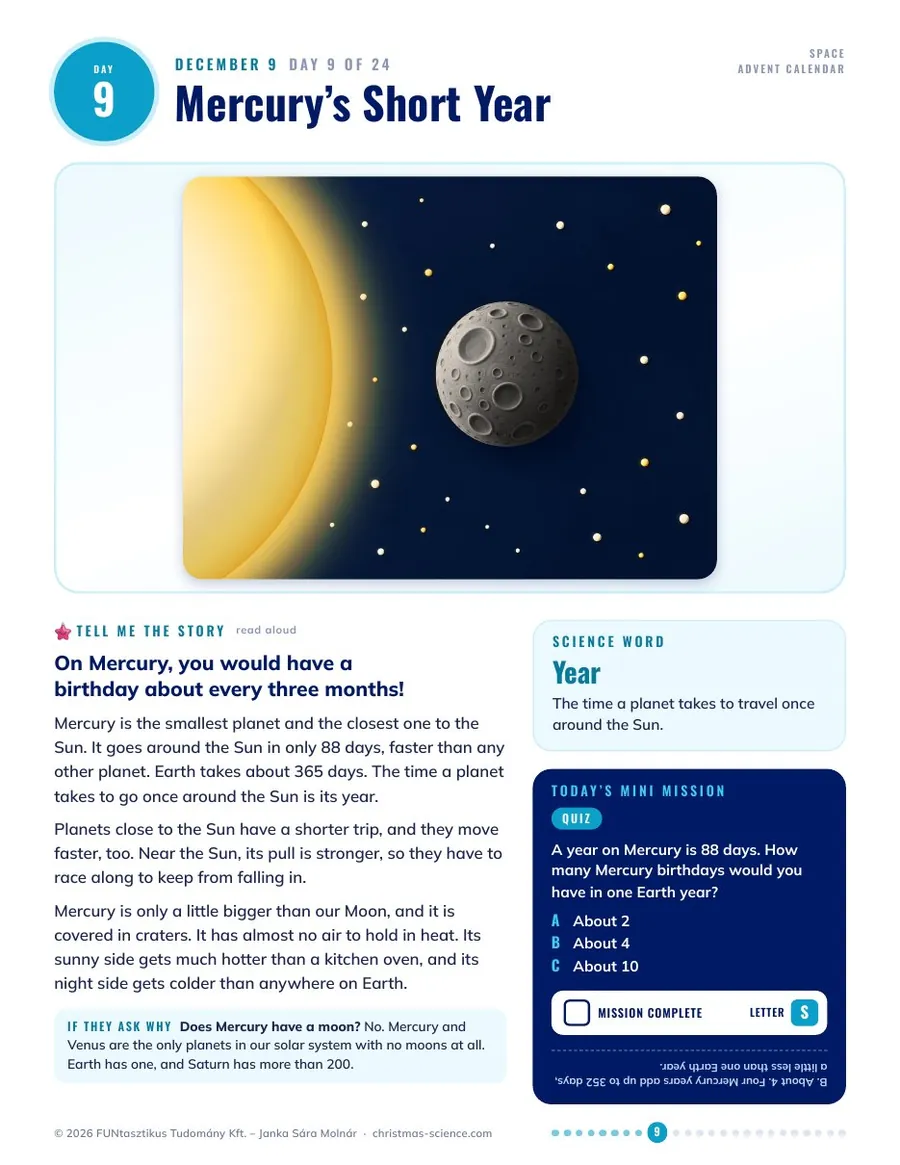
Mercury is the closest planet to the Sun, and the smallest. It goes around the Sun in only 88 days, so on Mercury you would have a birthday about every three months.
Our solar system has eight planets: Mercury, Venus, Earth, Mars, Jupiter, Saturn, Uranus, and Neptune. Mercury is the fastest of them all. The Sun pulls hardest on what is close to it, so Mercury has to race along to keep from falling in.
Mercury is only a little bigger than our Moon, and it has almost no air to hold in heat. Its sunny side gets much hotter than a kitchen oven, and its night side gets colder than anywhere on Earth.
TODAY’S MINI MISSION · QUIZ
A year on Mercury is 88 days. How many Mercury birthdays would you have in one Earth year? A) About 2 B) About 4 C) About 10
Answer: B. About 4. Four Mercury years add up to 352 days, a little less than one Earth year.
IF THEY ASK WHY
Does Mercury have a moon? No. Mercury and Venus are the only planets in our solar system with no moons at all.
Which planet is the hottest?
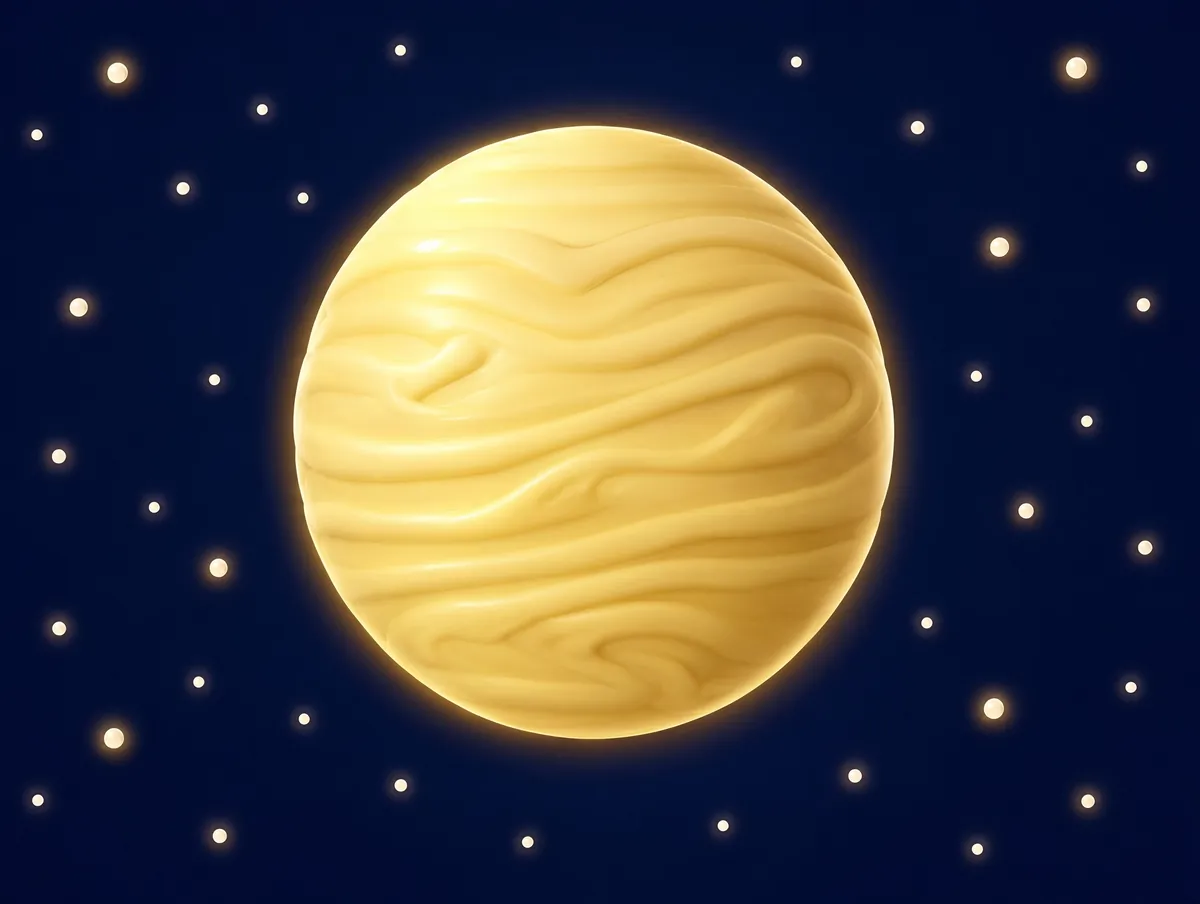
Venus is the hottest planet, even hotter than Mercury, which is closer to the Sun. On the ground, it’s about 870 degrees Fahrenheit (465 degrees Celsius). That’s hot enough to melt lead, a soft metal.
The secret is its air. The layer of air around a planet is called its atmosphere, and Venus’s atmosphere is so thick and heavy that standing in it would feel like being deep under the ocean. A little sunlight gets through the thick clouds and warms the ground. But the thick air hardly lets the heat back out into space, so the ground stays scorching hot, at night too.
TODAY’S MINI MISSION · TRY IT
Tonight in bed, notice how cozy it gets under your covers. A thick blanket keeps you warm at night. How is Venus’s air like a blanket?
Why is Mars red?
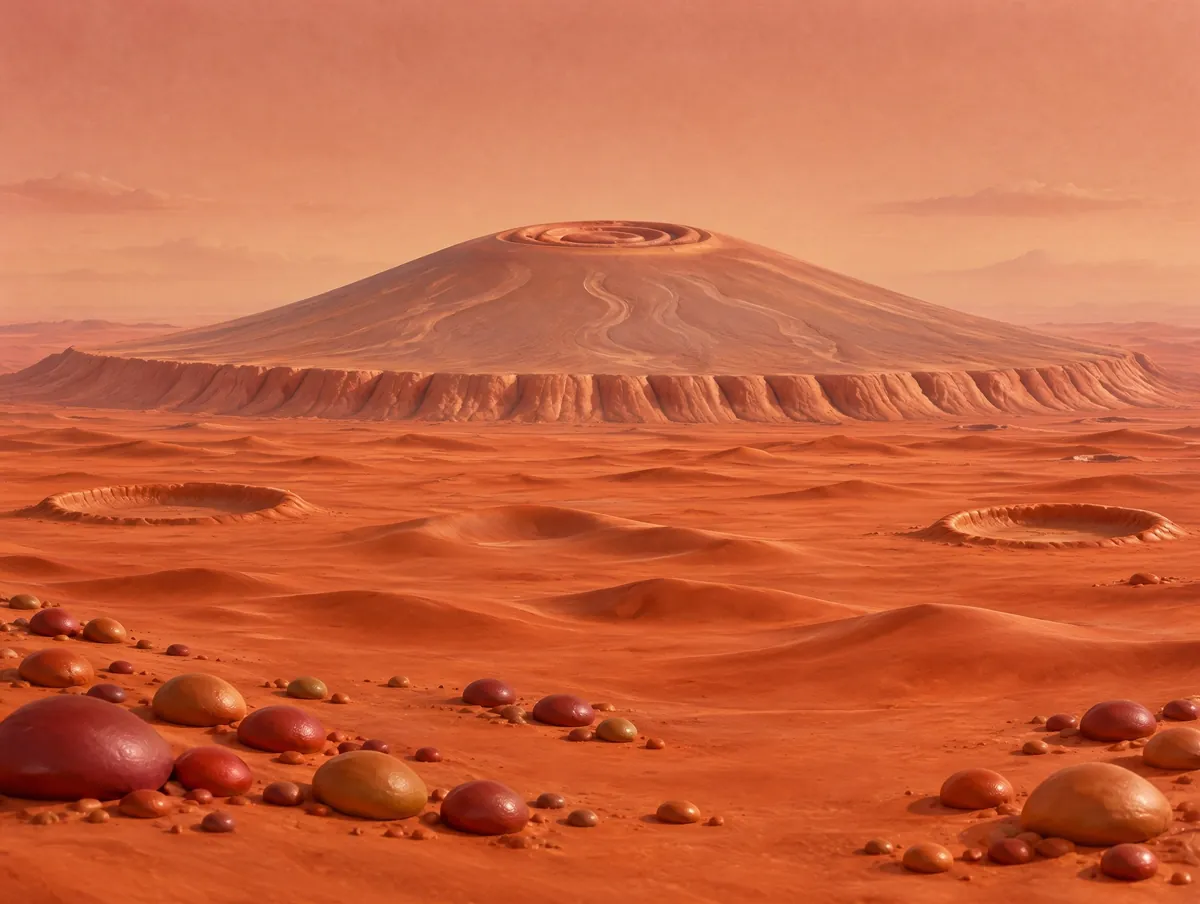
Mars is red because its dusty ground has rust in it. Rust forms when iron joins with oxygen, with help from a little water. It’s the same orange-brown crust you might see on an old nail.
Winds lift the fine red dust high into the air, and in the daytime the dust turns even the sky a pinkish orange. Mars also has the biggest volcano in the solar system, Olympus Mons. It is about two and a half times as tall as Mount Everest, the highest mountain on Earth. But its sides slope so gently that it looks more like a giant, wide hill than a pointy mountain.
TODAY’S MINI MISSION · A QUESTION TO WONDER ABOUT
Have you ever seen rust? Where was it?
IF THEY ASK WHY
Does Mars have moons? Yes, two small, lumpy ones called Phobos (say FOH-bus) and Deimos (say DY-mus).
Have a friend whose kids ask “Why?” at every bedtime? Send them this. A rusty planet makes a great dinner-table surprise. Share it
What is the biggest planet?
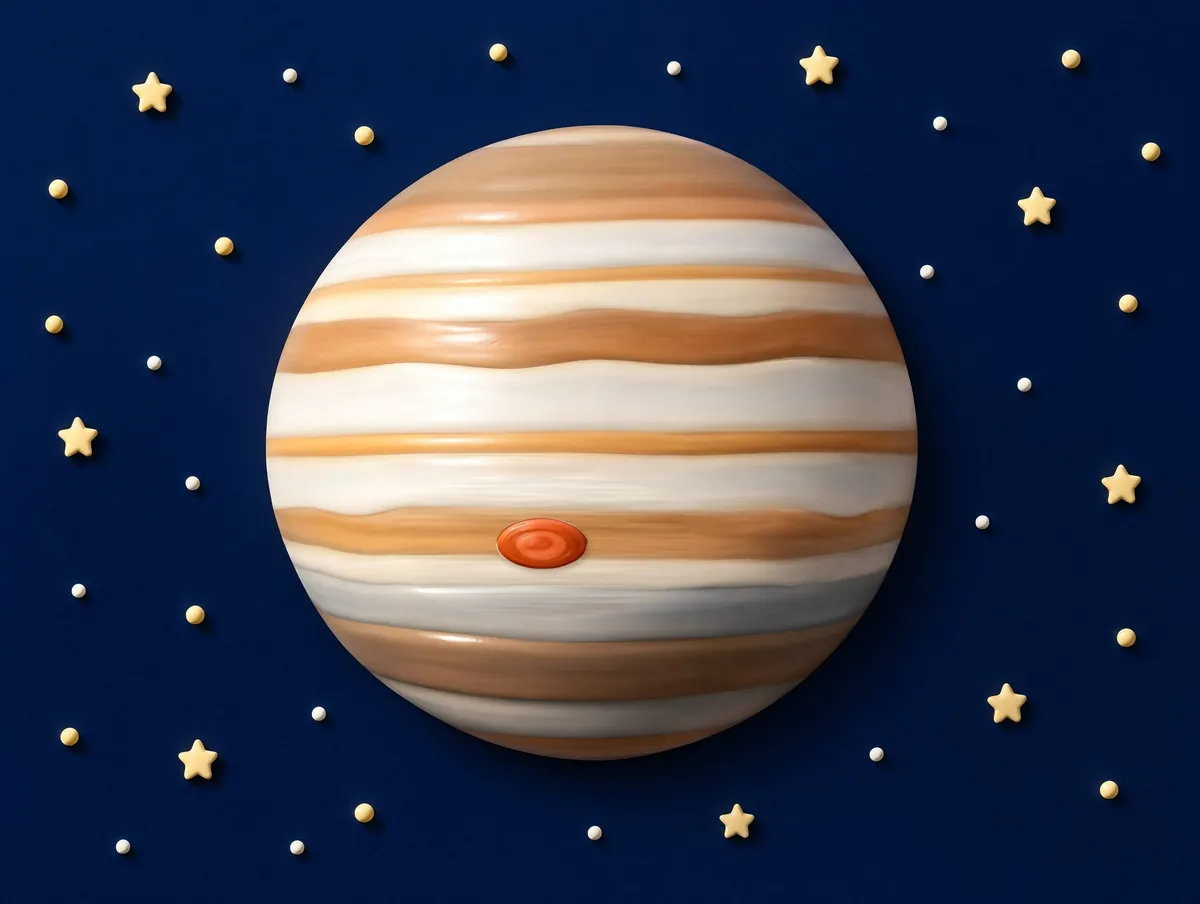
Jupiter is the biggest planet. About 1,000 Earths could fit inside it, and its biggest storm, the Great Red Spot, is bigger than Earth.
That storm has been swirling for more than 150 years, since long before your great-grandparents were born. Jupiter is a gas giant, made mostly of hydrogen and helium, the same two gases the Sun is mostly made of. Under its striped clouds, there is no solid ground to stand on. And a whole day and night on Jupiter lasts only about 10 hours.
TODAY’S MINI MISSION · QUIZ
True or false? A spaceship could land on Jupiter’s rocky ground.
Answer: False. Jupiter has no solid ground. It is made mostly of gas and liquid.
What are Saturn’s rings made of?
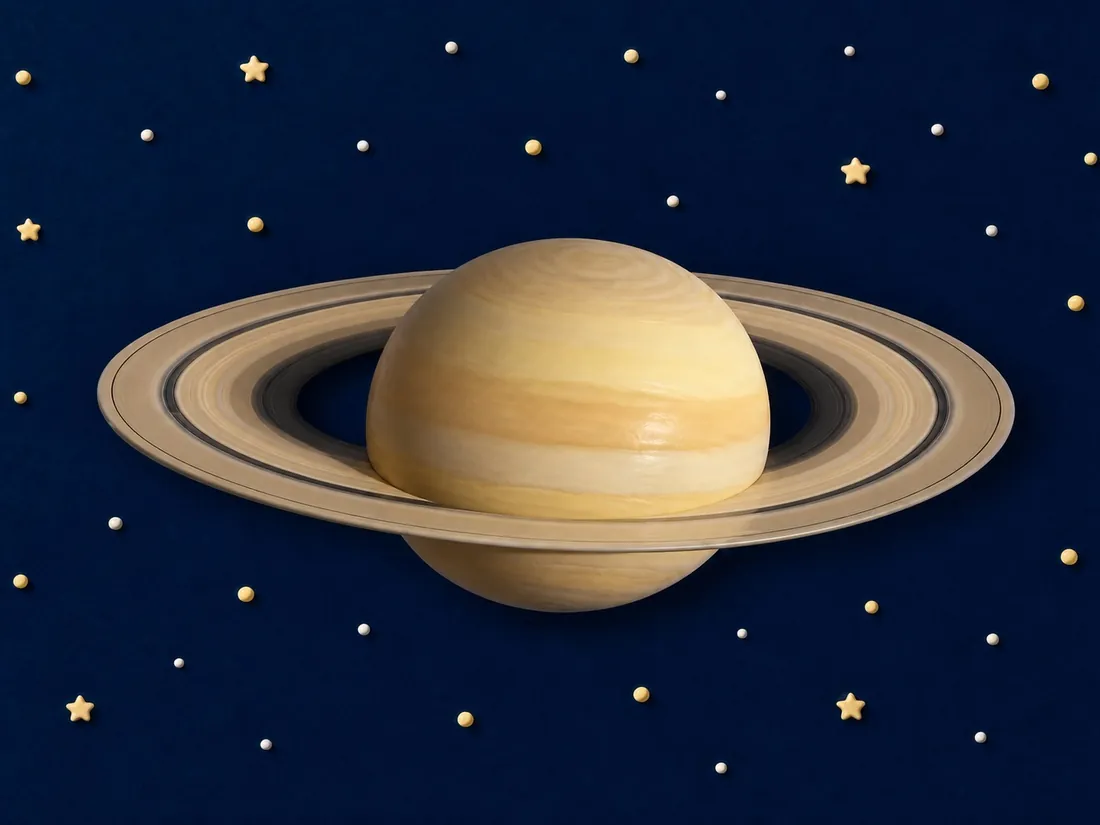
Saturn is a giant too, and its rings are made of lots and lots of pieces of ice and rock. Some are as tiny as dust, and some are as big as a house. Each piece circles Saturn on its own, like a tiny moon. From edge to edge, the rings are wider than 20 Earths in a row. But in many places they are only about 30 feet (10 meters) thick, about as tall as a three-story building.
TODAY’S MINI MISSION · MOVE IT
Put a chair in the middle of the room. That’s Saturn. Walk slowly around it in a big circle. You are one icy piece of the rings, circling Saturn like a tiny moon.
IF THEY ASK WHY
Do other planets have rings? Yes. Jupiter, Uranus, and Neptune have rings too, but theirs are dark and faint, so they are much harder to see.
Which planet spins on its side?
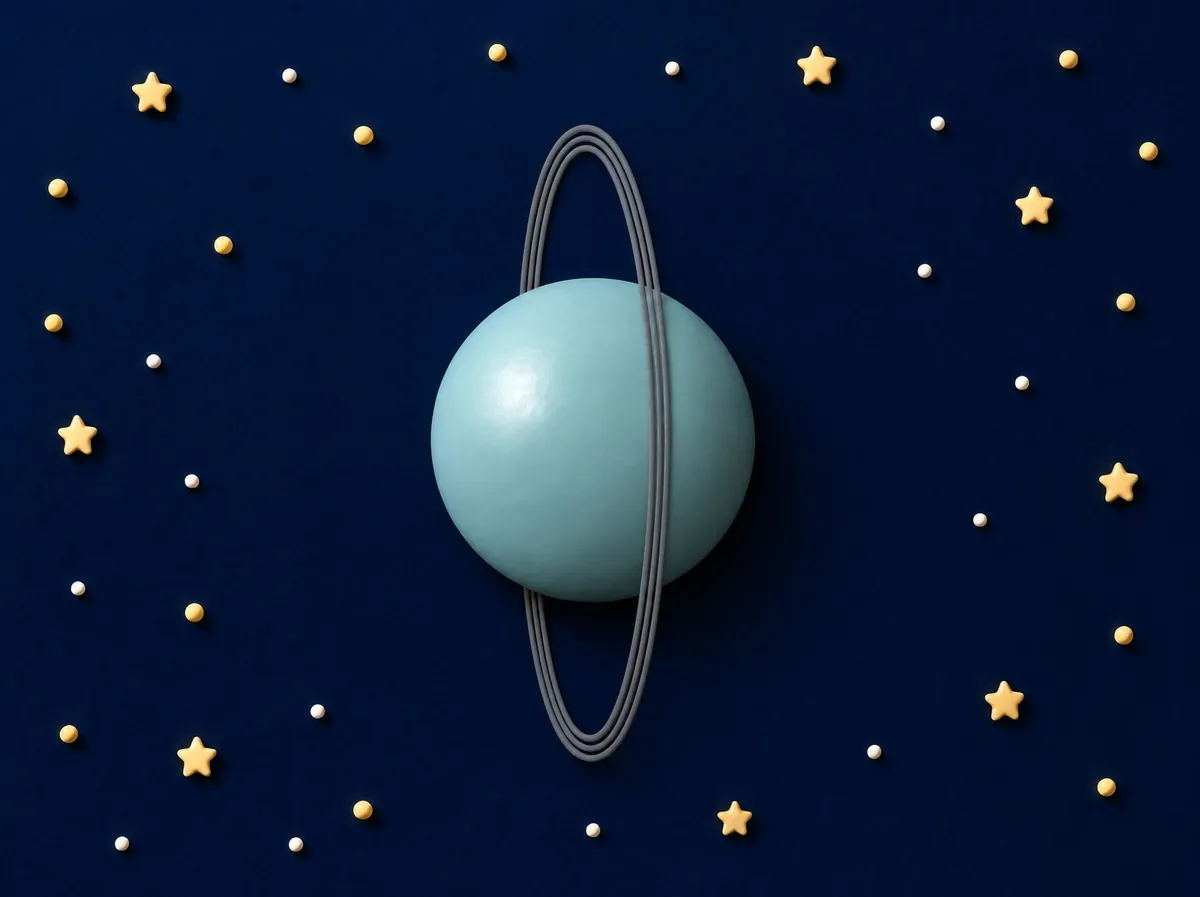
Uranus. It is tipped over on its side, so it goes around the Sun like a rolling ball. Scientists think a big crash long ago knocked it over.
Its tilt is so big that its poles take turns pointing toward the Sun. Each pole gets about 42 years of sunlight, and then about 42 years of darkness. If you were born at the start of that sunny time, you would be all grown up before it ended. Only one spacecraft has ever visited Uranus: Voyager 2, in 1986.
TODAY’S MINI MISSION · TRY IT
Roll a soft ball slowly across the floor and watch it turn. Uranus spins on its side, like that ball.
Which planet has the strongest winds?
Neptune is the farthest planet from the Sun, and its winds can blow faster than 1,200 miles an hour (2,000 kilometers an hour), the fastest of any planet. Neptune is too faint to see with eyes alone. But Uranus wasn’t moving quite the way it should, as if something were tugging on it. In 1846, a scientist used math to work out where that unknown planet should be. That same year, astronomers pointed a telescope at that spot and found it.
TODAY’S MINI MISSION · QUIZ
One year on Neptune lasts about 165 Earth years. How old would you be in Neptune years? A) Not even 1 B) About 5 C) About 165
Answer: A. Not even 1. Since it was found in 1846, Neptune has gone around the Sun only once.
IF THEY ASK WHY
Why is Neptune blue? Like Uranus, it has methane in its air. Methane soaks up red light, so the light that bounces back looks blue.
Is Pluto a planet?
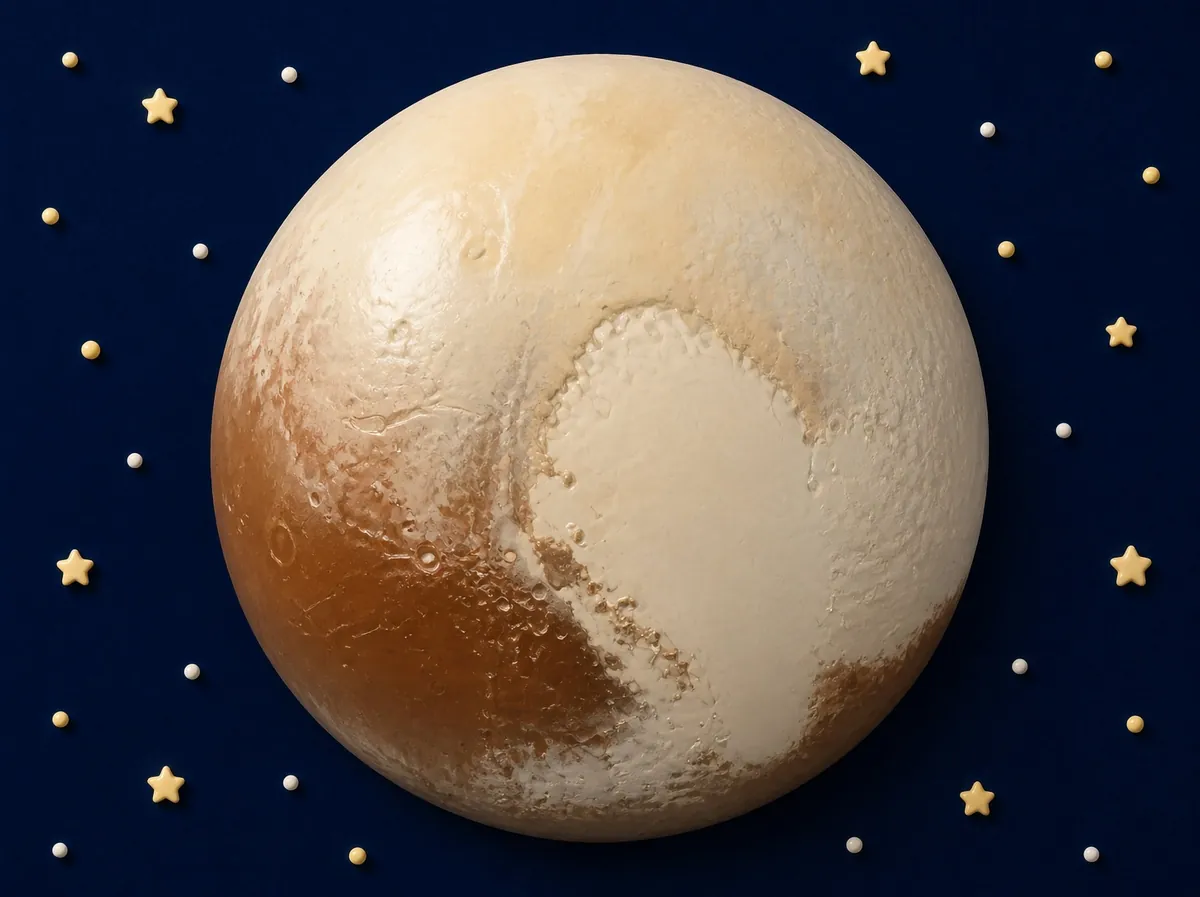
Pluto is a dwarf planet. For 76 years it was called the ninth planet, but in 2006, astronomers put it in a group of smaller worlds, the dwarf planets, because Pluto shares its far-off neighborhood with many other icy objects.
Pluto is even smaller than our Moon, and it has a big, bright patch shaped like a heart, about 1,000 miles (1,600 kilometers) across. Scientists saw it clearly for the first time in 2015, when the New Horizons spacecraft flew past Pluto. Its trip there took more than nine years, probably longer than your child has been alive.
TODAY’S MINI MISSION · DRAW IT
Who would you like to draw a heart for today? Draw it, and give it to them.
Why do stars twinkle but planets don’t?
Stars twinkle because our moving air makes their light wiggle on the last part of its trip to your eyes. Planets usually shine much more steadily. They are so much closer that their light comes from a tiny round disk instead of a single point, and the wiggles cancel out.
Air is always on the move. Warm air rises, and cool air sinks. Each little pocket of air bends the light a tiny bit, the same way water bends light and makes a spoon in a glass look bent. Astronauts above the air see stars that don’t twinkle at all.
So here is a trick for a clear evening: if one bright dot shines steadily while the stars around it twinkle, you may be looking at a planet.
TODAY’S MINI MISSION · TRY IT
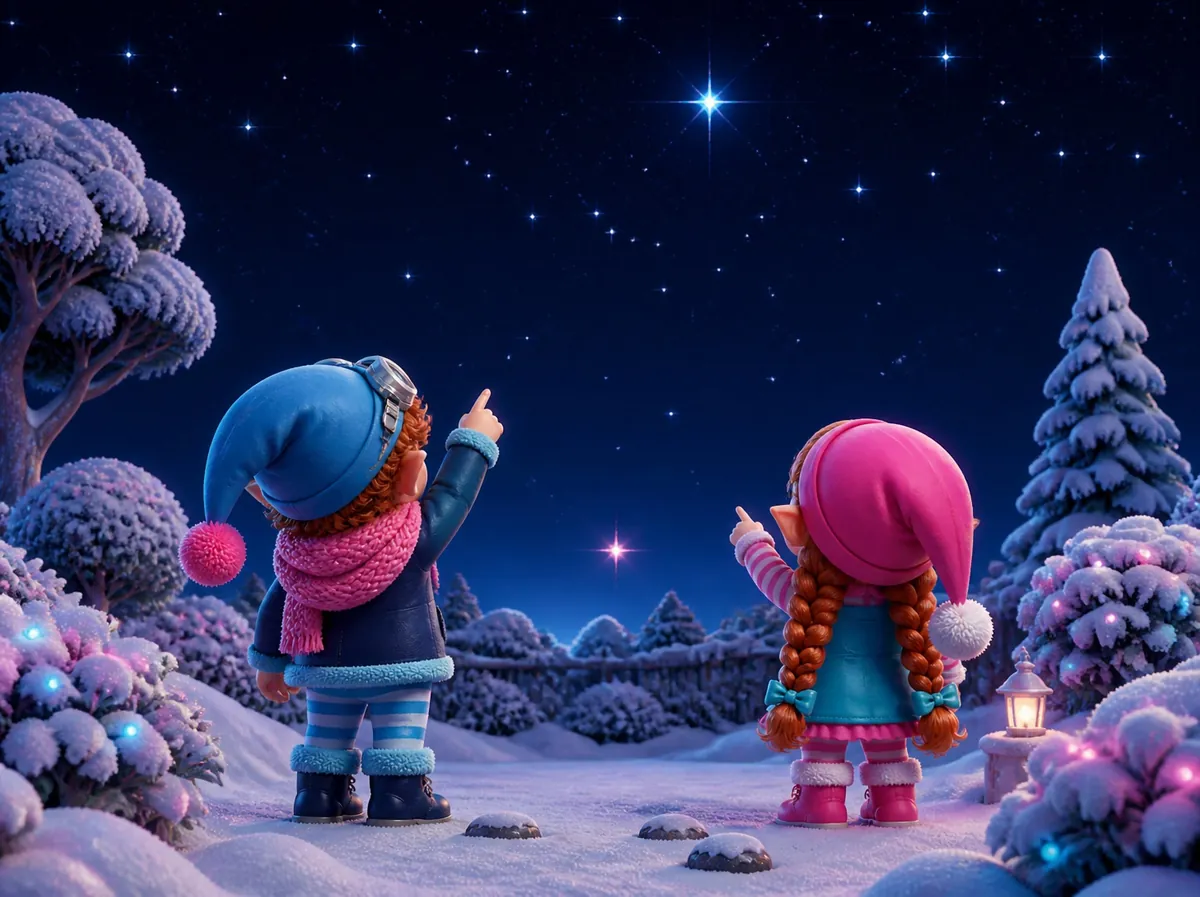
With a grown-up, find one star low in the sky and one high up. Which one twinkles more?
IF THEY ASK WHY
Why does the low star twinkle more? Its light passes through much more air on the way to your eyes, so it gets wiggled more.
Know a family who sings “Twinkle, Twinkle, Little Star” at bedtime? Now they can answer the question in the song. Send them this. Share it
What’s inside the Space Advent Calendar?
Theo & Tilda’s Space Advent Calendar is a printable advent calendar with 24 true space stories for kids ages 4 to 9, one for each day from December 1 to 24. The planet stories above are Days 9 to 12 and 14 to 17.
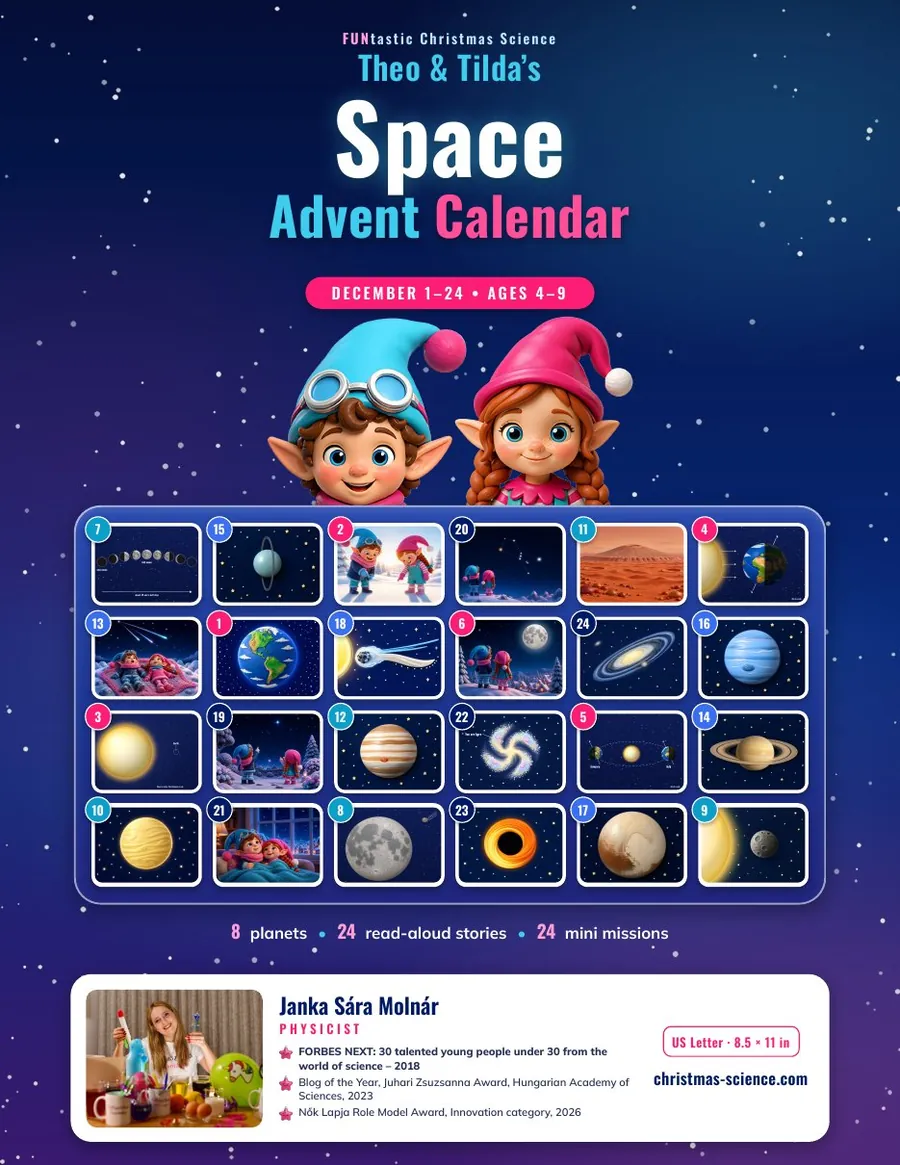
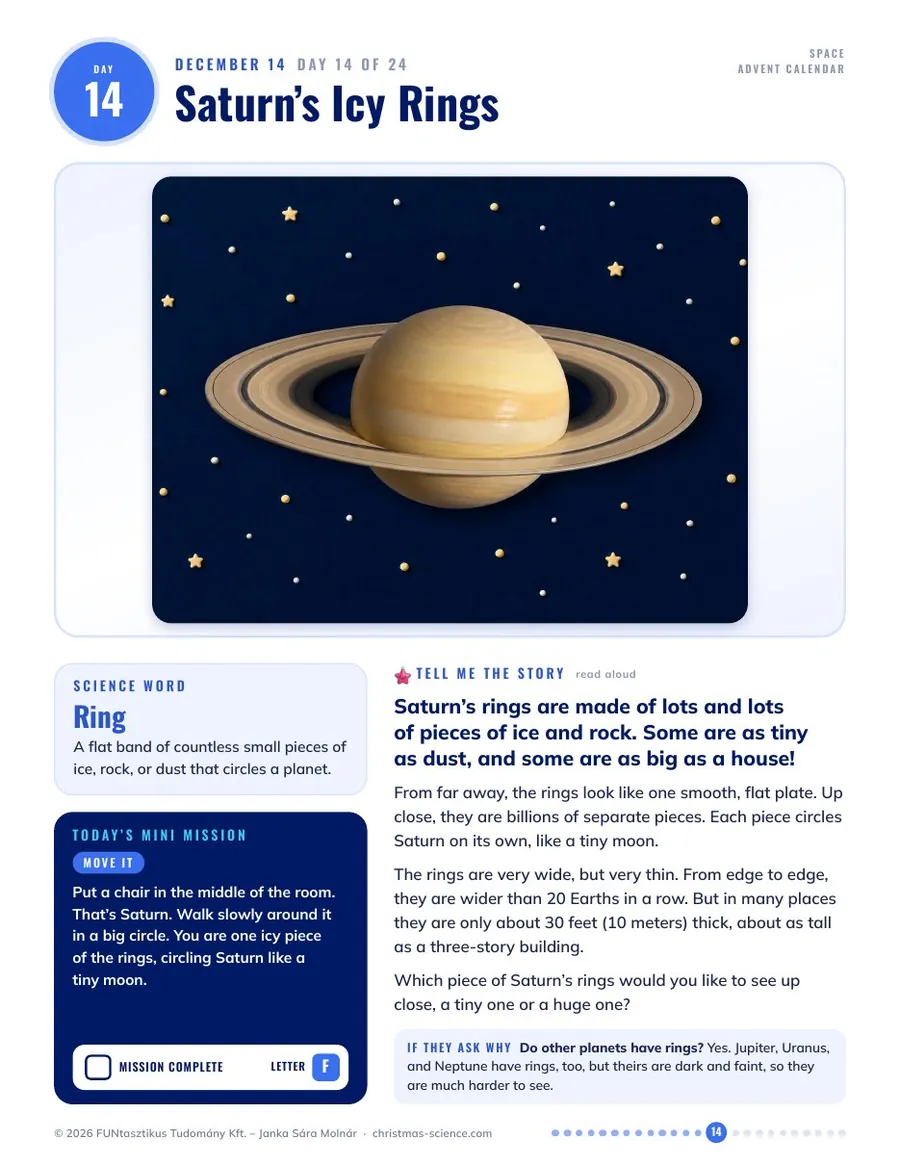
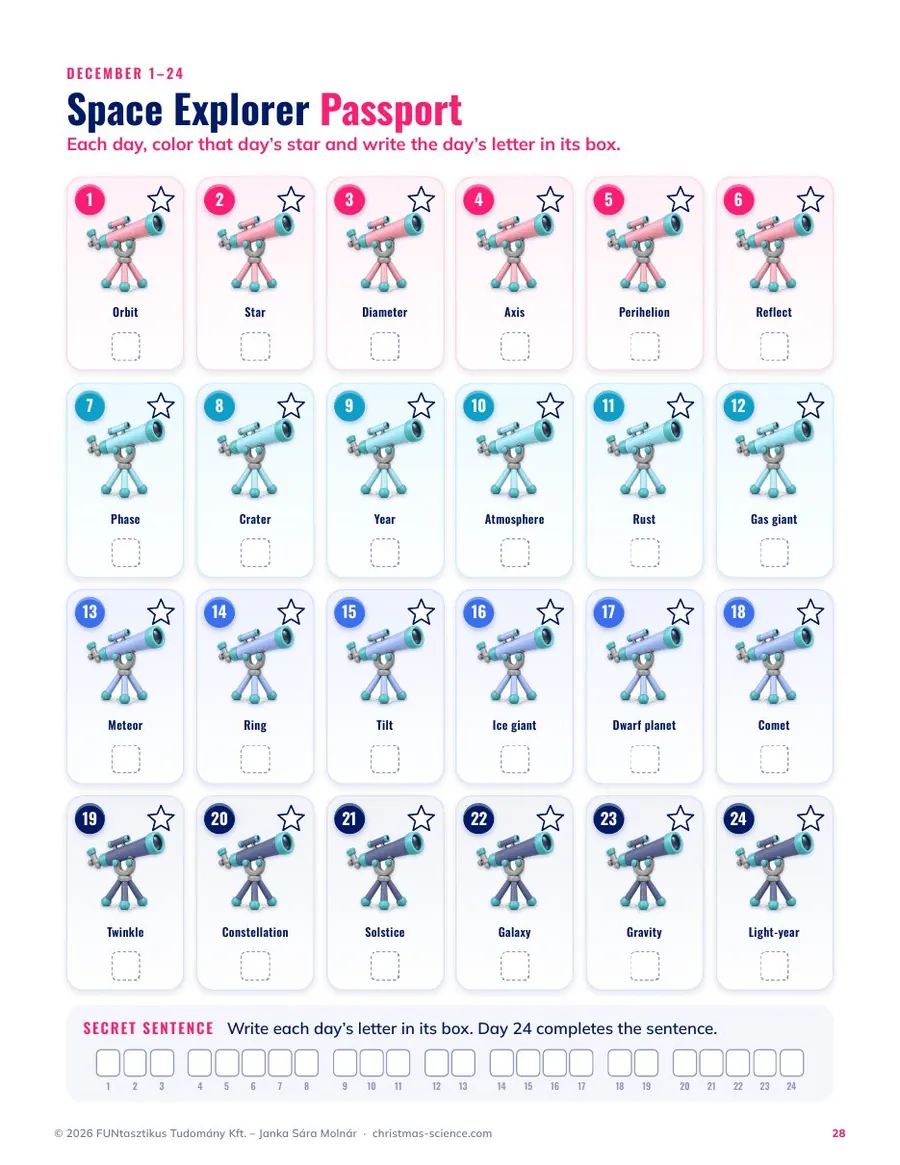
- 24 day pages, each with its own illustration, a one-minute story, a Science word, a mini mission (a quiz, a movement game, a drawing, something to find in the sky, or a question for dinner), and an “If they ask why” helper for the grown-up
- All eight planets and Pluto, plus the Sun, the Moon, comets, shooting stars, constellations, the Milky Way, black holes, and faraway galaxies
- Pages that match the December sky: the Geminid meteor shower and the winter solstice
- A Space Explorer Passport with all 24 Science words and a secret sentence, and a Junior Astronomer certificate for Christmas Eve
- No telescope needed. No printer? Read it on a tablet, a laptop, or a phone.
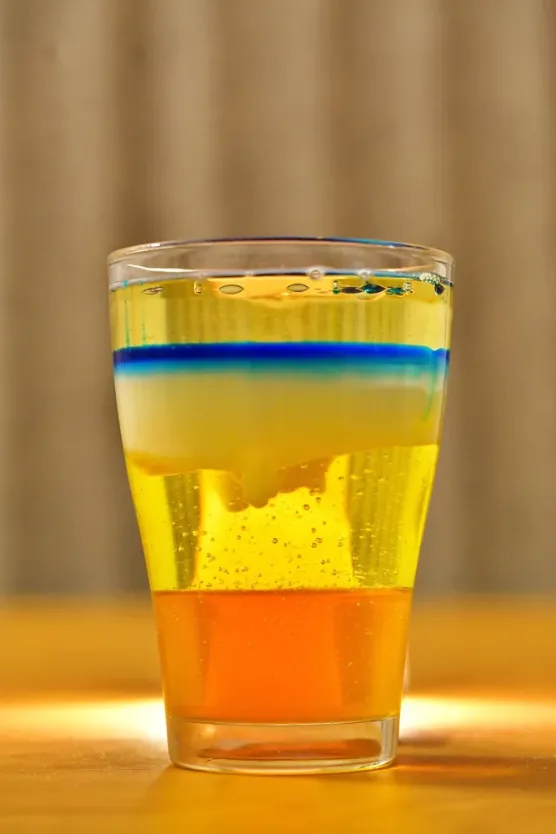
One real experiment: why planets have heavy middles
You can see the idea in a glass. This is the Liquid Tower, Experiment 45 in Theo and Tilda’s Christmas Science Adventure. Pour 2 tablespoons each of honey, dish soap, milk, and cooking oil, in exactly that order, very slowly into a tall, narrow glass. Honey is the densest, so it sinks to the bottom. Oil is the least dense, so it floats on top.
Something like this happened inside Earth long ago. When young Earth was hot enough to melt, heavy iron and nickel sank to the middle and formed Earth’s core, and lighter rock rose toward the surface. That is why our planet has a heavy metal heart.
GOOD TO KNOW
- Pour very slowly, onto the back of a spoon if it helps, and don’t stir.
- If the layers mix, don’t lose heart. Pour it out and try again, even more slowly.
- Don’t taste the mix. Pour it out at the end.

Children ask the best planet questions. Is Pluto a planet? Could I stand on Jupiter? Why is Mars red? Each day page answers one big question in about a minute, with facts I checked against NASA and other trusted science sources.
Read it at bedtime, at breakfast, or at the window on a clear night. Five minutes together is enough.
Looking for a different theme? Here are all my printable advent calendars for kids, from true dinosaur stories to animal superpowers. And for the shortest day of the year, read five true sky stories for the winter solstice.
Your space address
We started on Earth, the planet you are riding on right now, and we visited all the others. Now let’s find out where Earth itself lives.
The Sun and its planets are called the solar system. Our solar system is part of a giant swirl of more than 100 billion stars: our galaxy, the Milky Way. We live in a small arm, far from the middle.
So you have a space address: your street, your town, your country, Earth, the solar system, the Milky Way.
Tonight’s mission: Say your space address out loud to a grandparent, a brother or sister, or a favorite stuffed animal.
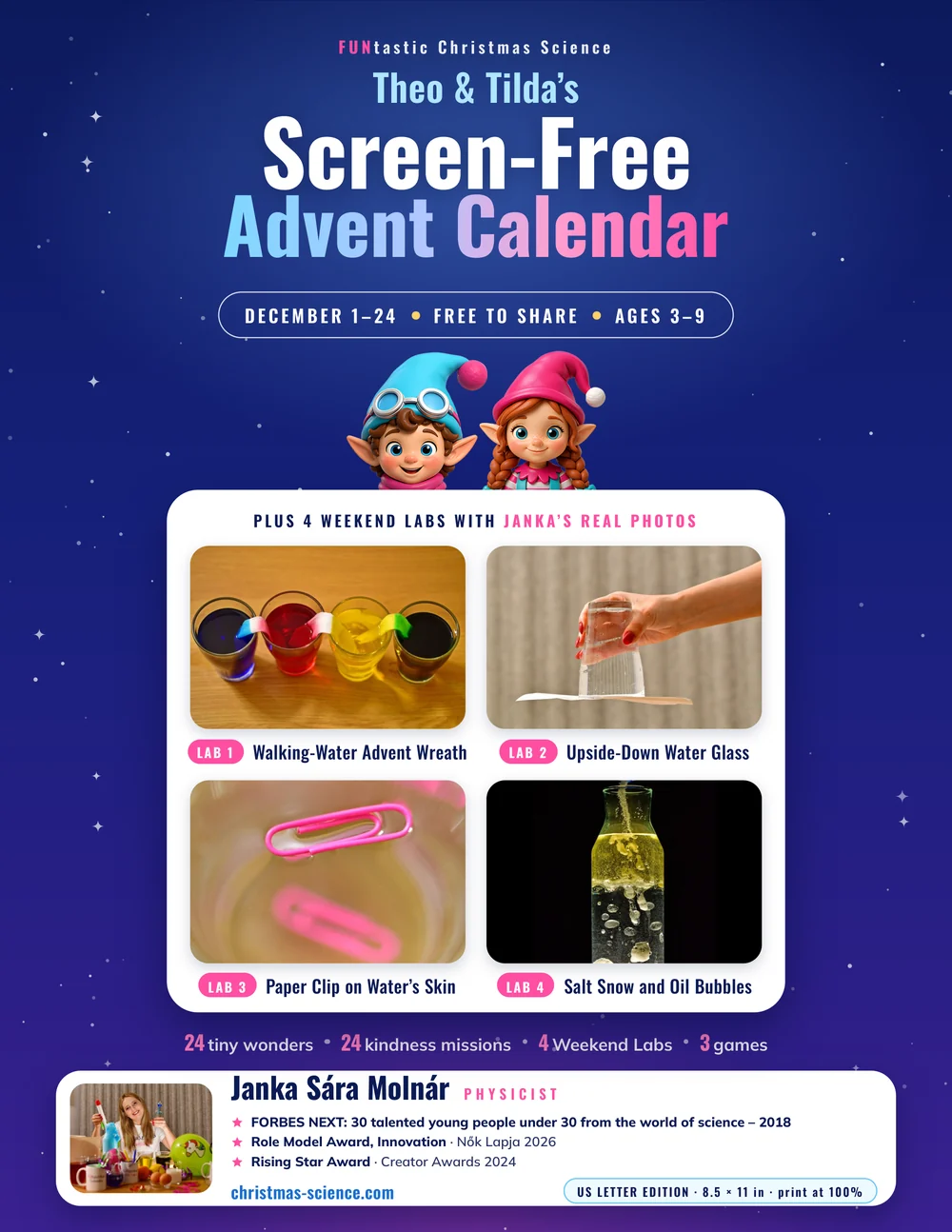
Theo & Tilda’s Screen-Free Advent Calendar
24 tiny wonders and 24 kindness missions, one for every day from December 1 to 24, plus 4 Weekend Labs with my real photos and 3 games. Most tiny wonders take about 10 minutes and use things you probably already have. 22 pages, for ages 3–9.
This calendar is free to share. Print it as often as you like for your family or class, and pass it on to friends, families, and teachers. Please don’t sell it or change it.
Know a family with a little space fan?
Send them tonight’s trip around the solar system. The planet stories above are free to read aloud, and each one takes about a minute.
COPY THIS MESSAGE
Paste it into a family group chat, or send it to a friend.
I found true planet stories to read to the kids tonight: why Venus is hotter than Mercury, why Mars is rusty, the planet that rolls on its side, and Pluto’s big heart. A physicist checked every fact. www.christmas-science.com/blog/fun-facts-about-the-planets-for-kids
Fun facts about the planets: quick answers
How many planets are there?
Eight: Mercury, Venus, Earth, Mars, Jupiter, Saturn, Uranus, and Neptune. Pluto was called the ninth planet for 76 years, but since 2006 it has been a dwarf planet.
Which planet has the most moons?
Saturn, with more than 270 known moons. Earth has one, and Mercury and Venus have none at all.
Which planet is the hottest?
Venus, even though Mercury is closer to the Sun. Its thick atmosphere traps the heat, so the ground is about 870 degrees Fahrenheit (465 degrees Celsius), day and night.
Why is Neptune blue?
Neptune has methane in its air. Methane soaks up red light, so the light that bounces back looks blue.
What age is the Space Advent Calendar for?
Ages 4 to 9. Little ones can enjoy it with a grown-up reading aloud. Each of the 24 day pages has a one-minute true story, a Science word, and a mini mission, and the calendar comes as two PDF files, US Letter and A4. No printer? You can read it on a tablet, a laptop, or a phone.

About Janka
Janka Sára Molnár is a physicist and award-winning science communicator from Hungary, and the founder of FUNtastic Christmas Science. As a high school student, she built particle detectors and took them to CERN several times, where she presented them in its teacher program. She graduated from Eötvös Loránd University (ELTE) in Budapest, and for almost 15 years she has run several hundred science shows for children and families.
- FORBES NEXT: 30 talented young people under 30 from the world of science – 2018
- Rising Star Award, Creator Awards, 2024
- Role Model Award, Innovation, Nők Lapja, 2026
- Juhari Zsuzsanna Blog of the Year Award, Hungarian Academy of Sciences, 2023
The space illustrations and the pictures of Theo, Tilda, and their world were created with AI-assisted tools (Canva) and edited by our team. Physicist Janka Sára Molnár checked every fact in this post against NASA and other trusted science sources. The Liquid Tower photo is a real photo of her own experiment.
Keep reading
More Christmas science ideas from Theo, Tilda, and me.
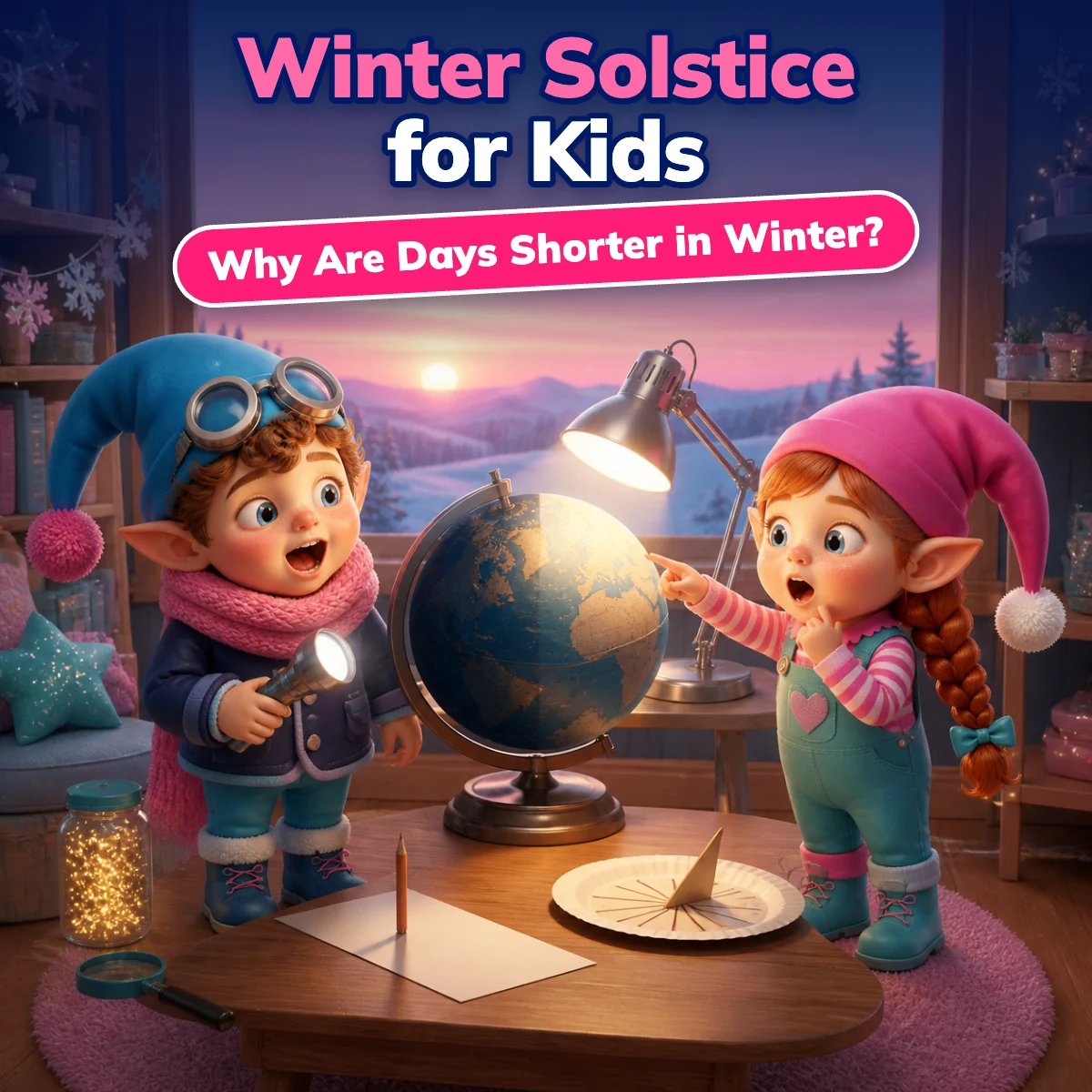 For parents · 11 min readWinter Solstice for Kids: Why Are Days Shorter in Winter?Winter solstice for kids, explained by a physicist: why winter days are short, why Earth is closest to the Sun in January, and 5 true sky stories.Read the post →
 For parents · 11 min readAre Birds Dinosaurs? Yes! How to Explain It to KidsAre birds dinosaurs? Yes. A true story to tell your kids today, with a bird-watching mission, a feather mystery, and the “dinosaurs” that aren’t dinosaurs.Read the post →
 For parents · 22 min read10 Kitchen Science Experiments for Kids, Physicist-Tested10 easy kitchen science experiments for kids 3–9: lava lamp, walking water, bouncy egg, melting ice race, and more. Exact amounts, real photos.Read the post →
© 2026 FUNtasztikus Tudomány Kft. – Janka Sára Molnár