Deep Sea Creatures for Kids: 7 True Stories from the Dark Ocean to Read Aloud Tonight
Deep sea creatures live far below the waves, where there is almost no sunlight. Some make their own light, one has a see-through head, and one little fish lives more than five miles down. Here are seven true stories about deep sea creatures for kids, from my Ocean Animals Advent Calendar. Each one takes about a minute to read aloud before bed.
- 7 deep-sea animals
- Ages 4–9
- About a minute each
- Nothing to buy
Save this for a cozy deep-sea night, or send it to a friend whose child loves squid and anything that glows.
Eyes Like Dinner Plates
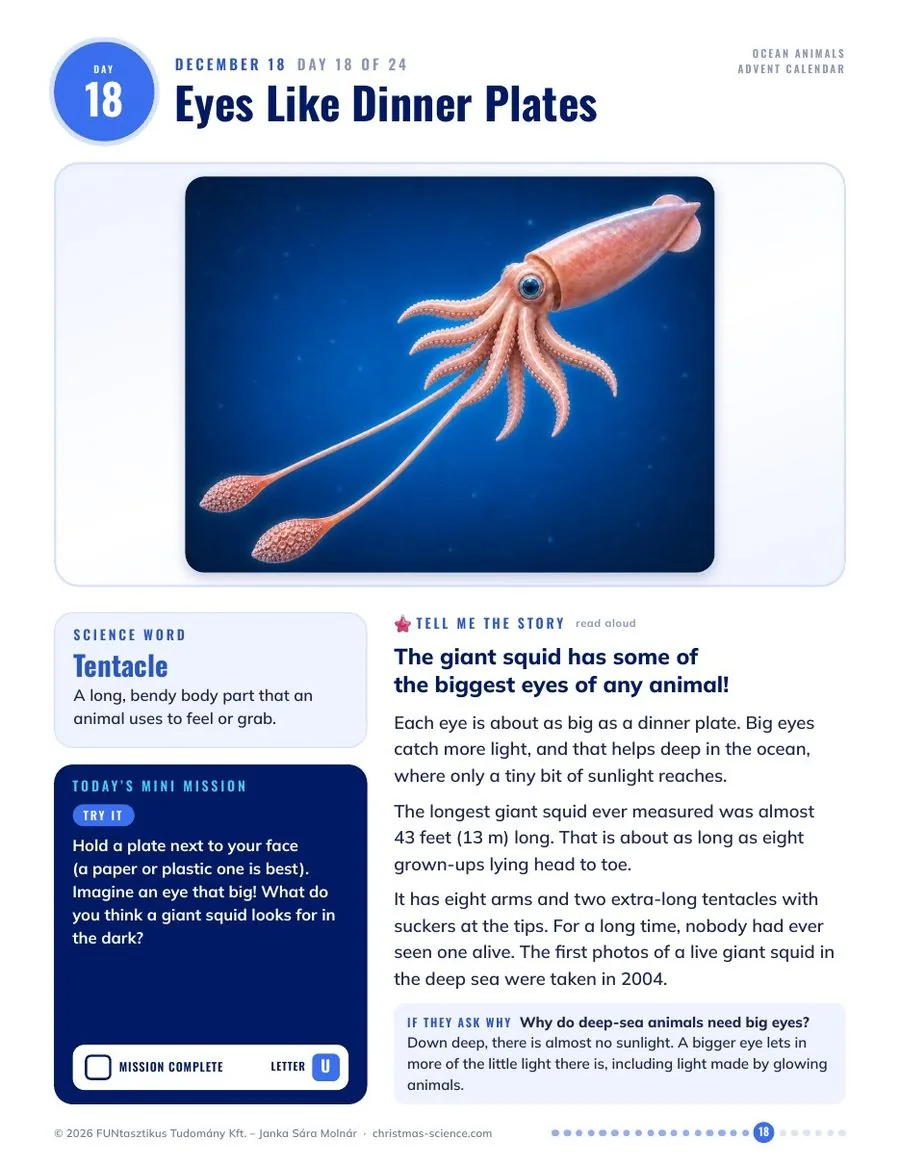
The giant squid has some of the biggest eyes of any animal! Each eye is about as big as a dinner plate.
The longest giant squid ever measured was almost 43 feet (13 meters) long. That is about as long as eight grown-ups lying head to toe. It has eight arms and two extra-long tentacles with suckers at the tips. Yet for a long time, nobody had ever seen one alive in its deep-sea home. Scientists knew giant squid mostly from dead or dying ones that had washed up on beaches or had been caught in fishing nets by accident.
Then, in 2004, two researchers from Japan took the first photos of a live giant squid, deep in the ocean.
Stop here and ask your child: Why do you think it took so long to see one in its home? Let’s dive down and find out what lives in the dark. The end of our dive is at the bottom of this page.
Know a little one who could talk about sharks and octopuses all day? Send this to their grown-up. Each story also answers a why question, like why the deep sea is so dark. Share it
How dark is the deep sea?
The deep sea is very dark. Below about 650 feet (200 meters), there is hardly any sunlight left. Below about 3,300 feet (1,000 meters), the ocean is pitch dark, day and night.
That is why the giant squid needs such huge eyes.
TODAY’S MINI MISSION · TRY IT
Hold a plate next to your face (a paper or plastic one is best). Imagine an eye that big! What do you think a giant squid looks for in the dark?
IF THEY ASK WHY
Why do deep-sea animals need big eyes? Down deep, there is almost no sunlight. A bigger eye lets in more of the little light there is, including light made by glowing animals.
Which fish has a see-through head?
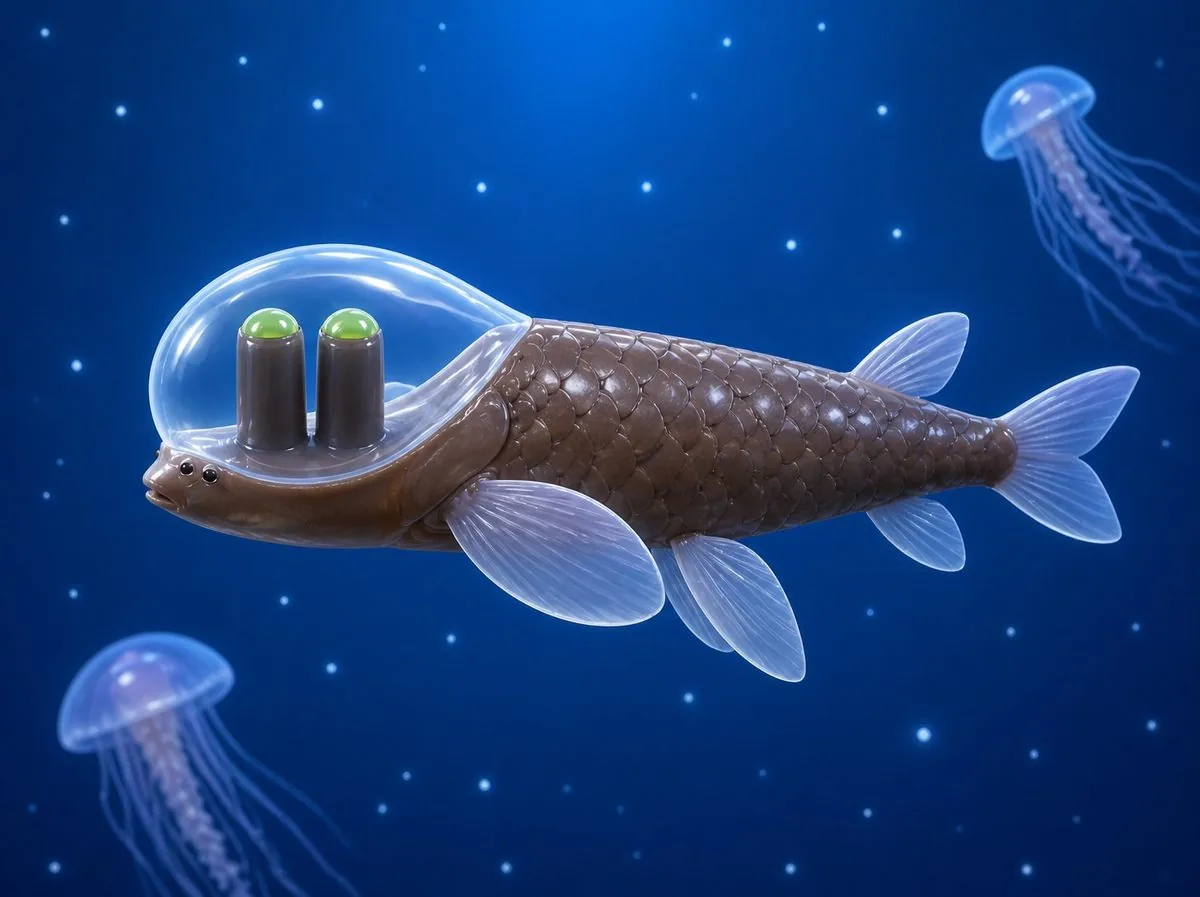
The barreleye fish. Its two big eyes sit inside a clear dome on its head, and they have green lenses.
The eyes are shaped like tubes. They can turn to look straight up, to spot the shadows of animals swimming above. Then they can turn forward, so the fish can see its food as it eats. And the two dots on its face that look like eyes? They are really for smelling, like nostrils.
For many years, scientists only saw barreleyes that had been pulled up in nets, and the soft dome was always broken. Then a robot camera filmed a living one, with its clear head still whole.
TODAY’S MINI MISSION · DRAW IT
Draw your own fish with a see-through head. What will you put inside it?
IF THEY ASK WHY
Why is the head see-through? The clear dome lets light reach the eyes from above. Scientists think it may also protect the eyes from stinging animals.
What do deep sea creatures eat?
Some deep sea creatures eat marine snow: tiny bits of dead plants and animals that drift down from the upper ocean, a little like snowflakes. Others hunt in the dark. The vampire squid eats marine snow.
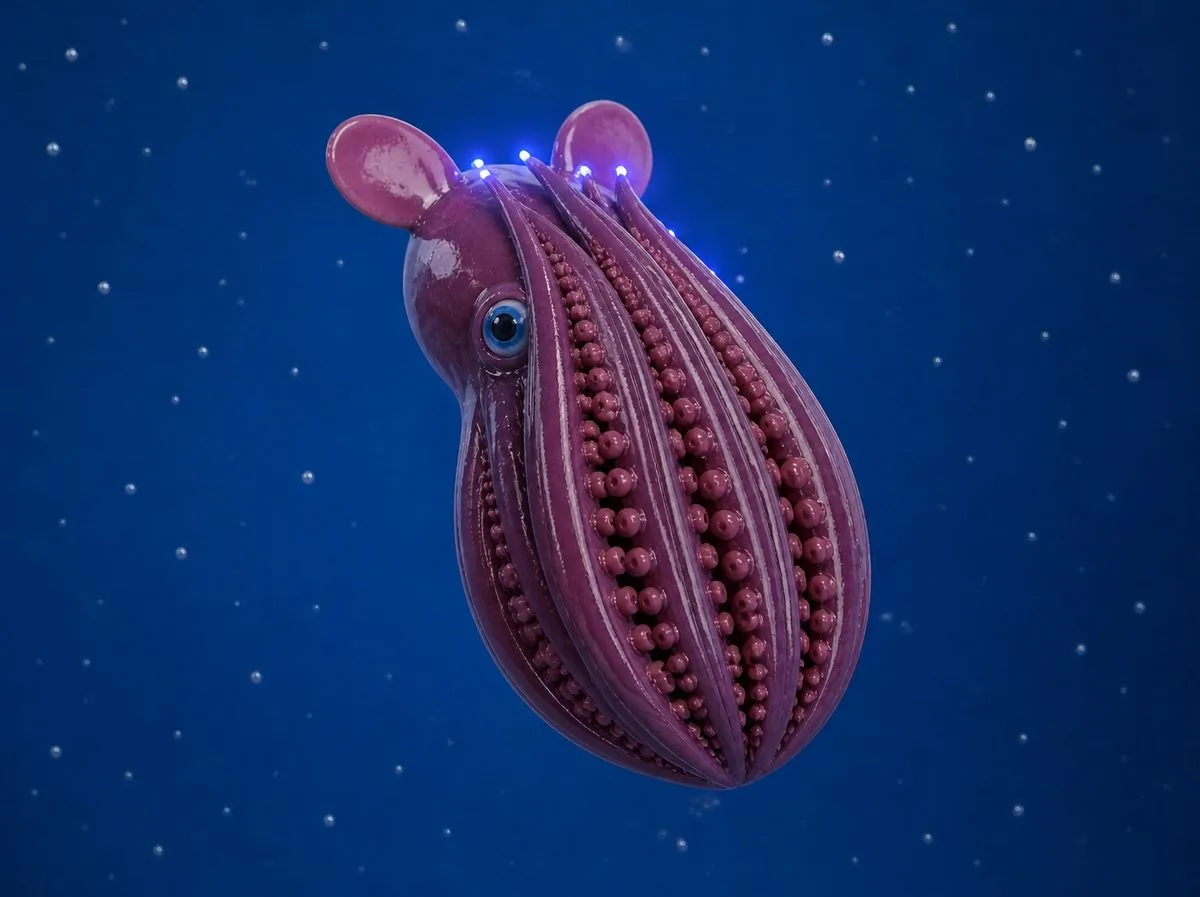
The vampire squid is neither a vampire nor a squid! It got its spooky name from its dark color and the skin between its arms, which looks like a cape. It is about the size of an American football.
When danger comes, it turns its webbed arms inside out and wraps itself up like a cloak. The tips of its arms can glow, which may confuse an animal that wants to eat it.
TODAY’S MINI MISSION · MAKE IT
Tear a paper napkin into tiny pieces. Stand up, hold them high, and let them drift down like marine snow. Which pieces fall the slowest?
IF THEY ASK WHY
If it isn’t a squid, what is it? It belongs to its own small group. It is a bit like a squid and a bit like an octopus, and it is the only kind of animal alive today in that group.
Does Grandma or Grandpa love a good bedtime story? Send them this one. A vampire squid that wraps itself in a cape is hard to forget. Share it
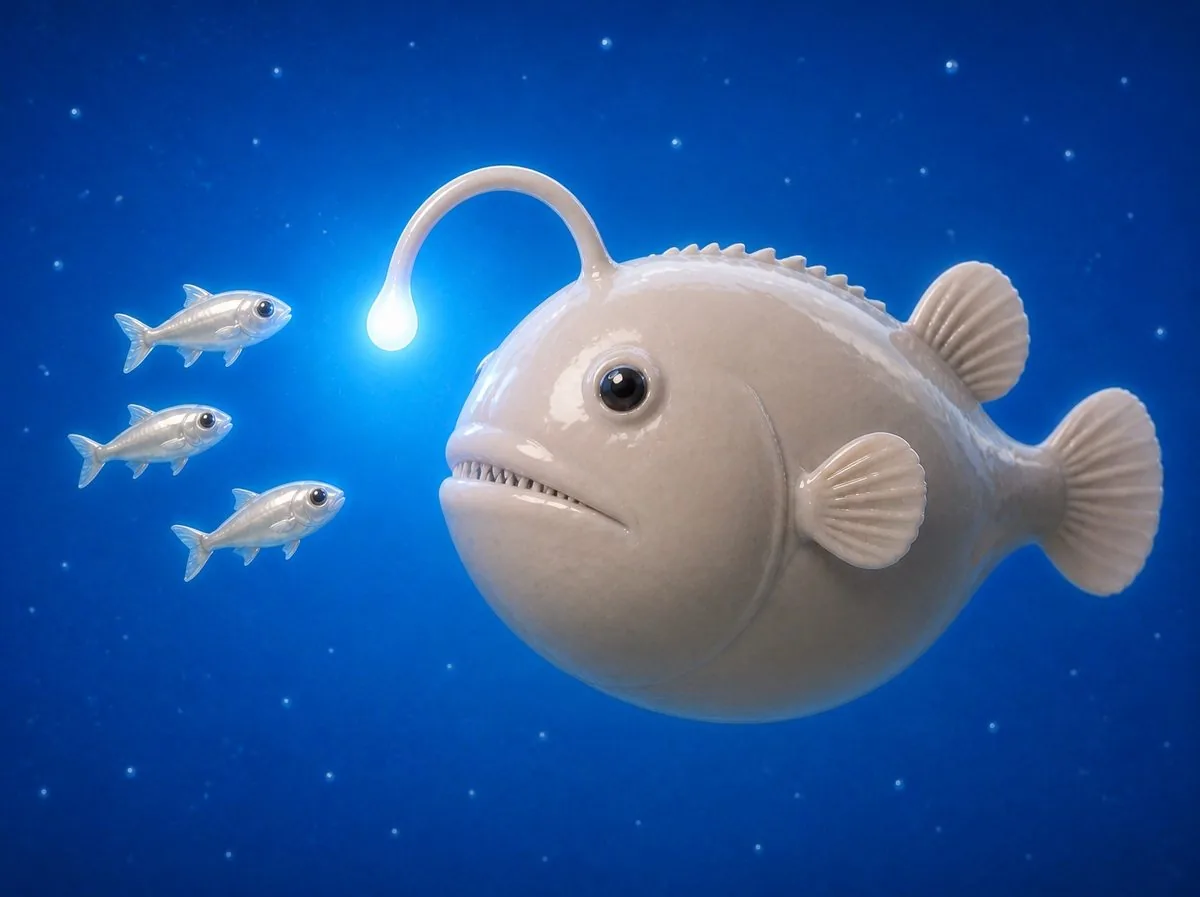
How does an anglerfish make light?
An anglerfish’s light is made by bacteria, tiny living things inside its lure. A female deep-sea anglerfish dangles this glowing lure in front of her mouth, like a fishing rod with a light on the end.
Small fish and shrimp swim closer to look. Then, gulp! Her sharp teeth point inward, so a fish that gets in can’t slip back out. Only the females have a lure. The males are much smaller.
TODAY’S MINI MISSION · WONDER
Ask everyone at dinner: If you lived where it is always dark, how would you find your friends? What kind of light would you make?
IF THEY ASK WHY
Where does she get the glowing bacteria? Scientists think young anglerfish pick them up from the seawater around them.
Why do deep sea fish look so scary?
Many deep-sea fish have long, sharp teeth that make them look scary. Food is hard to find down there, and sharp teeth help a fish hold on to a slippery meal whenever it gets the chance. On camera, they can look fierce, but a lot of them are smaller than you might expect. The fangtooth has the biggest teeth of any fish in the ocean for its body size, yet it grows only to about 7 inches (17 centimeters), shorter than a school ruler.
What is the deepest-living octopus?
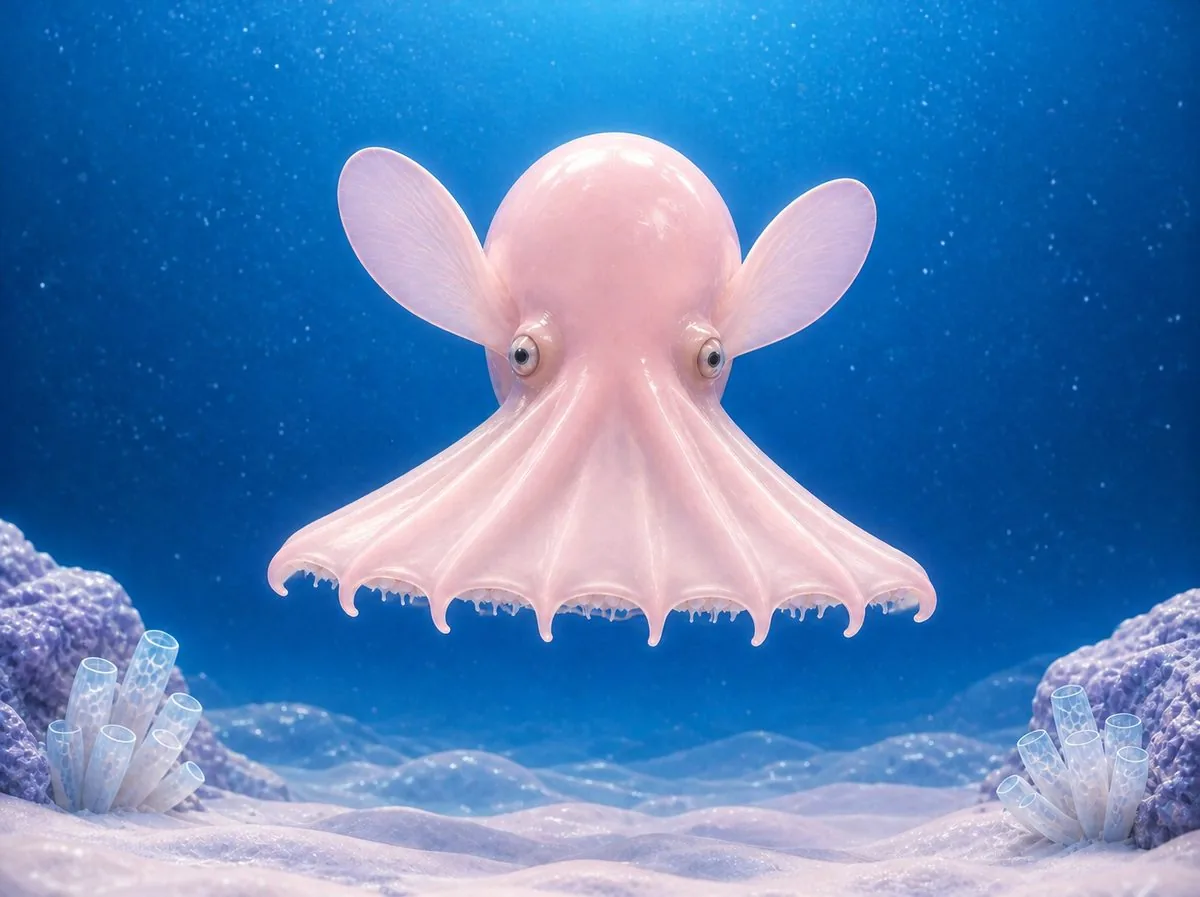
The dumbo octopus. Scientists have spotted one almost 23,000 feet (7,000 meters) down. That is more than four miles below the waves.
It swims by flapping two big fins on top of its body that look a lot like an elephant’s ears, and that is how it got its name. Its arms are joined by skin, like an umbrella. It hovers above the sea floor, and when it finds a worm or another small animal, it swallows it whole.
TODAY’S MINI MISSION · MOVE IT
Put your hands next to your ears and flap them like fins. Now “swim” slowly around the room on tiptoe, like a dumbo octopus hovering just above the sea floor.
IF THEY ASK WHY
Can it squirt ink like other octopuses? No. It has no ink sac. Scientists think this may be because few animals hunt it so deep down.
What is the deepest fish ever seen alive?
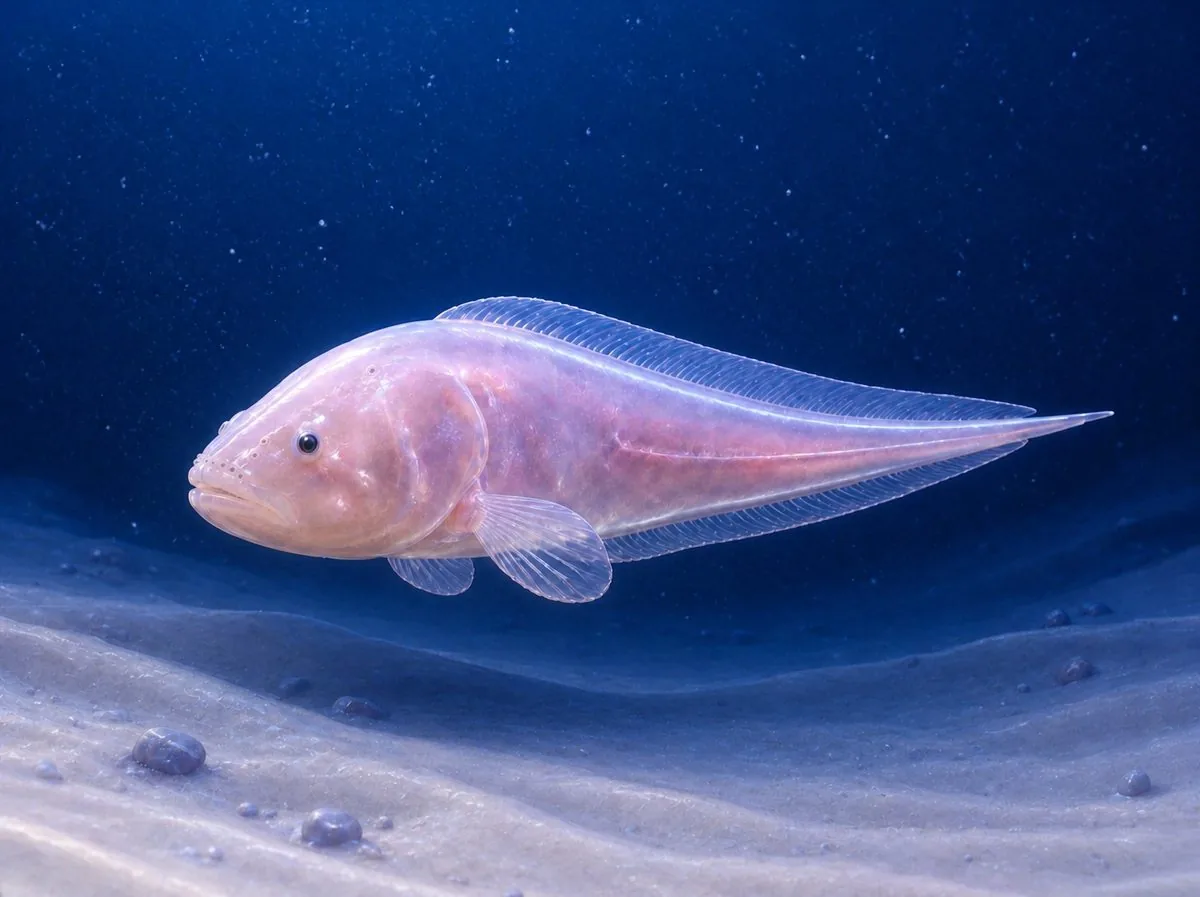
A little snailfish. Off the coast of Japan, scientists filmed it in a deep ocean trench, more than 27,000 feet (8,300 meters) down. That is more than five miles below the surface.
Down there, the water presses more than 800 times harder than at the surface. A snailfish has a soft, jelly-like body with no air-filled bag inside, so there is nothing to get squashed.
Scientists think fish can’t live much deeper than that. So this little snailfish may be very close to the deepest a fish can ever go.
TODAY’S MINI MISSION · QUIZ
Down where the snailfish lives, how much harder does the water press than at the surface? A) 2 times B) 10 times C) More than 800 times
Answer: C. More than 800 times.
IF THEY ASK WHY
Why does the water press so hard? All the water above is heavy. The deeper you go, the more water there is pressing down from above.
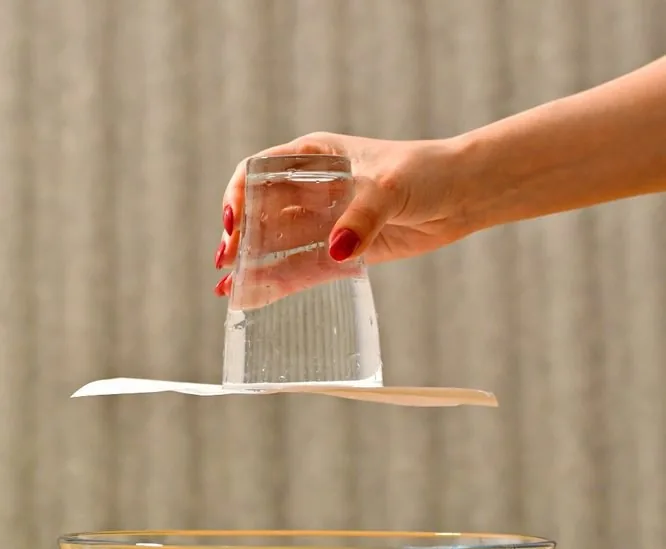
One real experiment: see how hard the air pushes
Water presses hard because it is heavy. Air is much lighter, but there is a lot of it above us, and it pushes on everything too. You can see that push with my Upside-Down Glass, Experiment 23 in Theo and Tilda’s Christmas Science Adventure. Over the sink, fill a narrow glass with water right to the top. Press a card a bit wider than the glass (a Christmas card works well) onto the rim with your palm. Keeping your palm on the card, turn the glass upside down, hold it straight, and slowly take your hand away. The water stays in!
The air below pushes the card up, and that push is much stronger than the weight of the water. Now think of the snailfish’s home. For every 33 feet (about 10 meters) you go down in the ocean, the water adds another push as strong as all the air above us. At the snailfish’s depth, that adds up to more than 800 of those pushes.
GOOD TO KNOW
- Stay over the sink or a large bowl the whole time. After a while, the card gets soggy and bends, and the water spills.
- Press the card down evenly with your palm, so there are no gaps anywhere. A plastic glass is fine.
- If someone spills the water the first time, don’t laugh. Show them how you did it.
Why do deep sea creatures glow?
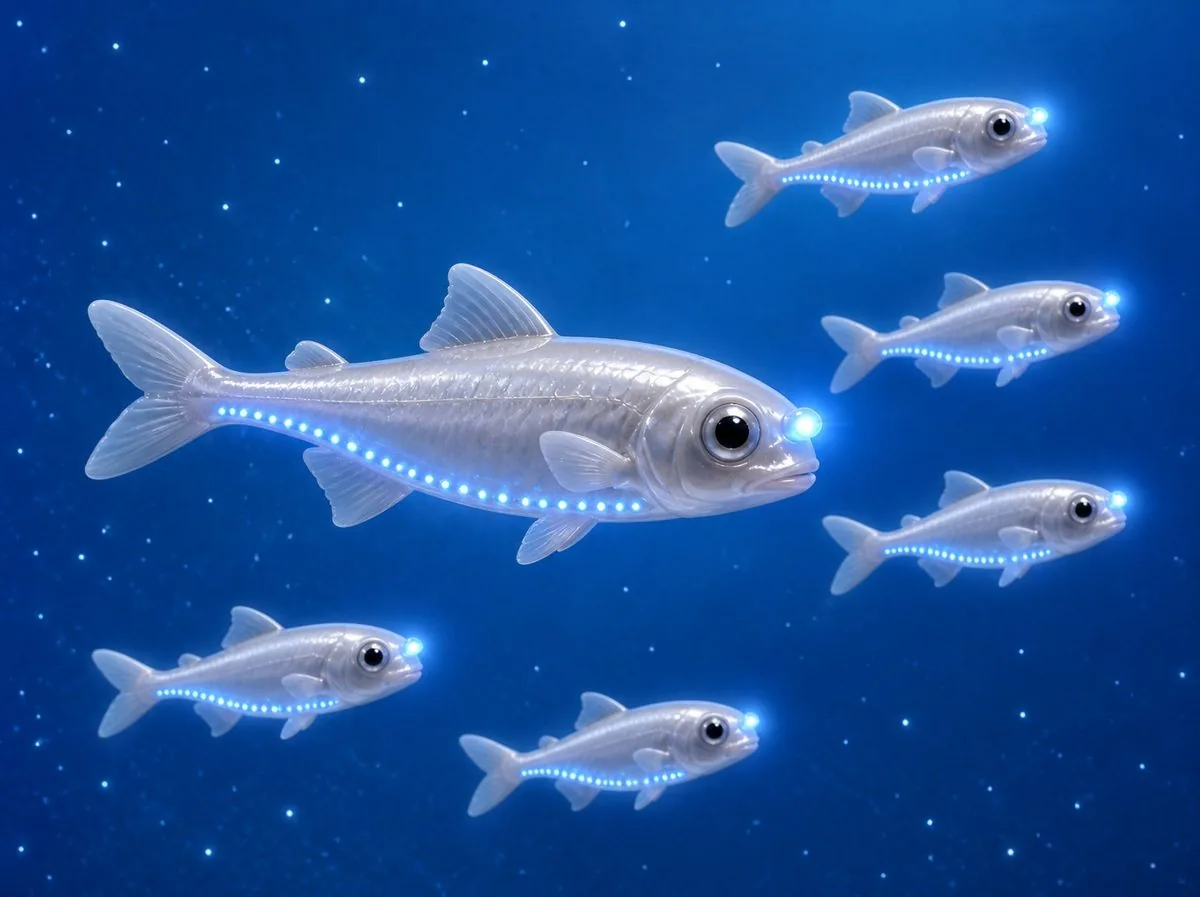
Glowing helps deep sea creatures find food, find each other, and hide from or scare off hungry animals. Most deep-sea animals make some light of their own. Scientists call it bioluminescence.
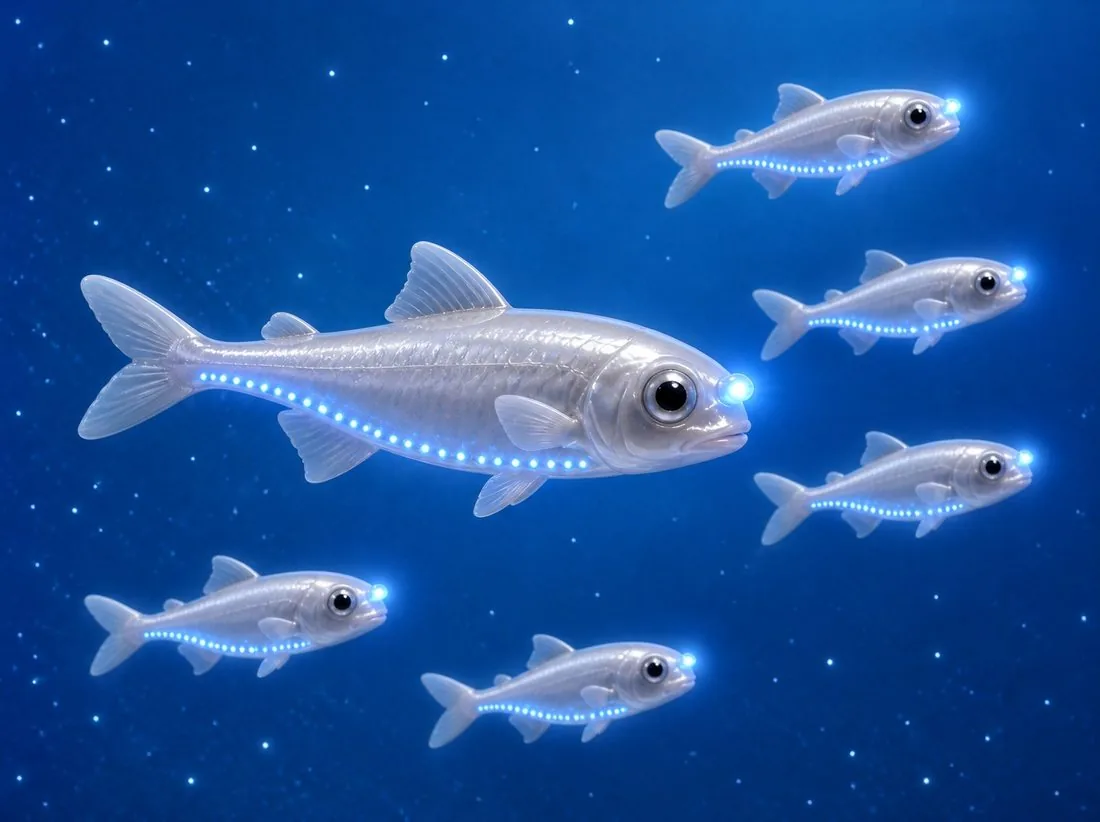
The lanternfish is a little fish that glows. Some lanternfish have rows of tiny lights along the belly and a light on the nose that works like a headlight. Every night, many lanternfish swim up toward the surface to feed. Every morning, they swim back down into the dark.
Know a family who loves driving around to look at Christmas lights? Send them this. Tonight they can tell the kids about the lights in the deep sea, too. Share it
What’s inside the Ocean Animals Advent Calendar?
Theo & Tilda’s Ocean Animals Advent Calendar is a printable advent calendar with 24 true ocean animal stories for kids ages 4 to 9, one for each day from December 1 to 24. Day by day, it dives from the shore, past the coral reef and the open ocean, all the way down to the deep sea. The deep-sea stories above are Days 18 to 24.
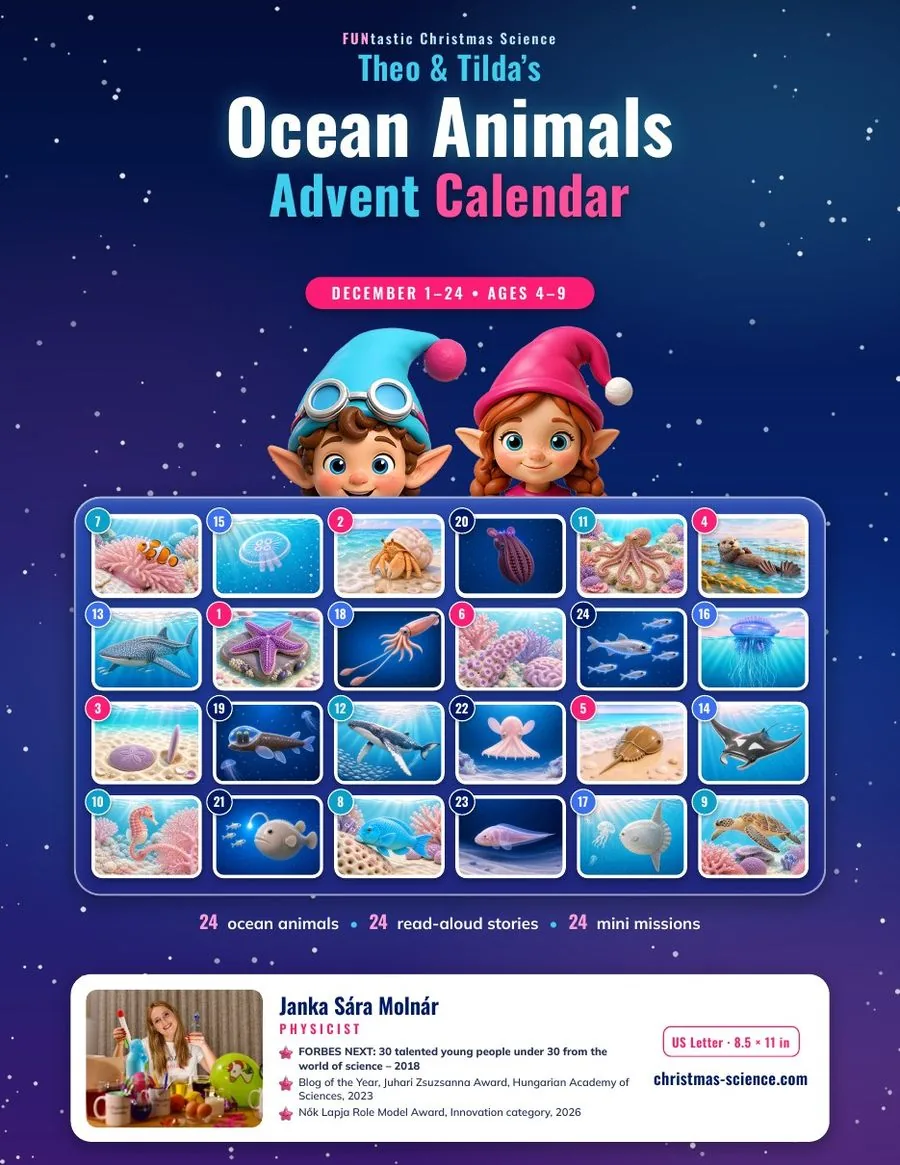
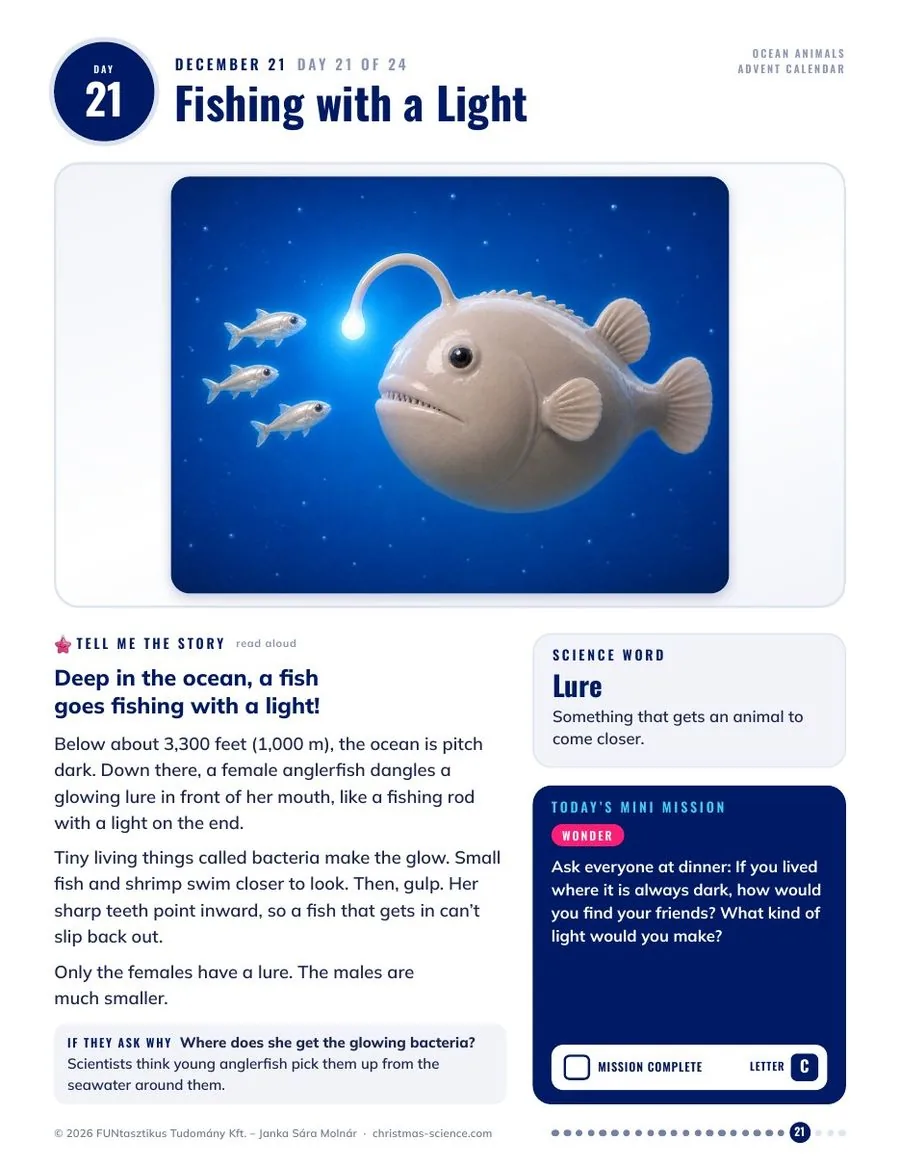
- 24 day pages, each with its own illustration, a one-minute true story, a Science word, a mini mission (a quiz, a game, a drawing, counting, or a question for dinner), and an “If they ask why” helper for the grown-up
- 24 real ocean animals in four zones: the shore, the coral reef, the open ocean, and the deep sea
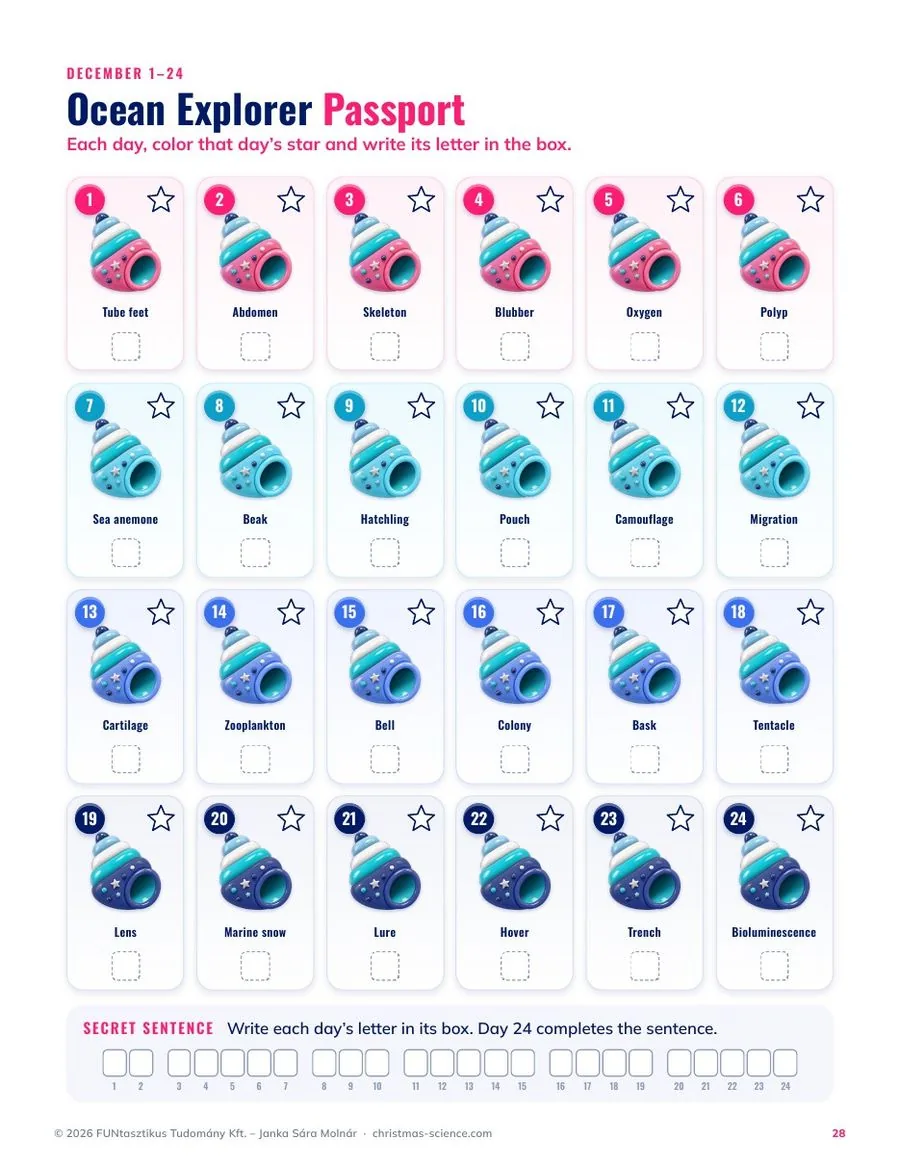
- An Ocean Explorer Passport: color a star every day, and the 24 letters spell a secret sentence
- A Junior Ocean Explorer certificate for Christmas Eve
- Most missions need nothing at all. No printer? Read it on a tablet, a laptop, or a phone.

Children ask the best questions about the ocean. Why is it dark down there? How deep can a fish live? Why does that one glow? Each day page answers one big question in about a minute, with facts I checked against NOAA, the Smithsonian, and other trusted ocean science sources.
Read it at bedtime, at breakfast, or snuggled under a blanket on a dark winter evening. Five minutes together is enough.
Looking for a different theme? Here are all my printable advent calendars for kids, from true dinosaur stories to rockets and planets. And for the animals that live closer to the surface, read fun facts about ocean animals for kids: eight more true sea stories.
Merry Christmas from the deep sea
We started with a giant squid and its dinner-plate eyes. Now we are at the end of our dive, where most animals make some light of their own.
In my Ocean Animals Advent Calendar, this is the Christmas Eve page. After 24 days and 24 real ocean animals, starting at the shore, the last page shows a little lanternfish glowing in the deep sea.
Tonight’s mission: Look at the Christmas lights with your family. Tell them about the ocean animals that glow. Can you name three from this page?

Theo & Tilda’s Screen-Free Advent Calendar
24 tiny wonders and 24 kindness missions, one for every day from December 1 to 24, plus 4 Weekend Labs with my real photos and 3 games. Most tiny wonders take about 10 minutes and use things you probably already have. 22 pages, for ages 3–9.
This calendar is free to share. Print it as often as you like for your family or class, and pass it on to friends, families, and teachers. Please don’t sell it or change it.

Know a family with a little ocean explorer?
Send them tonight’s trip to the bottom of the sea. The stories above are free to read aloud, and each one takes about a minute.
COPY THIS MESSAGE
Paste it into a family group chat, or send it to a friend.
I found true deep-sea stories to read to the kids tonight: a fish with a see-through head, a vampire squid that wraps itself in a cape, a fish that fishes with a light, and the deepest fish ever filmed. A physicist checked every fact. www.christmas-science.com/blog/deep-sea-creatures-for-kids
Deep sea creatures: quick answers
What animals live in the deep sea?
Giant squid, barreleye fish, vampire squid, anglerfish, dumbo octopuses, snailfish, and lanternfish are some of them. Most deep-sea animals make some light of their own.
Why is the deep sea dark?
Sunlight fades as it travels down through the water. Below about 650 feet (200 meters) there is hardly any left, and below about 3,300 feet (1,000 meters) the ocean is pitch dark.
How deep can a fish live?
The deepest fish ever seen alive is a little snailfish, filmed more than 27,000 feet (8,300 meters) down off the coast of Japan. Scientists think fish can’t live much deeper than that.
What is bioluminescence?
Bioluminescence is light made by a living thing. In the deep sea, glowing helps animals find food, find each other, and hide from or scare off hungry animals.
What age is the Ocean Animals Advent Calendar for?
Ages 4 to 9. Little ones can enjoy it with a grown-up reading aloud. Each of the 24 day pages has a one-minute true story, a Science word, and a mini mission, and the calendar comes as two PDF files, US Letter and A4. No printer? You can read it on a tablet, a laptop, or a phone.

About Janka
Janka Sára Molnár is a physicist and award-winning science communicator from Hungary, and the founder of FUNtastic Christmas Science. As a high school student, she built particle detectors and took them to CERN several times, where she presented them in its teacher program. She graduated from Eötvös Loránd University (ELTE) in Budapest, and for almost 15 years she has run several hundred science shows for children and families.
- FORBES NEXT: 30 talented young people under 30 from the world of science – 2018
- Rising Star Award, Creator Awards, 2024
- Role Model Award, Innovation, Nők Lapja, 2026
- Juhari Zsuzsanna Blog of the Year Award, Hungarian Academy of Sciences, 2023
- Winner of the HBO Max reality show A Híd (The Bridge)
The ocean illustrations and the pictures of Theo, Tilda, and their world were created with AI-assisted tools (Canva) and edited by our team. Physicist Janka Sára Molnár checked every fact in this post against NOAA, the Smithsonian, and other trusted science sources. The Upside-Down Glass photo is a real photo of her own experiment.
Keep reading
More Christmas science ideas from Theo, Tilda, and me.
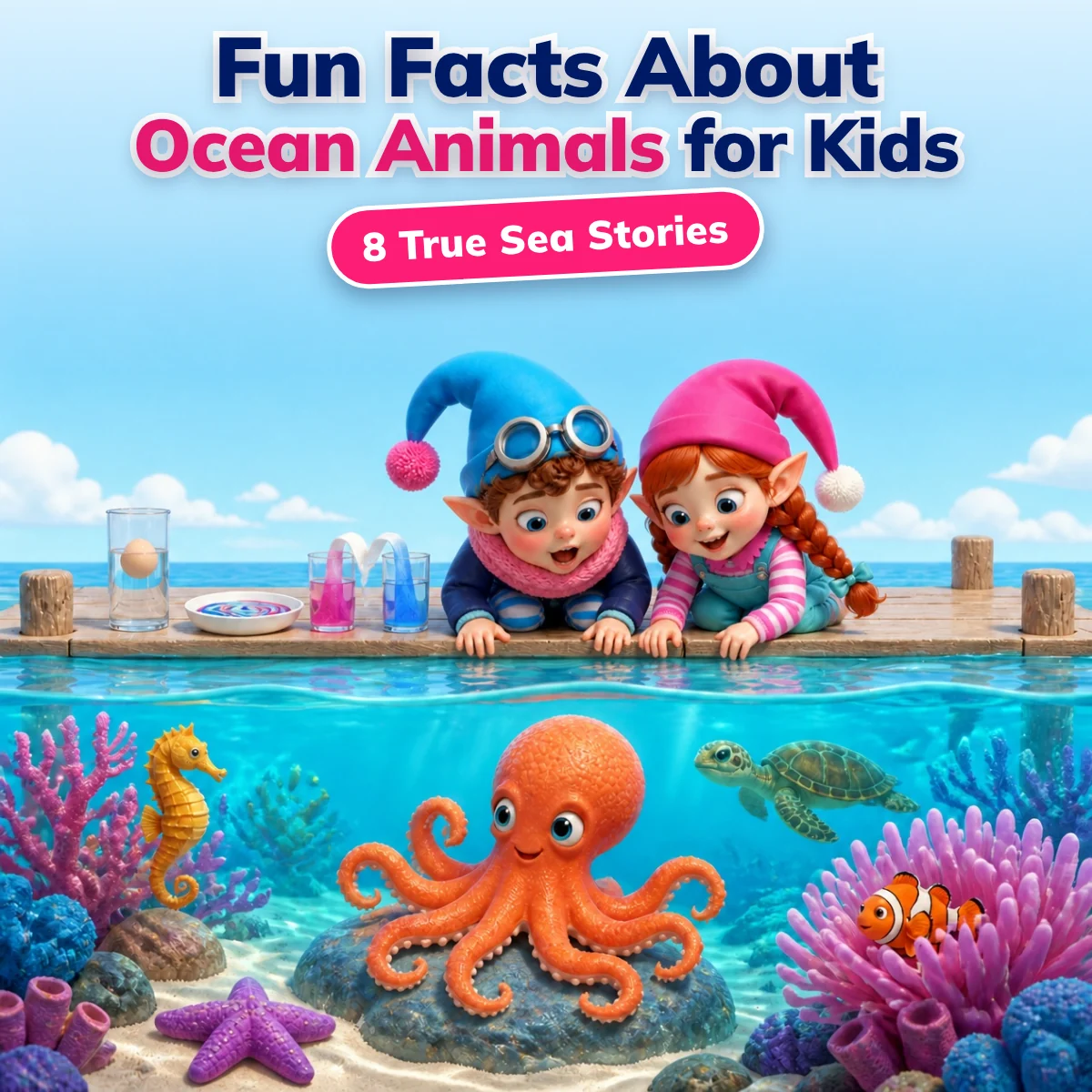 For parents · 16 min readFun Facts About Ocean Animals for Kids (Physicist-Checked)Fun facts about ocean animals for kids: an octopus with three hearts, a seahorse dad, a fish that makes sand. 8 true stories, checked by a physicist.Read the post →
 For parents · 13 min readFun Facts About the Planets for Kids (Physicist-Checked)Fun facts about the planets for kids: one true story for each of the 8 planets, plus Pluto’s heart and why stars twinkle. Checked by a physicist.Read the post →
 For parents · 10 min readDid Dinosaurs Live in the Snow? True Stories for KidsDid dinosaurs live in the snow? Yes. Baby dinosaurs hatched in snowy Arctic Alaska, and a crested dinosaur lived in forested Antarctica. Four true stories.Read the post →
© 2026 FUNtasztikus Tudomány Kft. – Janka Sára Molnár