Christmas Science Experiments for KS1 and EYFS: Easy Lessons for the Last Weeks of the Autumn Term
A story to read aloud, an experiment and talk questions for every adventure, with curriculum links for England and a free UK Teacher Guide.
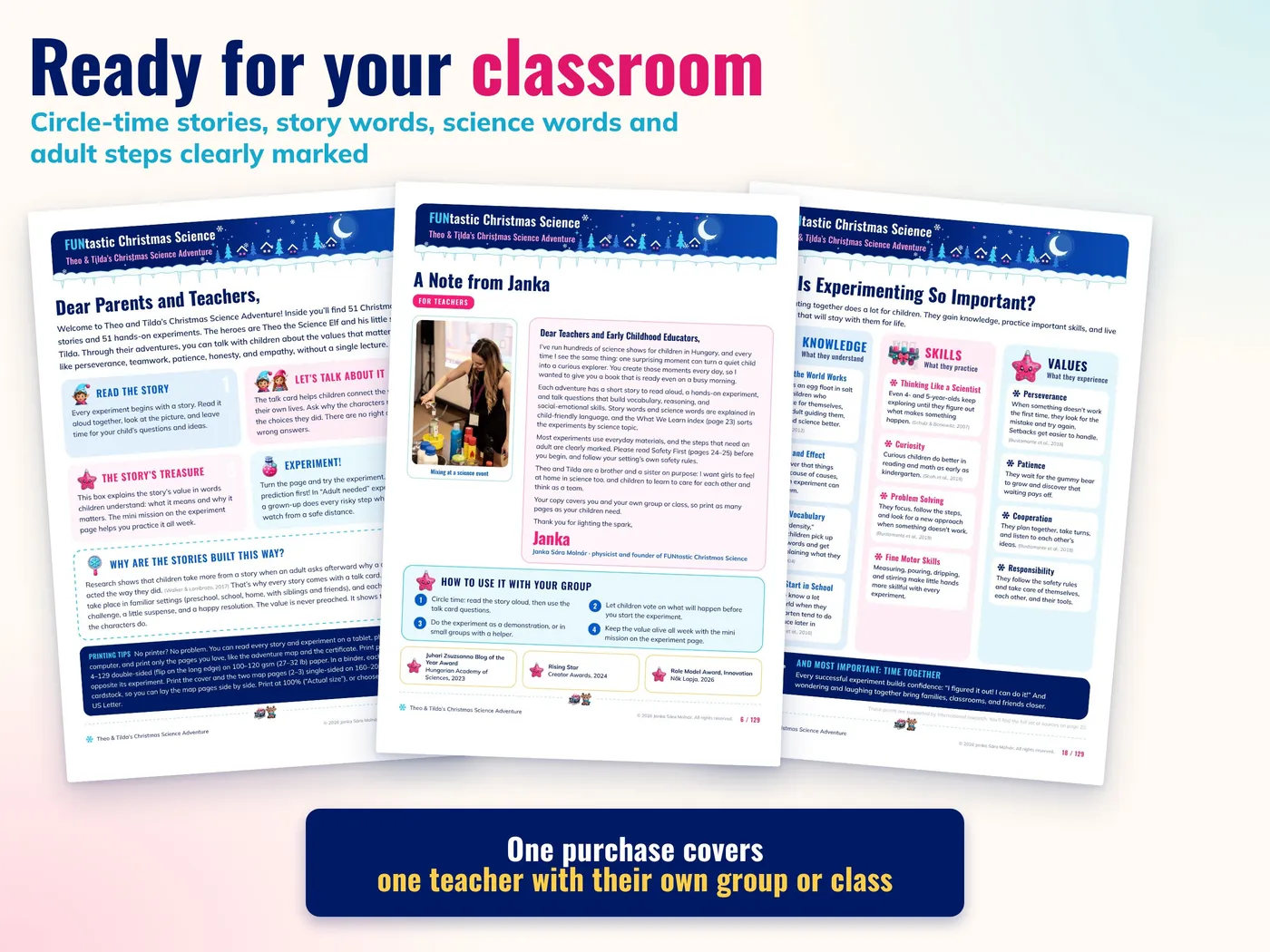
Save it for your end-of-term planning, or share it with your year group partner.
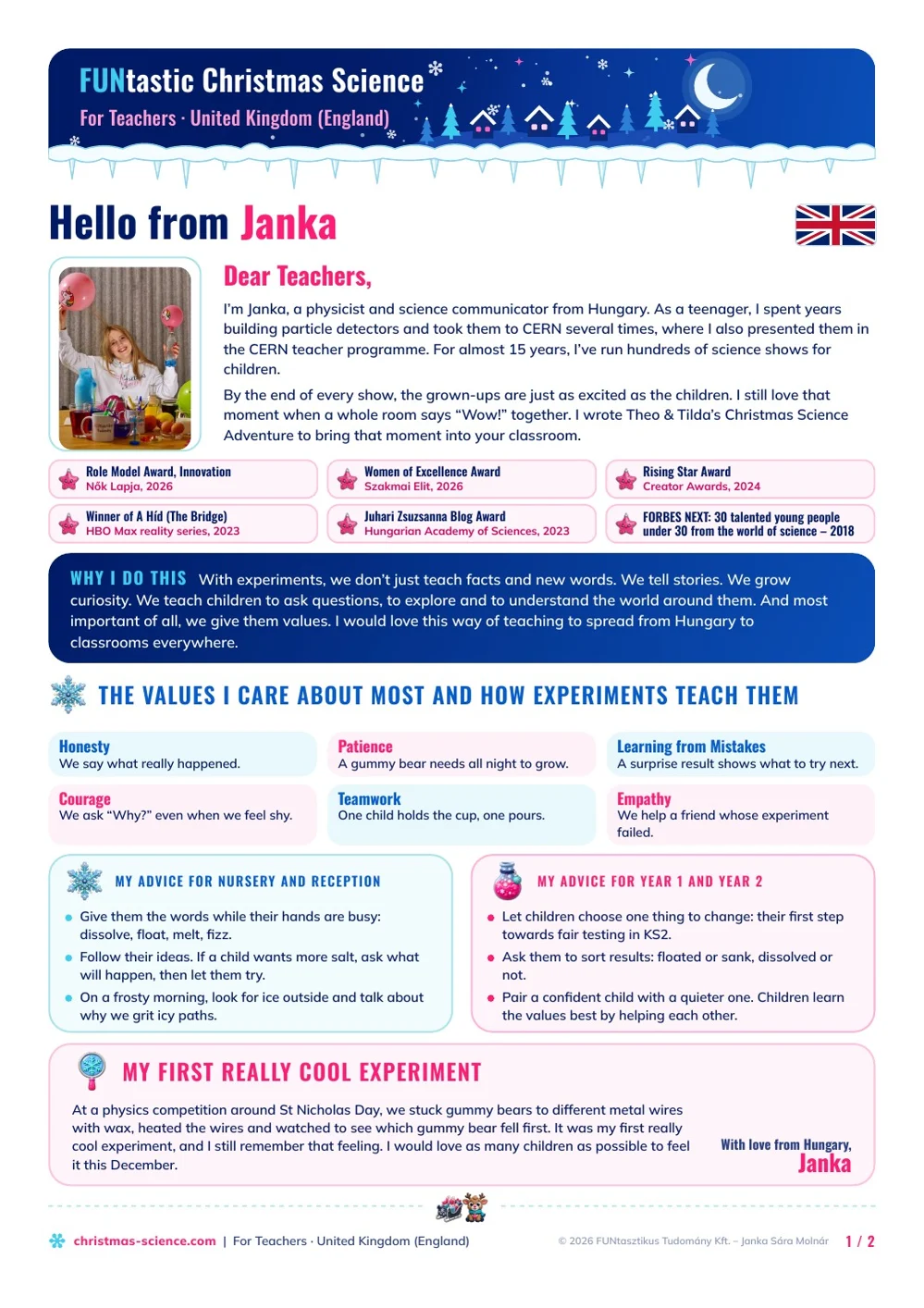
I’m Janka, a physicist and science communicator from Hungary. For almost 15 years I’ve run hundreds of science shows for children. By the end of every show, the grown-ups are just as excited as the children, and I wrote Theo & Tilda’s Christmas Science Adventure to bring that moment into your classroom.
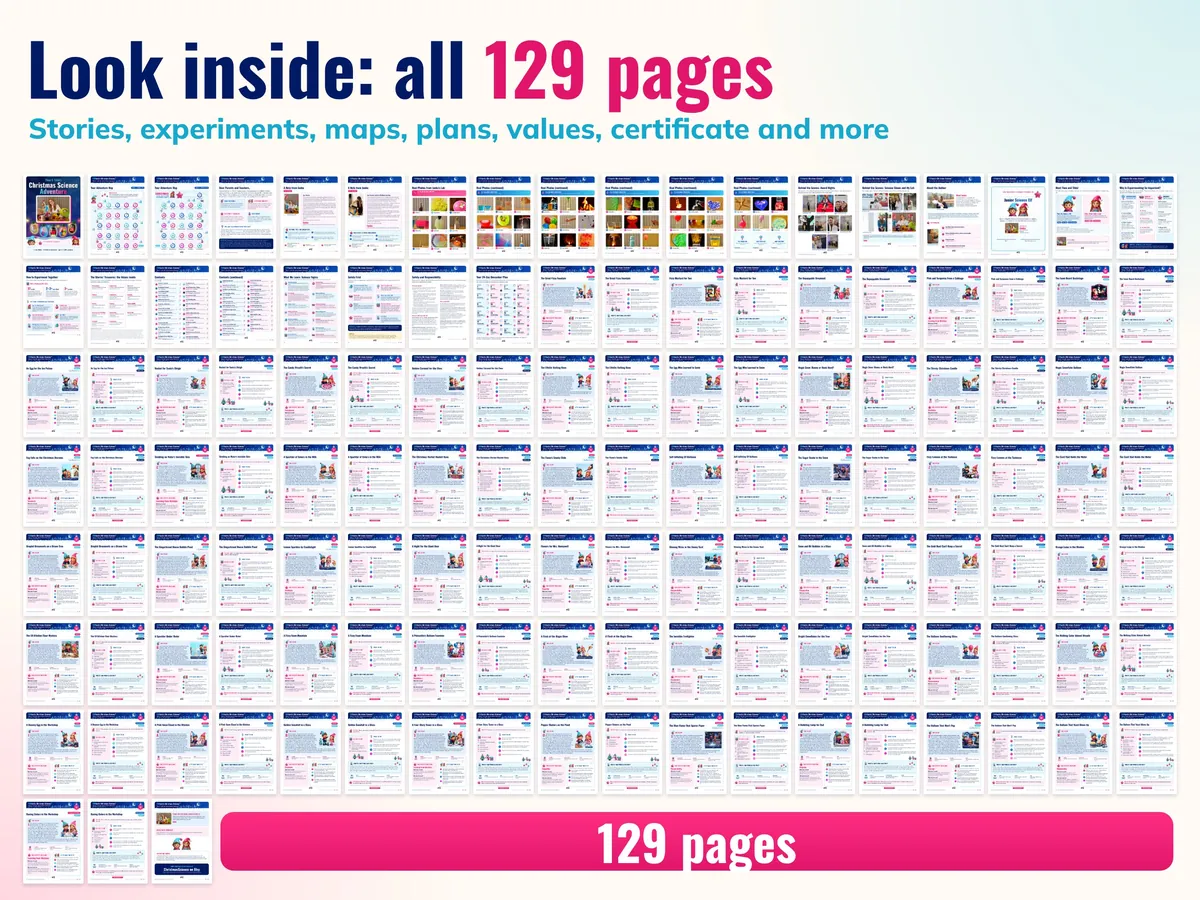
The book has 51 short Christmas stories to read aloud, each built around one value, and each followed by an experiment with a real photo of the result: 36 hands-on kitchen experiments for ages 3–9, always with a grown-up, and 15 teacher demonstrations. Below is how I would use it in the last weeks of term, year group by year group, with the routines, safety levels and curriculum links from the free UK Teacher Guide.
Know a Year 1 or Year 2 teacher who is planning the last weeks of the autumn term? Send this to them. Every experiment comes with a story from the book. Share it
Which Christmas science experiments work best for KS1?
This is the Autumn 2 sequence I suggest in the UK Teacher Guide. The numbers are the experiment numbers in the book, so you can find each one in seconds.
| Year group | National Curriculum link | Experiments that fit December |
|---|---|---|
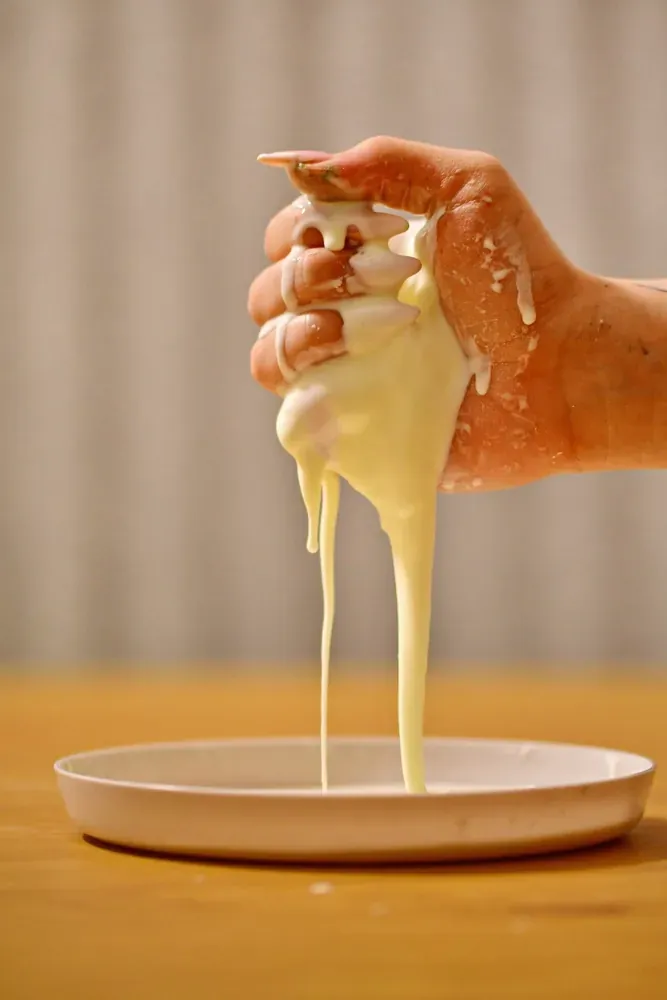
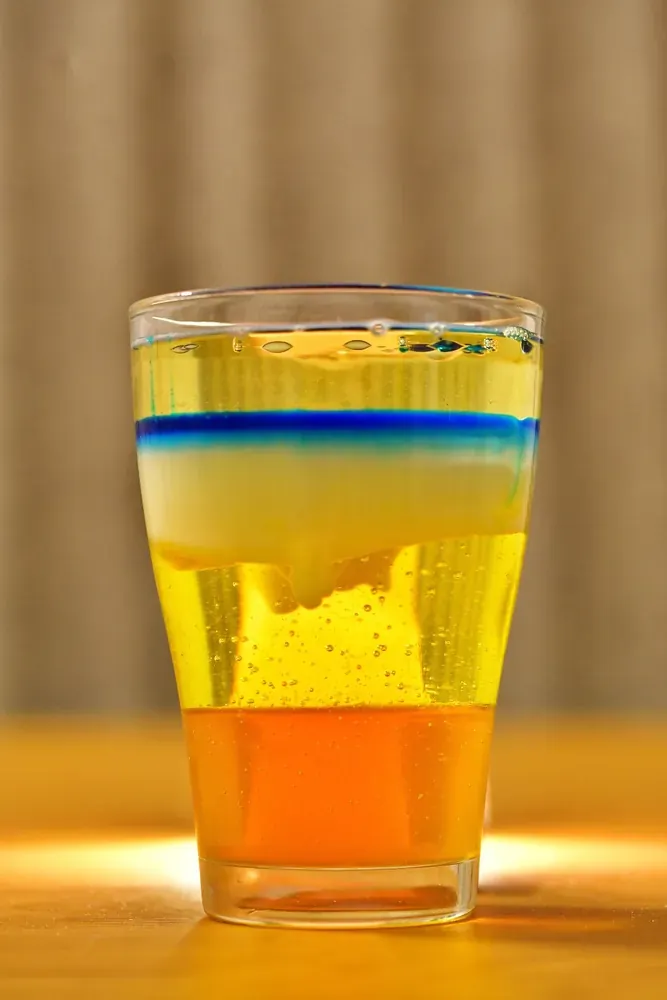
| Year 1 | Everyday materials: properties, compare and group | 12 Cornstarch Magic Snow, 16 Paper Clip on Water’s Skin, 24 Color Drops in Oil, 45 Four-Layer Liquid Tower, 30 Salt Snow and Oil Bubbles |
| Year 2 | Uses of everyday materials: suitability, stretching | 41 Walking-Water Advent Wreath (which paper works?), 23 Upside-Down Water Glass (which cover works?), 3 The Unpoppable Balloon (an adult does the needle), 5 Bubble Snake Beard |
| Both | Working scientifically | 4 Red Cabbage Color Magic, 31 Color-Changing Turmeric Gold and 33 Flour Detectives with Iodine for identifying and classifying, 10 Ice Melting Race for a simple test |
Titles are printed as in the book, which uses US spelling. Cornstarch is cornflour in the UK. Keep 28 Color-Changing Cabbage Flowers and 50 The Yeast-Powered Balloon for the spring plants and living things units, or use them now as a preview.
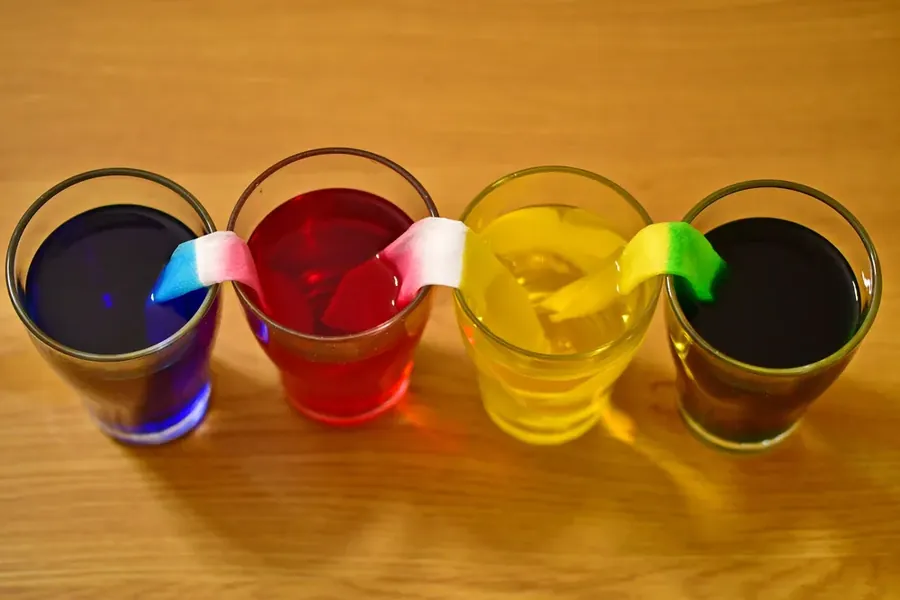
Turn one experiment into a Year 2 test. The book lists paper towels, toilet paper or tissues for the walking-water wreath. Give each group a different paper, let them predict which one will carry the colour up and across, and compare. That is “suitability of everyday materials” and “performing simple tests” in one lesson.
- Let children choose one thing to change. It is their first step towards fair testing in KS2.
- Ask them to sort results: floated or sank, dissolved or not.
- Pair a confident child with a quieter one. Children learn the values best by helping each other.
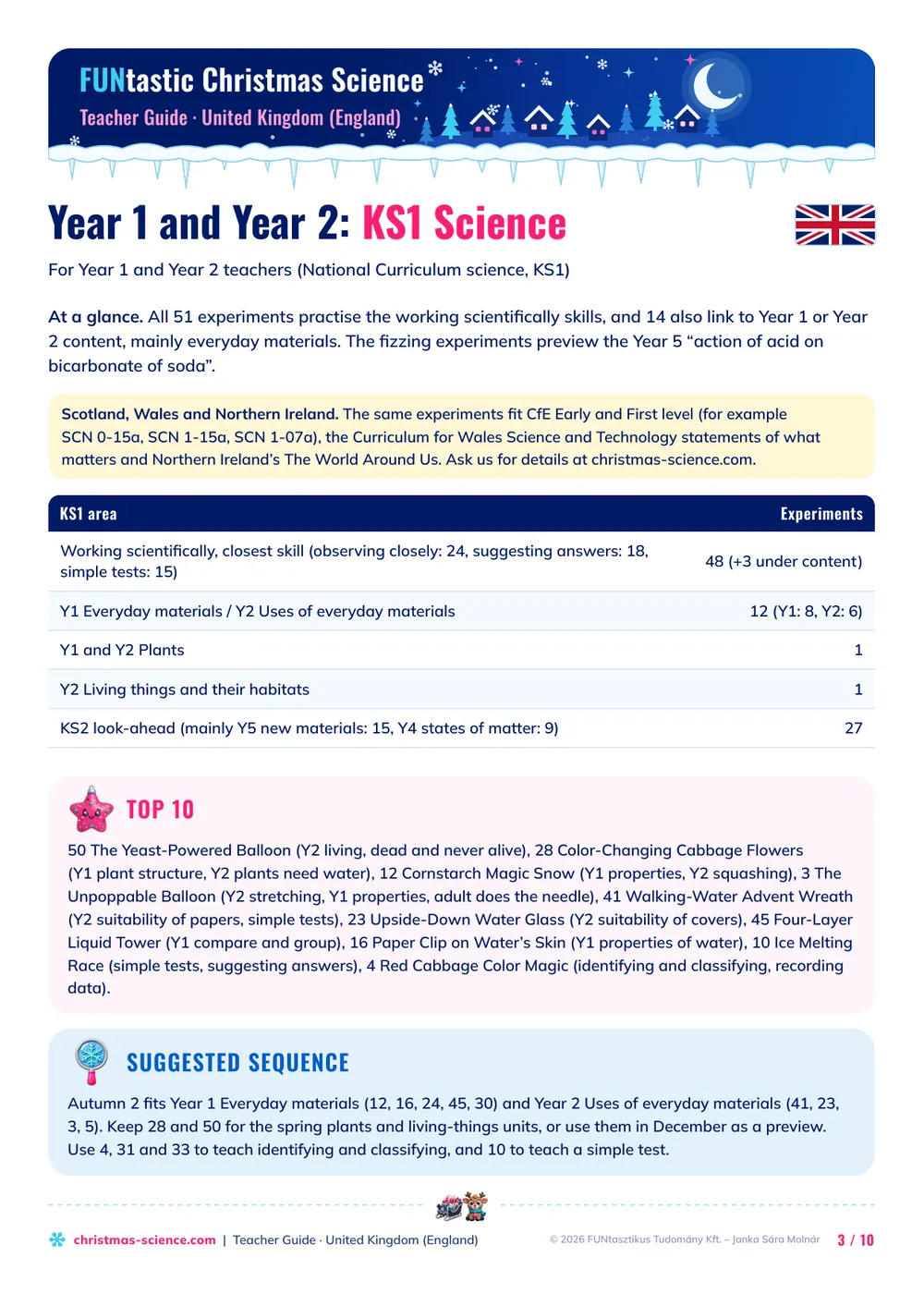
Teaching Year 3 or Year 4? The book is written for ages 3–9. The guide marks 27 experiments as a KS2 look-ahead, mainly the Year 5 work on new materials and Year 4 states of matter, and the fizzing experiments preview the Year 5 “action of acid on bicarbonate of soda”.
Working with a Reception or nursery class? The EYFS ideas come next, so share them with your EYFS team. Share it
Which Christmas science activities suit EYFS?
In the UK guide, 27 experiments link to The Natural World, 21 to Speaking, 4 to Creating with Materials and 2 to Fine Motor Skills. For early years, keep the lesson to the story, one prediction and the experiment, about 15–20 minutes. Predictions can be thumbs up or down, or picture cards.
- Nursery: start with the sensory ones: 12 Cornstarch Magic Snow, 24 Color Drops in Oil and 41 Walking-Water Advent Wreath.
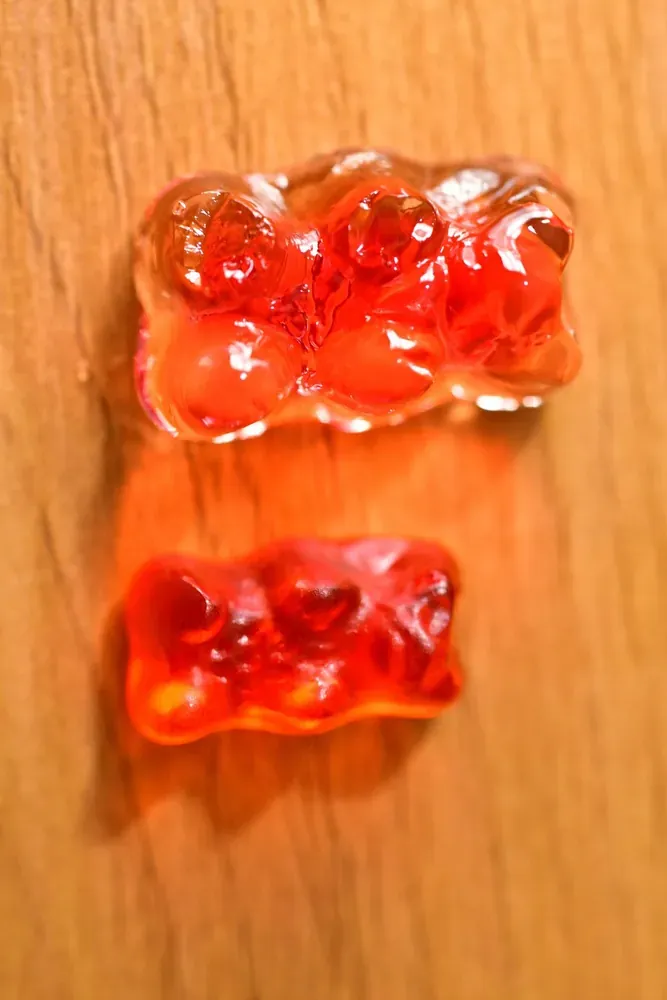
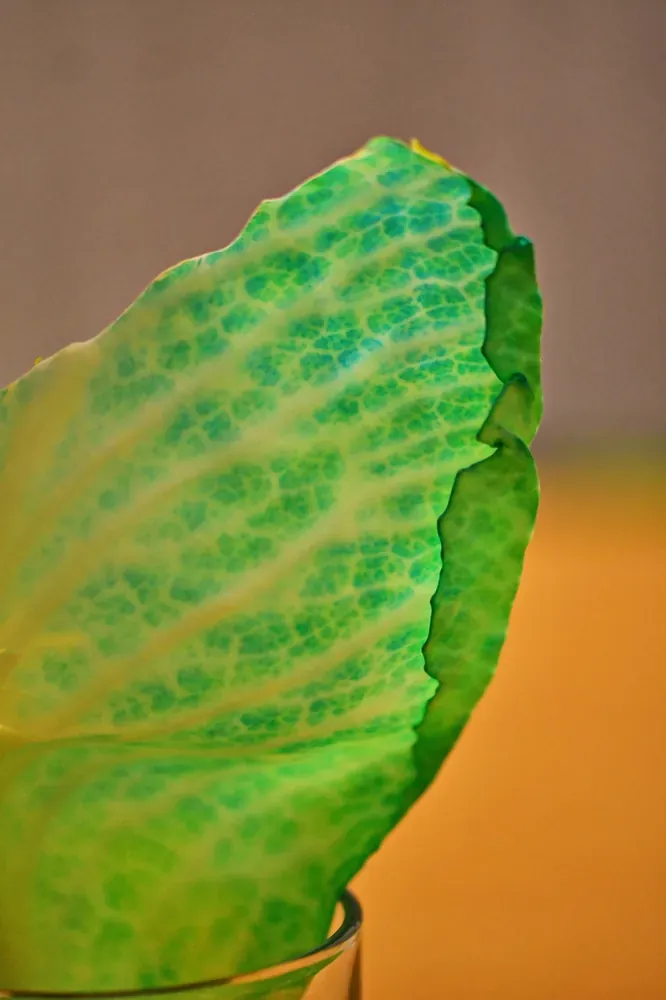
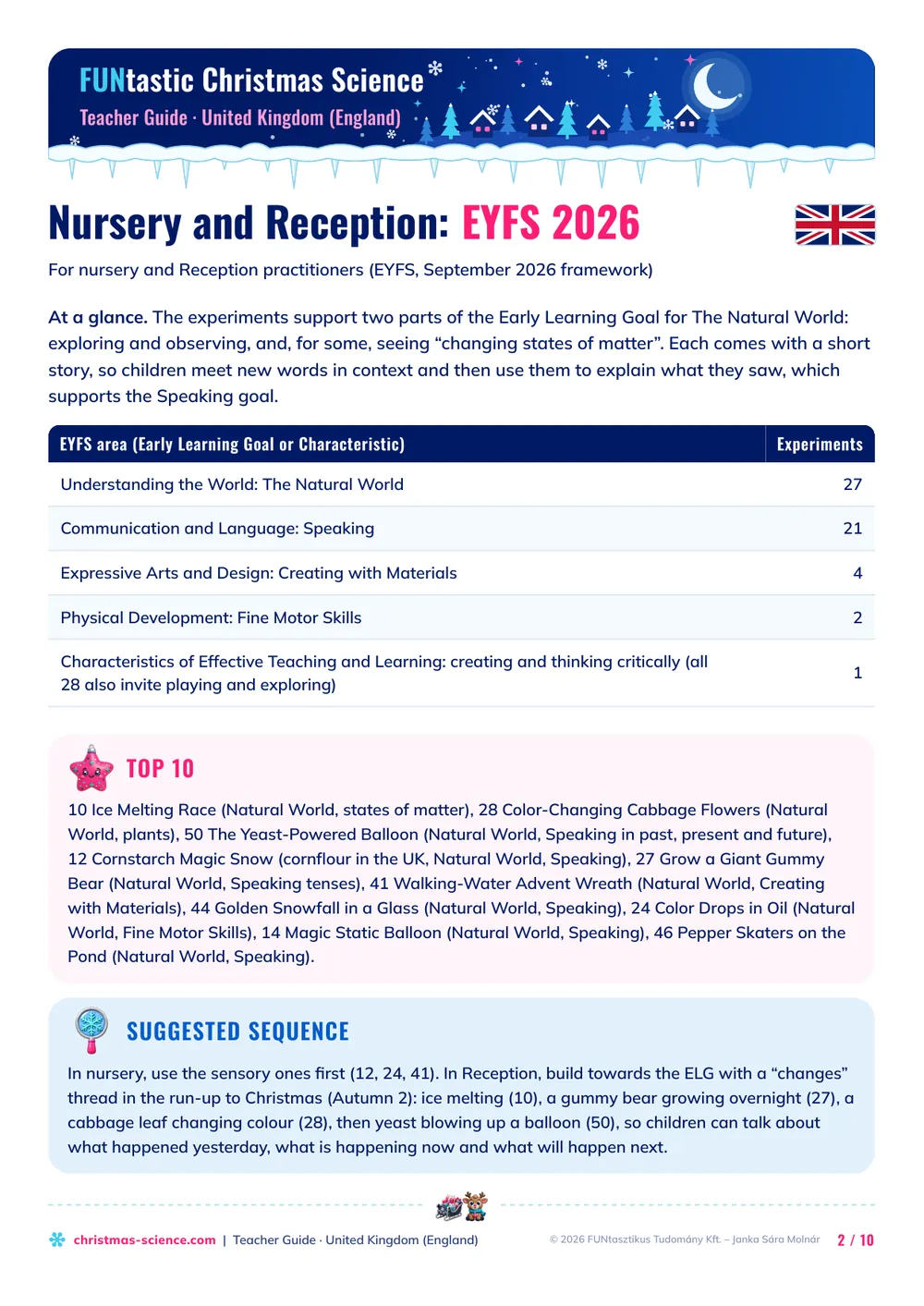
- Reception: build a “changes” thread in the run-up to Christmas. Ice melting (10), a gummy bear growing overnight (27), a cabbage leaf changing colour (28), then yeast blowing up a balloon (50). Children talk about what happened yesterday, what is happening now and what will happen next.
- Give them the words while their hands are busy: dissolve, float, melt, fizz.
- Follow their ideas. If a child wants more salt, ask what will happen, then let them try.
- On a frosty morning, look for ice outside and talk about why we grit icy paths.
- In Nursery, a grown-up handles the gummy bears. Small sweets are a choking hazard for children under 5.
How do you run a Christmas science lesson in 35–50 minutes?
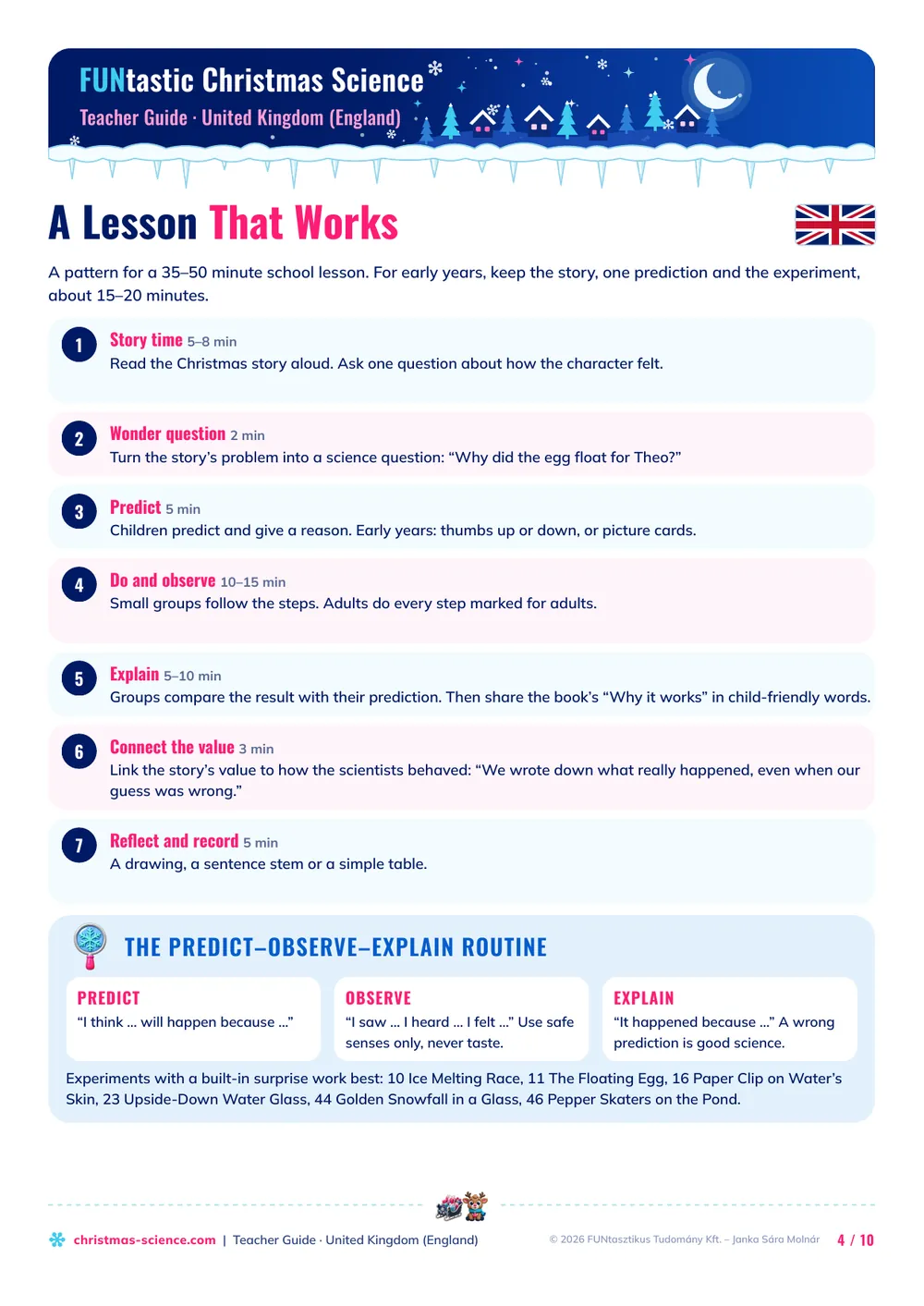
This is the pattern from the UK Teacher Guide, with timings.
- 5–8 minStory time. Read the Christmas story aloud. Ask one question about how the character felt.
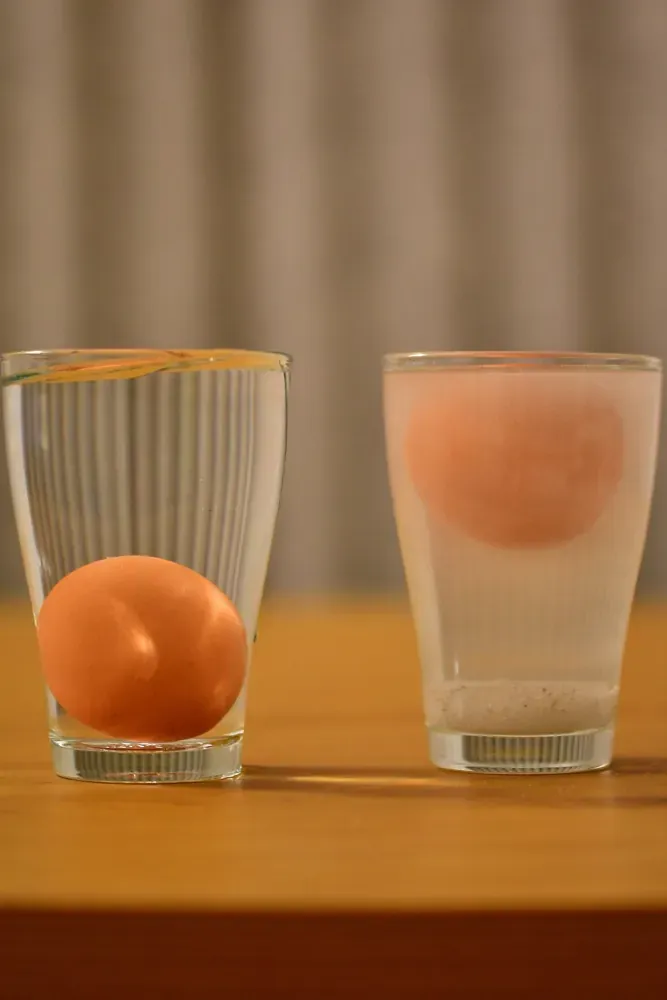
- 2 minWonder question. Turn the story’s problem into a science question: “Why did the egg float for Theo?”
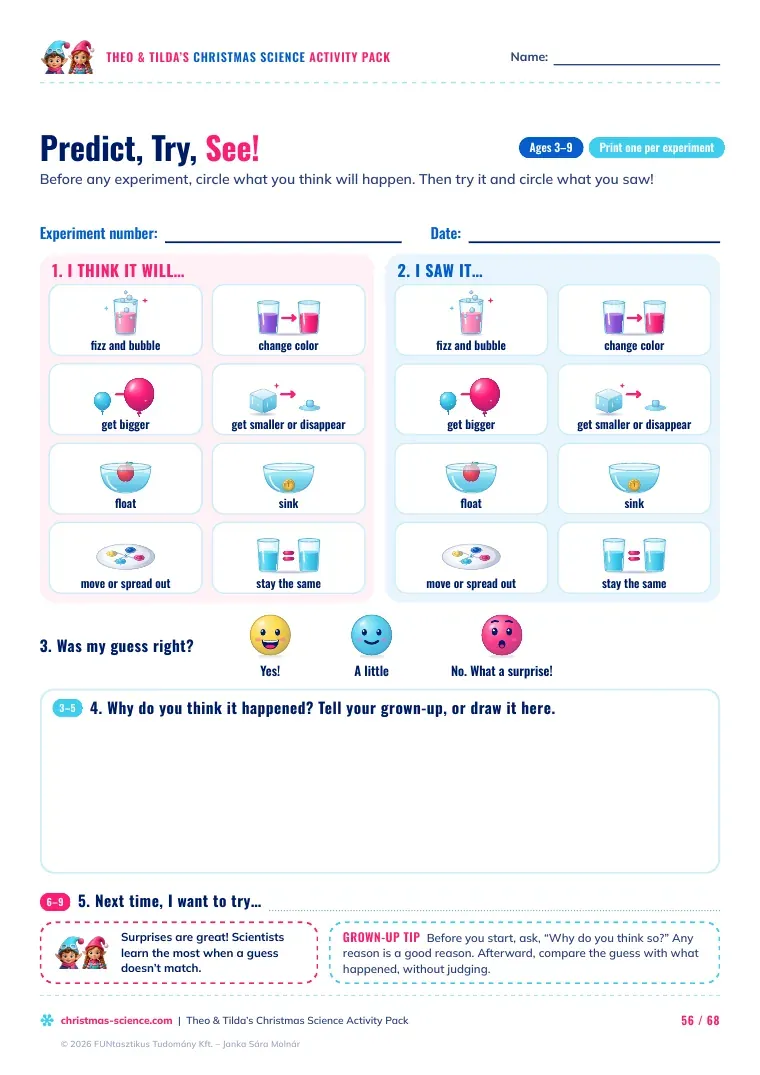
- 5 minPredict. Children predict and give a reason.
- 10–15 minDo and observe. Small groups follow the steps. Adults do every step marked for adults.
- 5–10 minExplain. Groups compare the result with their prediction, then share the book’s “Why it works” in child-friendly words.
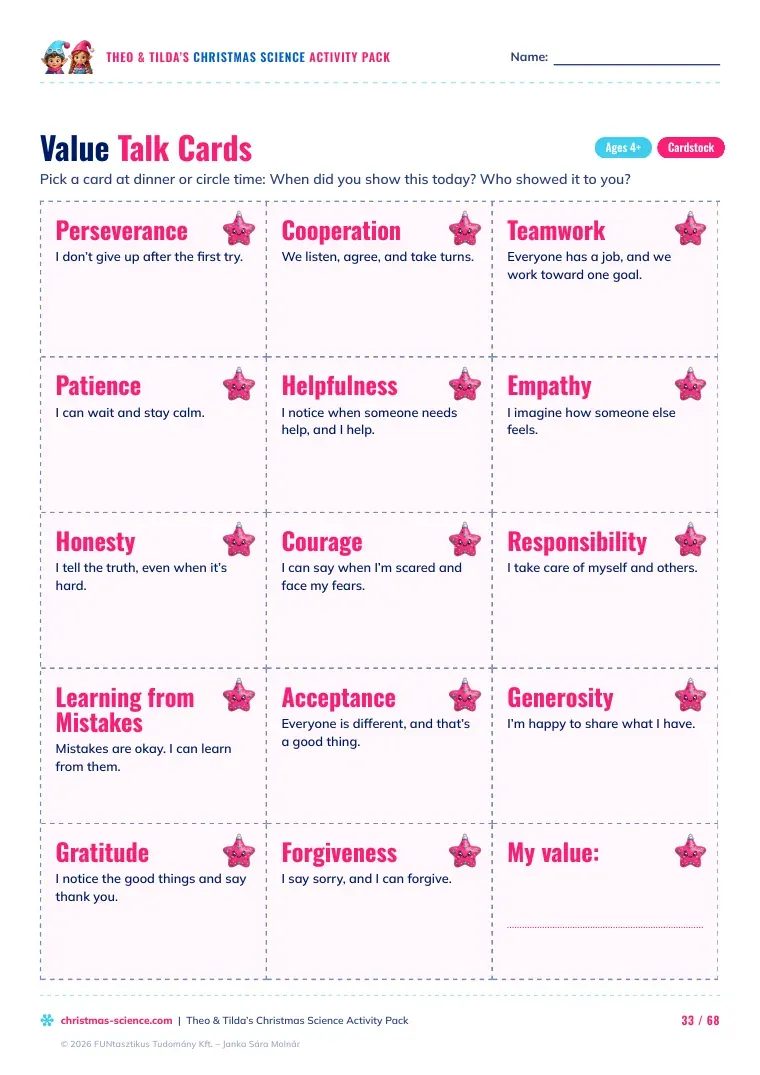
- 3 minConnect the value. “We wrote down what really happened, even when our guess was wrong.”
- 5 minReflect and record. A drawing, a sentence stem or a simple table.
Sentence stems for Predict, Observe, Explain
Experiments with a built-in surprise work best for predicting: 10 Ice Melting Race, 11 The Floating Egg, 16 Paper Clip on Water’s Skin, 23 Upside-Down Water Glass, 44 Golden Snowfall in a Glass and 46 Pepper Skaters on the Pond.
A real example: Pepper Skaters on the Pond (no. 46)
In the story, Tilda skates for the first time, falls on her tummy, and the bigger elves laugh. Theo giggles too. Then he remembers the school show when he forgot his poem and someone laughed at him. He knocks on Tilda’s door, says sorry, and takes her to the kitchen, where he sprinkles pepper on a bowl of water: “Look, pepper skaters!”
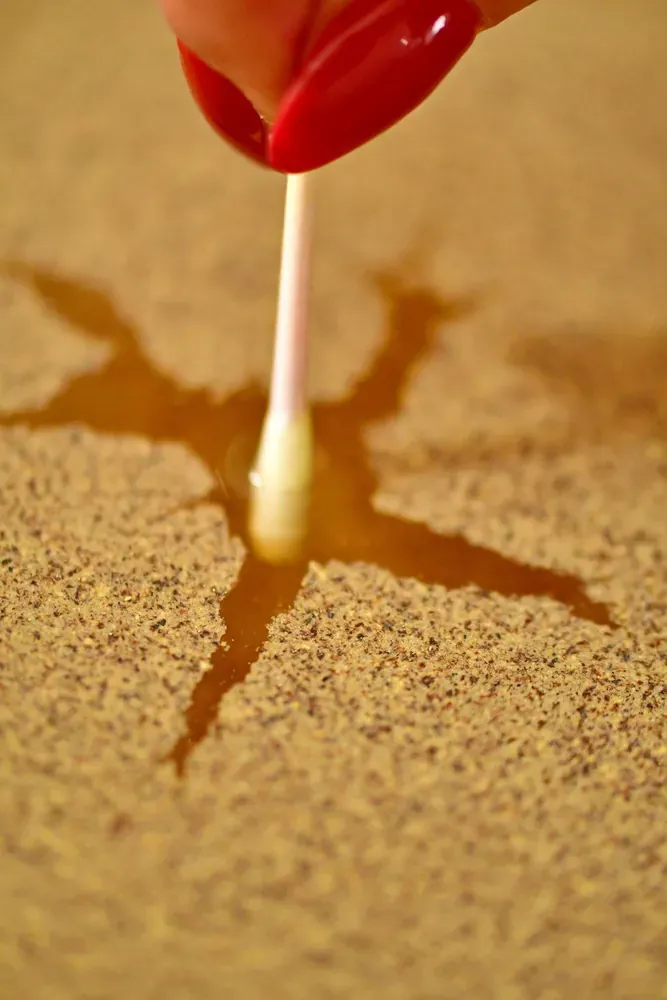
The experiment needs a bowl of water, ground pepper, one drop of washing-up liquid and a cotton bud. Wait until the water is perfectly still, sprinkle the pepper, then touch the soapy tip to the middle. The pepper rushes to the edge. The soap weakens the water’s surface tension where it touches, the rest of the surface keeps pulling, and it carries the pepper with it. One tip from the book: change the water before you repeat it, or it won’t work again.
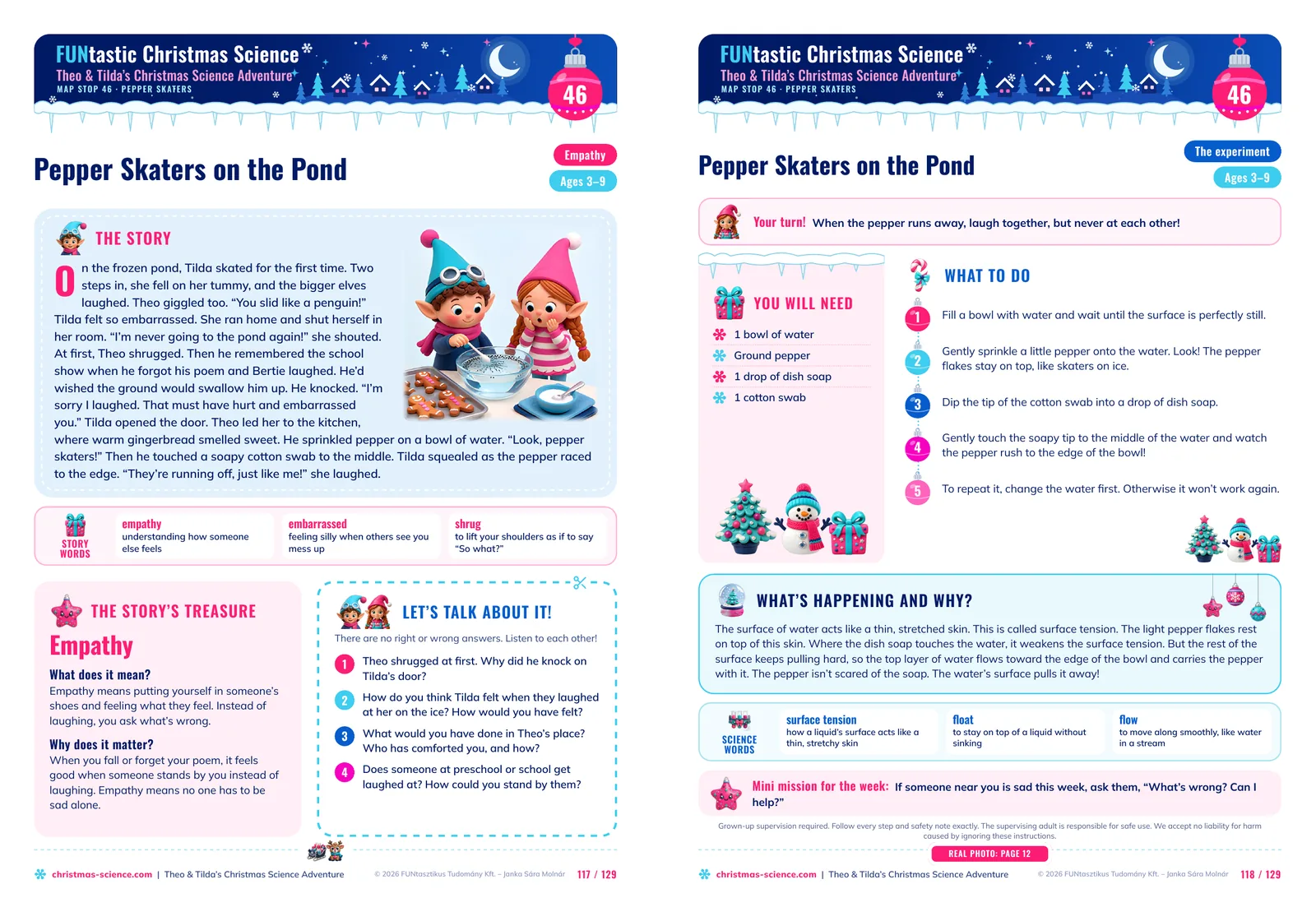
The value talk takes five minutes. Feel: how did Tilda feel when they laughed? Think: what choice did Theo make? Do: when could we make that choice today? The experiment page ends with a mini mission for the week: “If someone near you is sad this week, ask them, ‘What’s wrong? Can I help?’”
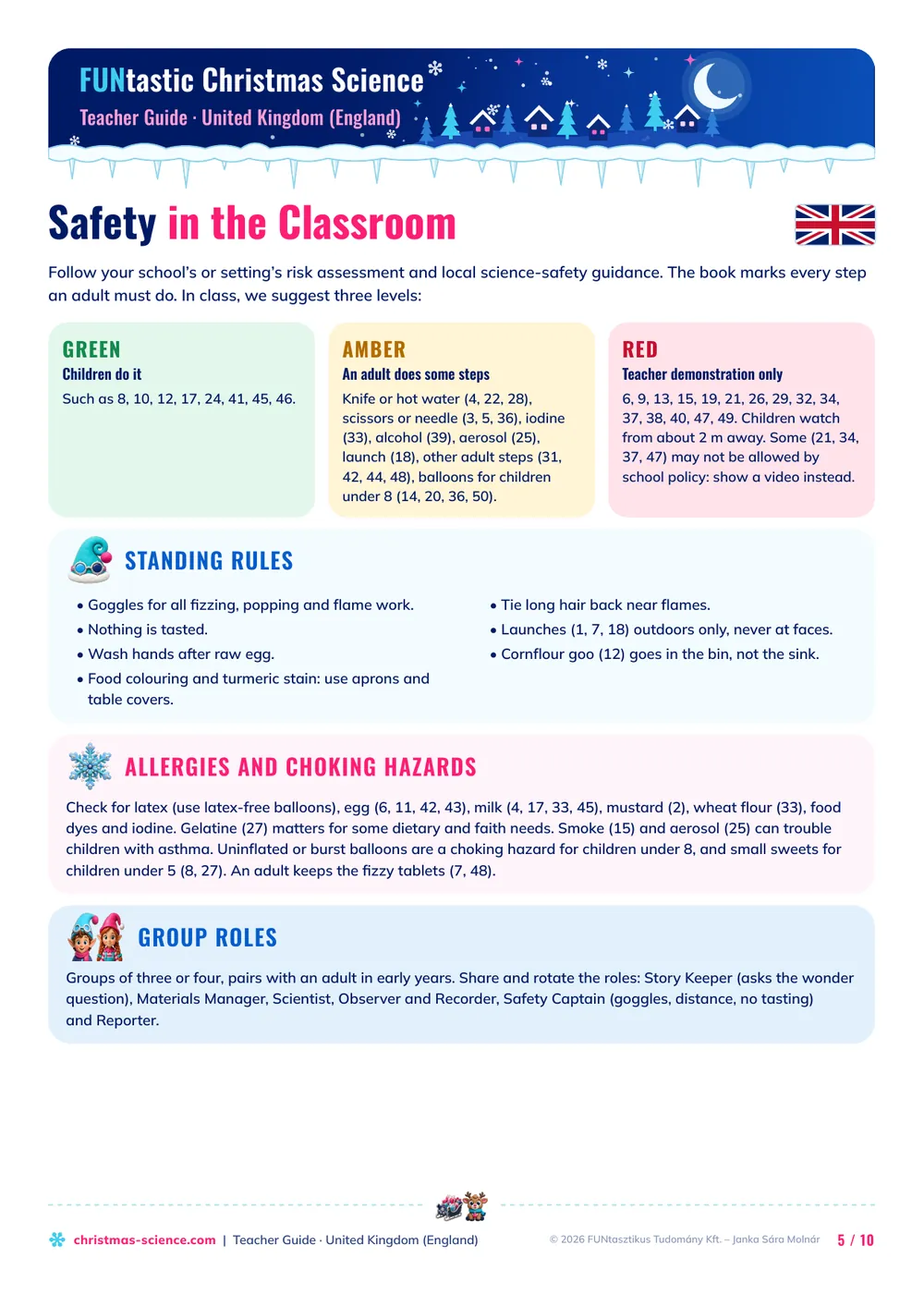
- Groups of three or four, pairs with an adult in early years. Rotate the roles each lesson.
- Story Keeper asks the wonder question, Materials Manager, Scientist, Observer and Recorder, Safety Captain (goggles, distance, no tasting) and Reporter.
Teaching assistant helping with the experiments? Share the safety levels with them before the first lesson. Share it
Are Christmas science experiments safe to do in class?
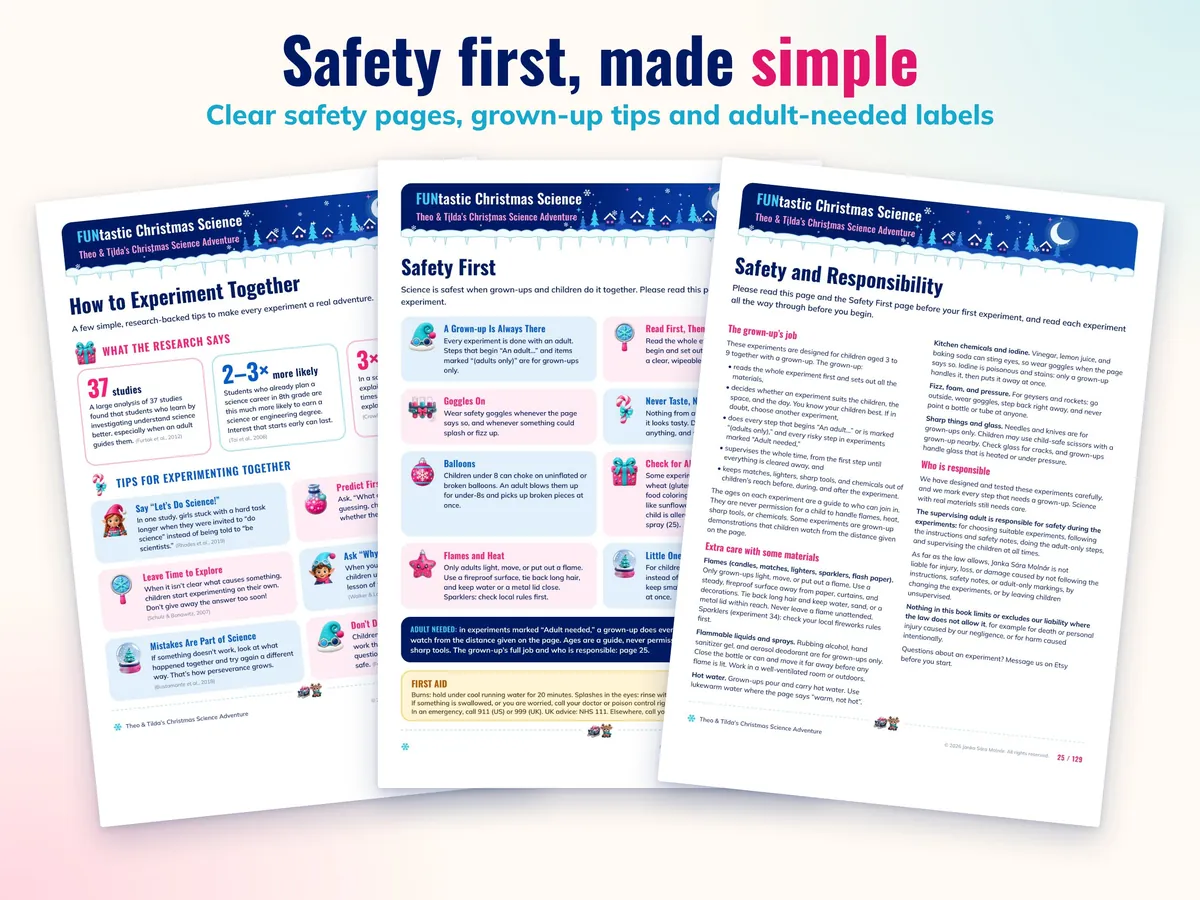
The UK Teacher Guide sorts all 51 experiments into three levels:
Standing rules
- Goggles for all fizzing, popping and flame work. Tie long hair back near flames.
- Nothing is tasted.
- Launches (1, 7, 18) are outdoors only, never at faces.
- Wash hands after raw egg.
- Cornflour goo (12) goes in the bin, not the sink.
- Food colouring and turmeric stain, so use aprons and table covers.
Allergies and choking hazards to check first
Latex (use latex-free balloons), egg (6, 11, 42, 43), milk (4, 17, 33, 45), mustard (2), wheat flour (33), food dyes and iodine. Gelatine (27) matters for some dietary and faith needs. Smoke (15) and aerosol (25) can trouble children with asthma. Uninflated or burst balloons are a choking hazard for children under 8, and small sweets for children under 5. An adult keeps the fizzy tablets (7, 48).
- Check allergies and your setting’s risk assessment.
- Choose the experiment and check its level in the tables.
- Gather the materials the day before, and try the experiment once yourself.
- Cover the tables, set out goggles and keep paper towels and a bin bag close.
- Send a short note home about the project and the no-tasting rule.
Copy this plan into your end-of-term planning, or send it to a colleague who teaches the same year group. Share it
How can you plan Christmas science up to the end of term?
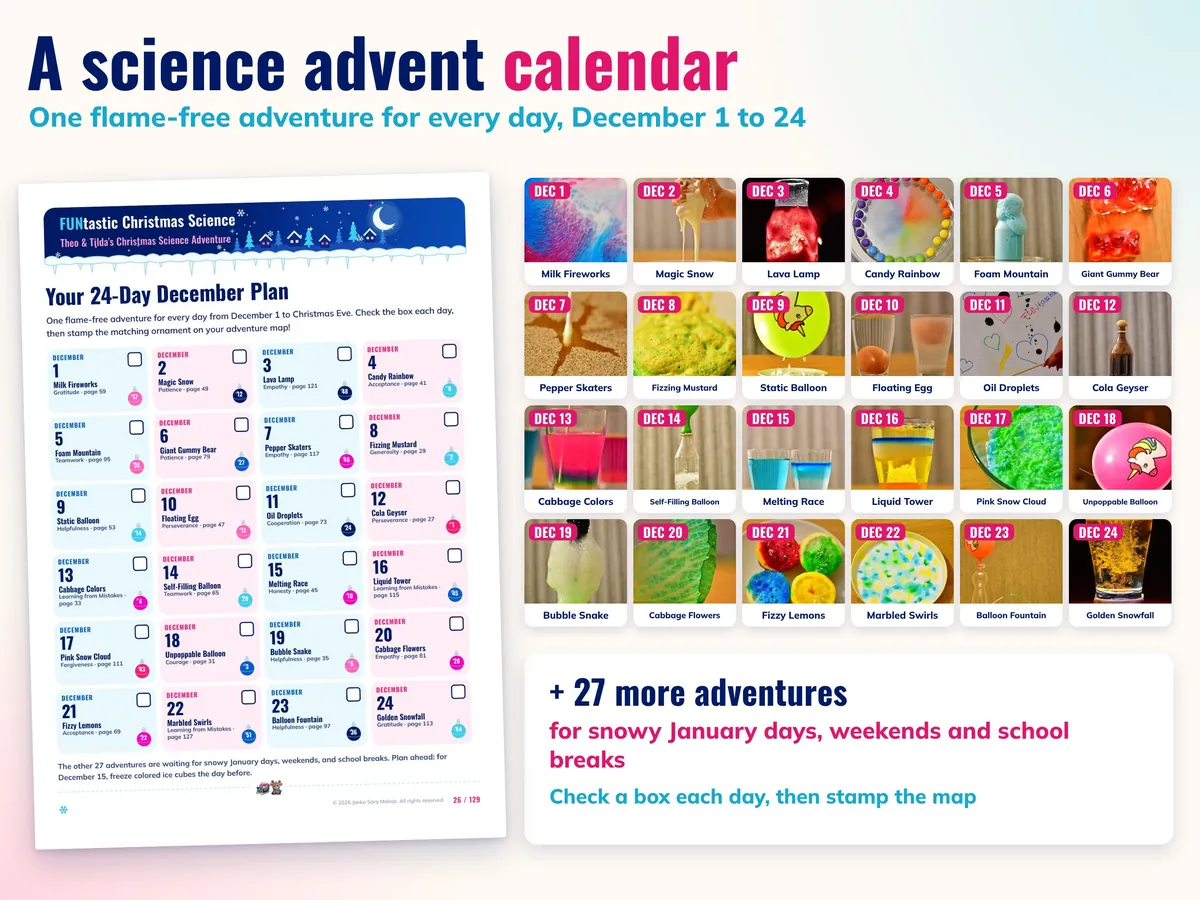
A few days from the plan: 1 December Milk Fireworks (gratitude), 2 December Magic Snow (patience), 7 December Pepper Skaters (empathy), 15 December Melting Race (honesty, freeze coloured ice cubes the day before) and 24 December Golden Snowfall (gratitude). Your term ends before Christmas Eve, so use the school days in class. Green experiments make good take-home cards for the holidays, and the other 27 adventures are waiting for January.
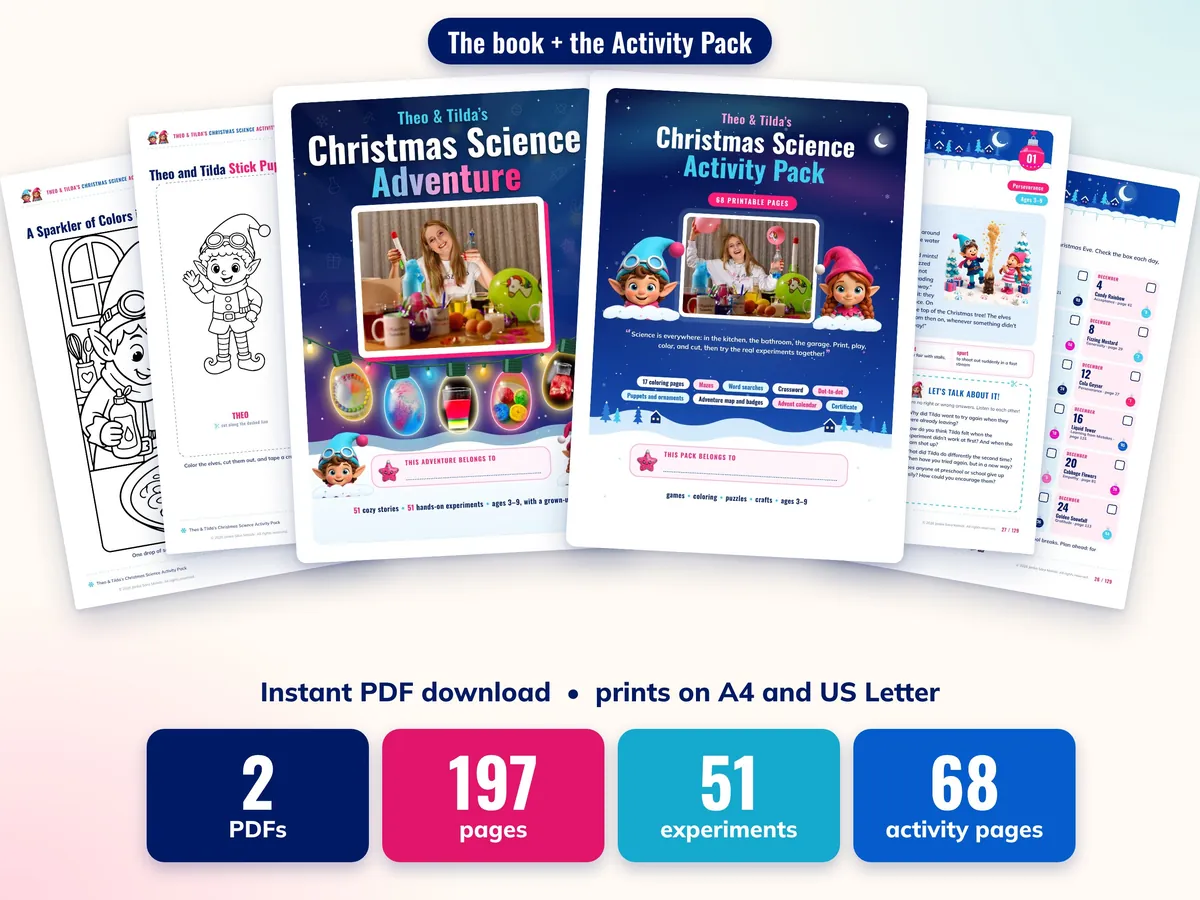
The Book + Activity Pack bundle
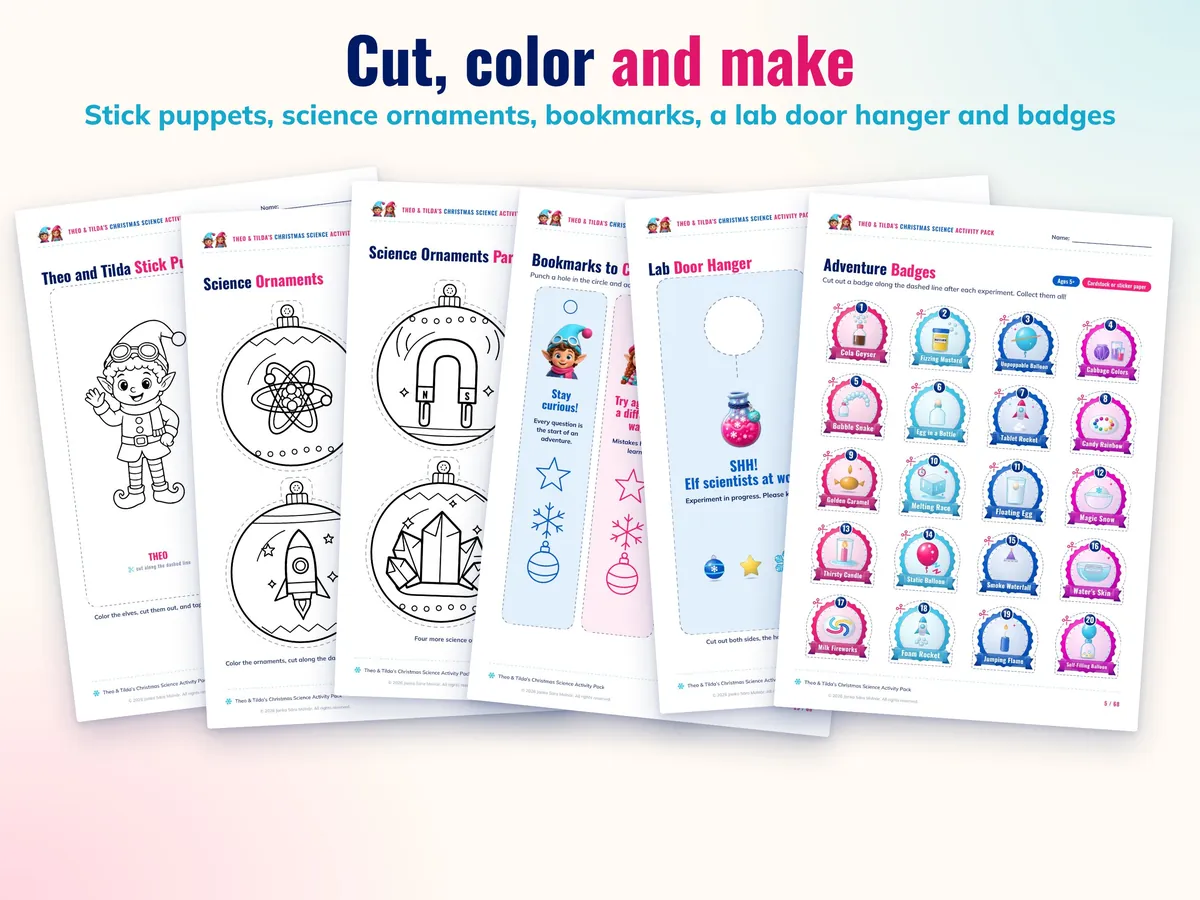
The 68-page Activity Pack fills the wet-play and end-of-term gaps: colouring pages, stick puppets, science ornaments, bookmarks, a lab door hanger, badges, word and value cards, a Kindness Advent Calendar, an experiment journal, mazes, a word search, a crossword, dot-to-dot, spot the difference, riddles, Elf Lab Mysteries detective cases, “Predict, Try, See!” sheets, STEM challenge cards and a certificate.
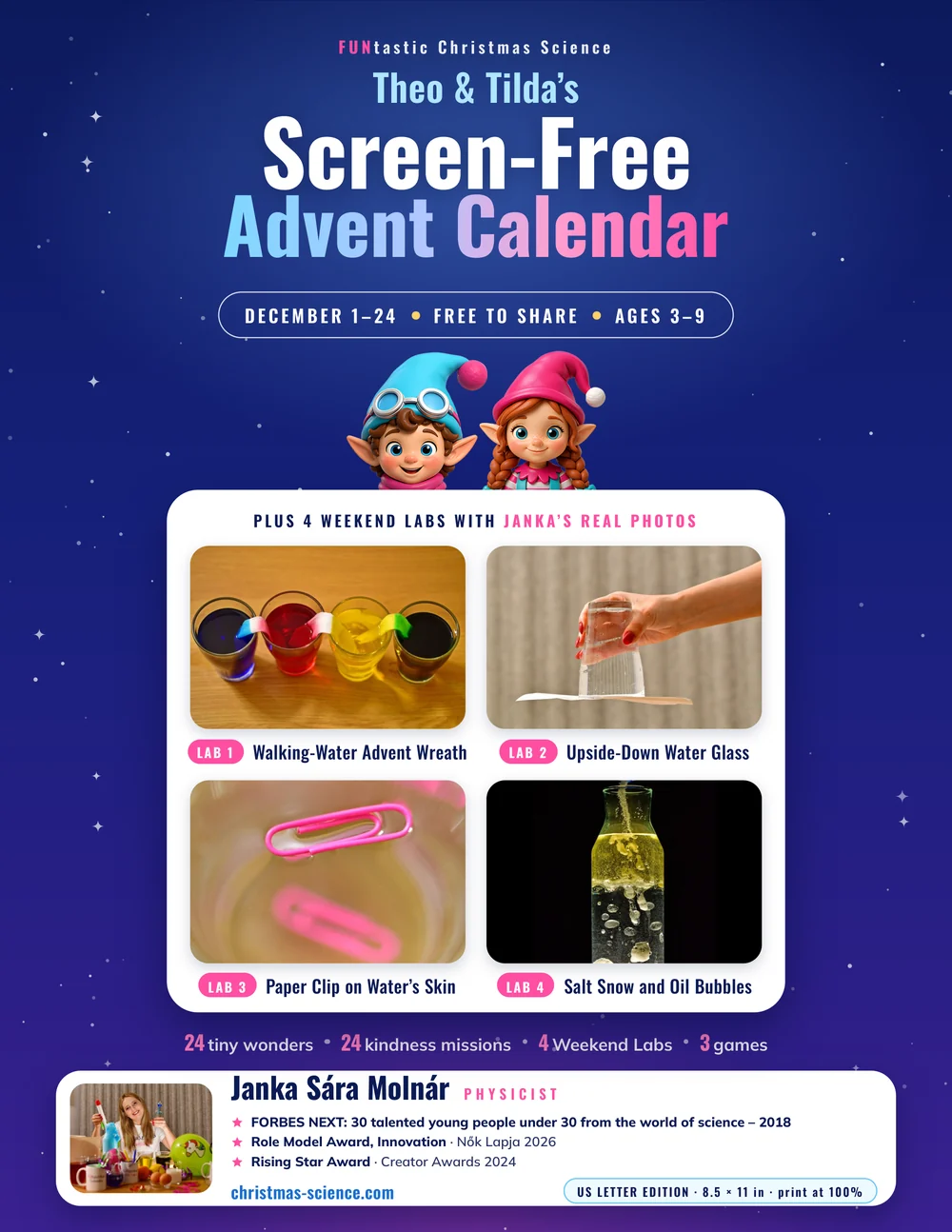
Theo & Tilda’s Screen-Free Advent Calendar
24 tiny wonders and 24 kindness missions, one for every day from 1 to 24 December, plus 4 Weekend Labs with my real photos and 3 games. Most tiny wonders take about 10 minutes and use things you probably already have. 22 pages, for ages 3–9.
It fits the ten minutes after the register. Day 2, for example, is The Ice Cube Watch: put an ice cube on a plate, guess how many minutes it will last, then check every 10 minutes. The kindness mission: when you have to wait today, hum a song or count snowflakes in your head.
This calendar is free to share. Print it as often as you like for your family or class, and pass it on to friends, families, and teachers. Please don’t sell it or change it.
- Ask before you explain. “What do you think will happen?” is the best question in science.
- Keep it tiny. Ten minutes is enough, and stopping while it’s still fun makes tomorrow exciting.
- Notice the kindness out loud. “I saw you help Grandma” means more than any sticker.
One price for everyone. One purchase covers one teacher with their own group or class, and you can print as many pages as you need (please don’t share the file). You get every file in A4 and US Letter, so print the A4 version at 100%.
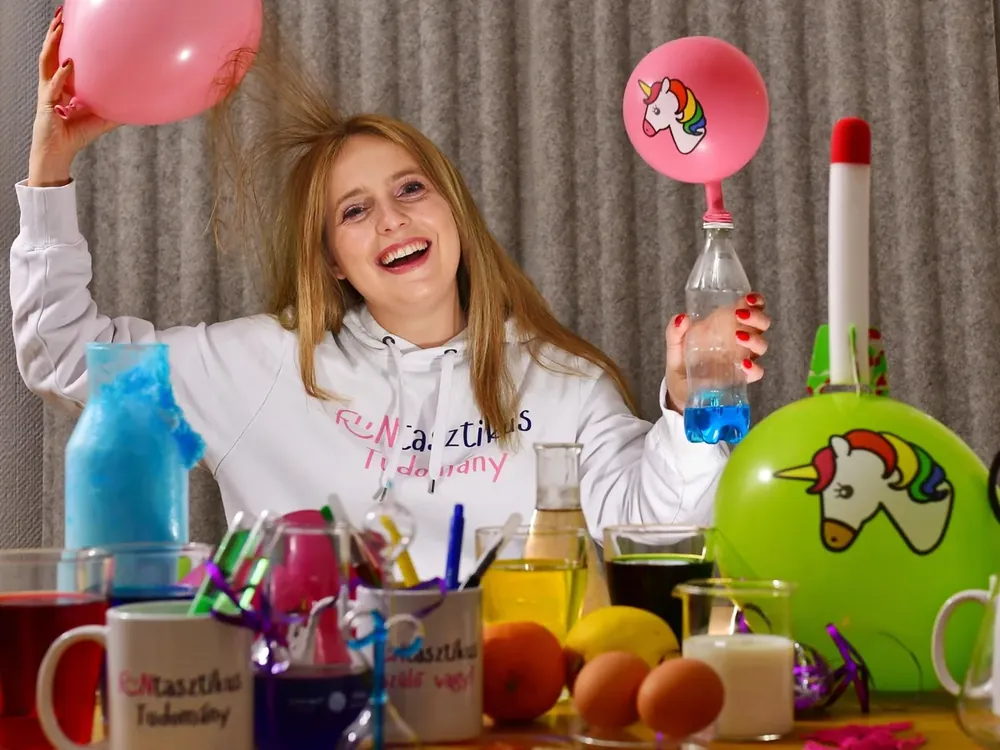
“At a physics competition around St Nicholas Day, we stuck gummy bears to different metal wires with wax, heated the wires and watched to see which gummy bear fell first. It was my first really cool experiment, and I still remember that feeling. I would love for as many children as possible to feel that magic this December.”
Janka
Know a teacher who’d love this?
If Bonnie’s pink made you smile, pass this post on to a colleague. The lesson pattern, the safety levels and the free UK Teacher Guide are all here for them.
COPY THIS MESSAGE
Paste it into your year group chat, or send it to a colleague.
Found this for the end of term! Christmas science experiments for KS1 and EYFS, with a ready lesson pattern, safety levels, curriculum links for England and a free UK Teacher Guide. www.christmas-science.com/blog/christmas-science-experiments-ks1
Questions teachers ask
What are easy Christmas science experiments for KS1?
Walking water, cornflour “magic snow”, pepper skaters, a four-layer liquid tower and an upside-down water glass. They use kitchen materials and show a clear change, and most of them link to Year 1 Everyday materials or Year 2 Uses of everyday materials. All five are in Theo & Tilda’s Christmas Science Adventure, with steps, a “Why it works” explanation and a real photo of the result.
Which Christmas science activities suit EYFS?
In Nursery, start with sensory experiments such as cornflour magic snow, colour drops in oil and walking water. In Reception, a “changes” thread works well: ice melting, a gummy bear growing overnight, a cabbage leaf changing colour and a yeast balloon. They support The Natural World and Speaking goals of the EYFS framework.
Do these Christmas science experiments link to the National Curriculum?
Yes. The free UK Teacher Guide links all 51 experiments to KS1 working scientifically, 14 of them to Year 1 or Year 2 content, and the experiments for younger children to the EYFS 2026 framework. The same experiments fit Curriculum for Excellence Early and First level in Scotland, the Curriculum for Wales and The World Around Us in Northern Ireland. It is an independent alignment guide, not endorsed by any curriculum authority.
Can I use one copy with my whole class?
Yes. One purchase covers one teacher with their own group or class, and you can print as many pages as you need. Please don’t share the file with other teachers. The UK Teacher Guide is free, so colleagues can download their own copy.
About Janka
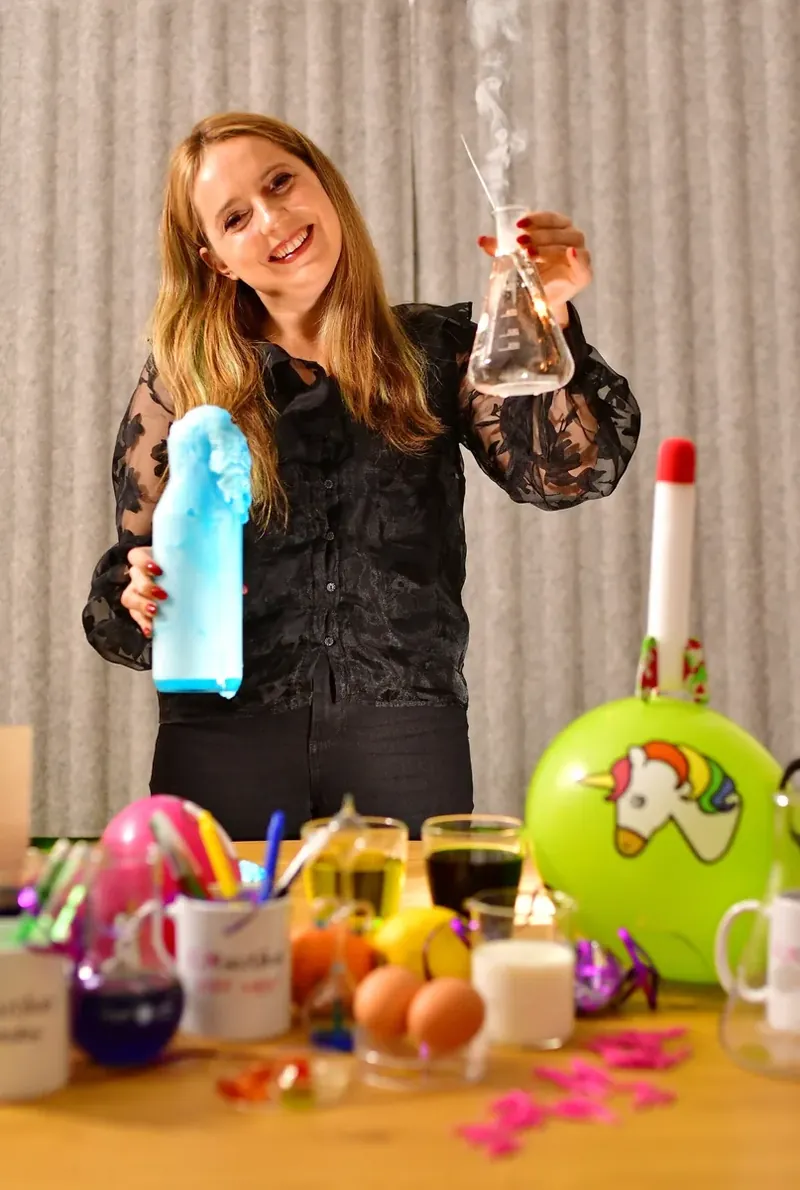
Janka Sára Molnár is a physicist and award-winning science communicator from Hungary, and the creator of FUNtastic Christmas Science. As a secondary school student, she spent years building multiwire proportional chambers, a kind of particle detector, and took them to CERN several times, where she also presented them in the CERN teacher programme. She later graduated from Eötvös Loránd University (ELTE) in Budapest.
Her awards include the Role Model Award (Nők Lapja, 2026), the Women of Excellence Award (Szakmai Elit, 2026) and the Rising Star Award (Creator Awards, 2024), and she was featured in “FORBES NEXT: 30 talented young people under 30 from the world of science – 2018”.
The UK Teacher Guide is an independent alignment guide prepared by the publisher and checked against official curriculum documents on 6 November 2026. It is not endorsed or accredited by any curriculum authority.
© 2026 FUNtasztikus Tudomány Kft. – Janka Sára Molnár
Keep reading
More Christmas science ideas from Theo, Tilda, and me.
 Teachers · USA · 10 min readChristmas Science Experiments for the Classroom (K–2)Low-prep Christmas science experiments for the classroom: 51 K–2 activities with read-aloud stories, real photos, NGSS links, and a December plan.Read the post →
 Teachers · Australia · 10 min readChristmas Science Activities for Australian ClassroomsSummer Christmas science activities for Foundation to Year 2: ice races, magic snow and a cola geyser, with AC v9.0 links and a free teacher guide.Read the post →
 Preschool · 22 min readWinter Science Experiments for Preschoolers (No Snow Needed)10 easy winter science experiments for preschoolers, no snow needed: ice, salt, cornstarch, a floating egg, static snowflakes. No flames, no hot water.Read the post →