Christmas Science Activities for Australian Classrooms: Summer Experiments for the Last Weeks of Term
Low-prep Christmas experiments with ice, water and pantry materials, linked to the Australian Curriculum v9.0, from a physicist who has run hundreds of science shows for children.
Save it for your end-of-year planning, or share it with the teacher next door.
The Elfville Melting Race
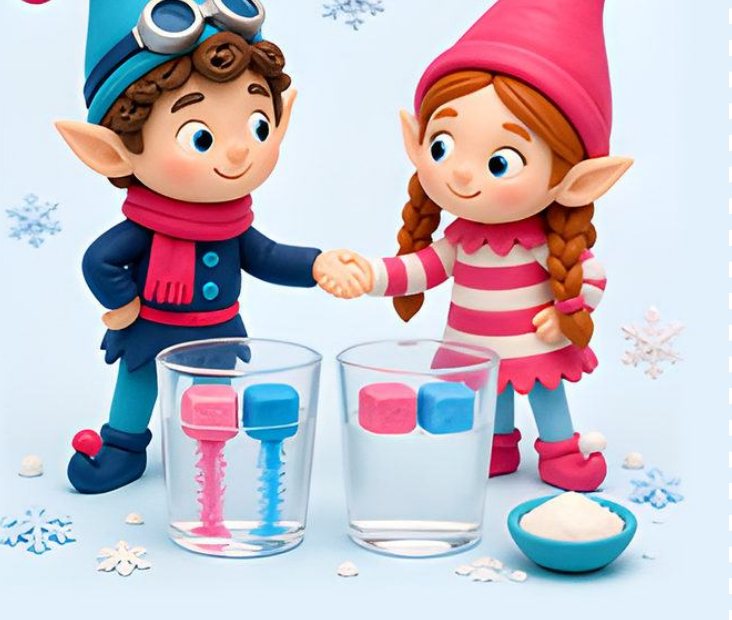
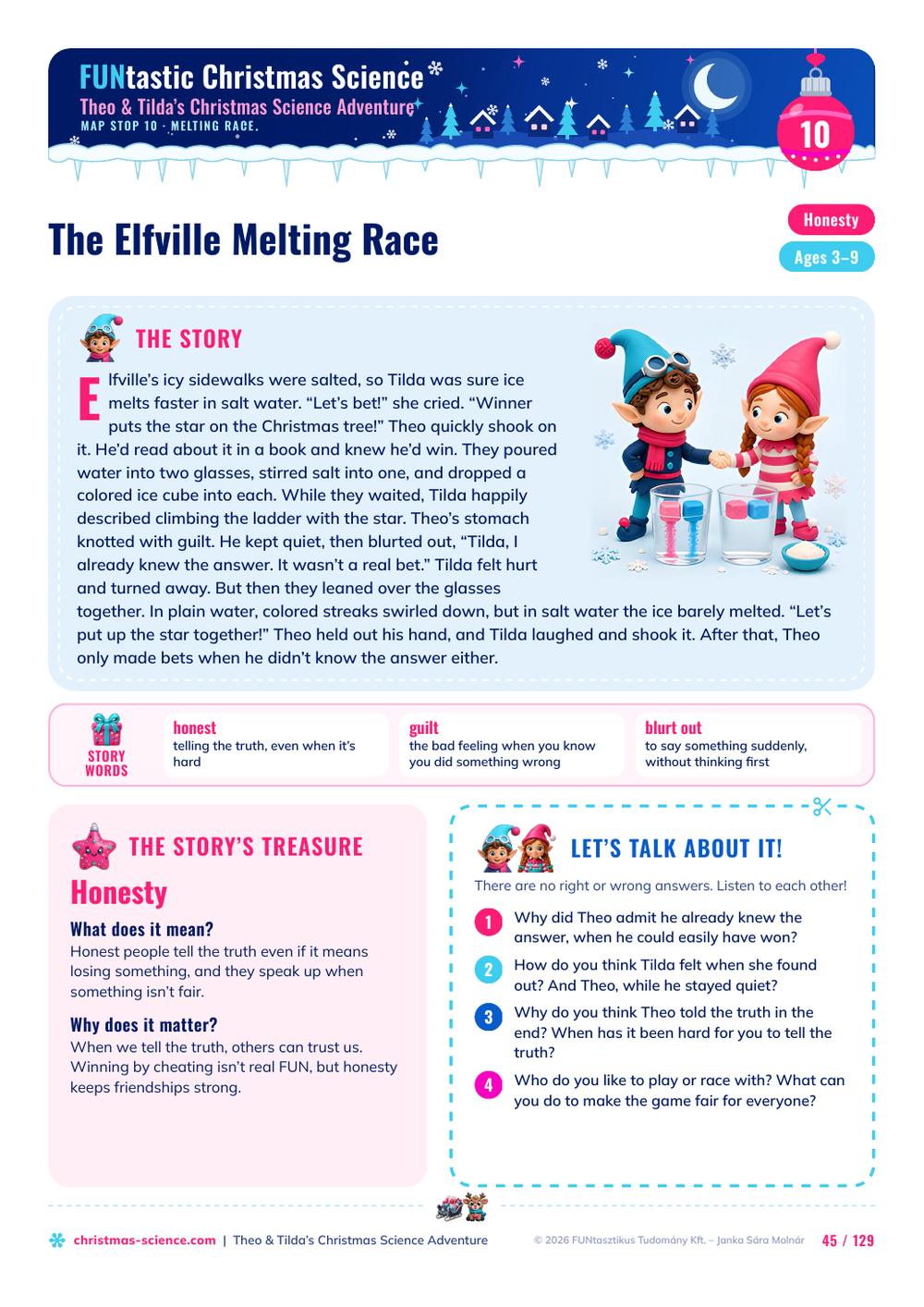
Elfville’s icy sidewalks were salted, so Tilda was sure ice melts faster in salt water. “Let’s bet!” she cried. “Winner puts the star on the Christmas tree!” Theo quickly shook on it. He’d read about it in a book and knew he’d win. They poured water into two glasses, stirred salt into one, and dropped a colored ice cube into each. While they waited, Tilda happily described climbing the ladder with the star. Theo’s stomach knotted with guilt.
Which glass would your class bet on? Ask them before you read on. The ending is at the bottom of this page.
From Theo & Tilda’s Christmas Science Adventure, adventure 10. Value: honesty.
Know a Foundation to Year 2 teacher who is planning the last weeks of the school year? Send this to them. These experiments work in an Australian summer. Share it
1What are the best Christmas science activities for an Australian classroom?
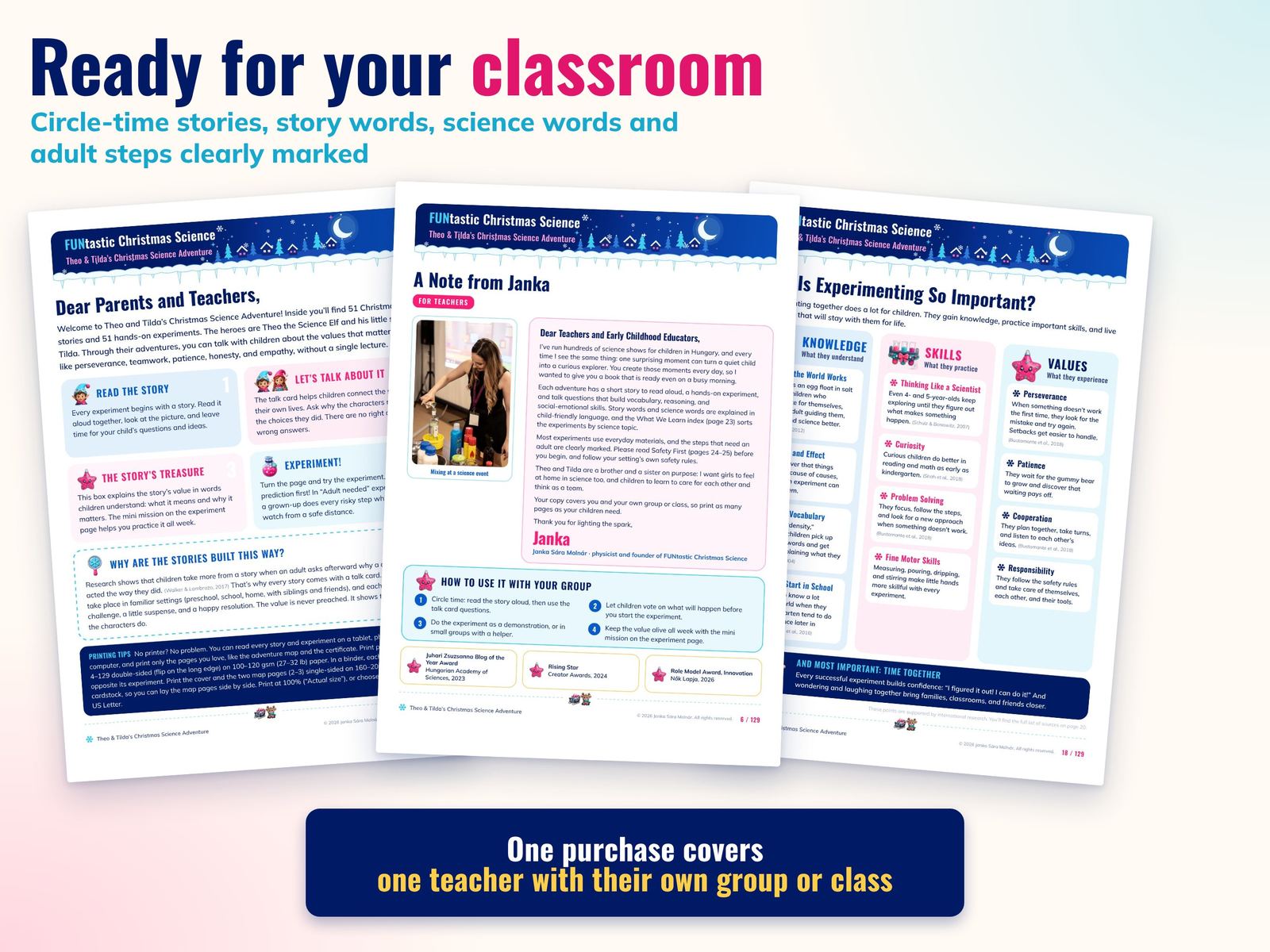
The best Christmas science activities for an Australian classroom are short, low-prep experiments with ice, water and pantry materials, because in Australia Christmas arrives in summer, right at the end of Term 4. Theo & Tilda’s Christmas Science Adventure gives you 51 of them: 51 short read-aloud Christmas stories, each paired with a kitchen experiment and a real photo of the result, for children aged 3 to 9. Of these, 36 are hands-on for children and 15 are teacher demonstrations. My free Australian Teacher Guide links all of them to the Australian Curriculum v9.0 for Foundation to Year 2.
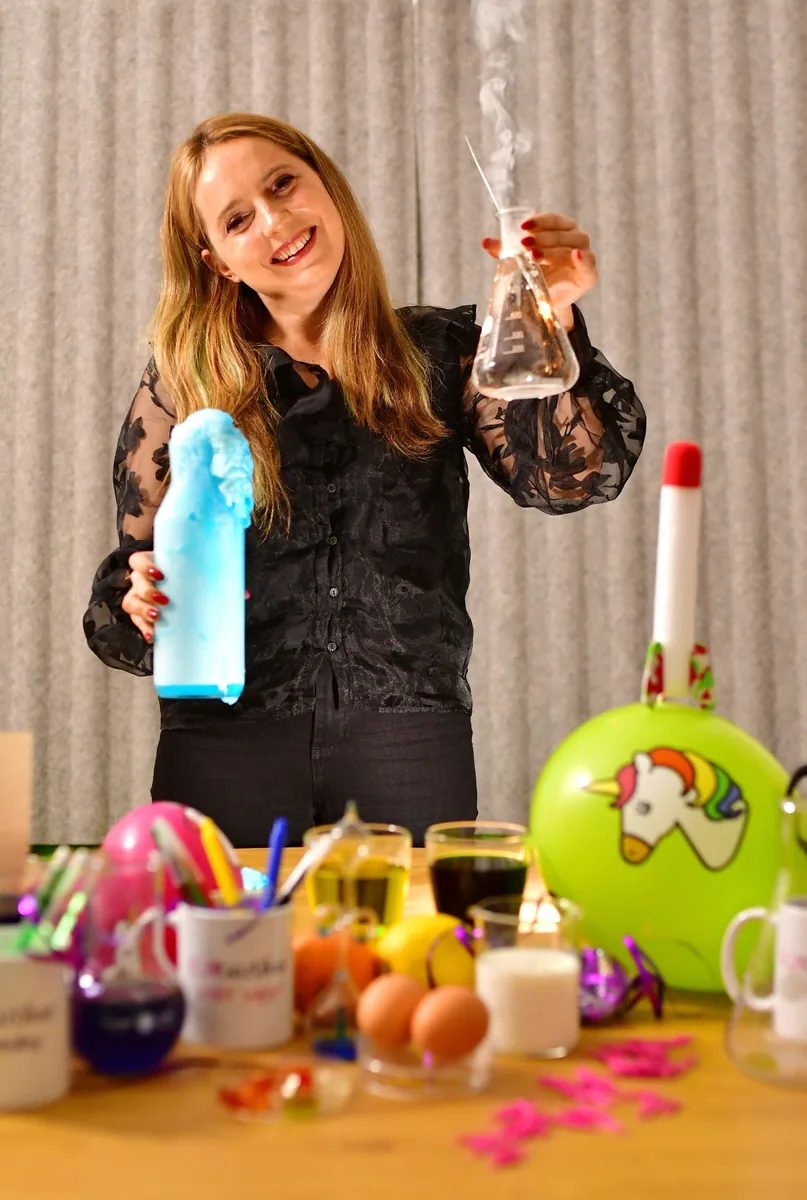
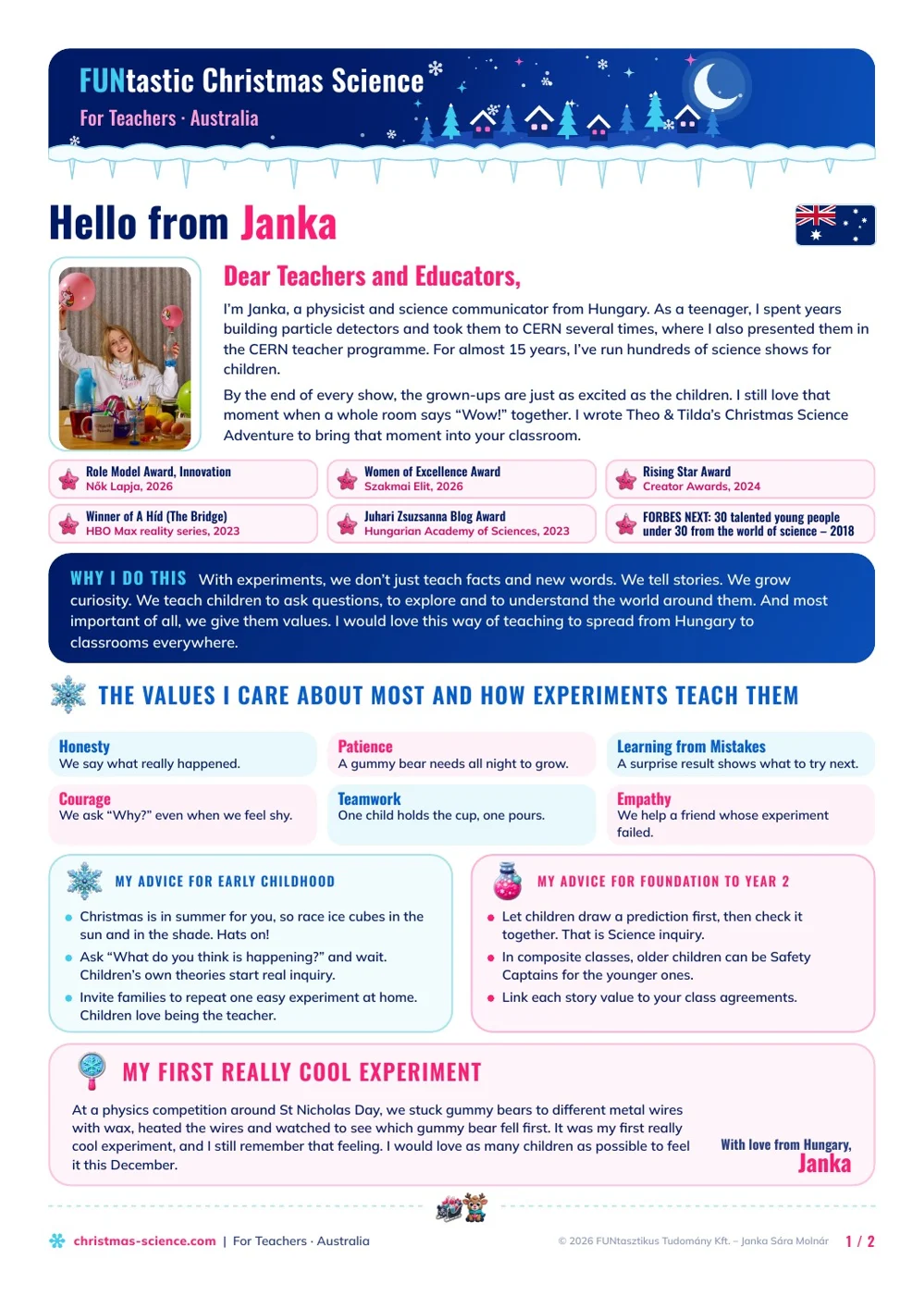
I’m Janka, a physicist and science communicator from Hungary. As a teenager I spent years building particle detectors and took them to CERN several times. For almost 15 years I’ve run hundreds of science shows for children, and by the end of every show the grown-ups are just as excited as the children. I still love that moment when a whole room says “Wow!” together.
I tried every experiment in my own lab, and the photos in the book are the real results, so your class knows exactly what to look for.
Melting ice in a hot classroom is half the fun. Share this section with a colleague who thinks Christmas science needs snow. Share it
2How do you turn summer into a Christmas science experiment?
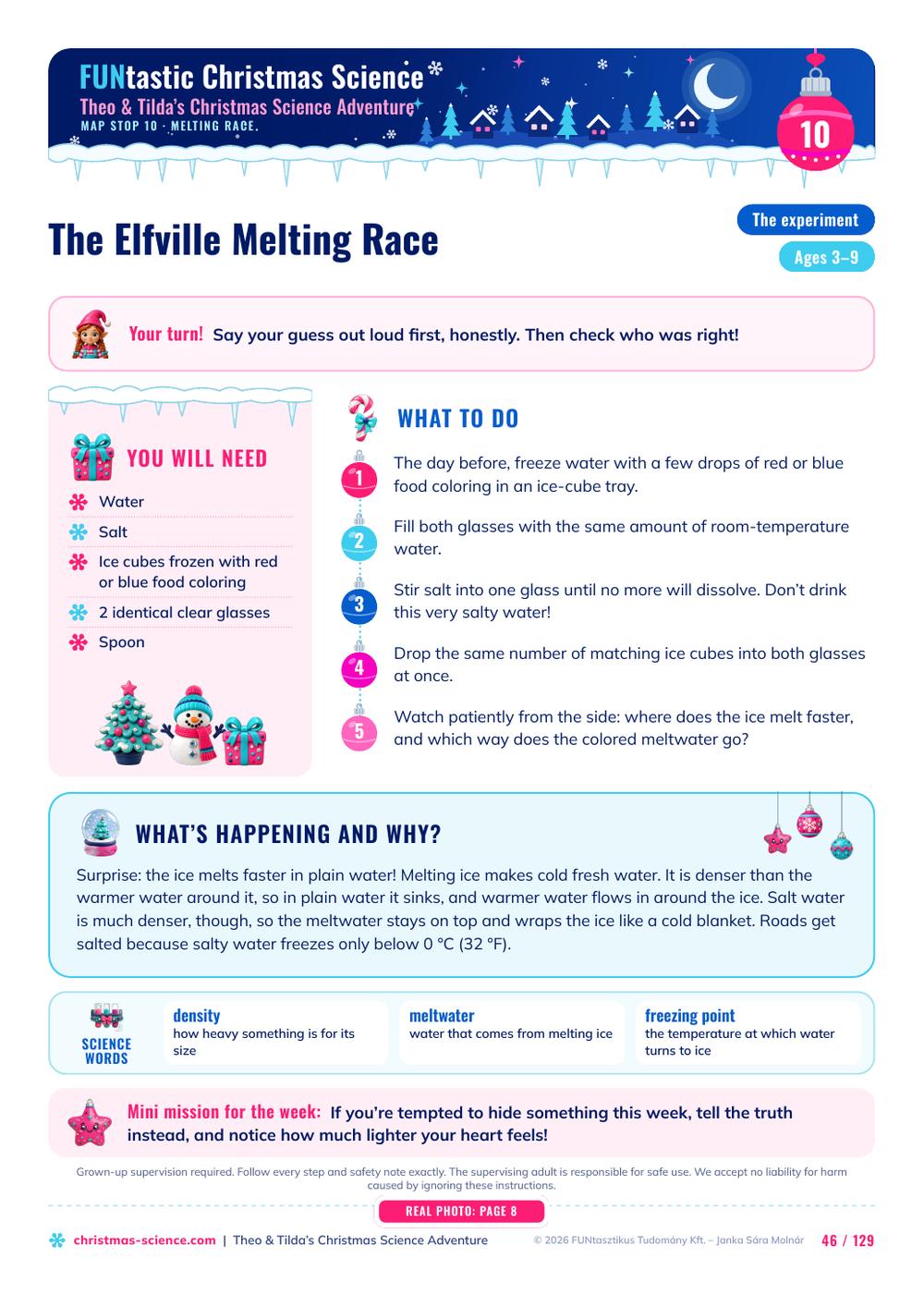
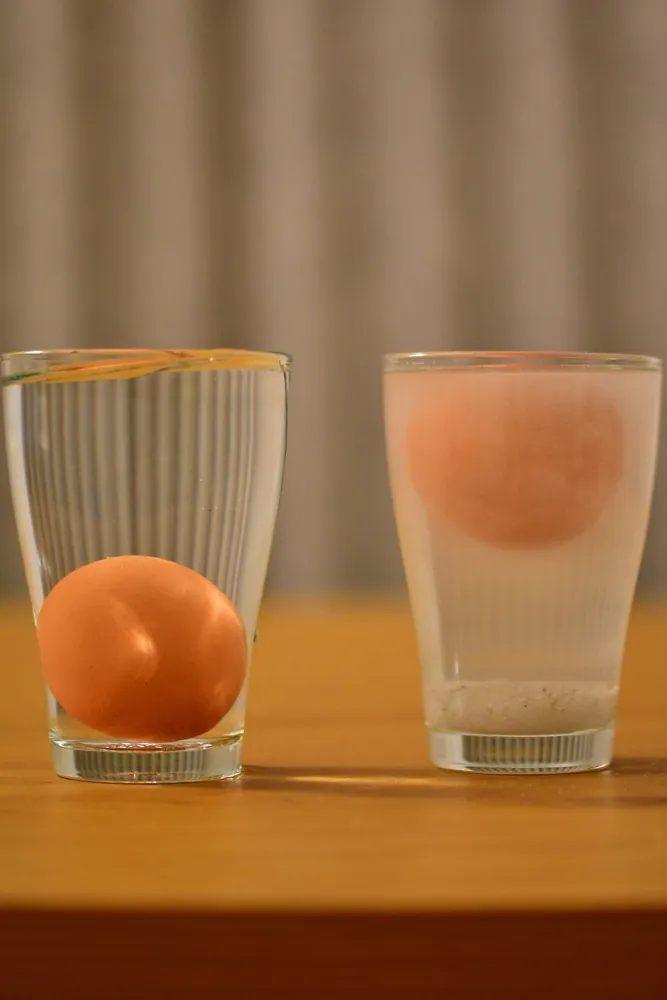
Use the heat. In the book, the Ice Melting Race is a race between two glasses: one with plain water, one with as much salt stirred in as will dissolve. The day before, freeze water with a few drops of red or blue food colouring in an ice-cube tray. Pour the same amount of room-temperature water into two identical clear glasses, salt one of them, and drop matching ice cubes into both at once. Then watch from the side. The surprise: the ice melts faster in plain water. Melting ice makes cold fresh water. In plain water it sinks and warmer water flows in around the ice. Salt water is much denser, so the cold meltwater stays on top and wraps the ice like a cold blanket.
Christmas is in summer for you, so race ice cubes in the sun and in the shade, too. Hats on! Ask “What do you think is happening?” and wait. Children’s own theories are where real inquiry starts. In my Teacher Guide, the Ice Melting Race is one of the top 10 picks for Foundation to Year 2, linked to AC9SFI04, AC9S1H01 and AC9S2U03.
3Which Christmas experiments fit Foundation, Year 1 and Year 2?
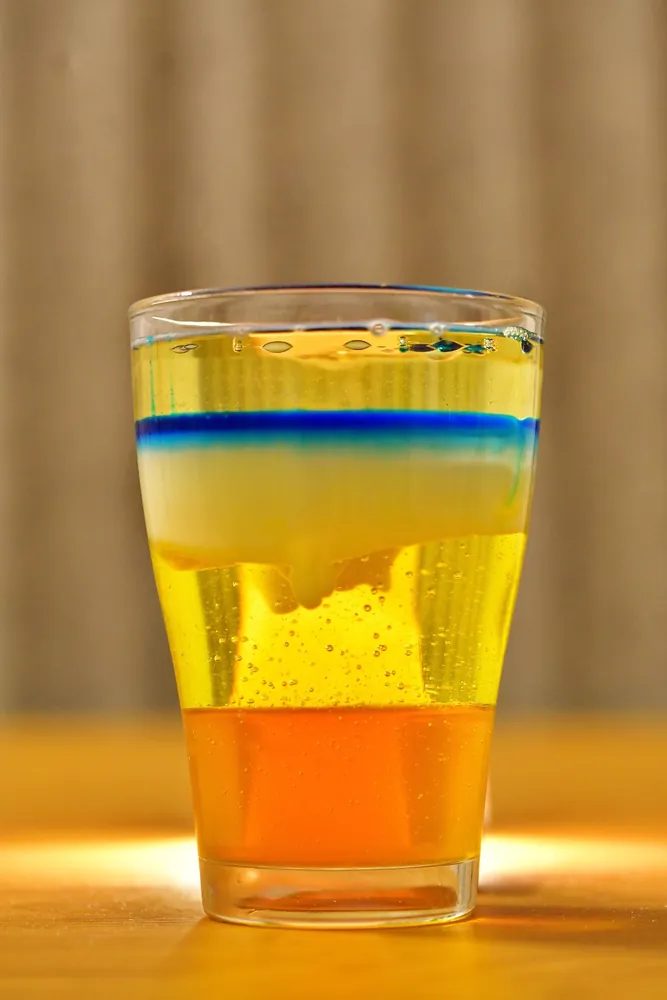
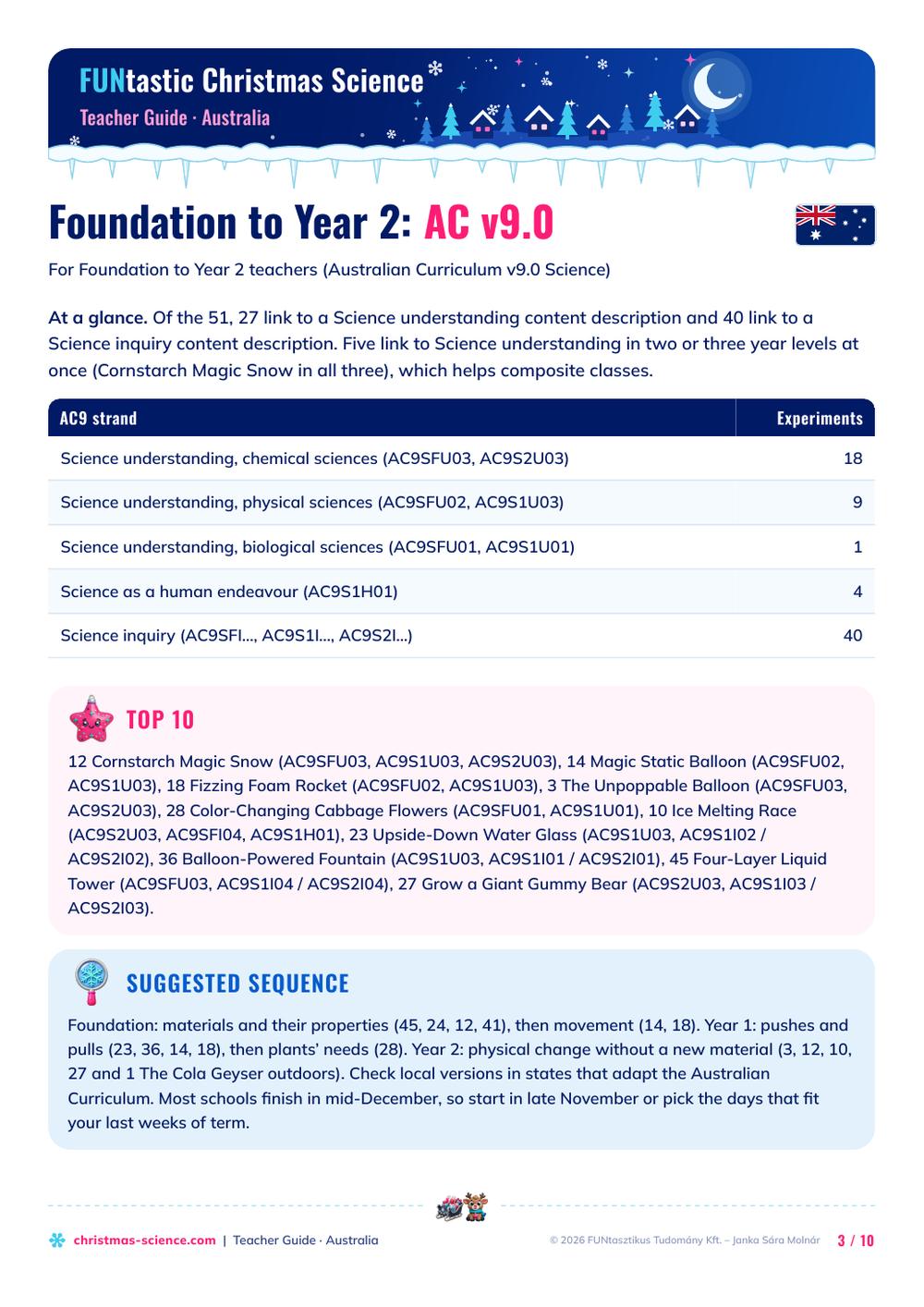
Of the 51 experiments, 27 link to a Science understanding content description and 40 to a Science inquiry content description. For each year level, my Teacher Guide suggests a sequence, with the experiment titles as printed in the book:
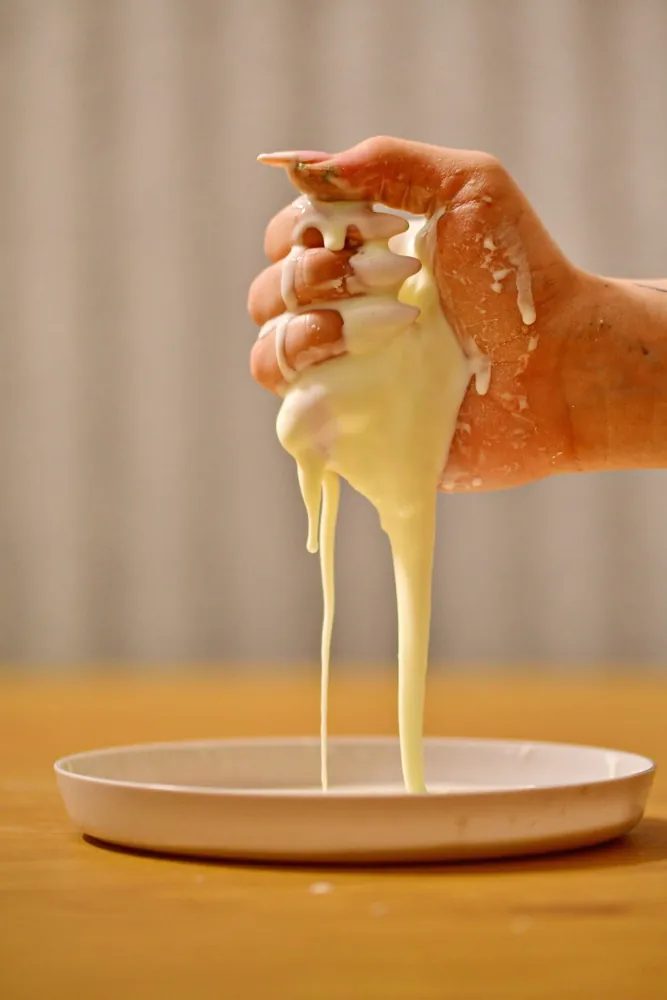
Teaching a composite class? Start with Cornstarch Magic Snow. It links to Science understanding in all three year levels (AC9SFU03, AC9S1U03, AC9S2U03). The book’s recipe: about 1 cup of cornflour and ½ cup of water, roughly twice as much cornflour as water, stirred in a little at a time. The mix is right when it flows slowly as you tilt the bowl but feels hard when you tap it with a spoon. Squeeze a handful into a ball, then open your hand and watch it ooze away. What matters isn’t how hard you push, but how fast you move. When you’re done, the leftovers go in the bin, not down the sink.
Planning the last weeks of term with your team? Share this lesson pattern with them. Share it
4How do you run a Christmas science lesson in 35–50 minutes?
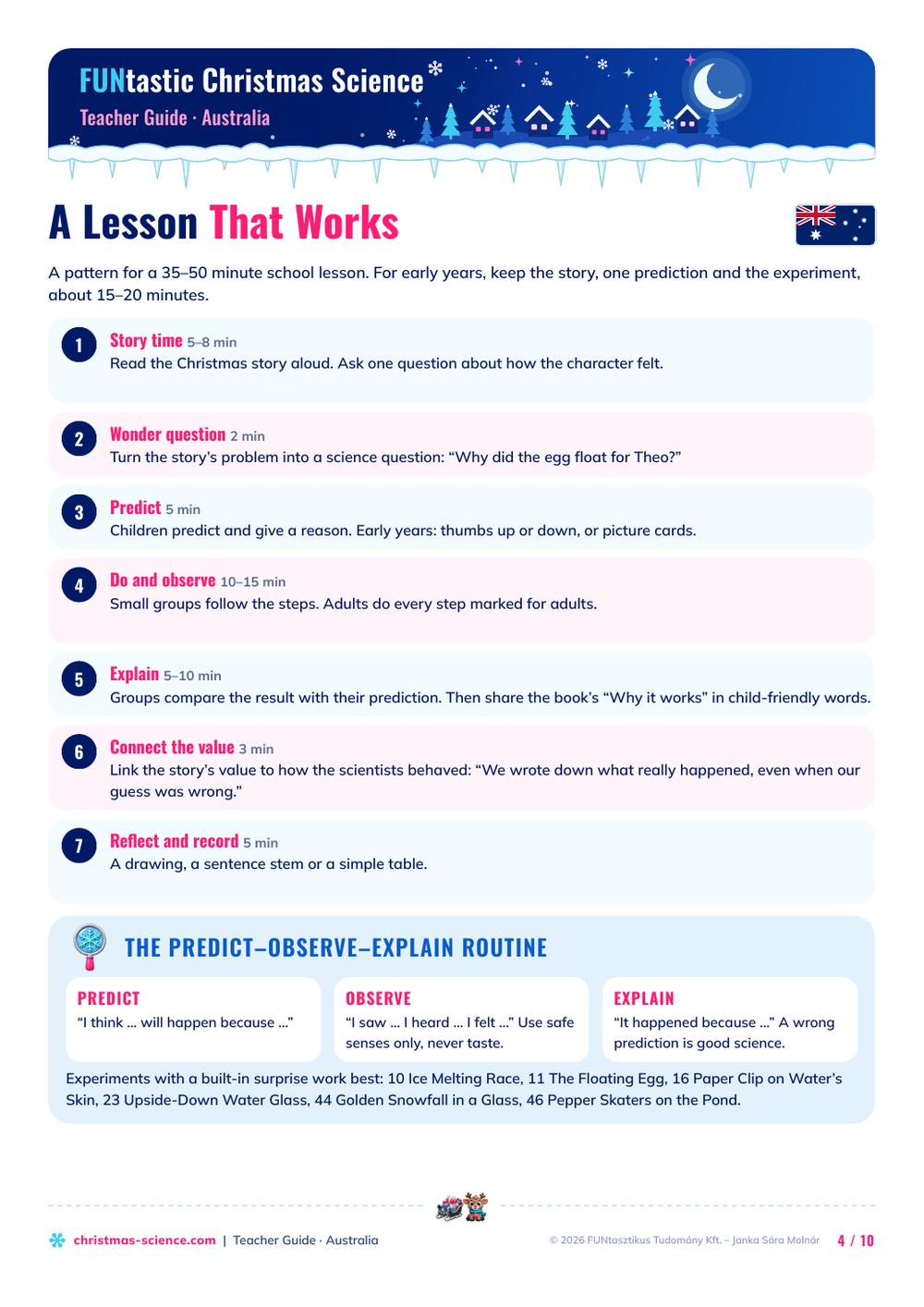
This is the lesson pattern from my Teacher Guide. For early years, keep the story, one prediction and the experiment, about 15–20 minutes.
- Story time5–8 min
- Wonder question2 min
- Predict5 min
- Do and observe10–15 min
- Explain5–10 min
- Connect the value3 min
- Reflect and record5 min
Give children three sentence starters: “I think … will happen because …”, “I saw … I heard … I felt …” and “It happened because …”. A wrong prediction is good science. My advice for Foundation to Year 2: let children draw a prediction first, then check it together. That is Science inquiry. Every story is built around a value, from honesty and patience to courage and forgiveness, so link each one to your class agreements. Work in groups of three or four and rotate the roles: Story Keeper, Materials Manager, Scientist, Observer and Recorder, Safety Captain and Reporter. In composite classes, older children can be Safety Captains for the younger ones.
The standing rules: goggles for all fizzing, popping and flame work, nothing is tasted, and launches happen outdoors only, never at faces. Before you start, check for latex (use latex-free balloons), egg, milk and mustard allergies, and remember that the gelatine in gummy bears matters for some dietary and faith needs.
Copy these ideas into your end-of-term planner, or send them to a colleague who teaches the same year level. Share it
5Which end of term activities work before the summer holidays?
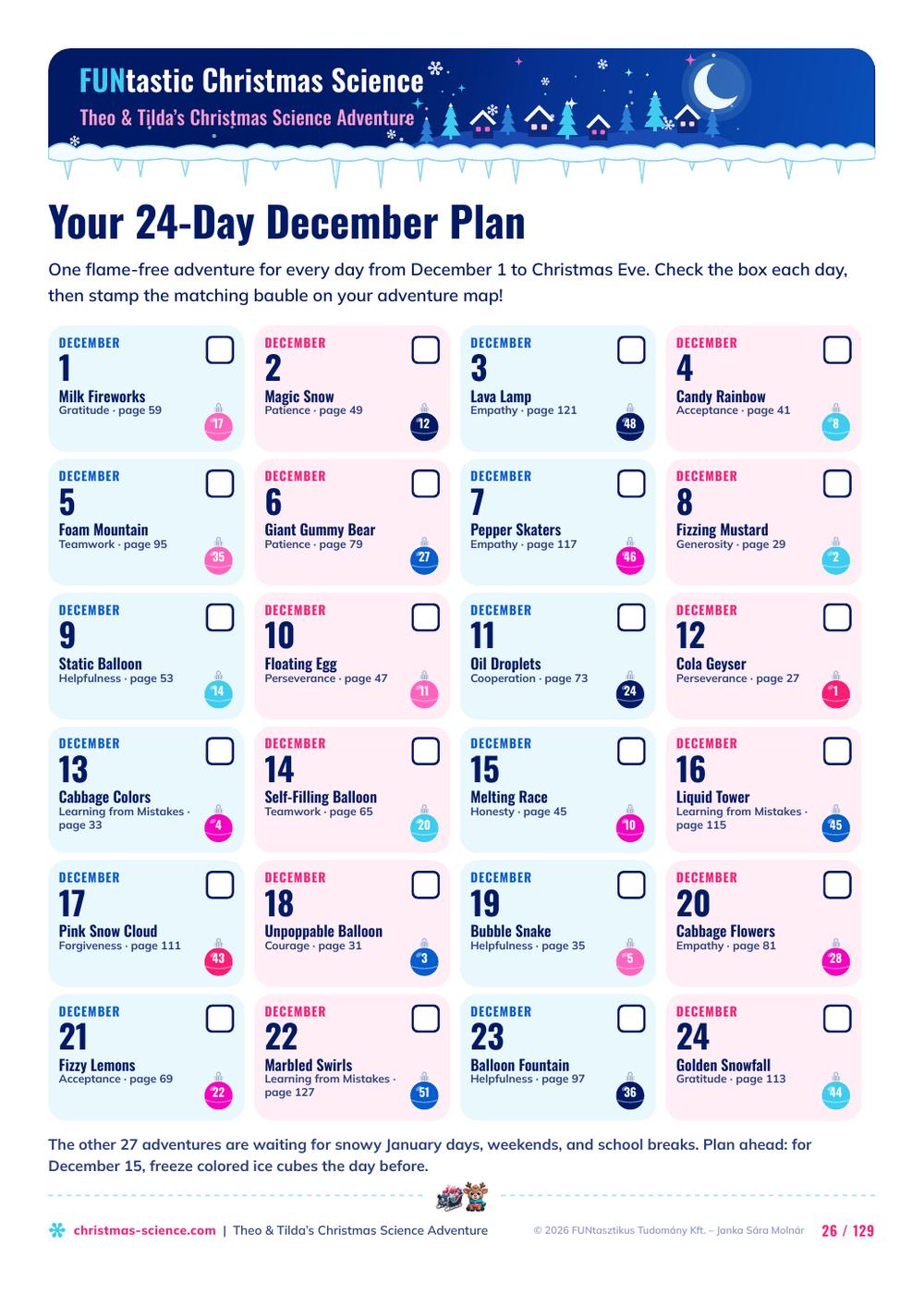
The book’s 24-Day December Plan is flame-free, with one adventure for every day from 1 to 24 December. In 2026, Term 4 in government schools ends in mid-December, between about 10 and 18 December depending on your state or territory, so start in late November or pick the days that fit your last weeks of term.
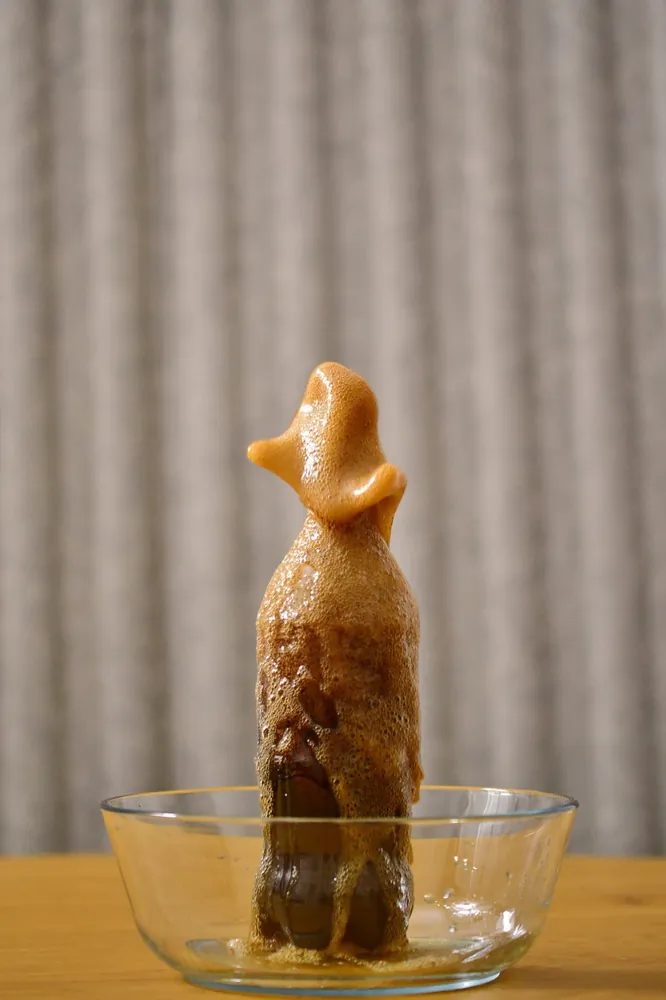
For break-up week, take The Cola Geyser outside, where it belongs anyway. You need a two-litre bottle of cola (diet works even better), a roll of mint Mentos, a sheet of paper rolled into a tube so all the mints drop in at once, and safety goggles. Drop, step back and watch the foam shoot up. It’s a physical change, not a chemical reaction: tiny rough spots on the mints let the gas escape from the cola as bubbles, very fast. If the first try only fizzes, that’s the story’s lesson too: “One more try, a different way!”
Theo & Tilda’s Screen-Free Advent Calendar is free to download and free to share. It has 24 day cards, each with a tiny wonder to try, the science behind it in a few words, a kindness mission and the name of that day’s experiment from the 24-day plan. Starting late? Start with today’s card. Every card stands on its own. And before the holidays, send one green experiment home: green experiments make good take-home cards, and children love being the teacher.
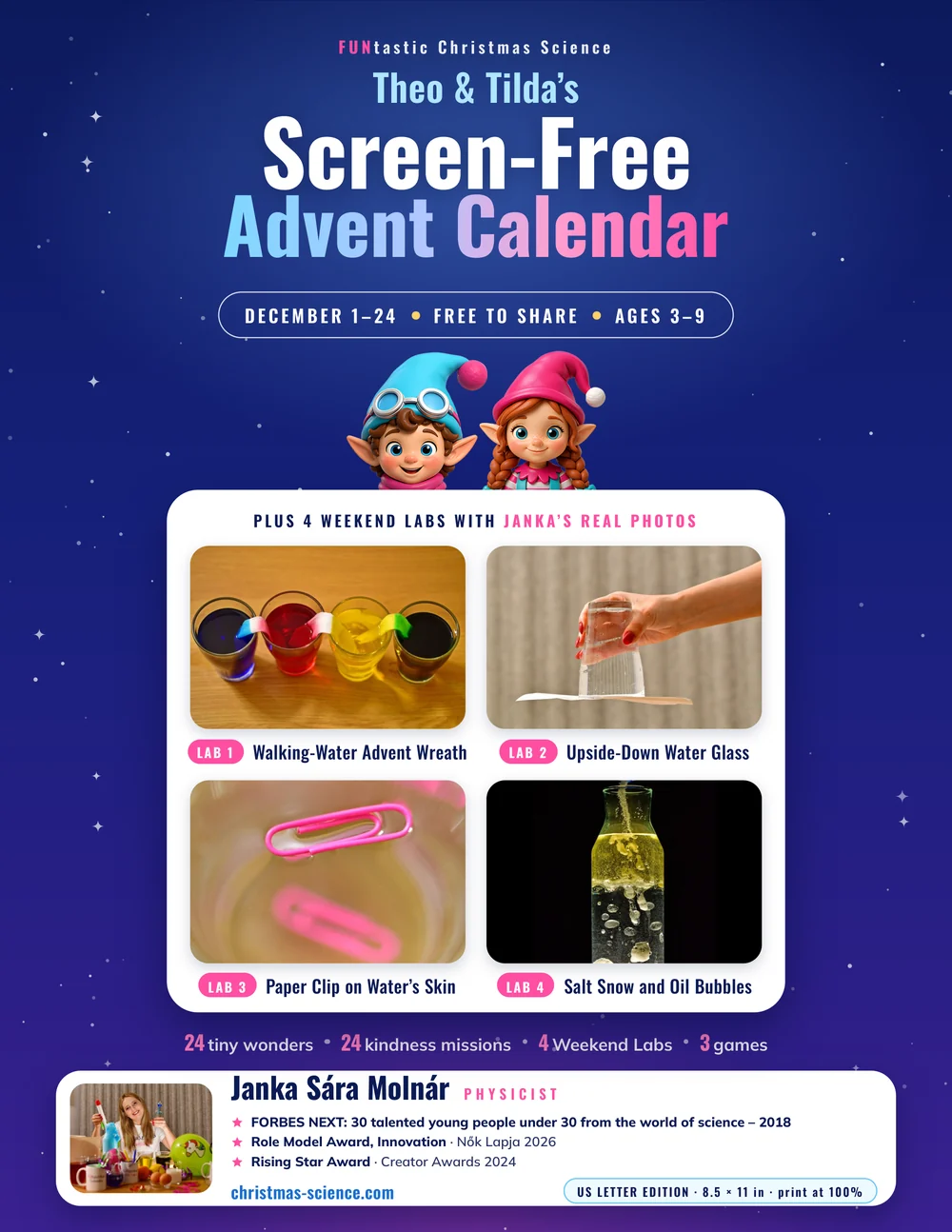
Theo & Tilda’s Screen-Free Advent Calendar
24 tiny wonders and 24 kindness missions, one for every day from 1 to 24 December, plus 4 Weekend Labs with my real photos and 3 games. Most tiny wonders take about 10 minutes and use things you probably already have. 22 pages, for ages 3–9.
This calendar is free to share. Print it as often as you like for your family or class, and pass it on to friends, families, and teachers. Please don’t sell it or change it.
The Elfville Melting Race
He kept quiet, then blurted out, “Tilda, I already knew the answer. It wasn’t a real bet.” Tilda felt hurt and turned away. But then they leaned over the glasses together. In plain water, colored streaks swirled down, but in salt water the ice barely melted. “Let’s put up the star together!” Theo held out his hand, and Tilda laughed and shook it. After that, Theo only made bets when he didn’t know the answer either.
In the book, four talk questions follow, such as: “Why did Theo admit he already knew the answer, when he could easily have won?” And a mini mission for the week: “If you’re tempted to hide something this week, tell the truth instead, and notice how much lighter your heart feels!”
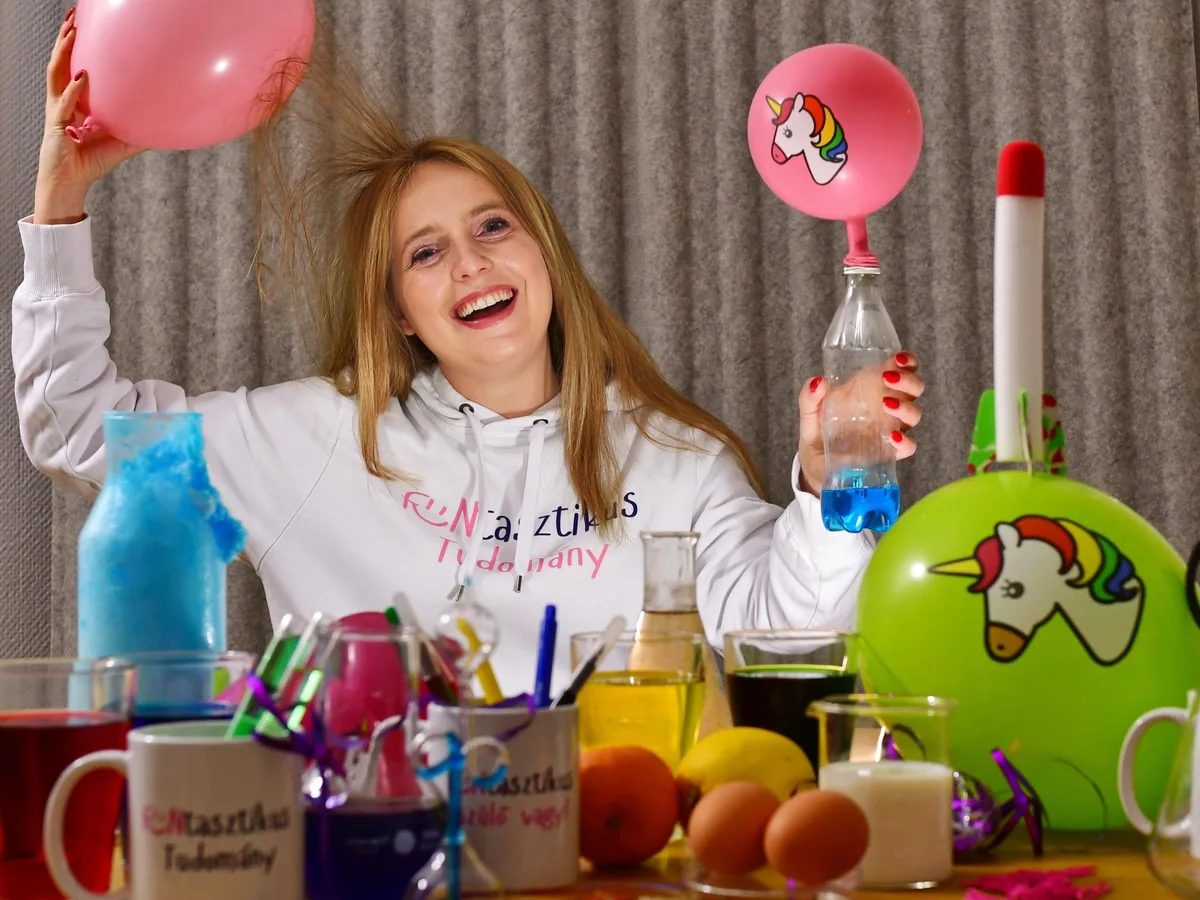
Not every experiment will be spectacular the first time, and that is part of the FUN. I hope these last weeks of term bring your class lots of “Wow!” moments, and a slower, calmer moment for you too.
With love from Hungary, Janka
Know a teacher who’d love this?
If Theo and Tilda’s bet made you smile, pass this post on to a colleague. The experiments, the AC v9.0 links and the free teacher guide are all here for them.
COPY THIS MESSAGE
Paste it into your staff group chat, or send it to a colleague.
Found this for the end of the school year! Summer Christmas science activities for Foundation to Year 2, with Australian Curriculum v9.0 links and a free teacher guide. www.christmas-science.com/blog/christmas-science-activities-australia
Questions teachers ask
What Christmas science activities work in an Australian summer?
Activities with ice, water and pantry materials work best: the Ice Melting Race, ice cubes raced in the sun and in the shade, Cornstarch Magic Snow and The Cola Geyser outdoors. The 24-day December plan in Theo & Tilda’s Christmas Science Adventure is flame-free.
Are these Christmas experiments linked to the Australian Curriculum?
Yes. The free Australian Teacher Guide links all 51 experiments to the Australian Curriculum v9.0 Science for Foundation to Year 2: 27 link to a Science understanding and 40 to a Science inquiry content description. For early childhood, the 28 experiments for ages 3–5 link to EYLF V2.0 Outcome 4. It is an independent guide, not endorsed by ACARA.
How long does a Christmas science lesson take?
The Teacher Guide’s lesson pattern takes 35–50 minutes in seven steps, from story time to reflect and record. For early years, about 15–20 minutes is enough: the story, one prediction and the experiment.
Can I use one copy with my whole class?
Yes. One purchase covers one teacher with their own class. Print as many pages as you need, but please don’t share the file. The book comes in A4 and in US Letter.
The illustrations of Theo, Tilda and their world were created with AI-assisted tools (Canva) and edited by our team. Physicist Janka Sára Molnár wrote the stories and the experiment instructions herself, and she designed and tested every experiment. AI tools were used only to correct and polish the text. The experiment photos are real photos of her own experiments.
The Teacher Guide is an independent alignment guide, checked against official curriculum documents on 6 November 2026. It is not endorsed or accredited by any curriculum authority. Australian Curriculum content: © Australian Curriculum, Assessment and Reporting Authority (ACARA) 2010 to present, licensed under CC BY 4.0. ACARA does not endorse any product that uses the Australian Curriculum. Every experiment needs grown-up supervision. Follow your school’s risk assessment and the safety notes in the book.